Phaëthornis Pretrei
Phaëthornis Pretrei
Pretre’s Hermit
- 合集
- 古尔德蜂鸟图谱
- 绘者
- John Gould(约翰·古尔德)
- 年代
- 1849
- 图版号
- Pl. 28, Vol. I
- 原书页码
- p.28
- 主色
- 绿
- 授权
- CC0 1.0 Universal (Public domain)
关于本图版
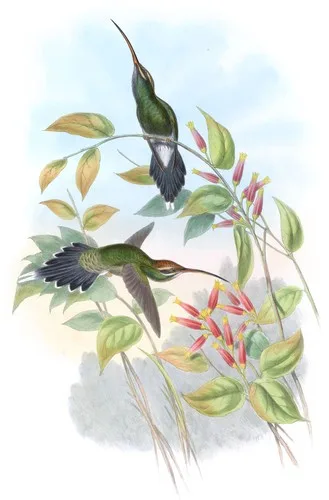
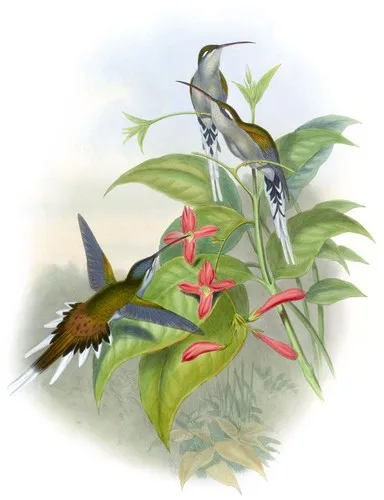
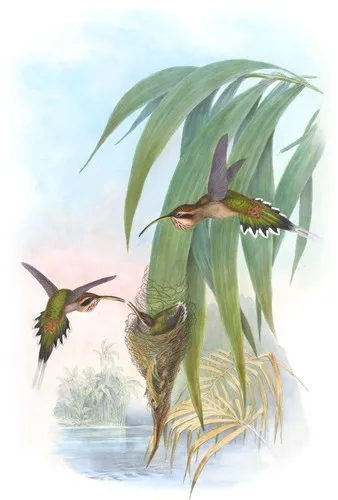
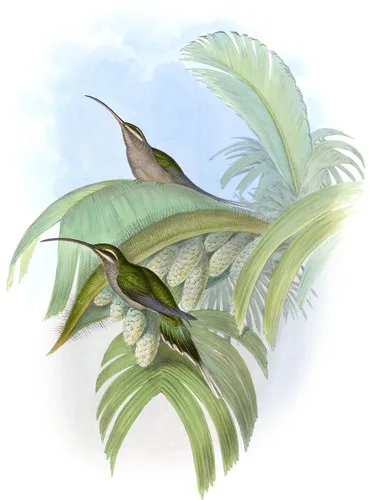
这幅图版出自《古尔德蜂鸟图谱》(Gould's Hummingbirds),由约翰·古尔德绘制,1849—1887 年间出版。原书题作“Phaëthornis Pretrei”,归入蜂鸟科(Trochilidae)。
全编共收录 421 幅图版,本图是其中一幅,原书将其列为 Pl. 28, Vol. I,见第 28 页,版式为纵幅,整幅以黄绿为主调。扫描件取自公有领域原件,经高分辨率修复与色彩校正,可按原大放大查看线条与设色。
原书文字(英文 / 法文)
Eastern Brazil
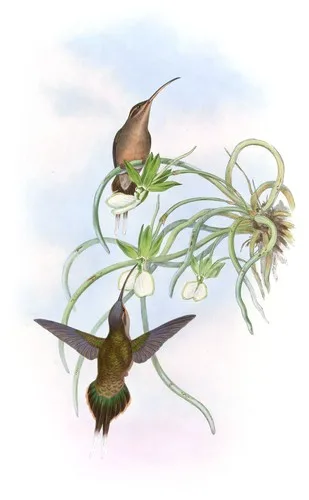
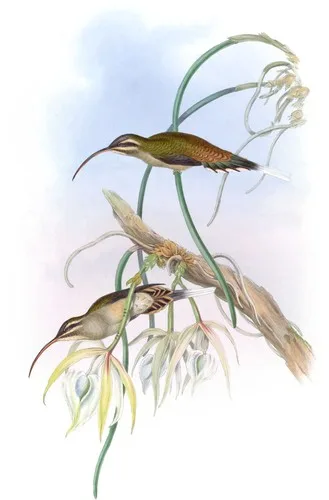
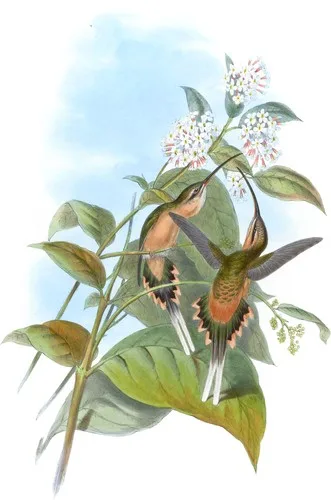
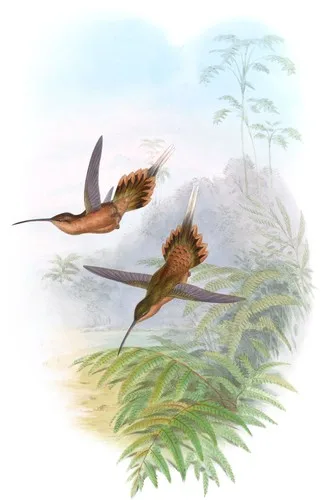
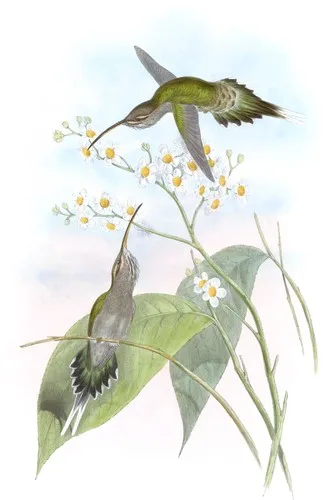
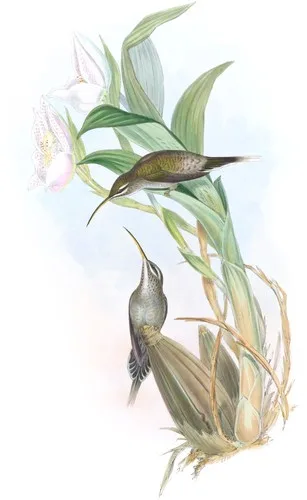
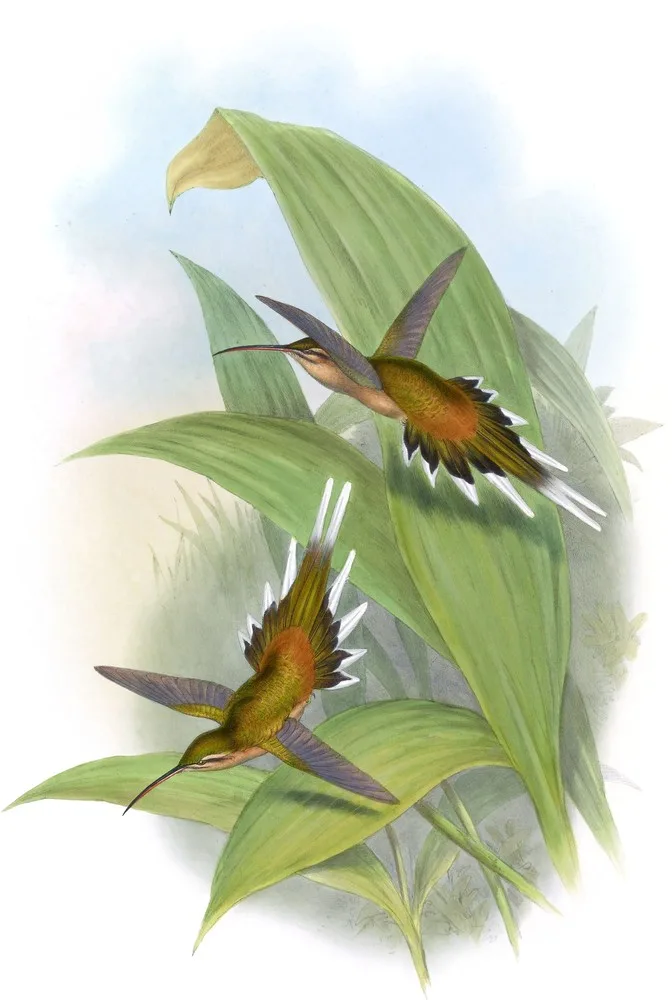
Notwithstanding the total absence of any metallic or lustrous colouring in this species, it is recommended to our notice by the extreme elegance of its form and by the strongly-contrasted markings of its tail.
Of its history and appearance when flying in its native forests, nothing has yet I believe been recorded; we may, however, justly conclude that it is a most conspicuous object when on the wing, its sombre tints presenting a marked contrast to the vivid green of the surrounding vegetation. The virgin forests of Brazil, from the mouth of the Amazon to Bahia, are the situations whence we receive the greater part of our specimens; but it is said that it inhabits districts still farther south, and even flies in Minas-Geraes. I have never seen it in collections from the neighbourhood of Rio de Janeiro, and I believe it never occurs in that province. It may be ranked among the largest species of the Phaëthorni, and also among the most conspicuously-marked species of the genus.
I apprehend that the colouring of the under mandible is extremely evanescent, as in most of the specimens received in this country, the red has given place to a lighter colour, and in some instances to yellow; I have, however, specimens of recently-killed individuals in which the blood-red colouring is perfectly preserved, and in this state I have figured it. It is possible that at the period just prior to the season of repro duction this fiery hue may be much heightened, and that at other times a yellow tint may prevail.
Among the numerous specimens in my collection I can trace no marked difference in the sexes, except that of size; the female, as is the case I believe with all the other members of the genus, being somewhat the smallest.
All the upper surface rich bronze, becoming of a browner hue on the head; wings purple-brown; upper tail-coverts rust-red; two centre tail-feathers rich bronze, largely tipped with white, the basal portion of which is clouded with black; lateral tail-feathers bronze at the base, then crossed diagonally with black and tipped with white, the white extending farther towards the base on the outer than on the inner web; stripes above and below the eye buff; lores and ear-coverts black; under surface deep fawn colour with a lighter streak down the throat; upper mandible and apical fourth of the under mandible black; the basal threefourths of the under mandible blood-red.
The figures are of the natural size.
References
- Trochilus Pretrei, De Latt. et Less. Rey. Zool. 1839, p. 20.
- Phætornis Pretrei, Gray and Mitch. Gen. of Birds, vol. i. p. 104, Phetornis, sp. 16. pl. xxxv.
- Phaetorms pretrii, Bonap. Consp. Gen. Av., p. 68, Phaetornis, sp. 15.—Bonap. Consp. Troch. in Rey. et Mag. de Zool. 1854, p. 249.