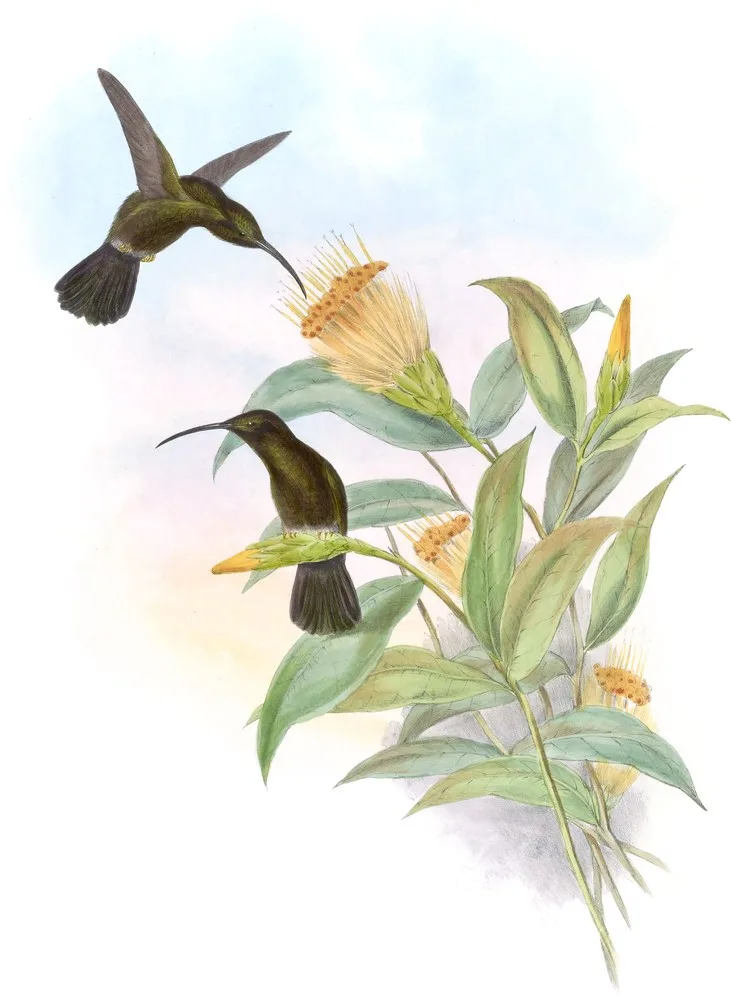
Threnetes Antoniæ
Threnetes Antoniæ
Sooty Barbed-throat
- 合集
- 古尔德蜂鸟图谱
- 绘者
- John Gould(约翰·古尔德)
- 年代
- 1849
- 图版号
- Pl. 15, Vol. I
- 原书页码
- p.15
- 授权
- CC0 1.0 Universal (Public domain)
关于本图版
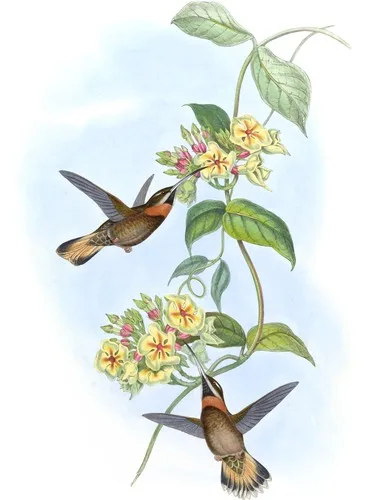
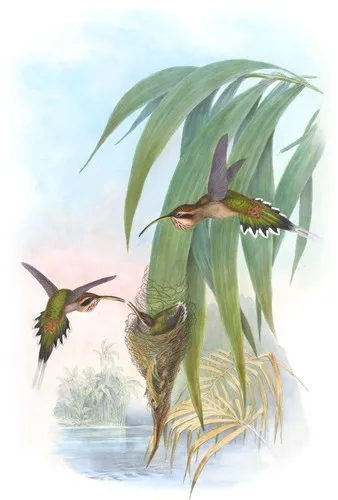
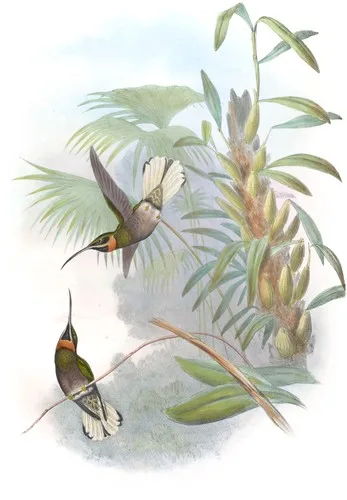
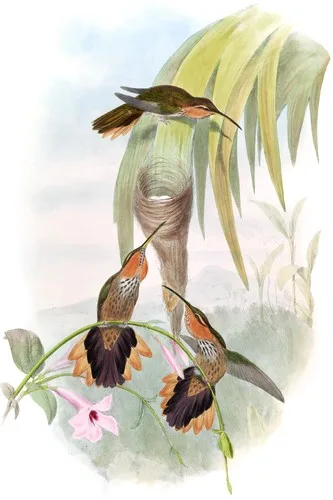
《古尔德蜂鸟图谱》(Gould's Hummingbirds)由约翰·古尔德绘制,1849—1887 年间印行,本图即其中一幅。原书题作“Threnetes Antoniæ”,在分类体系中列于蜂鸟科(Trochilidae)。
该合集全编共 421 幅图版,此图为其中之一,图版编号 Pl. 15, Vol. I,对应原书第 15 页,版式为纵幅。扫描件取自公有领域原件,经高分辨率修复与色彩校正,可按原大放大查看线条与设色。
原书文字(英文 / 法文)
Cayenne and the Guianas
Although this species has been long known to ornithologists, it was only in the year 1846 that it received a scientific appellation, M. Bourcier then assigning to it the name of Antoniæ in honour of Madame Antonia Perroud, the wife of a learned entomologist.
Since then it has been transferred to the genus Polytmus by Mr. G. R. Gray, and to Lampornis by the Prince of Canino. That it does not belong to either of those genera, or to any other at present established, is certain, and I have therefore been necessitated to propose a new generic term for it and its near ally T. leucurus. The circumstance of its having remained so long undescribed by Lesson and others, who have professed to give complete monographs of this group of birds, is doubtless due to its being unadorned by any brilliant or metallic colouring; its sombre plumage, however, does not, in my opinion, detract from its interest as a species; for in the economy of nature, this dull-coloured bird plays a part of equal consequence with those of its most gaily attired allies.
The native country of the T. Antoniæ is Cayenne, and the neighbouring countries; but the precise extent of its range has not yet been ascertained: I have never seen it from Trinidad or Northern Brazil.
The sexes are very similar in the colouring of their plumage, and I have seen specimens which appear to be immature, which do not materially differ.
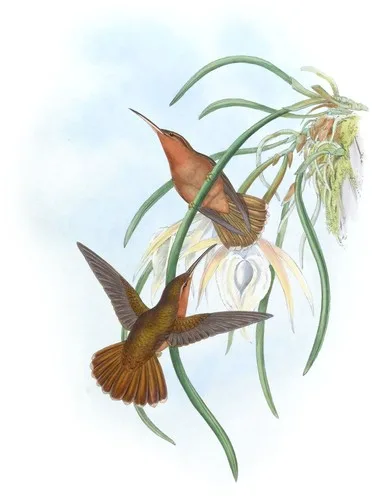
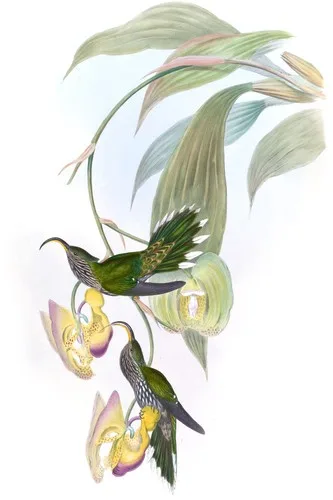
The entire plumage both above and beneath of a very dark greenish bronze; wings dark purplish brown; central tail-feathers greenish bronze; lateral feathers purplish brown, glossed at the base with greenish bronze; bill brownish black; feet light yellow.
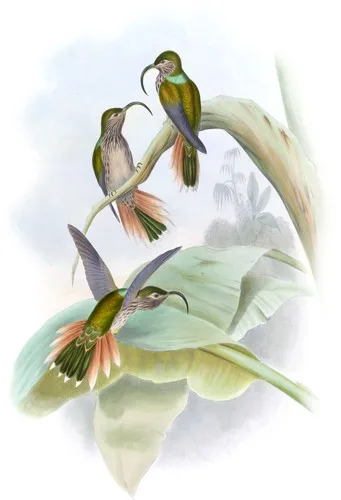
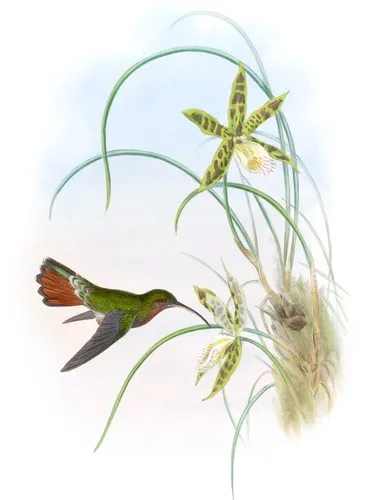
The Plate represents two examples of the natural size. The plant is a species of Stifftia, common in the country where the bird is found.
References
- Trochilus Antoniæ, Bourc. et Muls. in Ann. de la Soc. d’Agr. &c. de Lyon, 1846, p. 329.
- Polytmus Antoniæ, Gray and Mitch. Gen. of Birds, vol. i. p. 108, Polytmus, sp. 37.
- Lampornis Antoniæ, Bonap. Consp. Gen. Av., p. 72, Lophornis, sp. 8.