Dilleniaceæ
Dilleniaceæ
The Dillenia Tribe
- 合集
- 植物自然目
- 绘者
- Elizabeth Twining(伊丽莎白·特温宁)
- 年代
- 1868
- 图版号
- Order 2
- 原书页码
- p.2
- 主色
- 黄
- 授权
- CC BY-SA 4.0
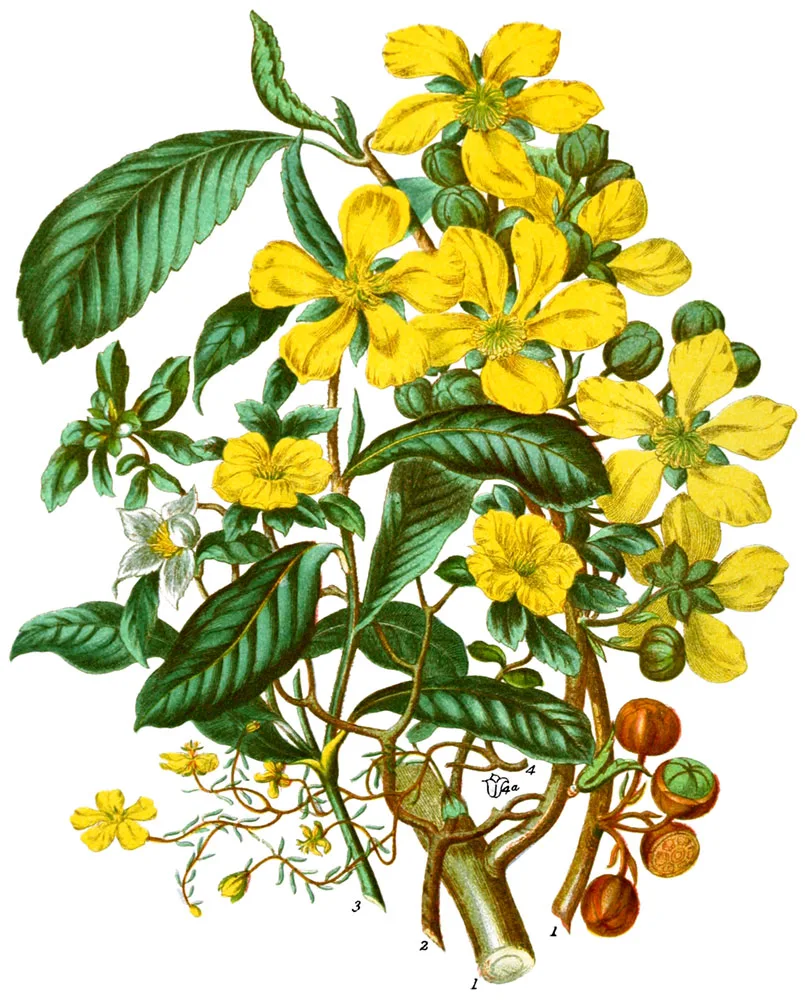
图中植物与部位
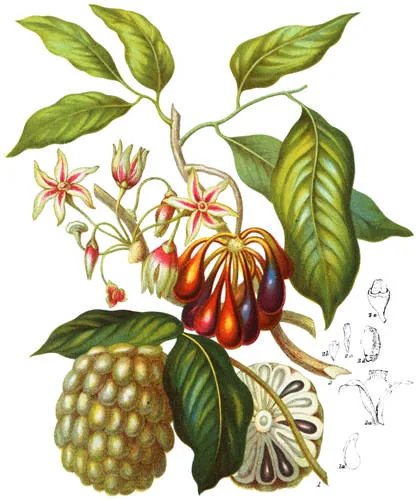
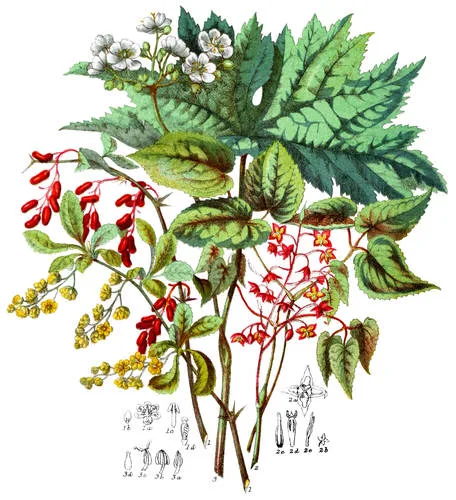
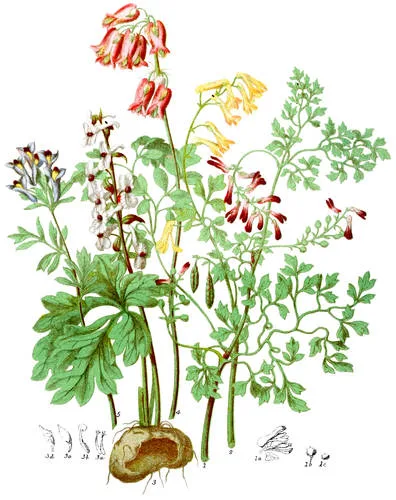
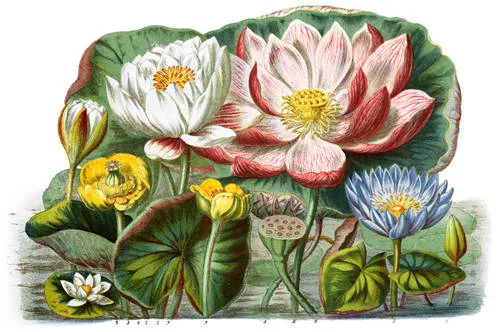
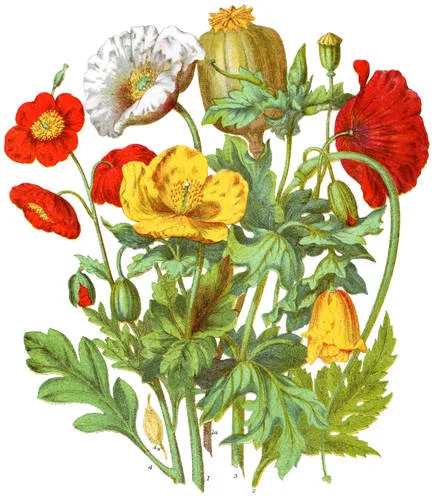
- 1. Dillenia scabrella Bengal
- 2. Candollea cuneiformis New Holland
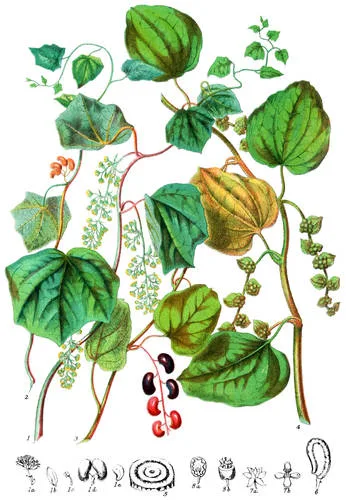
- 3. Hibbertia volubilis Malabar and Java
-
4.
Hibbertia pedincularia
New South Wales
- 4a. Seed vessels
关于本图版
《植物自然目》(Natural Orders of plants)由伊丽莎白·特温宁绘制,1849 年印行,本图即其中一幅。原书题作“Dilleniaceæ”。这是该物种在早期博物学出版物中的图像记录之一。
该合集全编共 160 幅图版,此图为其中之一,图版编号 Order 2,对应原书第 2 页,版式为纵幅,整幅以橙黄为主调。图像自原件扫描修复,构图与设色未经改动,授权方式见页面下方。
原书文字(英文 / 法文)
Key characteristics
Trees, shrubs, and under-shrubs, with a very few herbaceous plants. The leaves usually grow alternate on the stem, very seldom opposite to each other, almost always without stipules; of a thick leathery substance, and generally having veins passing straight from the mid-rib to the margin in the manner called feather-veined. The flowers have five petals and five sepals; the stamens are attached below the ovary; either distinct, or united in sets. In Dillenia scabrella (1) the stamens of the inner row are longer and bend over those of the outer row; sometimes they are placed on one side of the pistil instead of around it. The ovaries are terminated by a simple stigma; the fruit is composed of two or five carpels, distinct, or cohering together, the seeds are surrounded by a pulpy aril, and are fixed in a double row to the inner edge of the carpel. The sepals remain after the petals fall off, and become a thickened covering to the fruit.
These plants have much affinity with Magnoliaceæ, also with Ranunculaceæ, but differ from both by the want of stipules, the persistent calyx, and the quinary arrangement of the parts of fructification. Their most distinguishing character is the aril around the seeds.
The chief use of this tribe is derived from the astringent property.
Select plants in this order
Not all plants listed are illustrated and not all plants illustrated are listed.
- Dillenia scabrella (1) is a tree thirty or forty feet high, with numerous branches. The flowers come forth in the beginning of the year before the leaves, and are very fragrant; the fruit ripens in May. The fleshy ripe calyx is used in Bengal to give a pleasant acid flavour to curries. This and other species of Dillenia yield a valuable, hard, and durable timber.
- The juice of the fruit of Dillenia speciosa, when mixed with syrup, is considered a remedy for coughs in India. Many of the Indian trees of this tribe are remarkable for the grandeur of their form and the beauty of their flowers.
- Dillenia, Tetracera, and others, have an exceeding rough surface to their leaves, which makes them useful to the natives for polishing wood and even metal.
- Hibbertia volubilis (3) is a lofty tree in Malabar, the flowers are of a brilliant appearance, but have an unpleasant odour.
- Several species of Tetracera are employed medicinally by the brazilians.
- Curatella Sambaiba is powerfully astringent, and affords an excellent decoction for healing wounds, and also is much used by tanners in Brazil.
Locations
The larger portion of this tribe is found to inhabit India, Australia, and the equinoctial parts of America. Only a very small number grow in equinoctial Africa.
Legend
- Dillenia scabrella. Bengal.
- Candollea cuneiformis. New Holland.
- Hibbertia volubilis. Malabar and Java.
- Hibbertia pedincularia. New South Wales.
- Seed-vessels.
本图涉及的植物
- Dillenia scabrella
- Candollea cuneiformis
- Hibbertia volubilis
- Hibbertia peduculata
属索引
- Candollea
- Curatella
- Delima
- Dillenia
- Hibbertia
- Tetracera