Double Narcissus Sulphur Kroon (Silver Phoenix
Double Narcissus Sulphur Kroon (Silver Phoenix
Double Narcissus Sulphur Kroon (Silver Phoenix
About this plate
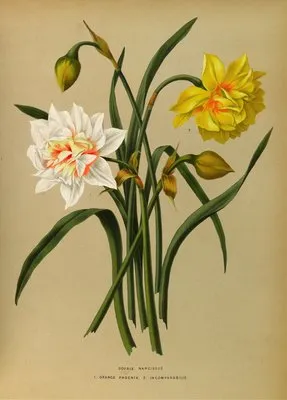
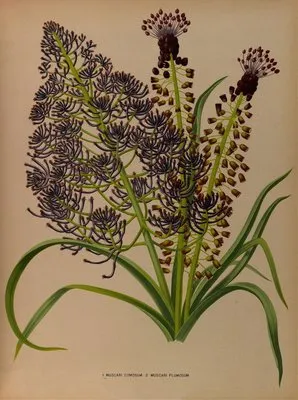
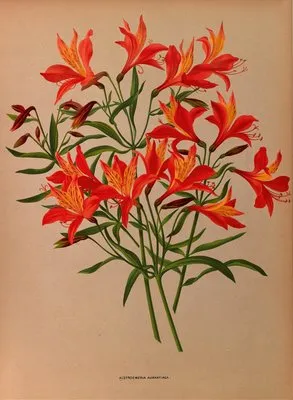
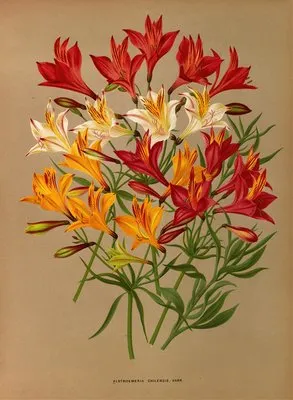
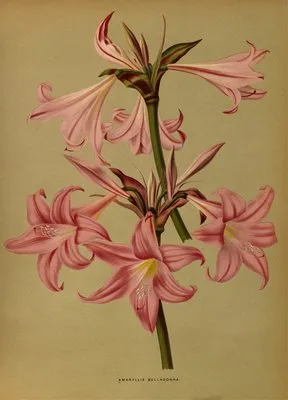
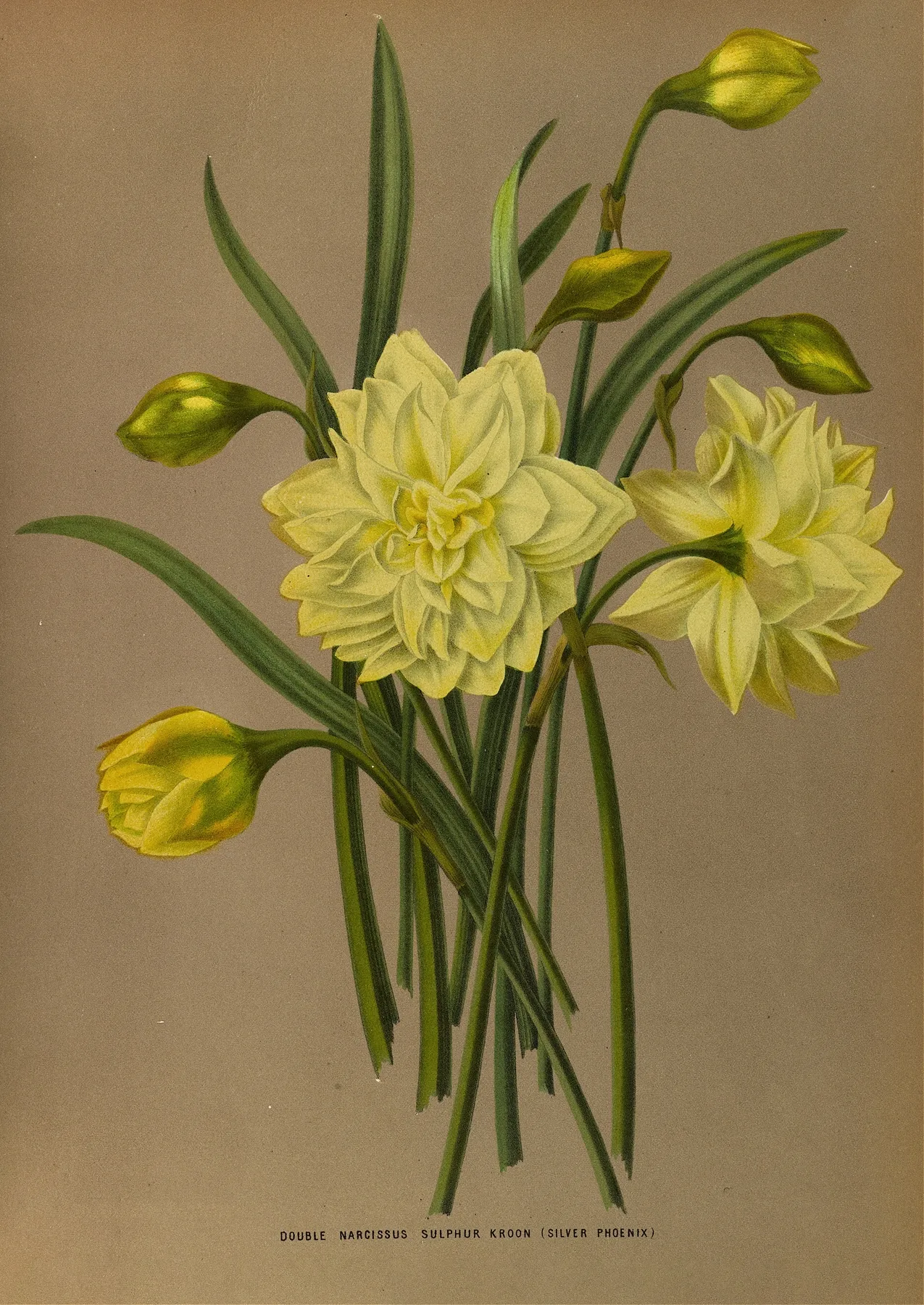
Double Narcissus Sulphur Kroon (Silver Phoenix is plate 21, from Haarlem's Flora, drawn by Arentine H. Arendsen. This public-domain plate is reproduced at high resolution, free to view and download. Publication: Haarlem : 1872-1881..
Twelve ways of seeing
- measured cast yellow-green
- upright 1.41 : 1
- published 1872
- Plate 21
Not a catalogue entry but a way of looking: how to stand, what to notice, how the line was cut, when it flowers, where it came from, who made it — and then the poems and the classics that taught China to see the same flower. Read the twelve in order and the plate opens.
-
First Look
搜尽奇峰打草稿。
—— 清·石涛《苦瓜和尚画语录》
Exhaust the strange peaks, and then make the sketch.
The sheet is vertical: the eye climbs and settles in the upper half. Let the plant stand before you look for detail. Then step in close: watch where colour meets line, and whether the line ever breaks. Third, find where the orange is deepest: the whole tonal order is measured from that patch. The pose leans right: the upper half carries 11 points further right than the lower — a living thing, not a diagram.
-
Name and Thing
Only the genus Narcissus is given; species-level names came later. No established Chinese name exists, so it is cited by its binomial alone.
-
Form and Colour
Measured on this plate: flower colour covers 16.9% of the sheet, foliage 4.9%, the cast yellow-green. No other plate shares exactly this measure. A layered bulb, upright strap leaves, six white tepals and a small golden cup — the Chinese name is 'silver terrace with a golden cup'. Filed under orange — an amber orange, built in washes from a pale ground. Read the outline, then the colour layers, then the brush.
-
Composition
Tall and narrow, the plant rising in one movement with generous margins — the upright format of most floras. (about 1.41 : 1) No details are appended: a plate for looking, not for keying out. The plant covers only 23% of the sheet, centred near the centre; the emptiness is where the eye rests. Cover the margins with your thumb and the plate suffocates; uncover them and the flower breathes again.
-
Line and Colour
In the later nineteenth century chromolithography took over: colour printed rather than painted, line demoted. Decide first whether it was printed or painted; only then discuss whether it is beautiful.
-
Season
Late winter into early spring: forced in water in the twelfth month, blooming at the New Year. The year 1872 on the plate is that of publication, not of flowering — the gathering came a year or two earlier. Note the season. Phenology is the most practical tool of appreciation.
-
Provenance
Native to the Mediterranean, reaching China by sea in the late Tang; Zhangzhou in Fujian has grown it since Ming times. The localities on the plate are those of a century ago; plants travel and places change their names.
-
The Book and the Hand
“Haarlem's Flora” was drawn by Arentine H. Arendsen and published 1872-1881. This plate is Plate 21. The image is public domain; the hand-colouring is still one person's hand.
-
Poetic Resonance
斩根削皮如紫玉,江妃水仙惜不得。
—— 唐·杜甫《桃竹杖引赠章留后》
The poem gives the mood first and the picture supplies the form; set the line beside the plate and the orange the corolla becomes its resting point.
-
The Written Tradition
凌波微步,罗袜生尘。
—— 三国魏·曹植《洛神赋》
She moves as if treading on waves, dust rising from her silken socks — the line from which the narcissus took its Chinese name, “fairy of the waves”.
Song poets made it famous — Huang Tingjian wrote that southern gardeners grew it widely; Qing manuals describe the Zhangzhou practice of raising it in sand and water, still used today. Keep the line; it will surface the next time you meet the same plant.
-
Symbolism
In China it is the New Year's offering — clear, fragrant, a little otherworldly; in Europe, because of Narcissus, it means self-love and the gaze turned inward. This plate leans orange, which in flower language adds one more degree of feeling. In a flora it is a species first and a symbol second; the order is worth keeping.
-
What to Take Away
If you keep one line, keep Guo Xi's: from afar its momentum, up close its texture. A flora exists to be consulted; look long enough and you forget to consult — someone in 1872 gave a whole day to a single flower.