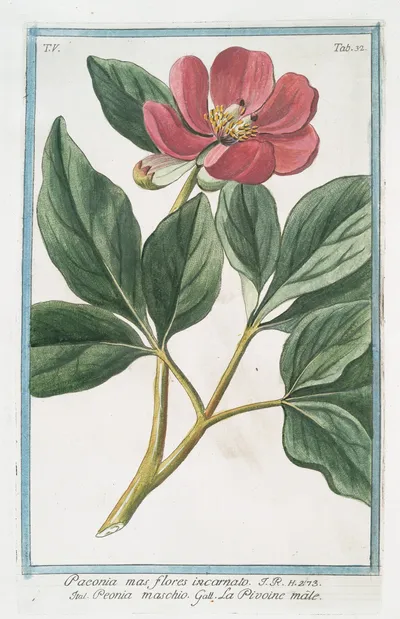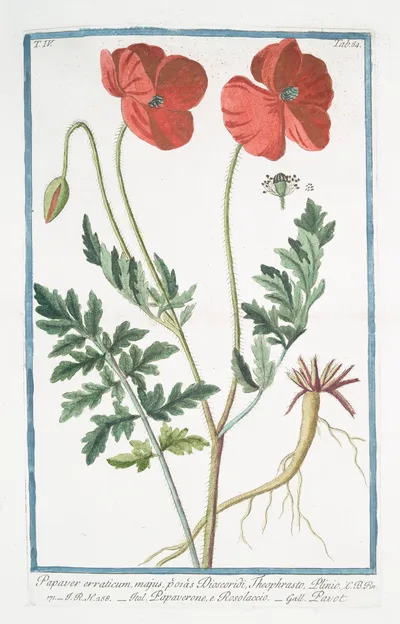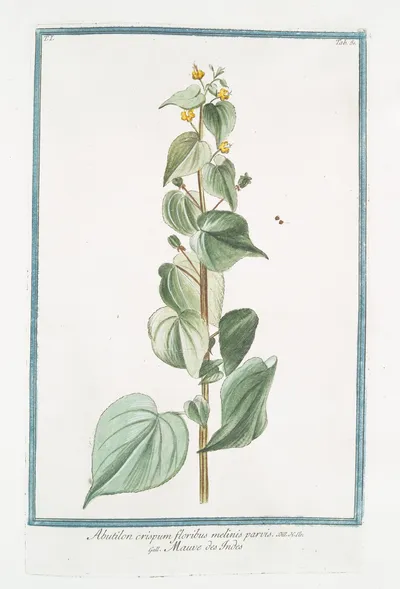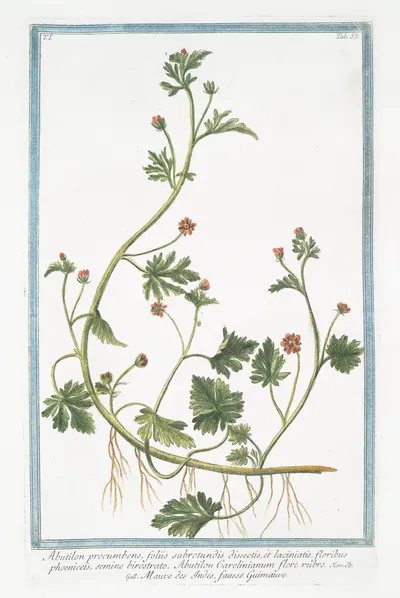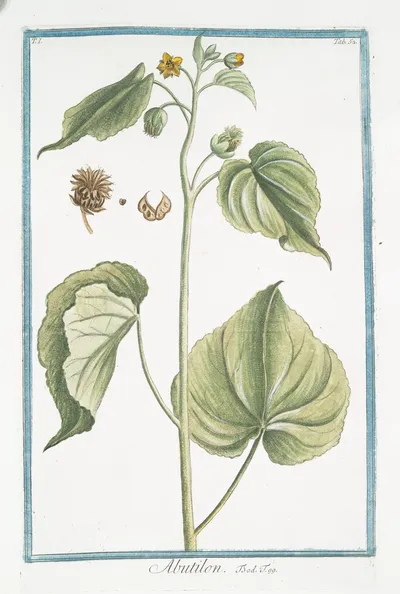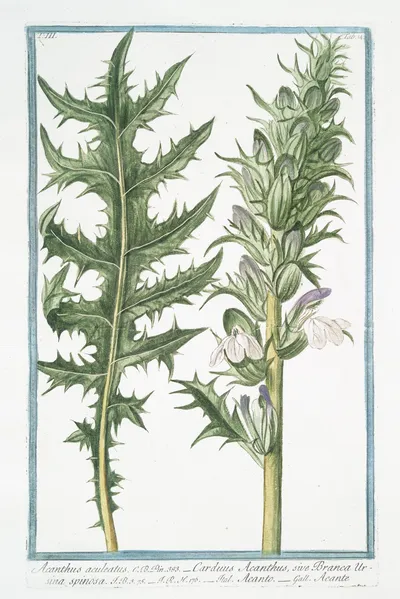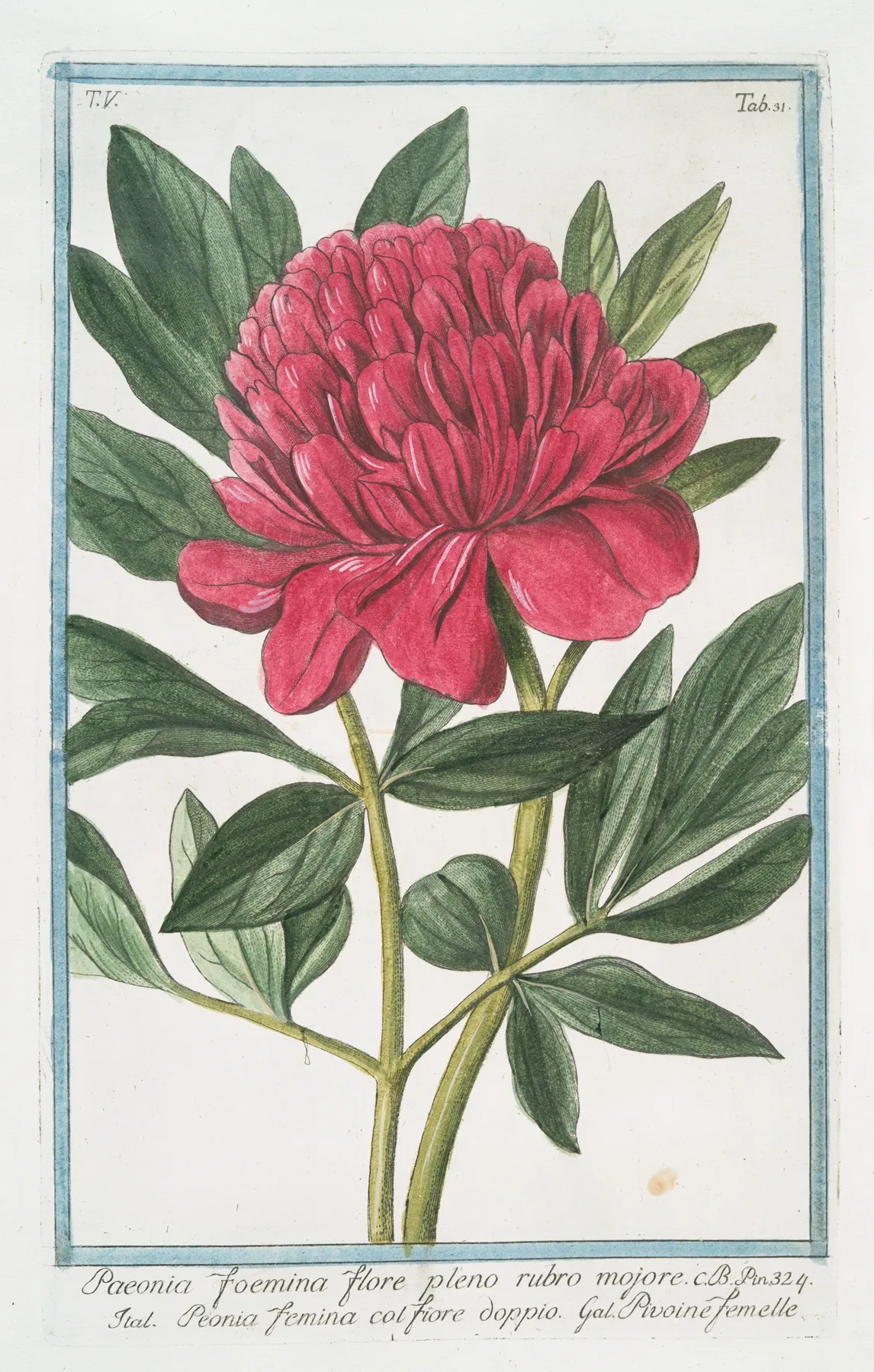
Paoenia foemina flore pleno rubro mojore – Peonia femina col. Fiore dopio – Pivoine femelle. (Peony) (1772-1793)
Ten ways of seeing
- upright 1.57 : 1
First Look
论画以形似,见与儿童邻。
—— 宋·苏轼《书鄢陵王主簿所画折枝》
To judge painting by likeness alone is the view of a child.
The sheet is vertical: the eye climbs and settles in the upper half. Let the plant stand before you look for detail. Then step in close: watch where colour meets line, and whether the line ever breaks. Third, find the darkest small patch: the whole tonal order is measured from there.
Name and Thing
No reliable binomial survives, so the printed title must serve. Neither name nor binomial survives: the printed title must do.
Form and Colour
Herbaceous peonies die back each year, tree peonies keep woody stems; both have twice-trifoliate leaves and huge double blooms, often blotched at the petal base.No colour group is recorded. Three things fix the habit: leaf arrangement, tepal count, and how the flower is borne.
Composition
Tall and narrow, the plant rising in one movement with generous margins — the upright format of most floras. No details are appended: a plate for looking, not for keying out. Cover the margins with your thumb and the plate suffocates; uncover them and the flower breathes again.
Line and Colour
Eighteenth-century plates are mostly copper engraving: hatched lines for shadow, then hand-colouring by another hand. Take a loupe to three places: petal edge, leaf vein, caption. An unbroken line means engraving; colour crossing the outline means a hand. If you mean to copy it: take its skeleton, its margins and the order of its colours; the burin's hatching is the language of copper — suggest it with pencil density, do not imitate it stroke for stroke.
Poetic Resonance
唯有牡丹真国色,花开时节动京城。
—— 唐·刘禹锡《赏牡丹》
Only the peony is truly national beauty; when it blooms, the whole capital is stirred.
The poem gives the mood first and the picture supplies the form; set the line beside the plate and the corolla becomes its resting point.
Symbolism
The tree peony is 'national beauty and heavenly fragrance', an emblem of prosperity; the herbaceous peony is tenderness — given at parting, hence its name 'jiangli', 'about to leave'. Flower language was added later; the flower knows nothing of it, and that innocence is part of its power.
Season and Place
the whole show lasts barely twenty days. Native to China: tree peonies centred on Luoyang, herbaceous ones on Yangzhou. Most garden peonies in Europe descend from eighteenth-century Chinese imports. The year 1772 on the plate is that of publication, not of flowering — the gathering came a year or two earlier. Read the locality and the flowering season both with a discount: one is hearsay, the other a ten-day peak.
The Book and the Hand
“Hortus Romanus juxta systema Tournefortianum” carries only Giorgio Bonelli's name. The image is public domain; the hand-colouring is still one person's hand.
What to Take Away
Appreciation is not knowledge but habit — one more look each time. The flower of that year is dust, yet its image on paper has outlived every living cousin.