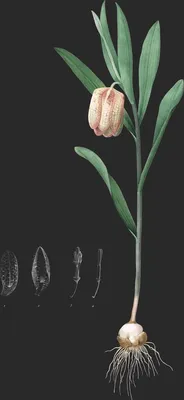
Fritillaria Persica
贝母属·Fritillaria Persica
Fritillarire de Perse
Ten ways of seeing
- measured cast violet-blue
- upright 2.16 : 1
First Look
夫象物必在于形似,形似须全其骨气。
—— 唐·张彦远《历代名画记》
Likeness is the threshold; bone-and-breath is the point.
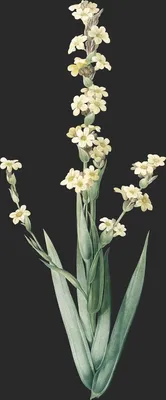
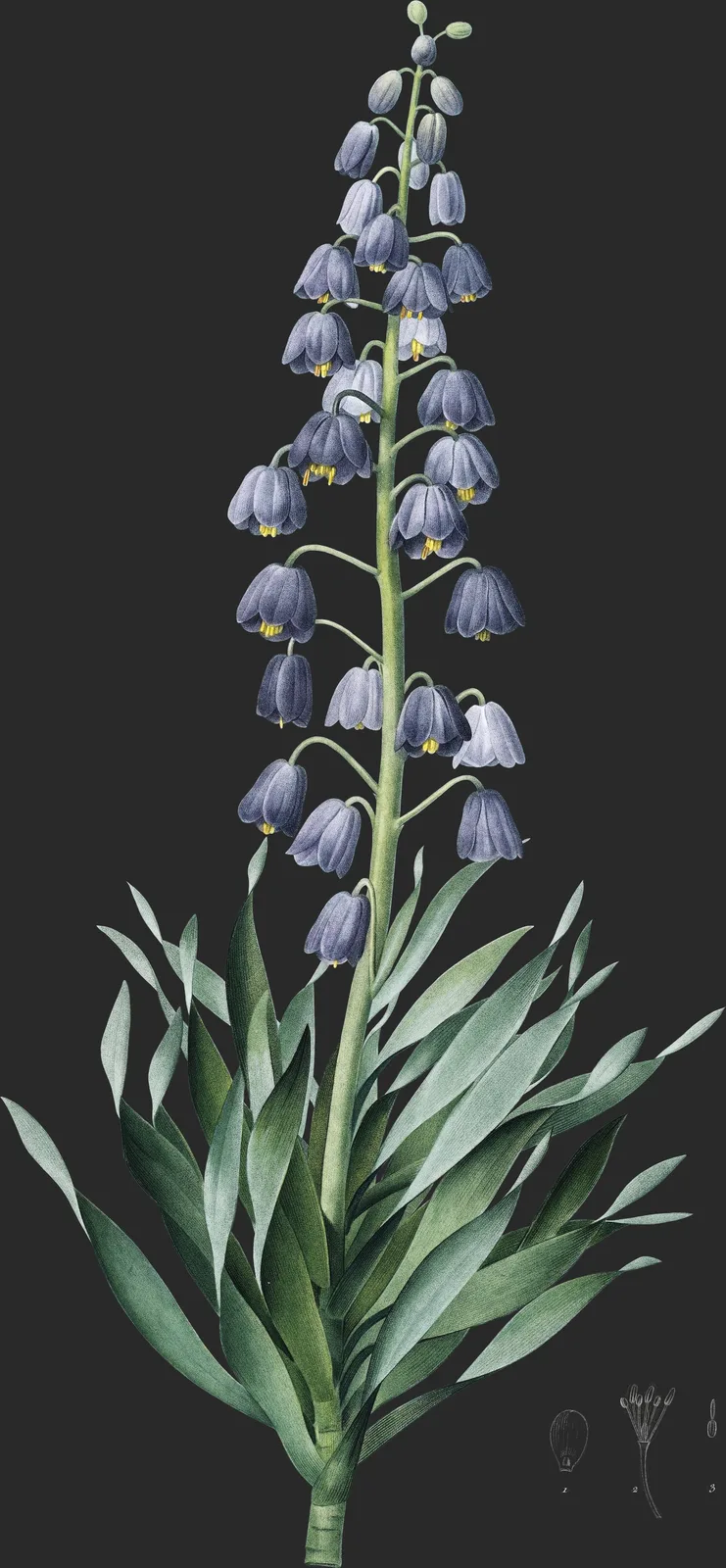
The sheet is vertical: the eye climbs and settles in the upper half. Let the plant stand before you look for detail. Then step in close: watch where colour meets line, and whether the line ever breaks. Third, find where the green is deepest: the whole tonal order is measured from that patch.
Name and Thing
The binomial is Fritillaria persica: the first word is the genus it belongs among, the second the epithet that sets it apart. Here the epithet persica means “of Persia” — the name records the feature the namer noticed first. The older system filed it under Liliaceæ by overall affinity; Linnaeus, counting stamens only, placed it in Hexandria — two ways of asking what a plant is. No established Chinese name exists, so it is cited by its binomial alone.
Form and Colour
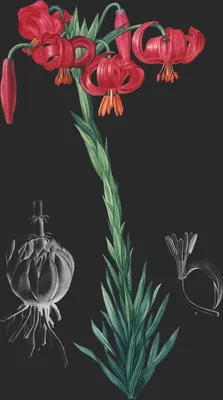
Measured on this plate: flower colour covers 2.0% of the sheet, foliage 5.5%, the cast violet-blue. No other plate shares exactly this measure. A bulb of overlapping fleshy scales gives the lily its Chinese name, 'hundred-fold'; six tepals reflex as the flower opens, around six stamens with long, T-shaped anthers. a moss green. A single plant, laid out with nothing hidden.
Composition
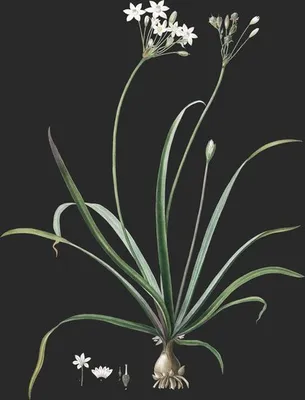
The sheet is tall. No details are appended: a plate for looking, not for keying out. The plant covers only 22% of the sheet, centred below centre; the emptiness is where the eye rests.
Line and Colour
The first half of the nineteenth century moved from copper to steel to lithography; stipple could render the softest transition. Decide first whether it was printed or painted; only then discuss whether it is beautiful. If you mean to copy it: take its skeleton, its margins and the order of its colours; the burin's hatching is the language of copper — suggest it with pencil density, do not imitate it stroke for stroke.
Poetic Resonance
梨花淡白柳深青,柳絮飞时花满城。
—— 宋·苏轼《东栏梨花》
Pear blossoms pale white, willows deep green; when the catkins fly, flowers fill the town.
The poem gives the mood first and the picture supplies the form; set the line beside the plate and the green the corolla becomes its resting point.
Symbolism
In the West the white lily is Marian purity, held by the angel of the Annunciation; in China the name sounds like 'a hundred years in harmony', a wedding wish. Meanings change their tune: the same flower can say opposite things within a century.
Season and Place
Early to high summer, June and July. Temperate north — China, Japan, Europe. Long used in Chinese medicine, lilies were hunted in East Asia by nineteenth-century collectors and transformed European gardens. The year 1804 on the plate is that of publication, not of flowering — the gathering came a year or two earlier. See this kind of plate in the flowering season if you can: once you have met the living flower, you stop reading only colour.
The Book and the Hand
“The Liliaceae” carries only Pierre-Joseph Redouté's name. The image is public domain; the hand-colouring is still one person's hand.
What to Take Away
Appreciation is not knowledge but habit — one more look each time. A flora exists to be consulted; look long enough and you forget to consult — someone in 1804 gave a whole day to a single flower.
About this plate
Description
La Fritillaire de Perse se distingue facilement de toutes les espèces de ce genre par ses feuilles obliques, et par ses fleurs nombreuses dispostes en grappe et dépourvues de bractées.
Elle pousse une tige herbacée, cylindrique, droite, simple, qui s’élève à la hauteur de 6 ou 8 décimètres, et qui sort d’une bulbe solide, arrondie, a écailles épaisses et peu nombreuses: sur cette tige naissent des feuilles éparses rapprochées, sexiles, oblongues, pointues, entières, obliques ou tordues en spirale, de couleur glauque, de 15 à 18 centimètres de longueur sur 2 de Jargeur.
La partie supérieure de la plante est occupée par une grappe simple, droite, composée de fleurs écartées, pédicellées, pendantes, et d’un pourpre sale tirant sur le vert glauque; ces fleurs sont plus petites que dans les autres Fri-tillaires; chacune d’elles est portée sur un pédicelle étalé, cylindrique, courbé en bas vers l’extrémité; a la base de ce pédicelle, on trouve un tubercule calleux au lieu de bractée: l’Helonias rose nous a deja ollert un semblable avortement.
L’enveloppe de la fleur est en forme de cloche, divisée en six lanières très. profondes, dont trois extérieures ovales, obtuses, munies à leur base interne d’une glande nectarifere, arrondie et demi-transparente, et trois intérieures à peu près égales ans précédentes, mais dans lesquelles la glande nectarifère est moins apparente.
Les six étam ont des filaments en forme d’alene, demi-transparents, d’un vert jaune à le blanes vers le sommet; les anthères sont droites, oblongues, d’un brun et à quatre sillons avant la fécondation, puis arrondies et couvertes d’un pollen jaune.
Lovaire est blanchatre, triangulaire, oblong, libre, droit, surmonté d’un style filiforme, deus fois plus court que les étamines, et simple à l’extrémité; tont le pistil parait demi-avorté dans les individos que l’on cultive dans nos jardins: aussi le fruit n’y parvient jamais à maturité.
Histoire
Cette plante parait être originaire de Perse; mais ce qu’on sait de plus certain sur son histoire, c’est qu’elle a été apportée de Suses l’an 1573; depuis cette époque, elle est cultivée dans les jardins de botanique, et a même pénétré dans ceux destinés à l’agrément platot qu’à l’étude.
Elle fleurit au milien du printemps. ♃.
Au délant de graines, on la multiplie par cayeux.
Explication de la planche.
La Plante de grandeur naturelle
- Un des segments de la fleur vu en dedans pour montrer le nectaire.
- Les étamines et le pistil vus en face.
- Le pistil.
Fam. des Liliacées. Juss.—Hexandrie monogynie. Lin.
- Fritillaria persica. F. racemo nudiasculo, foliis obliquis. Lin. Spec. 436. Hort. Ups. 85. Mill. Dice. n. 6. Wild. Spec. 2. p. 90.
- Fritillaria persica. F. folis obliquis, racemo pyramidali nudiusculo, floribus parvis alternis cernuis ex violaceo nigricantibus, Lam. Dict. 2. p. 549.
- Fritillaria racemo nudo terminali. Lin. Hort. Clif: 119.
- Fritillaria radice rotunda. Roy. Lagd-b. 30.
- Fritillaria maxima lore obsoleta purpurere. Tourn. Inst. 377.
- Lilium persicum. C. Bauh. Pin. 79. Rudb. Elys. a. p. 183. J. 1. Sivert. foril. 44. f. 1. Lab. icon. 1. p. 170. f. 1. 2.
- Liliam susianum. Clas. bist. 1. p. 130.
- Lilium persicum sen suzianum. J. Bauh. hist. 3. p. 699. Dod. Pempt. ago. Moris. hist. 9. p. 406. sect. 4. 1. 19.J. 1. Ray. Aist. 1106.