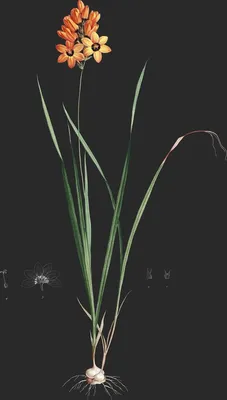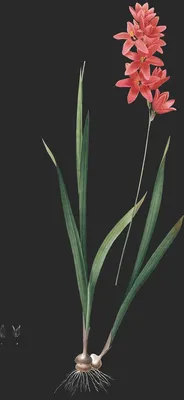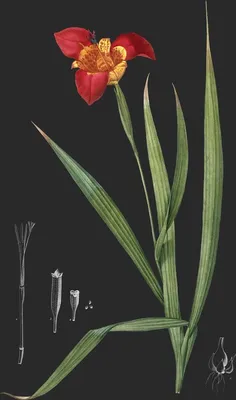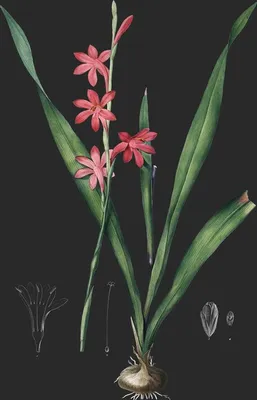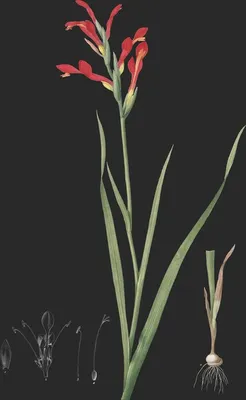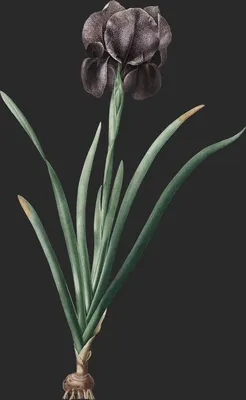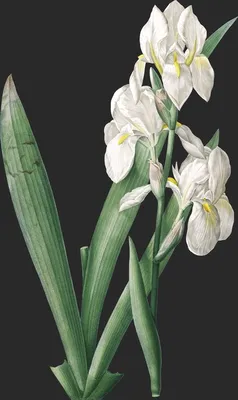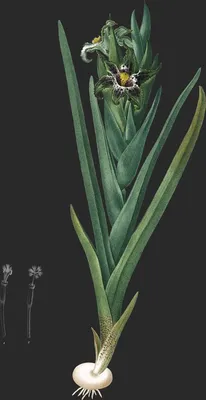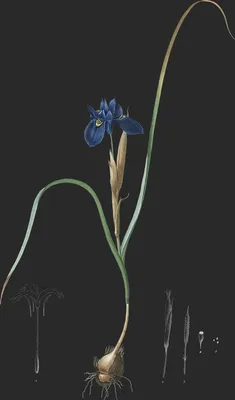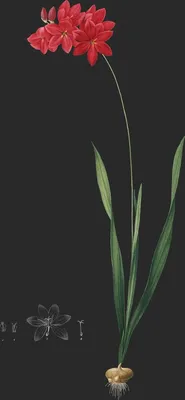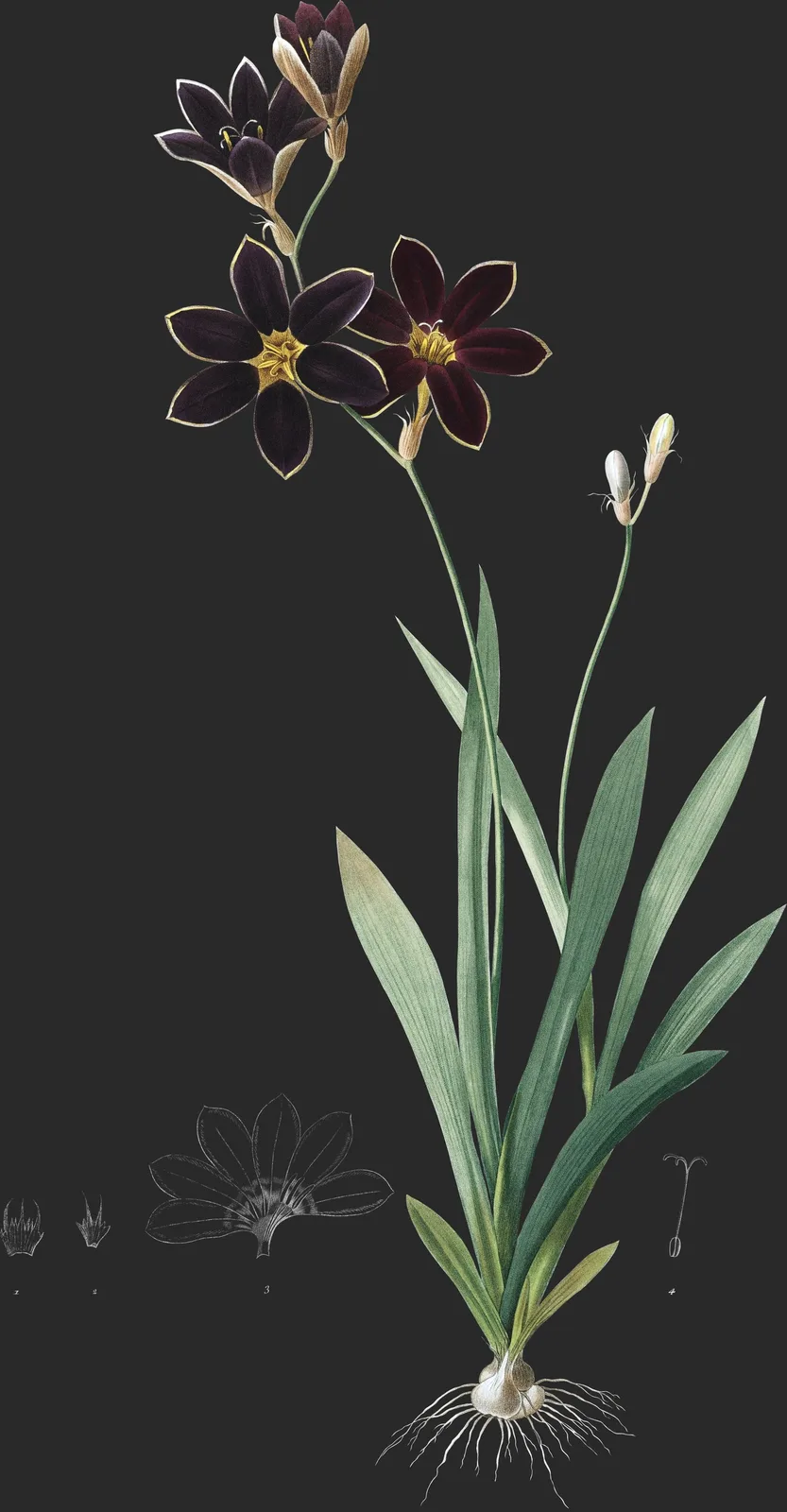
Ixia Grandiflora
Ixia a Grande Fleur
Ten ways of seeing
- measured cast amber
- upright 1.92 : 1
First Look
六法者何?一、气韵生动是也;二、骨法用笔是也;三、应物象形是也;四、随类赋彩是也;五、经营位置是也;六、传移模写是也。
—— 南齐·谢赫《古画品录》
The six laws: spirit resonance alive; bone-method in the brush; matching form; colour by kind; planning the placing; copying the masters.
The sheet is vertical: the eye climbs and settles in the upper half. Let the plant stand before you look for detail. Then step in close: watch where colour meets line, and whether the line ever breaks. Third, find where the green is deepest: the whole tonal order is measured from that patch. The pose leans left: the upper half carries 15 points further left than the lower — a living thing, not a diagram.
Name and Thing
The binomial is Ixia grandiflora: the first word is the genus it belongs among, the second the epithet that sets it apart. Here the epithet grandiflora means “large-flowered” — the name records the feature the namer noticed first. The older system filed it under Iridaceæ by overall affinity; Linnaeus, counting stamens only, placed it in Triandria — two ways of asking what a plant is. No established Chinese name exists, so it is cited by its binomial alone.
Form and Colour
Measured on this plate: flower colour covers 1.3% of the sheet, foliage 3.5%, the cast amber with a second note of yellow-green. No other plate shares exactly this measure. Bulbous plants store the year underground — bulb, corm or tuber — then send up a few thick leaves and a single scape, with six tepals in cup, funnel or star. a moss green. Three things fix the habit: leaf arrangement, tepal count, and how the flower is borne.
Composition
The sheet is tall. No details are appended: a plate for looking, not for keying out. The plant covers only 12% of the sheet, centred below centre; the emptiness is where the eye rests.
Line and Colour
The first half of the nineteenth century moved from copper to steel to lithography; stipple could render the softest transition. There is evidence on the back too: the plate mark pressed into the paper, the slight relief of the pigment, lines worn shallow in a later printing. If you mean to copy it: take its skeleton, its margins and the order of its colours; the burin's hatching is the language of copper — suggest it with pencil density, do not imitate it stroke for stroke.
Poetic Resonance
仙衣才试郁金黄,便觉秋风满院芳。
—— 宋·朱熹《次劉彥集木犀韻三首 其二》
The poem gives the mood first and the picture supplies the form; set the line beside the plate and the green the corolla becomes its resting point.
Symbolism
The tulip was an imperial emblem in Istanbul and a speculative bubble in Amsterdam; the hyacinth sprang from a boy's blood in Greek myth. What bulbs share is concealment: next year kept underground. In a flora it is a species first and a symbol second; the order is worth keeping.
Season and Place
Early spring to early summer, genus by genus: tulips and hyacinths first, gladiolus and amaryllis later. Three homelands: the Mediterranean, Central Asia and South Africa. The tulip came from Ottoman gardens and became a Dutch mania. The year 1805 on the plate is that of publication, not of flowering — the gathering came a year or two earlier. The bud and the ripe fruit on one branch tell the season; the name in the title often tells the journey.
The Book and the Hand
“The Liliaceae” carries only Pierre-Joseph Redouté's name. A plate is collective work: drawer, engraver and colourist were different hands, and the unnamed ones decided how good it looks.
What to Take Away
Appreciation is not knowledge but habit — one more look each time. The flower of that year is dust, yet its image on paper has outlived every living cousin.
About this plate
Description
Cette espèce ressemble un peu à notre Ixia fleur de lis, mais elle s’en distingue par ses spathesscarieuses, déchirées en lanières étroites: ce caractère la rapproche de l’Ixia porte-bulbes, dont elle diftère par sa tige simple, par sa stature moins élevée, par ses aisselles dépourvues de bulbes, par ses fleurs plus grandes et d’un pourpre violet, et enfin parce que les lanières de ses spathes sont déjetées en arrière.
Sa bulbe est ovoide, de la grosseur d’une noix, ombiliquée à sa base, enveloppée de tuniques fibreuses: ses cageux, qui naissent au nombre de 1–2, sont oblongs, situés à l’aisselle des feuilles radicales; sa tige est droite, simple, cylindrique, longue de 2–3 décimètres; ses feuilles naissent, les unes de la racine, les autres le long de la tige, et ne dépassent jamais la longueur de cette tige: elles sont droites, linéaires, pointues, disposées en forme de glaive, marquées de nervures un peu saillantes, légèrement échanerées à leur base interne, larges de 15 millimètres.
Les fleurs sont grandes, droites, peu ées, sessiles, au nombre de 1–6, plus souvent de 3; leurs spathes sont composées de a bractées scarieuses, blan-châtres, un peu rousses au sommet, marquées de nervures saillantes; ces bractées sont déchirées vers le sommet, la supérieure en 4, l’inférieure en 5 lanières aigues, étroites, un peu dentelées et déjetées en arrière; la corolle est en forme d’entonnoir, tantôt entièrement purpurine, tantôt n’ayant que 3 de ses lobes purpurins et 3 autres plus piles, ordinairement marquée à la base de chaque lobe d’ane tache blanche, au milien de laquelle cat une marque purpurine; le tube est grêle, cylindrique, plas court que les bractées; le limbe se divise en 6 lanières ovales-oblongues, obtuses, presque égales entre elles.
Les étamines sont remarquables par leur cooleur blanche, qui contraste avco le pourpre foncé de la corolle: leurs filaments sont droits, a peine plus longs que les onglets des lobes de la corolle; leurs anthères sont droites, linéaires; le pollen est blanc.
L’ovaire est ovoide, un peu triangulaire, caché sous les bractées; le style est blanc, filiforme, un peu plus long que les filets des étamines, divisé en 3 stigmates étalés, un peu épaissis à leur sommet, et garnis de papilles, du côté supérieur.
Je n’ai pas vu le fruit.
Histoire
L’ixia à grande fleur est originaire du Capele-Bonne-Espérance. ♃.
On le cultive depuis longtemps dans quelques jardins de botanique; mais on le conserve avec difliculté, et il y fleurit rarement.
Nous l’avons dessiné et décrit dans le jardin de M. Stein et Arnaut.
Fam. des Iridées. Juss.—Triandrie monogynie. Lin.
- Ixia grandiflora. I. foliis subtiliter striatis, spathis aristato-laceris, tubo brevi, laciniis stellato-patentibus oblongo-cuneatis apice rotundatis, staminibus lateralibus. Gawler in Cart. bot. mag. 1. 541. non Andr. Pers.
- Ixia grandiflora. Delaroche Diss. p. 93. Houtt. nat. Hist. p. 17. t. 77. f. 3. Lin. Pflanz. syst. 11. p. 37. t. 77. f. 3. Salish. prod. 37. 26.
- Ixia bulbifera flore purpureo. Thunb. Diss. 16. 17.
- Ixia aristata. Ait. Kew. 1. p. 57. Willd. Spec. 1. p. 203. Andr. bot. rep. 1. 87. Pers. Ench. 1. p. 49. war. β. non Thunb.
- Ixia limbriata. I. foliis ensiformibus, caule angulato flesuoso simplici, spathis fimbriato-laceris. Lam. Dict. 3. p. 339? Pers. Ench. 1. p. 49?
- Ixia unillora. Lin. Mant. 87. Jacq. coll. 4. p. 181. ic. rar. 2. 1. 283.
- Ixia holosericea. Jacq. Hort. Schænbr. 1. t. 17.
- Ixia foliis gladiatis glabris, caule unilloro. Mill. ic. t. 237. f. 3.
- Sysirinchium rethiopieum majus. Comm. Hort. 1. t. 42. p. 83?