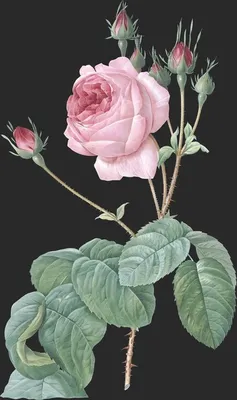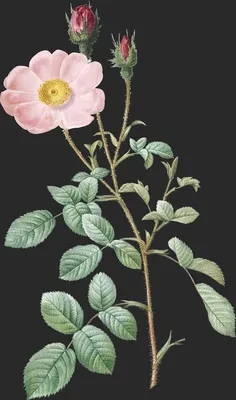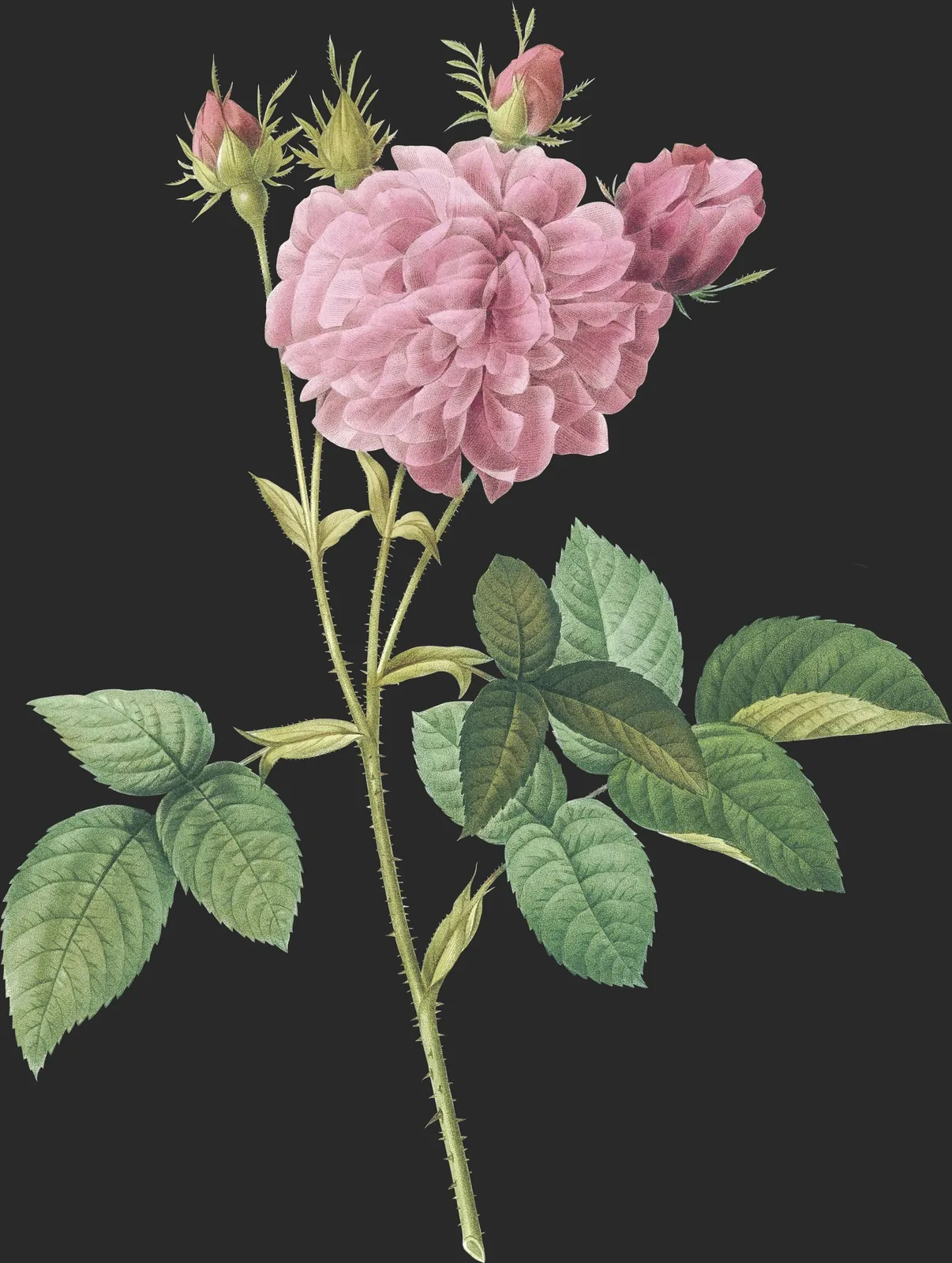
Rosa Gallica Agatha var Regalis
L’Agathe Royale
L’Agathe Royale
Ten ways of seeing
- measured cast red
- upright 1.33 : 1
First Look
凡画山水,意在笔先。
—— 唐·王维《山水论》
In painting, the intention precedes the brush.
The sheet is vertical: the eye climbs and settles in the upper half. Let the plant stand before you look for detail. Then step in close: watch where colour meets line, and whether the line ever breaks. Third, find where the green is deepest: the whole tonal order is measured from that patch.
Name and Thing
Only the genus Rosa is given; species-level names came later. No established Chinese name exists, so it is cited by its binomial alone.
Form and Colour
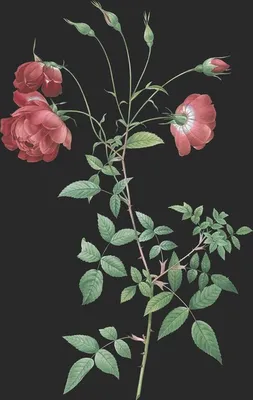
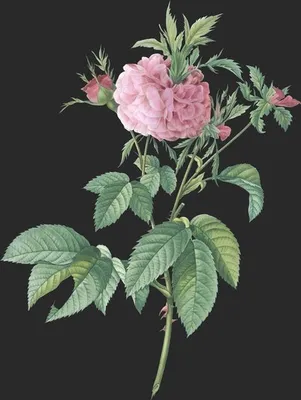
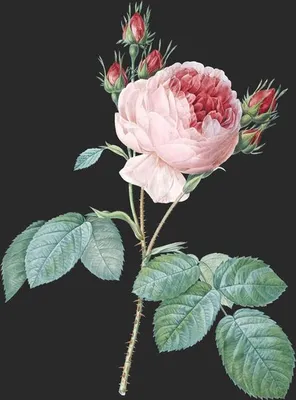
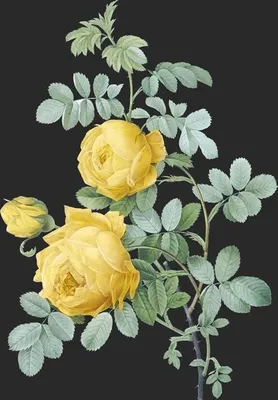
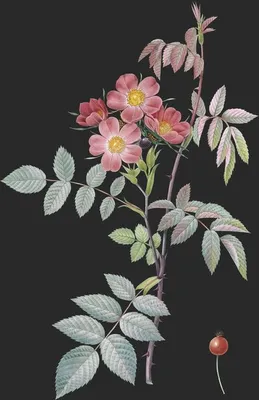
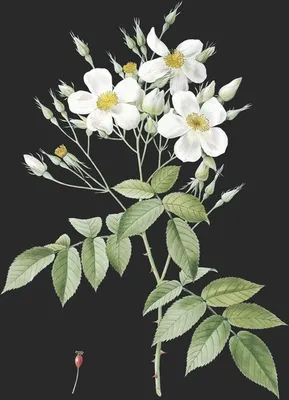
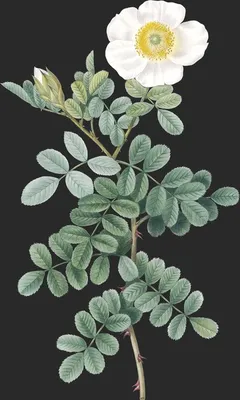
Measured on this plate: flower colour covers 10.5% of the sheet, foliage 12.3%, the cast red with a second note of yellow-green. No other plate shares exactly this measure. Roses are shrubs or scramblers with pinnate leaves of three to seven serrated leaflets; the double flowers open in crumpled, inward-curling layers around a small knot of yellow stamens. a moss green. A single plant, laid out with nothing hidden.
Composition
The sheet is tall. No details are appended: a plate for looking, not for keying out. The plant takes about 30% of the sheet, centred near the centre — the easy measure most florists kept to.
Line and Colour
The first half of the nineteenth century moved from copper to steel to lithography; stipple could render the softest transition. Take a loupe to three places: petal edge, leaf vein, caption. An unbroken line means engraving; colour crossing the outline means a hand. If you mean to copy it: take its skeleton, its margins and the order of its colours; the burin's hatching is the language of copper — suggest it with pencil density, do not imitate it stroke for stroke.
Poetic Resonance
□□□水作生涯,百年甘守空山静。
—— 宋·张抡《踏莎行》
The poem gives the mood first and the picture supplies the form; set the line beside the plate and the green the corolla becomes its resting point.
Symbolism
In Europe the rose means love and secrecy ('sub rosa'); in Chinese verse the rambling rose leans and clings — lingering attachment rather than ardour. Flower language was added later; the flower knows nothing of it, and that innocence is part of its power.
Season and Place
Late spring into early summer, peaking in May — the first flush of the garden year. the ever-blooming modern rose is a nineteenth-century crossing of European and Chinese stock. The year 1824 on the plate is that of publication, not of flowering — the gathering came a year or two earlier. The bud and the ripe fruit on one branch tell the season; the name in the title often tells the journey.
The Book and the Hand
“Les Roses” carries only Pierre-Joseph Redouté's name. The image is public domain; the hand-colouring is still one person's hand.
What to Take Away
Appreciation is not knowledge but habit — one more look each time. The flower of that year is dust, yet its image on paper has outlived every living cousin.
About this plate
Description
Arbrisseau qui s’élève en buisson à deux pieds et demi, ou environ. Ses branches, grêles, rapprochées entre elles, sont armées, surtout dans leur partie supérieure, d’aiguillons courts, inégaux, les plus grands dilatés à leur base. Les feuilles se composent de cinq, rarement de sept folioles, fermes au tou-cher, plus ou moins arrondies, glabres en-dessus, tomenteuses en-dessous, doublement dentées, les dents parfois surmontées de petites glandes. Elles sont portées par un pétiole un peu velu, garni de quelques petits aiguillons, ayant à sa base des stipules décurrentes, bifides, pointues au sommet. Les fleurs, moyennes, sont disposées, plusieurs ensemble, à l’extrémité des rameaux. Le tube du calice est presque ovoïde, et à-peu-près glabre: le pédoncule qui le supporte est muni d’un grand nombre de poils courts et glanduleux. Corolle très-double, à pétales d’un rose un peu vif, ceux du centre roulés et chiffonnés, engagés par leur sommet entre le calice et les styles. Point d’étamines. Styles en partie libres, en partie réunis en faisceau.
Observations
L’Agathe Royale fleurit au premier printemps, et ses fleurs se succèdent pendant long-temps. Souvent les pétales extérieurs se couvrent de nuances, ou blanchâtres, ou d’un rouge plus foncé que celui des pétales, ce qui donne à la fleur un aspect très-agréable. Le Rosier connu dans les jardins sous le nom d’Agathe de Provence (Provincialis incarnata), n’est qu’une sous-variété plus pâle de notre Rosier. Peut-être la Rose Belle-Fille des Anglais (R. Belladona), figurée dans Andrews, n’est-elle aussi qu’une autre sous-variété, encore plus pâle, de l’Agathe Royale.
- R. (damascena) flore pleno roseo purpurascente, germinibus ovatis pedunculisque crassioribus, pilato-rigidis-folüs sulfureo, viridibus. Roess. Roses, ? 18, cum Tab. Idem, Beschrei. der Ros. 1, p. 82; 2, p. 83.
- R. Rubella, flore majore multiplicato, sive plena, incarnata vulgo. J.-B. Hist. 2, p. 36.