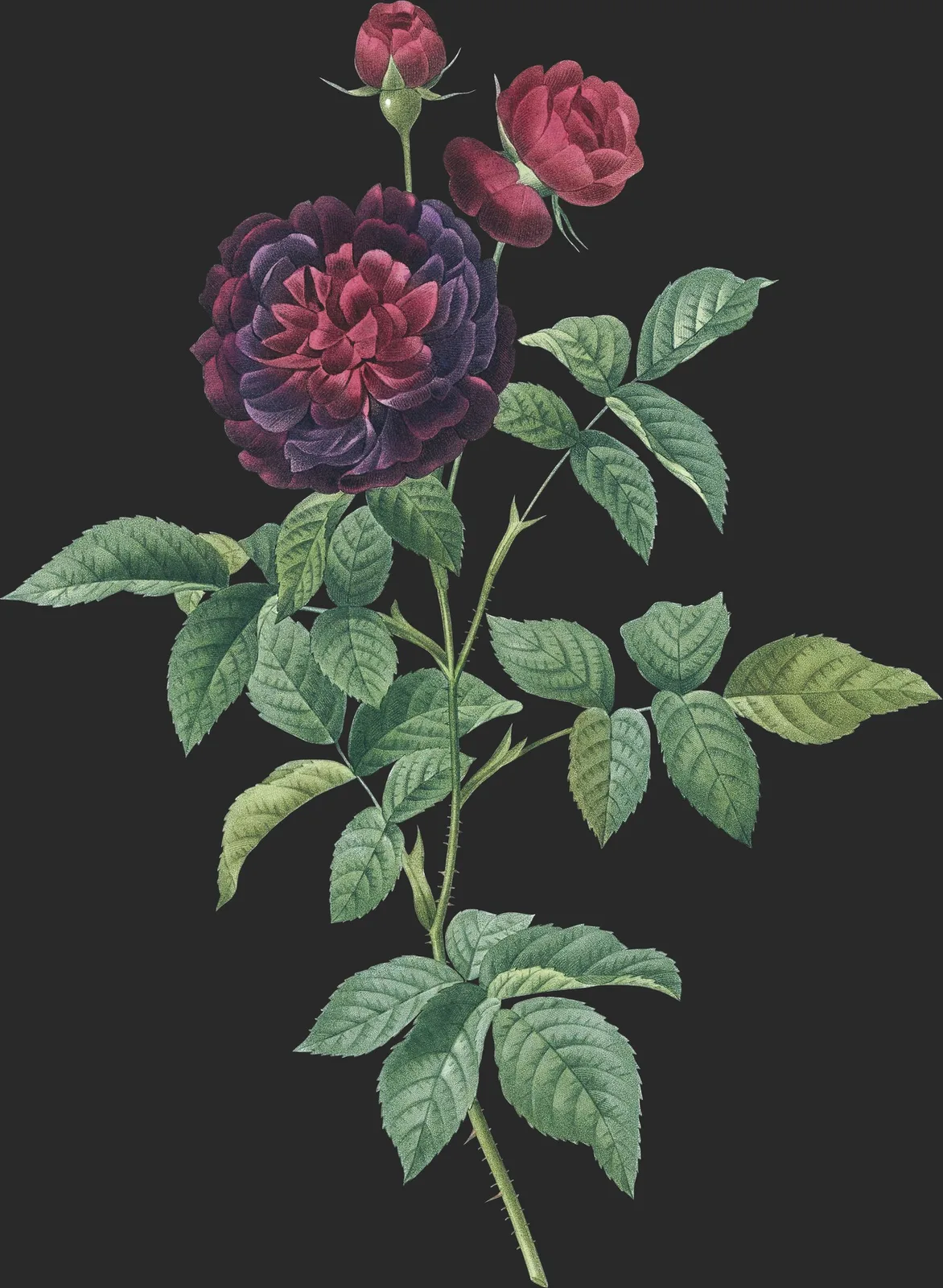
Rosa Gallica Gueriniana
Rosa Gallica Gueriniana
Le Rosier Guerin
Ten ways of seeing
- measured cast red
- upright 1.37 : 1
First Look
真山水之川谷,远望之以取其势,近看之以取其质。
—— 宋·郭熙《林泉高致·山水训》
Mountains and valleys: from afar take their momentum, up close take their texture — the two distances from which any picture is read.
The sheet is vertical: the eye climbs and settles in the upper half. Let the plant stand before you look for detail. Then step in close: watch where colour meets line, and whether the line ever breaks. Third, find where the green is deepest: the whole tonal order is measured from that patch.
Name and Thing
Only the genus Rosa is given; species-level names came later. No established Chinese name exists, so it is cited by its binomial alone.
Form and Colour
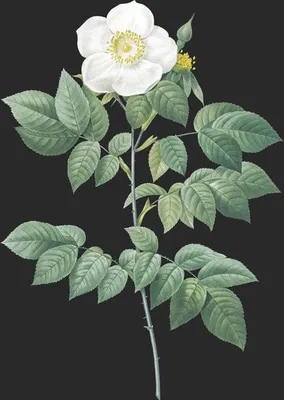
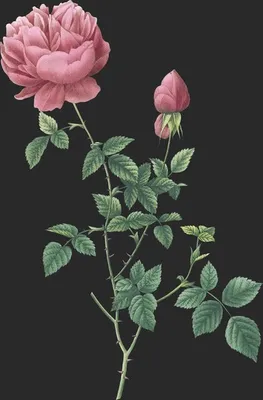
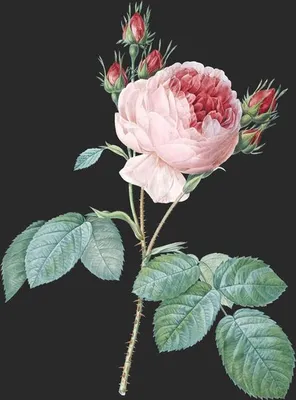
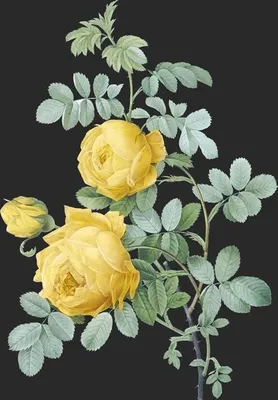
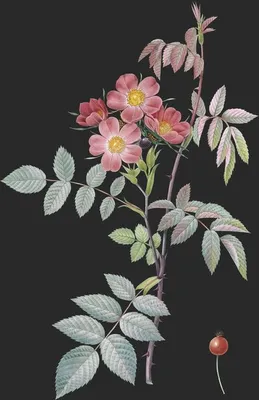
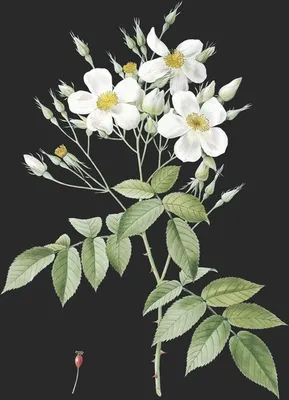
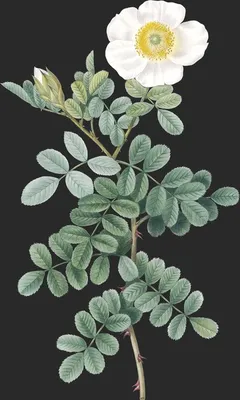
Measured on this plate: flower colour covers 4.0% of the sheet, foliage 11.1%, the cast red with a second note of crimson. No other plate shares exactly this measure. Roses are shrubs or scramblers with pinnate leaves of three to seven serrated leaflets; the double flowers open in crumpled, inward-curling layers around a small knot of yellow stamens. a moss green. Three things fix the habit: leaf arrangement, tepal count, and how the flower is borne.
Composition
The sheet is tall. No details are appended: a plate for looking, not for keying out. The plant covers only 24% of the sheet, centred near the centre; the emptiness is where the eye rests.
Line and Colour
The first half of the nineteenth century moved from copper to steel to lithography; stipple could render the softest transition. Craft leaves franker evidence than inscriptions. If you mean to copy it: take its skeleton, its margins and the order of its colours; the burin's hatching is the language of copper — suggest it with pencil density, do not imitate it stroke for stroke.
Poetic Resonance
天上蟠桃又熟,晕酡颜、红染芳腮。
—— 宋·王义山《乐语》
The poem gives the mood first and the picture supplies the form; set the line beside the plate and the green the corolla becomes its resting point.
Symbolism
In Europe the rose means love and secrecy ('sub rosa'); in Chinese verse the rambling rose leans and clings — lingering attachment rather than ardour. Flower language was added later; the flower knows nothing of it, and that innocence is part of its power.
Season and Place
Late spring into early summer, peaking in May — the first flush of the garden year. Widespread in the temperate north. Chinese gardeners knew roses since the Han. The year 1824 on the plate is that of publication, not of flowering — the gathering came a year or two earlier. Read the locality and the flowering season both with a discount: one is hearsay, the other a ten-day peak.
The Book and the Hand
“Les Roses” carries only Pierre-Joseph Redouté's name. From drawing to plate the sheet passed through several hands — the engraver aimed at accuracy, the colourist at speed, and between them lies each plate's unevenness.
What to Take Away
Carry three rules away: whole before detail; line before colour; picture before book. The flower of that year is dust, yet its image on paper has outlived every living cousin.
About this plate
Description
Ce Rosier s’élève à deux ou trois pieds, au plus. Les branches adultes sont armées d’aiguillons épars, assez forts et crochus. Les rameaux florifères sont garnis d’un grand nombre de petites épines presque droites, entremêlées d’aiguillons assez rares, pareils à ceux des branches de l’année précédente, quoiqu’un peu moins longs. Les feuilles se composent de cinq folioles d’un vert-gai, glabres en-dessus, plus pâles en-dessous, finement et inégalement dentées. Le pétiole qui les supporte est glanduleux, garni de plusieurs aiguillons, lesquels s’éten-dent, souvent, jusque sur la nervure principale de la foliole impaire: à sa base sont deux stipules bifides, pointues au som-met, denticulées en leur bord. Les fleurs, assez généralement solitaires, naissent à l’extrémité des rameaux qui croissent le long des branches: elles sont soutenues par des pédoncules allongés, garnis de petits poils rudes au toucher, entremèlés de quelques glandes sessiles. Le tube du calice est globuleux et glabre. Les divisions du limbe sont glabres à l’extérieur et cotonneuses à l’intérieur. Corolle de huit à dix rangs de pétales, d’une belle couleur violette au sommet, et à peu près rose vers l’onglet, irrégulièrement échancrés; ceux du centre, roulés et chiffonnés, permettent à peine d’apercevoir ce qui reste des étamines. Fruit rouge à la maturité.
Observations
La variété que nous présentons se distingue de toutes les autres par la beauté du feuillage, et encore par l’élégance des fleurs dont l’arbrisseau se couvre au printemps. Elle a été obtenue de semence à Angers, il y a quelques années, par M. Guerin, cultivateur habile et patient, qui s’occupe, avec succès, de propager le Rosier et d’autres belles plantes. Les amateurs pourront se procurer cet arbrisseau dans sa pépinière.