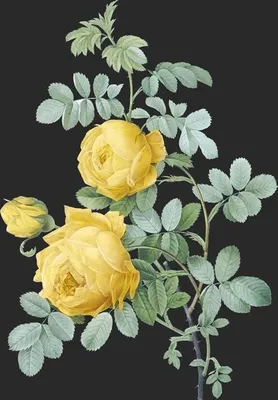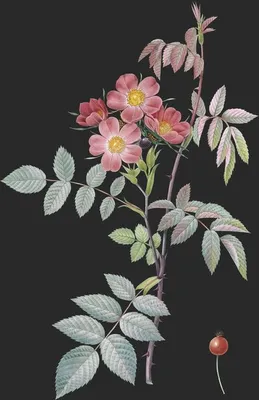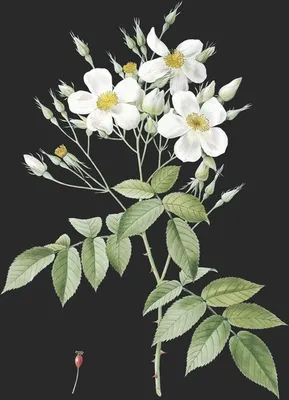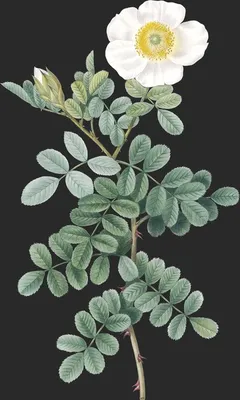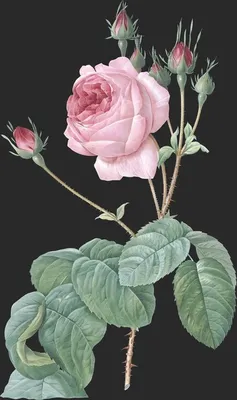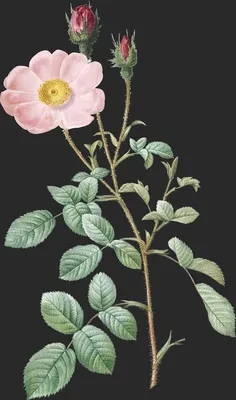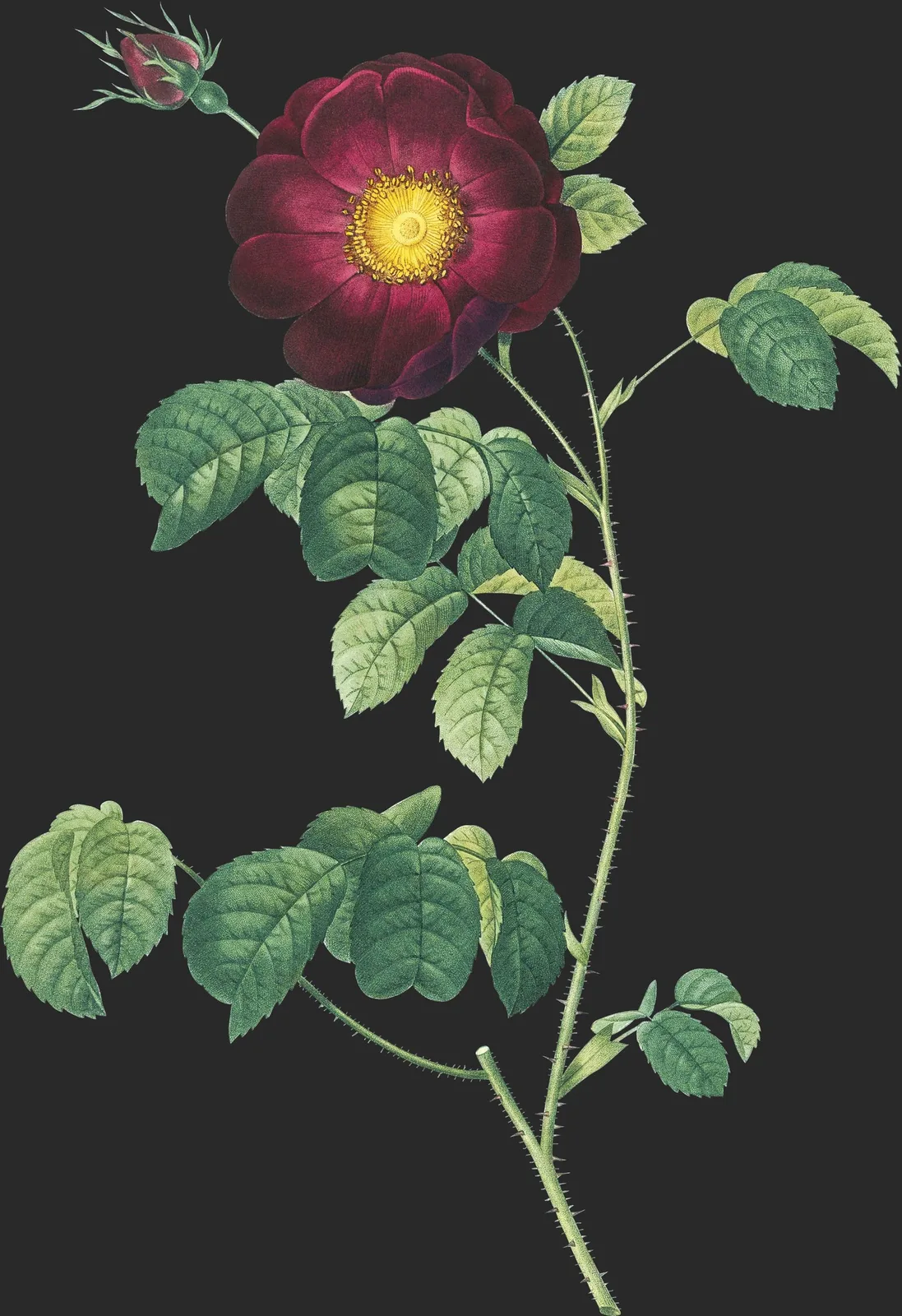
Rosa Gallica Maheka var Flore Subsimplici
Rosa Gallica Maheka var Flore Subsimplici
La Maheka
Ten ways of seeing
- measured cast red
- upright 1.46 : 1
First Look
六法者何?一、气韵生动是也;二、骨法用笔是也;三、应物象形是也;四、随类赋彩是也;五、经营位置是也;六、传移模写是也。
—— 南齐·谢赫《古画品录》
The six laws: spirit resonance alive; bone-method in the brush; matching form; colour by kind; planning the placing; copying the masters.
The sheet is vertical: the eye climbs and settles in the upper half. Let the plant stand before you look for detail. Then step in close: watch where colour meets line, and whether the line ever breaks. Third, find where the green is deepest: the whole tonal order is measured from that patch. The pose leans right: the upper half carries 8 points further right than the lower — a living thing, not a diagram.
Name and Thing
Only the genus Rosa is given; species-level names came later. No established Chinese name exists, so it is cited by its binomial alone.
Form and Colour
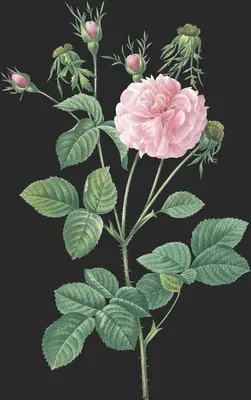
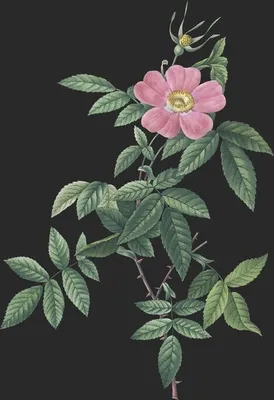
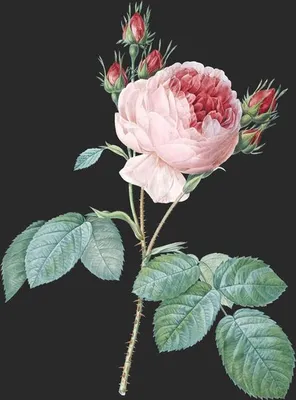
Measured on this plate: flower colour covers 3.6% of the sheet, foliage 17.1%, the cast red with a second note of yellow-green. No other plate shares exactly this measure. Roses are shrubs or scramblers with pinnate leaves of three to seven serrated leaflets; the double flowers open in crumpled, inward-curling layers around a small knot of yellow stamens. a moss green. Read the outline, then the colour layers, then the brush.
Composition
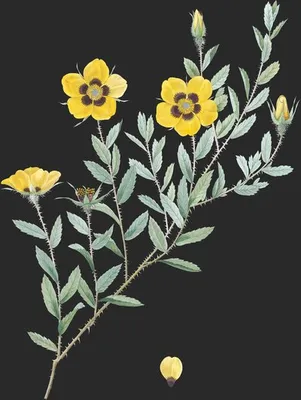
The sheet is tall. No details are appended: a plate for looking, not for keying out. The plant covers only 23% of the sheet, centred near the centre; the emptiness is where the eye rests.
Line and Colour
The first half of the nineteenth century moved from copper to steel to lithography; stipple could render the softest transition. There is evidence on the back too: the plate mark pressed into the paper, the slight relief of the pigment, lines worn shallow in a later printing. If you mean to copy it: take its skeleton, its margins and the order of its colours; the burin's hatching is the language of copper — suggest it with pencil density, do not imitate it stroke for stroke.
Poetic Resonance
恍出山、红尘吹断,落花流水。
—— 宋·刘辰翁《金缕曲・贺新郎》
The poem gives the mood first and the picture supplies the form; set the line beside the plate and the green the corolla becomes its resting point.
Symbolism
In Europe the rose means love and secrecy ('sub rosa'); in Chinese verse the rambling rose leans and clings — lingering attachment rather than ardour. Meanings change their tune: the same flower can say opposite things within a century.
Season and Place
Late spring into early summer, peaking in May — the first flush of the garden year. Widespread in the temperate north. Chinese gardeners knew roses since the Han. The year 1824 on the plate is that of publication, not of flowering — the gathering came a year or two earlier. The bud and the ripe fruit on one branch tell the season; the name in the title often tells the journey.
The Book and the Hand
“Les Roses” carries only Pierre-Joseph Redouté's name. A plate is collective work: drawer, engraver and colourist were different hands, and the unnamed ones decided how good it looks.
What to Take Away
Carry three rules away: whole before detail; line before colour; picture before book. The flower of that year is dust, yet its image on paper has outlived every living cousin.
About this plate
Observations
Ce beau Rosier est si connu des amateurs, que nous croyons devoir nous dispenser d’en présenter une description, laquelle ne ferait d’ailleurs que se rapporter à celles que nous avons déja publiées d’un grand nombre d’individus du même groupe. C’est une des plus magnifiques variétés du Gallica que nous ait donné la culture. L’arbrisseau n’exige aucun soin; il ne demande que l’exposition du grand soleil sans laquelle on n’obtiendrait pas des couleurs aussi vives dans les pétales. On trouve assez rarement la fleur entièrement simple. Les pépinières de la Hollande nous l’ont fourni il y a près de trente ans; c’est Du Pont qui l’a répandu dans nos collections. Chez quelques jardinistes on l’appelle la belle Sultanne.
- R. Maheka. Du P. Gymn. Ros. p. 17, var. 7.
- R. Holosoricea Rosss. Beschrei. der Ros. 1, p. 196. Idem. Roses fig. ? 16.
- R. Gallica Maheka. Thy. Prod. groupe XVI, p. 89, var. ὔ.