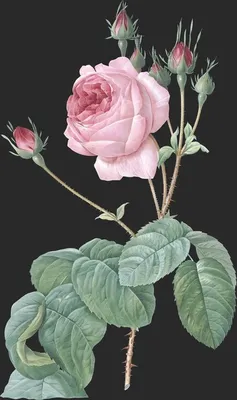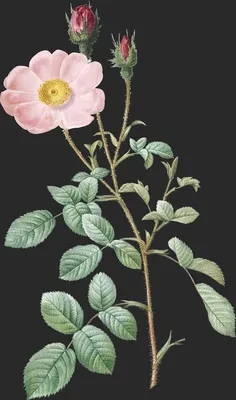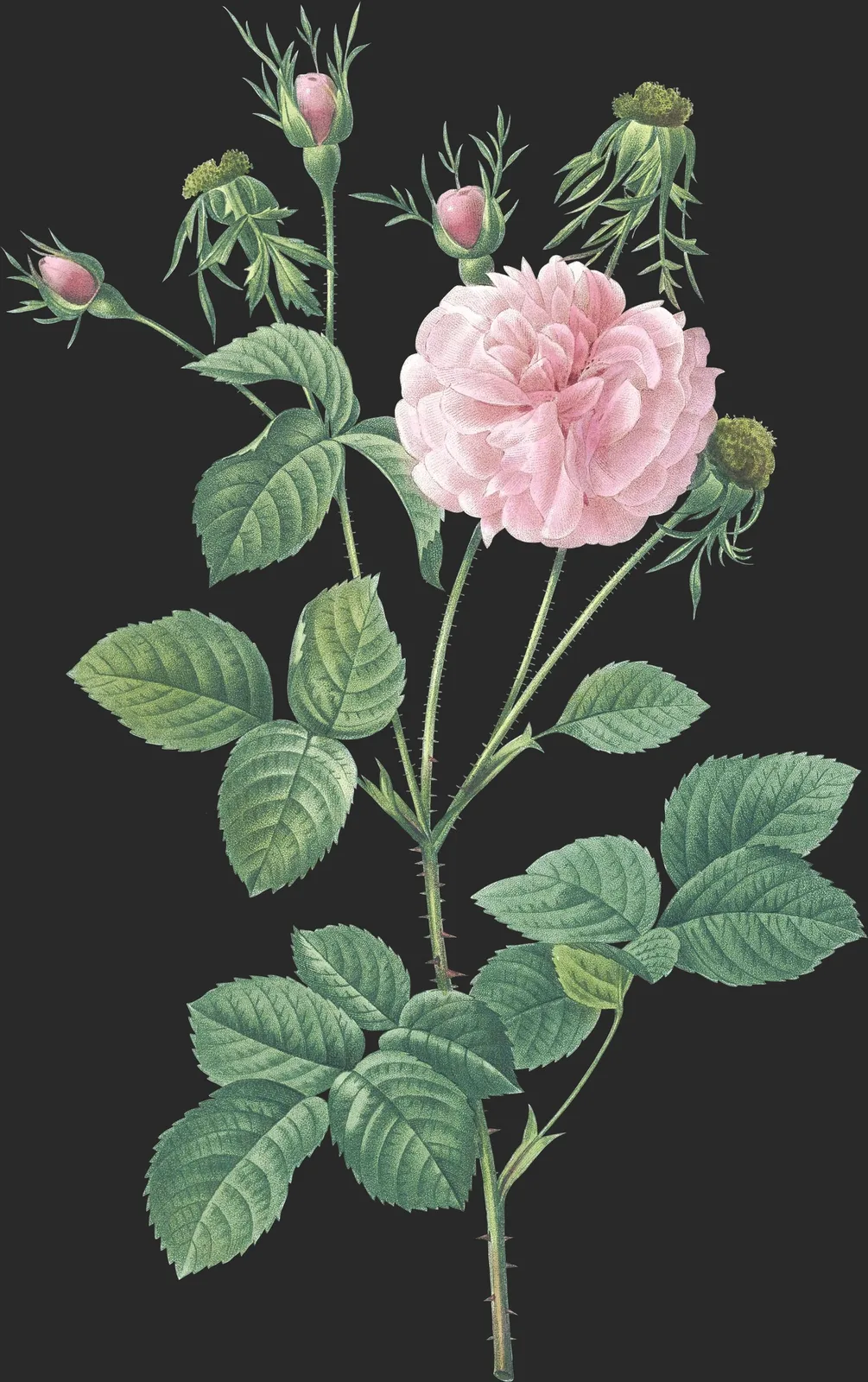
Rosa Gallica Agatha var Uncarnata
L’Agathe Carnée
L’Agathe Carnée
Ten ways of seeing
- measured cast red
- upright 1.59 : 1
First Look
夫象物必在于形似,形似须全其骨气。
—— 唐·张彦远《历代名画记》
Likeness is the threshold; bone-and-breath is the point.
The sheet is vertical: the eye climbs and settles in the upper half. Let the plant stand before you look for detail. Then step in close: watch where colour meets line, and whether the line ever breaks. Third, find where the green is deepest: the whole tonal order is measured from that patch.
Name and Thing
Only the genus Rosa is given; species-level names came later. No established Chinese name exists, so it is cited by its binomial alone.
Form and Colour
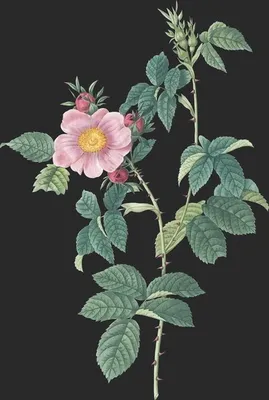
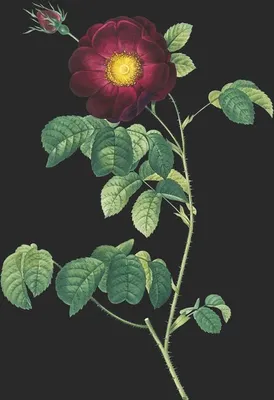
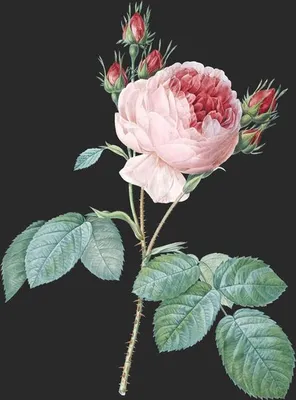
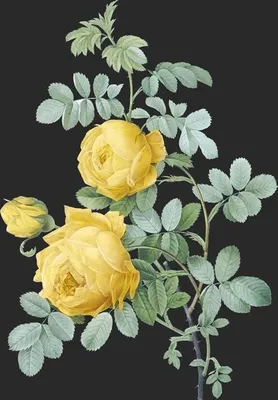
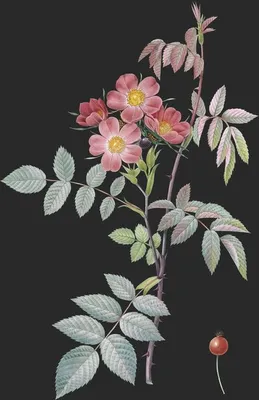
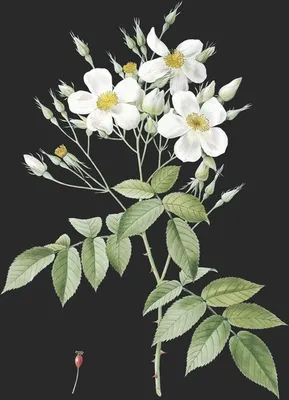
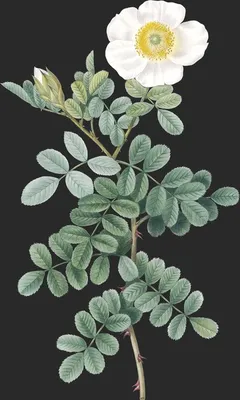
Measured on this plate: flower colour covers 1.9% of the sheet, foliage 16.1%, the cast red. No other plate shares exactly this measure. Roses are shrubs or scramblers with pinnate leaves of three to seven serrated leaflets; the double flowers open in crumpled, inward-curling layers around a small knot of yellow stamens. a moss green. Read the outline, then the colour layers, then the brush.
Composition
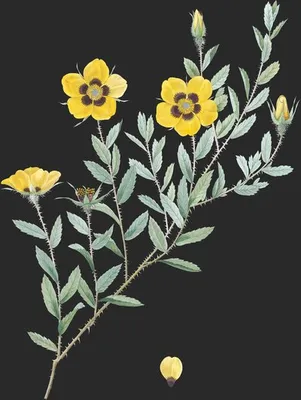
The sheet is tall. No details are appended: a plate for looking, not for keying out. The plant takes about 33% of the sheet, centred near the centre — the easy measure most florists kept to.
Line and Colour
The first half of the nineteenth century moved from copper to steel to lithography; stipple could render the softest transition. Craft leaves franker evidence than inscriptions. If you mean to copy it: take its skeleton, its margins and the order of its colours; the burin's hatching is the language of copper — suggest it with pencil density, do not imitate it stroke for stroke.
Poetic Resonance
把爆筵、趁取牡丹红,花前醉。
—— 宋·无名氏《满江红》
The poem gives the mood first and the picture supplies the form; set the line beside the plate and the green the corolla becomes its resting point.
Symbolism
In Europe the rose means love and secrecy ('sub rosa'); in Chinese verse the rambling rose leans and clings — lingering attachment rather than ardour. Flower language was added later; the flower knows nothing of it, and that innocence is part of its power.
Season and Place
Late spring into early summer, peaking in May — the first flush of the garden year. the ever-blooming modern rose is a nineteenth-century crossing of European and Chinese stock. The year 1824 on the plate is that of publication, not of flowering — the gathering came a year or two earlier. The bud and the ripe fruit on one branch tell the season; the name in the title often tells the journey.
The Book and the Hand
“Les Roses” carries only Pierre-Joseph Redouté's name. From drawing to plate the sheet passed through several hands — the engraver aimed at accuracy, the colourist at speed, and between them lies each plate's unevenness.
What to Take Away
Appreciation is not knowledge but habit — one more look each time. A flora exists to be consulted; look long enough and you forget to consult — someone in 1824 gave a whole day to a single flower.
About this plate
Description
Les branches de ce Rosier, ordinairement très-rapprochées, sont armées, surtout à leur sommet, de beaucoup d’aiguillons inégaux, rougeâtres, presque droits, d’inégale longueur. Les folioles sont d’un vert-obscur, fermes, glabres endessus, plus pâles et tomenteuses en-dessous, finement dentées, chaque dent surmontée d’une petite glande. Les fleurs naissent plusieurs ensemble à l’extrémité des rameaux. La corolle se compose d’un grand nombre de pétales très-rapprochés, d’un rose plus tendre que celui des fleurs de l’Agathe prolifère. On voit très-rare-ment le fruit de ce Rosier.
Observations
On confond quelquefois cet arbrisseau avec l’Alba incarnata (la cuisse de nymphe émue): mais c’est à tort, les deux Rosiers appartenant à deux groupes différents. Notre Rosier a produit diverses sous-variétés qui ne s’éloignent du type que par des teintes d’un rose plus ou moins prononcé dans les pétales. Il fleurit à la fin de juin: il est très-commun dans les jardins, où on lui donnait, autrefois, le nom de M. Louise.
R. Agathe carnée. Guerr. Alm. des Roses. Thy. Prod. groupe XVI, p. 94.