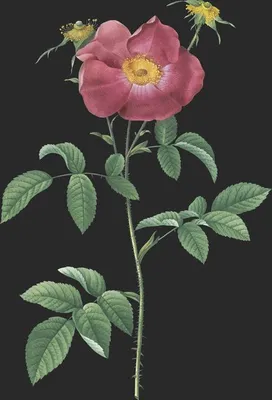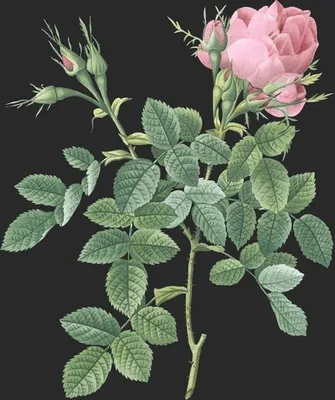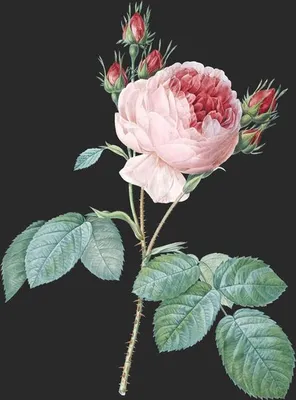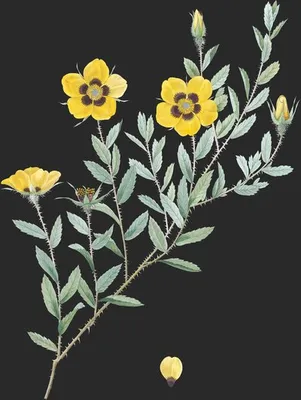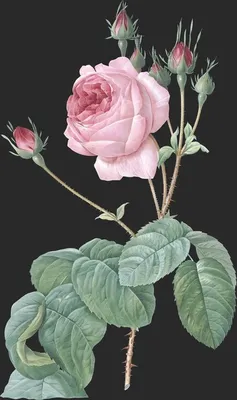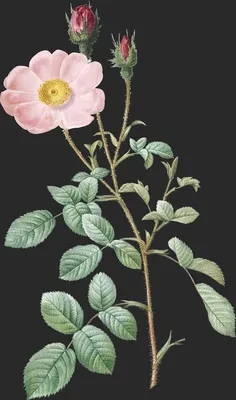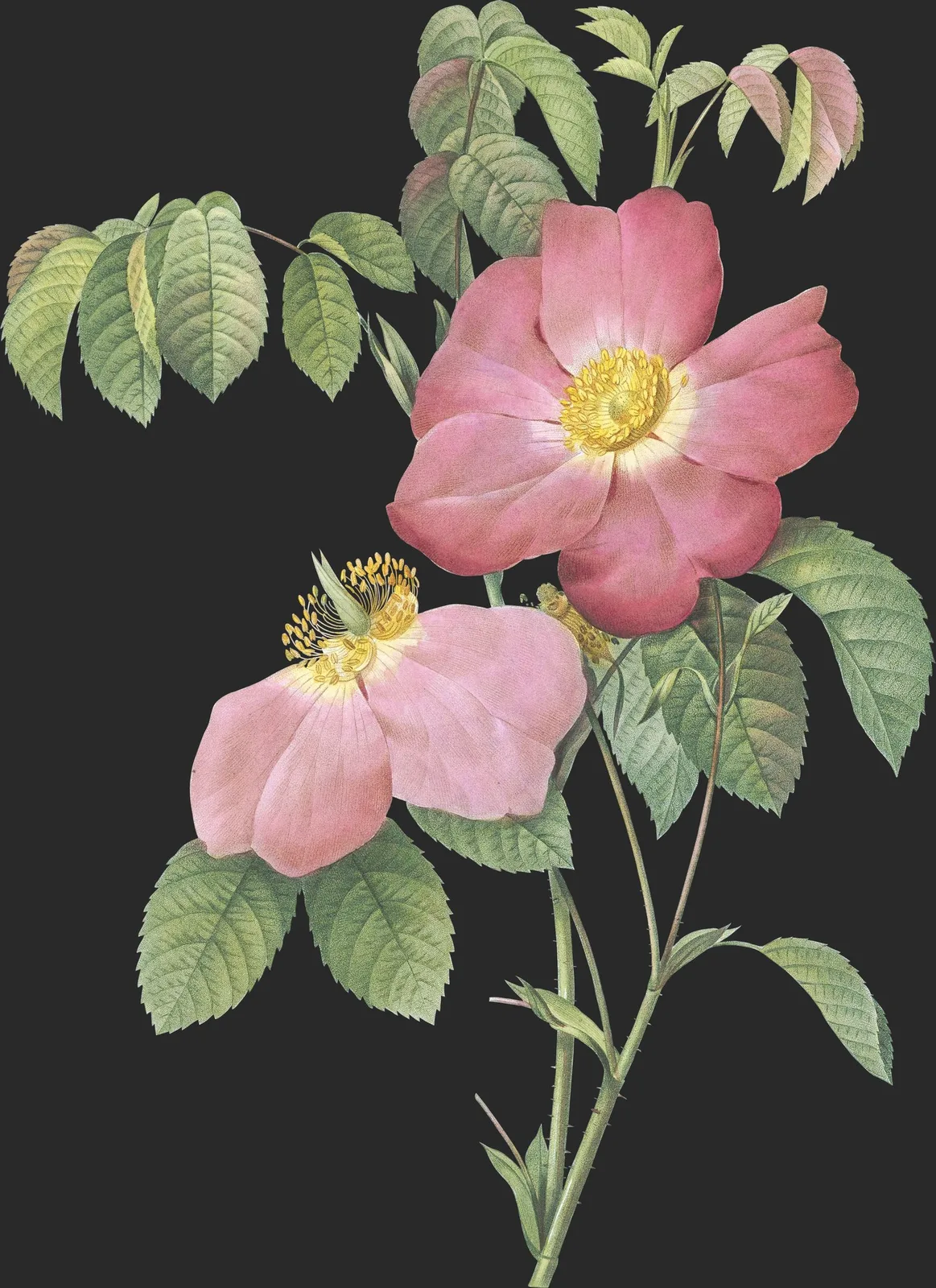
Rosa Gallica Rosea var Flore Simplici
狗牙蔷薇
Le Rosier de Provins
Ten ways of seeing
- measured cast red
- upright 1.38 : 1
First Look
夫象物必在于形似,形似须全其骨气。
—— 唐·张彦远《历代名画记》
Likeness is the threshold; bone-and-breath is the point.
The sheet is vertical: the eye climbs and settles in the upper half. Let the plant stand before you look for detail. Then step in close: watch where colour meets line, and whether the line ever breaks. Third, find where the green is deepest: the whole tonal order is measured from that patch.
Name and Thing
Only the genus Rosa is given; species-level names came later. The Chinese name 狗牙蔷薇 is a modern rendering of the Latin, not an old garden name.
Form and Colour
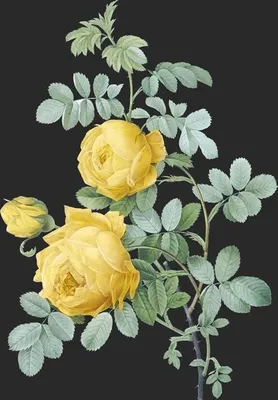
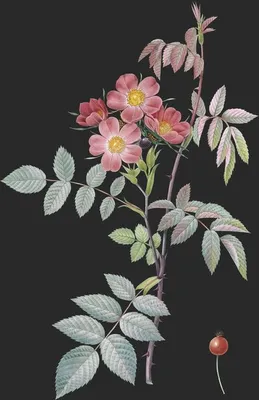
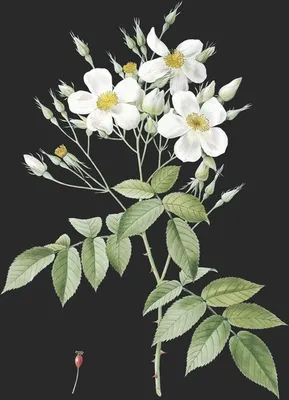
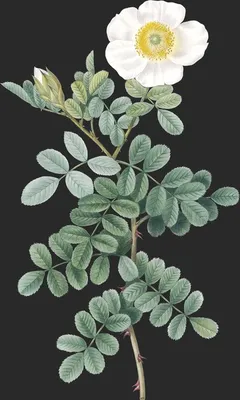
Measured on this plate: flower colour covers 15.1% of the sheet, foliage 11.8%, the cast red with a second note of yellow-green. No other plate shares exactly this measure. Roses are shrubs or scramblers with pinnate leaves of three to seven serrated leaflets; the double flowers open in crumpled, inward-curling layers around a small knot of yellow stamens. a moss green. Three things fix the habit: leaf arrangement, tepal count, and how the flower is borne.
Composition
The sheet is tall. No details are appended: a plate for looking, not for keying out. The plant fills 40% of the sheet, centred above centre — the herbarium way, drawn to be read whole.
Line and Colour
The first half of the nineteenth century moved from copper to steel to lithography; stipple could render the softest transition. Decide first whether it was printed or painted; only then discuss whether it is beautiful. If you mean to copy it: take its skeleton, its margins and the order of its colours; the burin's hatching is the language of copper — suggest it with pencil density, do not imitate it stroke for stroke.
Poetic Resonance
露压蔷薇金井栏。
—— 宋·耿时举《浣溪沙》
The poem gives the mood first and the picture supplies the form; set the line beside the plate and the green the corolla becomes its resting point.
Symbolism
In Europe the rose means love and secrecy ('sub rosa'); in Chinese verse the rambling rose leans and clings — lingering attachment rather than ardour. Meanings change their tune: the same flower can say opposite things within a century.
Season and Place
Late spring into early summer, peaking in May — the first flush of the garden year. Widespread in the temperate north. Chinese gardeners knew roses since the Han. The year 1824 on the plate is that of publication, not of flowering — the gathering came a year or two earlier. The bud and the ripe fruit on one branch tell the season; the name in the title often tells the journey.
The Book and the Hand
“Les Roses” carries only Pierre-Joseph Redouté's name. From drawing to plate the sheet passed through several hands — the engraver aimed at accuracy, the colourist at speed, and between them lies each plate's unevenness.
What to Take Away
Appreciation is not knowledge but habit — one more look each time. The flower of that year is dust, yet its image on paper has outlived every living cousin.
About this plate
Description
C’est un Rosier qui s’élève à deux ou trois pieds: ses rameaux, diffus, sont armés de plusieurs petits aiguillons inégaux, minces, peu dilatés à leur base. Les feuilles se composent de cinq folioles, assez grandes, en général arrondies à la base et au sommet, vertes en dessus, plus pâles et tomenteuses en-dessous, munies en leur bord de poils courts, entremêlés de glandes. Le pétiole qui les supporte, hispide-glanduleux, garni, mais rarement, de petits aiguillons, est muni à sa base de stipules grandes, bifides et pointues au sommet, denticulées et glanduleuses en leur bord. Les fleurs, tantôt solitaires, tantôt disposées par trois, naissent à l’extrémité des ramuscules qui croissent le long des branches principales: elles sont placées sur de longs pédoncules, garnis d’un grand nombre de poils spinuliformes et glanduleux. Le tube du calice est presque rond et glabre. Les divisions du limbe sont pinnatifides, et les pinnules spatulées au sommet. Corolle de cinq pétales d’un diamêtre de plus de trois pouces et demi, d’une belle couleur rose, échancrés en cœur au som-met. Fruit globuleux et rouge à la maturité.
Observations
Ce Rosier est connu et cultivé depuis longtemps en Angleterre. Les amateurs ont pu le voir dans les jardins de M. Shailer (of little chelsea). Andrews assure qu’on le rencontre assez rarement dans les collections en France et en Angleterre, mais qu’il est commun en Italie et en Espagne. Nous l’avons trouvé dans la Roseraie de M. Ternaux, à Auteuil, où, diton, il a éte obtenu de graines, il y a deux ans.
- R. Gullica simplex, floribus roseis. Red. Roses, vol. 1, p. 76, var. α. Thy. Prod. groupe XVI, p. 87, var α.
- R. (provincialis) germinibus subrotundis; pedunculis petiolisque hispidis, glandulosis; aculeis ramorum sparsis, rectis subreflexis; foliolis ovatis subtus villosis; serraturis glandulosis. And. Roses. Cum tab.