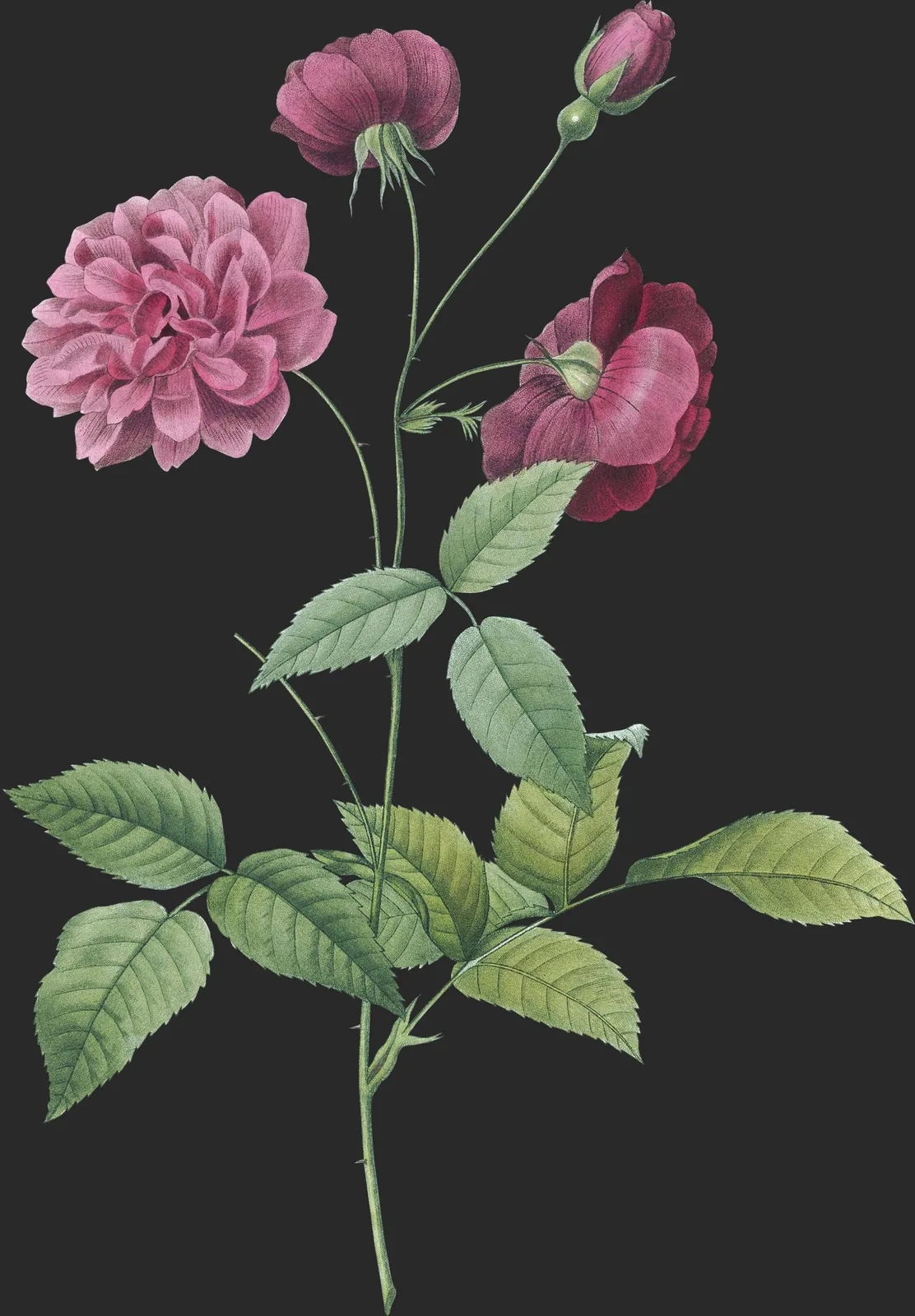
Rosa Indica Dichotoma
Rosa Indica Dichotoma
Le Bengale Animating
About this plate
Description
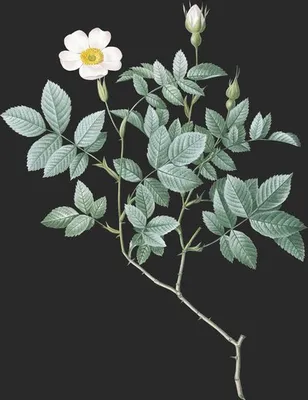
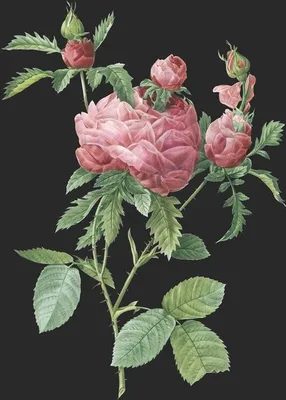
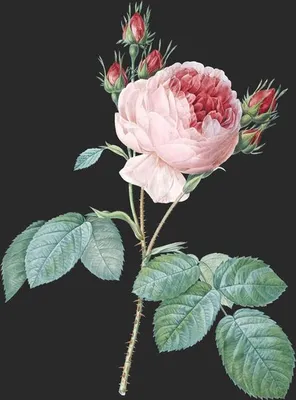
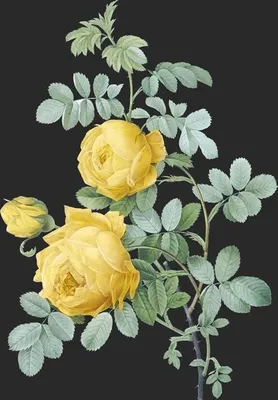
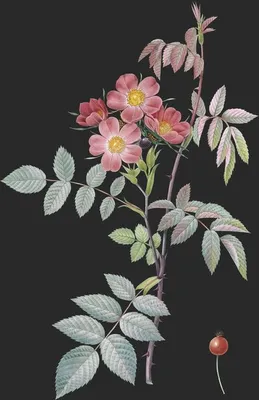
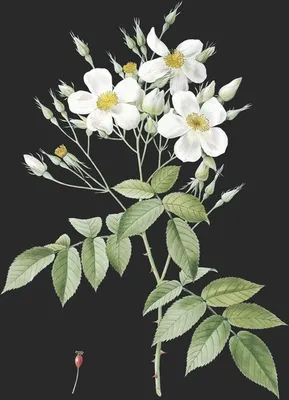
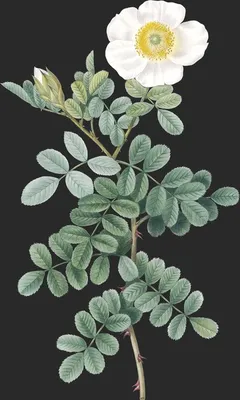
Rosier qui monte jusqu’à deux pieds, même plus, lorsqu’on l’élève dans une serre tempérée. Ses rameaux, diffus et bifurqués, sont armés d’aiguillons inégaux, crochus, épars. Les feuilles se composent de cinq, quelquefois de sept folioles, les unes ovales, les autres pointues, vertes et luisantes en-dessus, plus pâles en-dessous, finement dentées en scie. Le pétiole qui les supporte est légèrement tomenteux, muni de quelques petits aiguillons qui sétendent jusques sur la nervure principale des folioles: à sa base sont deux stipules étroites, denticulées et pointues au sommet. Les fleurs, odorantes, naissent plusieurs ensemble à l’extrémité des rameaux: elles sont portées par des pédoncules communs qui se divisent et se subdivisent, par bifurcation, en un grand nombre de pédicelles ou pédoncules partiels, suivant les règles de la dichotomie. Les pédoncules sont glabres, mais les pédicelles sont hispides-glanduleux. Le tube du calice est globuleux et glabre. Les divisions du limbe, munies, à l’extérieur, de petites glandes sessiles, sont tantôt simples, tantôt garnies de quelques pinnules. Corolle de plusieurs
R. germinibus globosis glabris; pedunculis glanduloso-hispidis; petiolis villosulis cauleque aculeatis; foribus cymosis. (N.) R. Indica dichotoma. Thy. Prod. groupe XXIV, p. 130, spec. 52, var. χ.
Ten ways of seeing
- measured cast crimson
- upright 1.44 : 1
- published 1824
- Plate 145
Not a catalogue entry but a way of looking: how to stand, what to notice, how the line was cut — then, halfway, a line of Chinese poetry: how the ancients saw this same flower. After it, the flower's language, its season and homeland, its book; and at the end one line of classical prose — and a pair of eyes to take away.
-
First Look
搜尽奇峰打草稿。
—— 清·石涛《苦瓜和尚画语录》
Exhaust the strange peaks, and then make the sketch.
The sheet is vertical: the eye climbs and settles in the upper half. Let the plant stand before you look for detail. Then step in close: watch where colour meets line, and whether the line ever breaks. Third, find where the green is deepest: the whole tonal order is measured from that patch.
-
Name and Thing
Only the genus Rosa is given; species-level names came later. No established Chinese name exists, so it is cited by its binomial alone.
-
Form and Colour
Measured on this plate: flower colour covers 9.3% of the sheet, foliage 11.3%, the cast crimson with a second note of red. No other plate shares exactly this measure. Roses are shrubs or scramblers with pinnate leaves of three to seven serrated leaflets; the double flowers open in crumpled, inward-curling layers around a small knot of yellow stamens. Filed under green — a moss green, a colour that comes mostly from leaf and stem. A single plant, laid out with nothing hidden.
-
Composition
Tall and narrow, the plant rising in one movement with generous margins — the upright format of most floras. (about 1.44 : 1) No details are appended: a plate for looking, not for keying out. The plant covers only 26% of the sheet, centred a little left of centre; the emptiness is where the eye rests. Old plates set the plant slightly off centre, with unequal margins — that small imbalance is what keeps it alive.
-
Line and Colour
The first half of the nineteenth century moved from copper to steel to lithography; stipple could render the softest transition. Decide first whether it was printed or painted; only then discuss whether it is beautiful. If you mean to copy it: take its skeleton, its margins and the order of its colours; the burin's hatching is the language of copper — suggest it with pencil density, do not imitate it stroke for stroke.
-
Poetic Resonance
瓮头竹叶经春熟,阶底蔷薇入夏开。
—— 唐·白居易《蔷薇正开春酒初熟因招刘十九张大夫崔二十四同饮》
The poem gives the mood first and the picture supplies the form; set the line beside the plate and the green the corolla becomes its resting point.
-
Symbolism
In Europe the rose means love and secrecy ('sub rosa'); in Chinese verse the rambling rose leans and clings — lingering attachment rather than ardour. Meanings change their tune: the same flower can say opposite things within a century.
-
Season and Place
Late spring into early summer, peaking in May — the first flush of the garden year. Widespread in the temperate north. Chinese gardeners knew roses since the Han. The year 1824 on the plate is that of publication, not of flowering — the gathering came a year or two earlier. The bud and the ripe fruit on one branch tell the season; the name in the title often tells the journey.
-
The Book and the Hand
“Les Roses” was drawn by Pierre-Joseph Redouté and published 1817-1824. This plate is Plate 145, book page 145. The image is public domain; the hand-colouring is still one person's hand.
-
The Written Tradition
插花不可太繁,亦不可太瘦。多不过二种三种,高低疏密,如画苑布置方妙。
—— 明·袁宏道《瓶史·宜称》
Flowers should be set neither too crowded nor too sparse — two or three kinds at most, tall and low, dense and open, arranged as a painter would compose.
Tradition places roses in the Han imperial park; Song and Ming manuals named the double forms 'Baoxiang' and 'Ten Sisters', and Qing compendia separated rose, rugosa and monthly rose. You need not parse every word: take the line, and the flower acquires a second face.
What to Take Away
Carry three rules away: whole before detail; line before colour; picture before book. A flora exists to be consulted; look long enough and you forget to consult — someone in 1824 gave a whole day to a single flower.