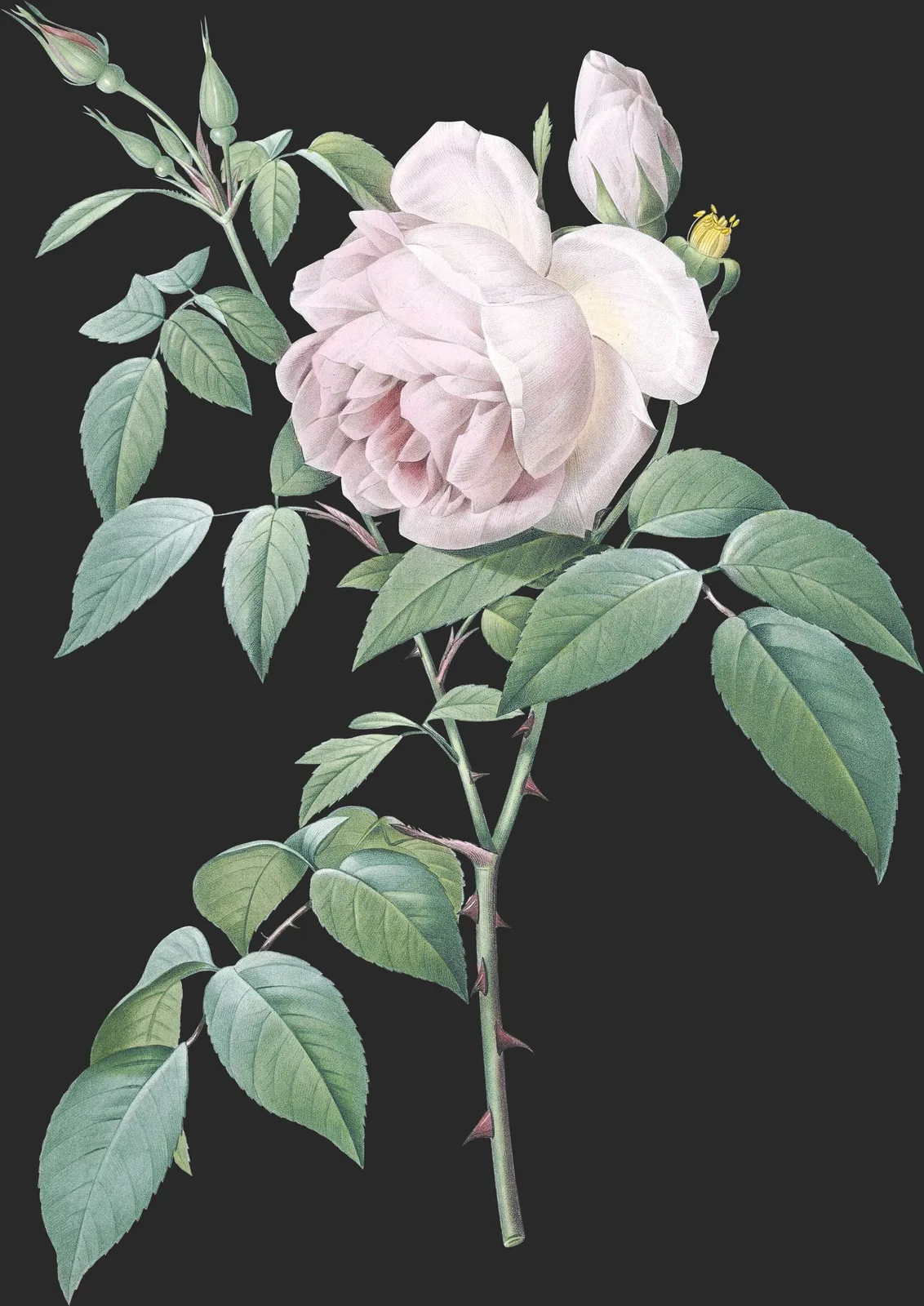
Rosa Indica var Fragrans
狗牙蔷薇
Le Rosier des Indes Odorant
About this plate
Description
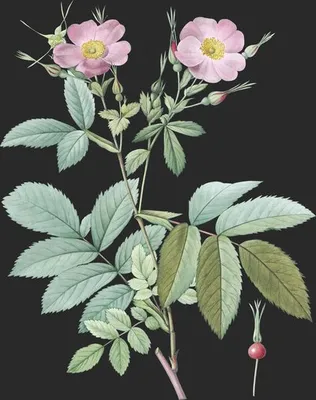
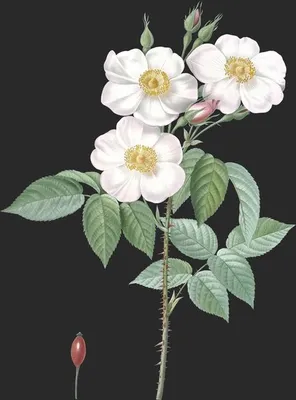
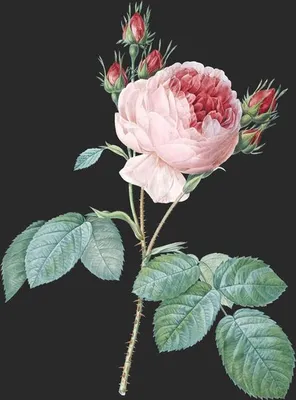
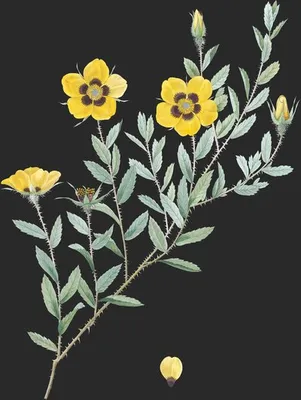
Les tiges de ce Rosier, qui s’élèvent à douze ou quinze pouces, rarement à deux pieds, sont armées d’aiguillons rou-geâtres, épars, et presque droits. Les feuilles se composent de trois ou cinq folioles ovales, aigues, glabres, finement den-tées, un peu colorées en dessous, portées par un pétiole garni de quelques petits aiguillons recourbés. Les fleurs, très-grandes, souvent du diamètre de plus de deux pouces et demi, penchées, d’un blanc tirant sur la couleur de chair, et comme transparentes, sont supportées par des pédoncules légèrement hispides. La corolle est composée de plusieurs rangs de pétales irrégulièrement échancrés au sommet. L’ovaire, globu-leux, et les lobes du calice presque toujours entiers, sont lisses et glabres.
Cette Rose se trouve figurée dans la première livraison de la Monographie d’Andrews.
Observations
Parmi les nombreuses variétés du Rosier des Indes, celle-ci est remarquable par son volume, l’espèce de transparence des pétales qui forment sa corolle, et par l’odeur suave qu’elle répand au loin, sur-tout au moment de son épanouissement. Ce Rosier fut apporté des Indes-Orientales en Angleterre, dans l’année 1809; il a fleuri, pour la première fois, dans la pépinière de M. Colville, qui l’a communiqué comme une variété dont la fleur avait l’odeur du thé, ce qui n’est pas exact. L’arbuste exige l’orangerie l’hiver: on le multiplie facilement de boutures, et encore mieux en l’écussonnant sur le Rosier des Indes commun (R. Indica vulgaris). Nous avons vu, dans la pépinière de M. Noisette, notre variété, greffée sur des vieux pieds de ce premier Rosier, donner des fleurs d’un volume considérable et d’une beauté rare.
Cette variété est souvent attaquée du blanc, maladie occasionnée par les pluies froides du printemps. On le fait disparaître en frottant légèrement toutes les parties qui en sont affectées avec une éponge imbibée de vinaigre. On doit cette découverte à M. Boursault. Peut-être l’emploieraiton utilement pour détruire la rouille ainsi que toutes les maladies qui affectent les Rosiers en général, et les font périr promptement.
- R. Germinibus globosis pedunculisque subhispidis; foliolis ovato-acuminatis, argute dentatis; petiolis aculeatis; caule aculeis subrectis, sparsis; calycibus subintegris. (N).
- R. (Indica odorata) germinibus globosis; pedunculis lœeviter hispidis, glabris nitidis; sæpeflorens; foliolis oblongis, acutis, dentatis, glabris nitidis; caule viridi nitido; spinis sparsis. Andrews Roses.
Twelve ways of seeing
- measured cast red
- upright 1.41 : 1
- published 1817
- Plate 19
Not a catalogue entry but a way of looking: how to stand, what to notice, how the line was cut, when it flowers, where it came from, who made it — and then the poems and the classics that taught China to see the same flower. Read the twelve in order and the plate opens.
-
First Look
凡画山水,意在笔先。
—— 唐·王维《山水论》
In painting, the intention precedes the brush.
The sheet is vertical: the eye climbs and settles in the upper half. Let the plant stand before you look for detail. Then step in close: watch where colour meets line, and whether the line ever breaks. Third, find where the green is deepest: the whole tonal order is measured from that patch.
-
Name and Thing
The binomial is Rosa indica: the first word is the genus it belongs among, the second the epithet that sets it apart. Here the epithet indica means “of India” — the name records the feature the namer noticed first. The Chinese name 狗牙蔷薇 is a modern rendering of the Latin, not an old garden name.
-
Form and Colour
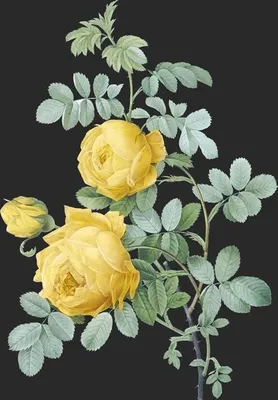
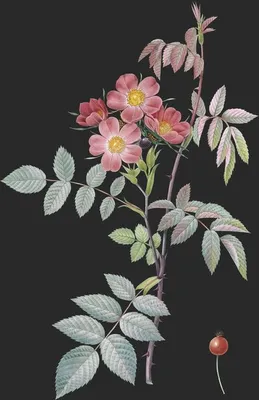
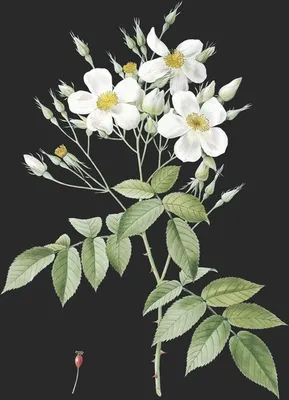
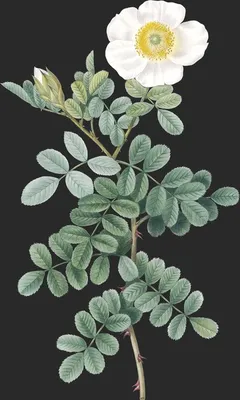
Measured on this plate: flower colour is sparing, 0.4% of the sheet against 5.4% of foliage, the cast tending red — as with pale or white blooms, outline and tone do the talking. Roses are shrubs or scramblers with pinnate leaves of three to seven serrated leaflets; the double flowers open in crumpled, inward-curling layers around a small knot of yellow stamens. Filed under green — a moss green, a colour that comes mostly from leaf and stem. Three things fix the habit: leaf arrangement, tepal count, and how the flower is borne.
-
Composition
Tall and narrow, the plant rising in one movement with generous margins — the upright format of most floras. (about 1.41 : 1) No details are appended: a plate for looking, not for keying out. The plant takes about 35% of the sheet, centred above centre — the easy measure most florists kept to. Old plates set the plant slightly off centre, with unequal margins — that small imbalance is what keeps it alive.
-
Line and Colour
The first half of the nineteenth century moved from copper to steel to lithography; stipple could render the softest transition. There is evidence on the back too: the plate mark pressed into the paper, the slight relief of the pigment, lines worn shallow in a later printing.
-
Season
Late spring into early summer, peaking in May — the first flush of the garden year. The year 1817 on the plate is that of publication, not of flowering — the gathering came a year or two earlier. The best time to read such a plate is its flowering season: three minutes under the tree explains what no text can.
-
Provenance
Widespread in the temperate north. Chinese gardeners knew roses since the Han; the ever-blooming modern rose is a nineteenth-century crossing of European and Chinese stock. The localities on the plate are those of a century ago; plants travel and places change their names.
-
The Book and the Hand
“Les Roses” was drawn by Pierre-Joseph Redouté and published 1817-1824. This plate is Plate 19, book page 19. The image is public domain; the hand-colouring is still one person's hand.
-
Poetic Resonance
有情芍药含春泪,无力蔷薇卧晓枝。
—— 宋·秦观《春日》
The peony, feeling, holds spring tears; the rose, strengthless, lies across the morning branch.
The poem gives the mood first and the picture supplies the form; set the line beside the plate and the green the corolla becomes its resting point.
-
The Written Tradition
插花不可太繁,亦不可太瘦。多不过二种三种,高低疏密,如画苑布置方妙。
—— 明·袁宏道《瓶史·宜称》
Flowers should be set neither too crowded nor too sparse — two or three kinds at most, tall and low, dense and open, arranged as a painter would compose.
Tradition places roses in the Han imperial park; Song and Ming manuals named the double forms 'Baoxiang' and 'Ten Sisters', and Qing compendia separated rose, rugosa and monthly rose. You need not parse every word: take the line, and the flower acquires a second face.
-
Symbolism
In Europe the rose means love and secrecy ('sub rosa'); in Chinese verse the rambling rose leans and clings — lingering attachment rather than ardour. Flower language was added later; the flower knows nothing of it, and that innocence is part of its power.
-
What to Take Away
If you keep one line, keep Guo Xi's: from afar its momentum, up close its texture. The flower of that year is dust, yet its image on paper has outlived every living cousin.