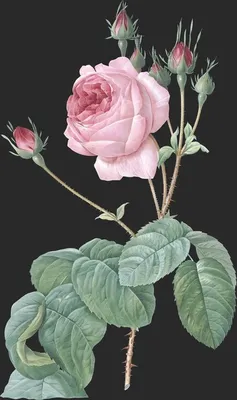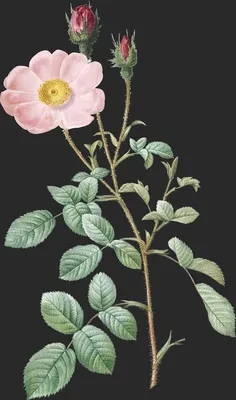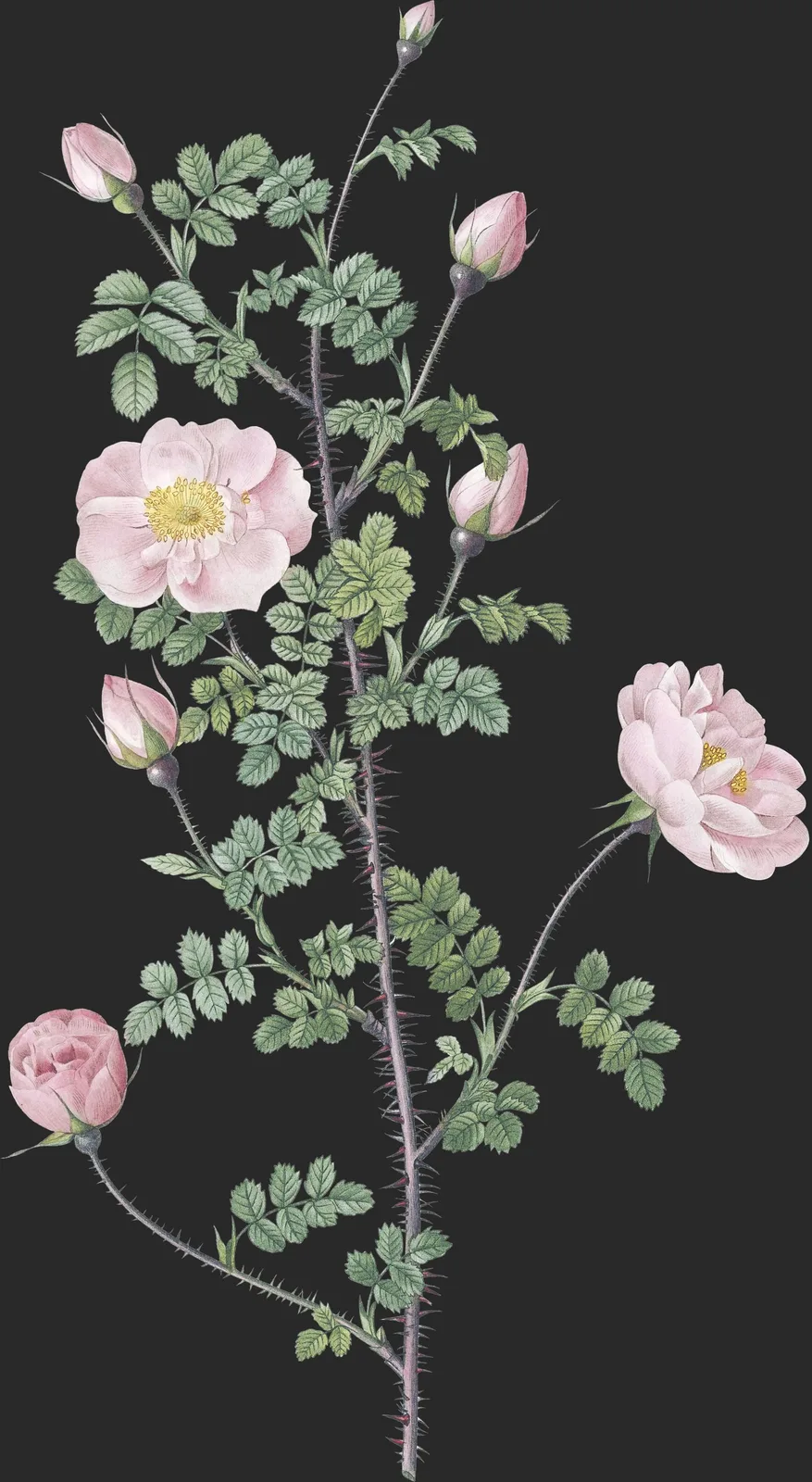
Rosa Pimpinellifolia var Flore Rubro Multiplici
Rosa Pimpinellifolia var Flore Rubro Multiplici
Le Rosier Pimprenelle Rouge
Ten ways of seeing
- measured cast red
- upright 1.82 : 1
First Look
真山水之川谷,远望之以取其势,近看之以取其质。
—— 宋·郭熙《林泉高致·山水训》
Mountains and valleys: from afar take their momentum, up close take their texture — the two distances from which any picture is read.
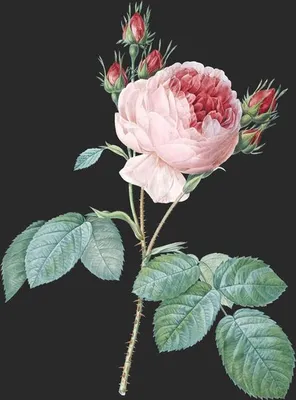
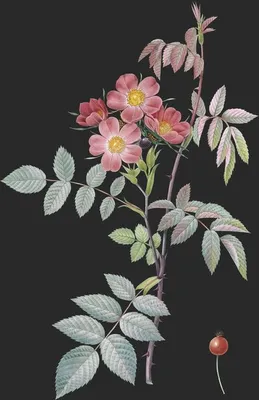
The sheet is vertical: the eye climbs and settles in the upper half. Let the plant stand before you look for detail. Then step in close: watch where colour meets line, and whether the line ever breaks. Third, find where the green is deepest: the whole tonal order is measured from that patch. The pose leans left: the upper half carries 11 points further left than the lower — a living thing, not a diagram.
Name and Thing
The binomial is Rosa pimpinellifolia: the first word is the genus it belongs among, the second the epithet that sets it apart. The genus name Rosa: Rosa is simply the Latin for rose, from Greek rhodon. No established Chinese name exists, so it is cited by its binomial alone.
Form and Colour
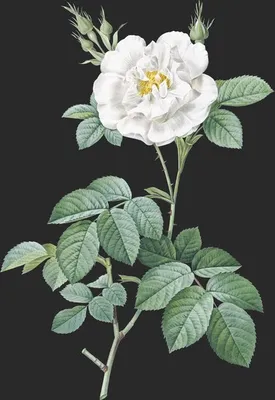
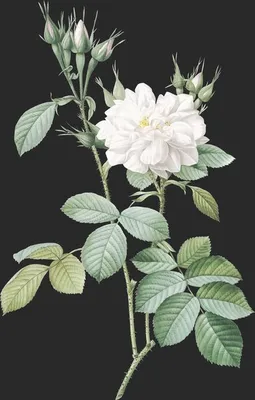
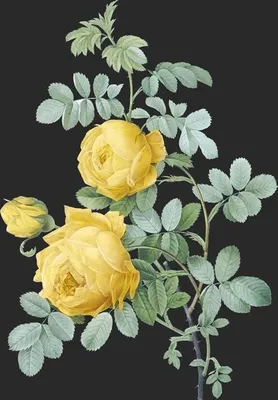
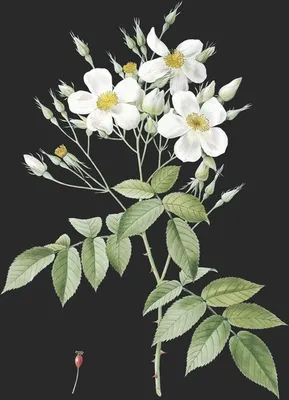
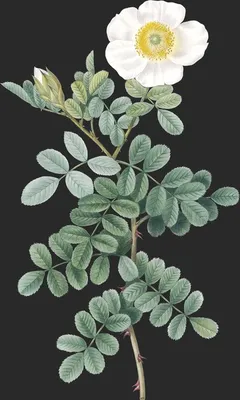
Measured on this plate: flower colour is sparing, 1.1% of the sheet against 2.6% of foliage, the cast tending red — as with pale or white blooms, outline and tone do the talking. Roses are shrubs or scramblers with pinnate leaves of three to seven serrated leaflets; the double flowers open in crumpled, inward-curling layers around a small knot of yellow stamens. a moss green. Three things fix the habit: leaf arrangement, tepal count, and how the flower is borne.
Composition
The sheet is tall. No details are appended: a plate for looking, not for keying out. The plant covers only 25% of the sheet, centred a little left of centre; the emptiness is where the eye rests.
Line and Colour
The first half of the nineteenth century moved from copper to steel to lithography; stipple could render the softest transition. There is evidence on the back too: the plate mark pressed into the paper, the slight relief of the pigment, lines worn shallow in a later printing. If you mean to copy it: take its skeleton, its margins and the order of its colours; the burin's hatching is the language of copper — suggest it with pencil density, do not imitate it stroke for stroke.
Poetic Resonance
牵衣不肯出朱门,红粉香脂刀下死。
—— 唐·韋莊《秦婦吟[一]》
The poem gives the mood first and the picture supplies the form; set the line beside the plate and the green the corolla becomes its resting point.
Symbolism
In Europe the rose means love and secrecy ('sub rosa'); in Chinese verse the rambling rose leans and clings — lingering attachment rather than ardour. In a flora it is a species first and a symbol second; the order is worth keeping.
Season and Place
Late spring into early summer, peaking in May — the first flush of the garden year. the ever-blooming modern rose is a nineteenth-century crossing of European and Chinese stock. The year 1817 on the plate is that of publication, not of flowering — the gathering came a year or two earlier. See this kind of plate in the flowering season if you can: once you have met the living flower, you stop reading only colour.
The Book and the Hand
“Les Roses” carries only Pierre-Joseph Redouté's name. A plate is collective work: drawer, engraver and colourist were different hands, and the unnamed ones decided how good it looks.
What to Take Away
Carry three rules away: whole before detail; line before colour; picture before book. Two centuries on, the plant may still flower in some garden; the one on this sheet stopped in the season of 1817.
About this plate
Description
Cette rare et belle variété s’élève en un buisson touffu à la hauteur d’un pied et demi, ou environ. Ses rameaux diver-gents, sont munis d’aiguillons inégaux, courts et presque droits. Les feuilles se composent de cing, de sept et souvent de neuf folioles rondes ou elliptiques, simplement dentées. Elles sont supportées par un pétiole glabre, ordinairement dépourvu d’aiguillons, ayant à sa base des stipules étroites et aigues. Les fleurs, d’un rose-tendre, légèrement odorantes, sont solitaires à l’extrémité des petits rameaux qui croissent le long des rameaux principaux: elles sont portées par des pédoncules glabres ou hispides, et souvent le même pied présente l’un et l’autre accident. D’ailleurs, cet arbuste ne diffère du Rosier Pimprenelle commun, à fleurs rouges et simples, que par sa corolle plus ou moins double, composée tantôt de cinq, tantôt de six à sept rangs de pétales, et encore par ses tiges beaucoup moins élevées. Les fruits, de la grosseur d’une pétite merise, sont d’abord rouges; mais ils noircissent à la maturité.
Observations
C’est M. Descemet, l’un de nos célèbres cultivateurs, qui a obtenu de semis, et communiqué ce Rosier remarquable par son élégance et par la quantité de fleurs dont il se couvre au printemps; mais le pied ayant péri dans sa pépinière, dès la troisième année, à la suite d’un hiver rigoureux, on ne le trouvait plus qu’en Angleterre dans la pépinière de MM. Loddige et Hackney. Nous pensions qu’il était perdu pour la France, lorsque le hasard nous en fit découvrir, au printemps de 18r1, un pied greffe, dans le jardin de M. Brisset, à Paris, rue Saint-Maur. M. Descemet, son ami, le lui avait donné. On nous permit d’en prendre un très-petit rameau que nous essayâmes de reproduire par la bouture, en prenant toutes les précautions convenables. Nous réussimes complètement, et nous eûmes le plaisir d’obtenir un franc de pied qui nous donna plusieurs roses dès le mois de septembre suivant. Livré immédiatement à la pleine terre, il n’a cessé de nous offrir, en récompense de nos soins, une récolte abondante de charmantes fleurs assez semblables à celles du Rosier Pompon. Il se propage très-bien par la greffe, mais on doit préférer celle en fente. Le buisson se forme lentement et produit peu de drageons. Cet arbuste est encore rare, ainsi que nous l’avons dit; mais la variété à fleurs blanches et doubles est assez commune.
- R. (spinosissima rubra) germinibus subglobosis glabris; pedunculis hispidis; floribus semi-duplicibus, incarnatis; folis patentibus; foliolis ovatis, costatis, crenatis; caule et petiolis aculeatissimis. Andr. Roses cum Tab.