Rosa Alba var Flore Pleno
Rosa Alba var Flore Pleno
Le Rosier Blanc
About this plate
Description
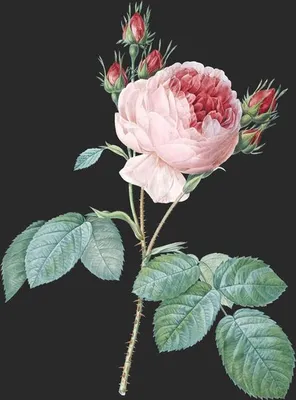
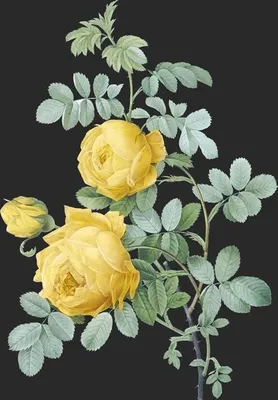
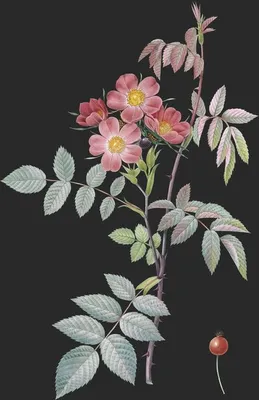
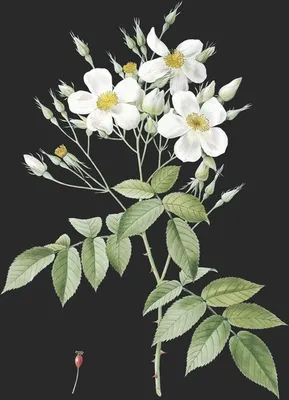
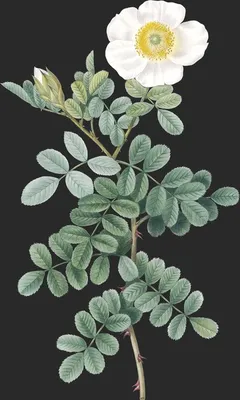
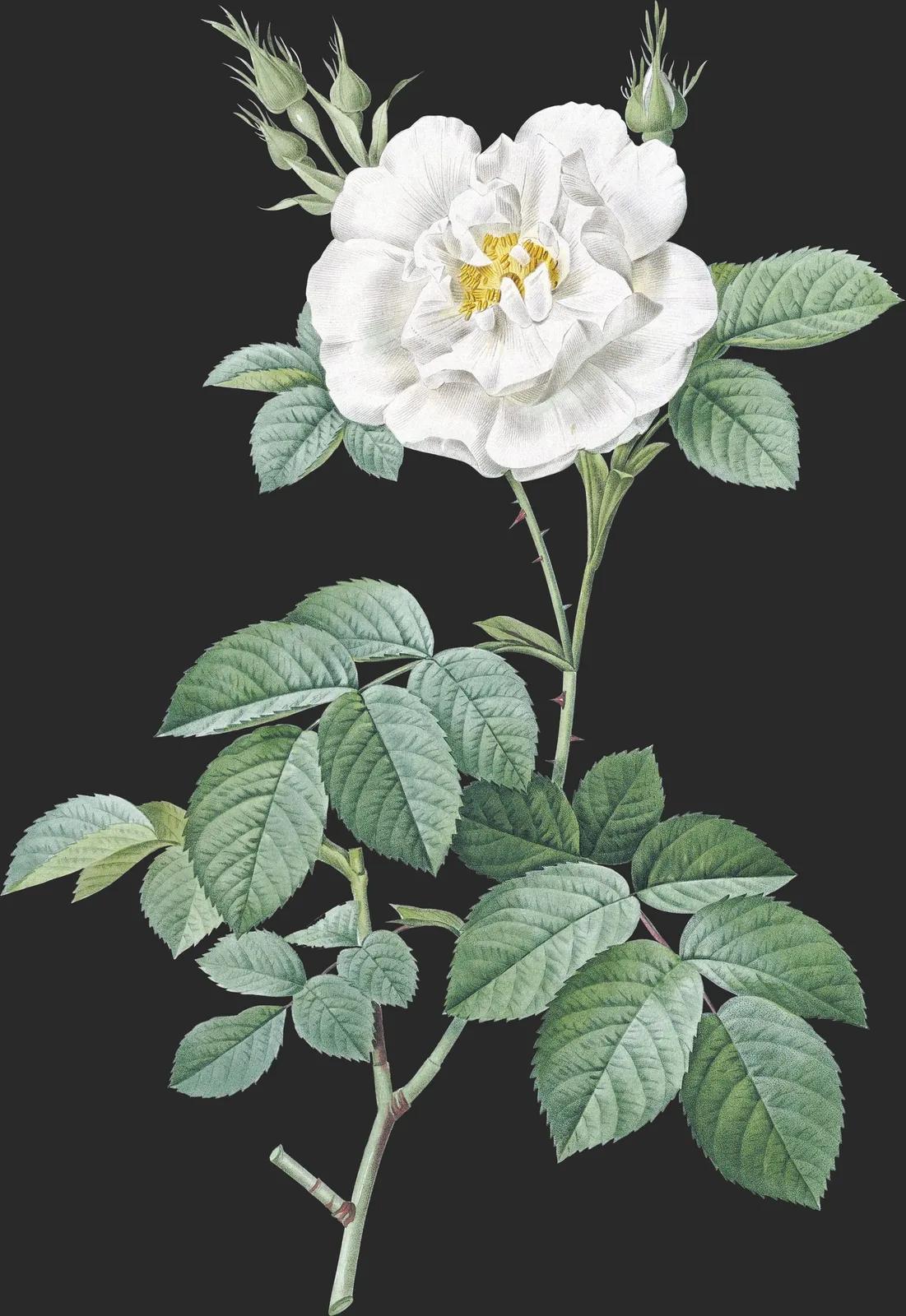
C’est un arbrisseau rameux, diffus, qui s’élève à une grande hauteur, souvent jusqu’à dix ou douze pieds. Ses rameaux, lisses, d’un verd-tendre dans leur jeunesse, sont munis d’ai guillons épars un peu recourbés. Les pousses de l’année sont presque toujours glabres et dépourvues d’épines. Les feuilles sont composées de cinq ou de sept folioles comme arrondies, d’un verd-sombre en-dessus, plus pâles et pubescentes en-dessous. Elles sont portées par un pétiole velu, muni de quel ques petits aiguillons crochus. Les fleurs latérales et terminales sont tantôt solitaires, tantôt réunies par trois ou quatre. Elles sont supportées par des pédoncules ou des pédicelles hérissés de poils glanduleux. Ces poils sont plus rares et par-fois presque nuls sur les ovaires. Les divisions du limbe sont alternativement entières et pinnatifides. La corolle, rarement bien pleine, très-souvent semi-double, d’une odeur particulière à l’espèce et à ses variétés, se compose de pétales blancs, échancrés en cœur au sommet. Ce Rosier, abandonné à lui-même, tend toujours à reproduire des fleurs simples: aussi n’est-il pas rare d’en trouver qui ne présentent que sept à huit pétales. Souvent le bouton de la fleur est légèrement coloré en rose-tendre.
Le Rosier blanc a été figuré dans beaucoup d’ouvrages; les principaux sont: Blackvelle, Herbar. Tab. 73; Besler, Hort. Eyst. vern. ord. 6, Tab. 3; Œder, Fl. Danica, Tab. 1215; Knorr 1, Tab. R. 6; Kerner, Tab. 662; Miss Lawrance, Tab. 25; Roessig, Tab. 15 et 34; Nouv. Duhamel, vol. 7, № 16, fig. 1. On trouve encore les figures de cette Rose dans de vieux ouvrages, tels que ceux de Dodoneus, de J. Bauhin, etc. mais elles sont mauvaises et ne méritent pas d’être consultées.
Observations
Le Rosier blanc à fleurs doubles, ou à fleurs semi-doubles, se plaît dans les lieux sauvages: on le trouve communément, selon l’auteur de la Flore de Wursbourg, dans les haies des vignes et des jardins des environs de cette ville, et dans les lieux incultes d’une partie de l’Allemagne. Il fleurit très-bien à l’ombre et n’exige que quelques labours. Comme il s’élève beaucoup, il peut servir à former de très-bonnes clôtures.
M. Desvaux (Journ. Bot. septembre 1813, pag. 120) assure que le Rosier blanc à fleurs simples n’a jamais été vu sauvage. Cependant M. Poiret dit qu’on le trouve dans les contrées méridionales de l’Europe: M. Bastard l’indique aussi sur les lieux montueux dans le haut Poitou, aux environs d’Angers et de Saumur; enfin, nous avons déja dit qu’on l’avait trouvé dans la Hesse Rhénane.
Le Rosier des Collines (R. Collina, Jacq.) est très-voisin du Rosier blanc dont il ne diffère que par sa corolle de couleur incarnate et toujours simple, ses pédoncules presque réunis en corymbe, et par les pétioles de ses feuilles qui sont his-pides-glanduleux.
Twelve ways of seeing
- measured cast yellow-green
- upright 1.45 : 1
- published 1817
- Plate 46
Not a catalogue entry but a way of looking: how to stand, what to notice, how the line was cut, when it flowers, where it came from, who made it — and then the poems and the classics that taught China to see the same flower. Read the twelve in order and the plate opens.
-
First Look
夫象物必在于形似,形似须全其骨气。
—— 唐·张彦远《历代名画记》
Likeness is the threshold; bone-and-breath is the point.
The sheet is vertical: the eye climbs and settles in the upper half. Let the plant stand before you look for detail. Then step in close: watch where colour meets line, and whether the line ever breaks. Third, find where the green is deepest: the whole tonal order is measured from that patch.
-
Name and Thing
The binomial is Rosa alba: the first word is the genus it belongs among, the second the epithet that sets it apart. Here the epithet alba means “white” — the name records the feature the namer noticed first. No established Chinese name exists, so it is cited by its binomial alone.
-
Form and Colour
Measured on this plate: flower colour is sparing, 0.4% of the sheet against 8.1% of foliage, the cast tending yellow-green — as with pale or white blooms, outline and tone do the talking. Roses are shrubs or scramblers with pinnate leaves of three to seven serrated leaflets; the double flowers open in crumpled, inward-curling layers around a small knot of yellow stamens. Filed under green — a moss green, a colour that comes mostly from leaf and stem. Three things fix the habit: leaf arrangement, tepal count, and how the flower is borne.
-
Composition
Tall and narrow, the plant rising in one movement with generous margins — the upright format of most floras. (about 1.45 : 1) No details are appended: a plate for looking, not for keying out. The plant takes about 36% of the sheet, centred near the centre — the easy measure most florists kept to. Cover the margins with your thumb and the plate suffocates; uncover them and the flower breathes again.
-
Line and Colour
The first half of the nineteenth century moved from copper to steel to lithography; stipple could render the softest transition. Decide first whether it was printed or painted; only then discuss whether it is beautiful.
-
Season
Late spring into early summer, peaking in May — the first flush of the garden year. The year 1817 on the plate is that of publication, not of flowering — the gathering came a year or two earlier. The plate records ten days of peak; the other three hundred are leaf, fruit and rest.
-
Provenance
Widespread in the temperate north. Chinese gardeners knew roses since the Han; the ever-blooming modern rose is a nineteenth-century crossing of European and Chinese stock. The localities on the plate are those of a century ago; plants travel and places change their names.
-
The Book and the Hand
“Les Roses” was drawn by Pierre-Joseph Redouté and published 1817-1824. This plate is Plate 46, book page 46. The image is public domain; the hand-colouring is still one person's hand.
-
Poetic Resonance
菱透浮萍绿锦池,夏莺千啭弄蔷薇。
—— 唐·杜牧《齐安郡后池绝句》
The poem gives the mood first and the picture supplies the form; set the line beside the plate and the green the corolla becomes its resting point.
-
The Written Tradition
天地与我并生,而万物与我为一。
—— 《庄子·齐物论》
Heaven and earth were born with me, and the ten thousand things are one with me.
Tradition places roses in the Han imperial park; Song and Ming manuals named the double forms 'Baoxiang' and 'Ten Sisters', and Qing compendia separated rose, rugosa and monthly rose. Keep the line; it will surface the next time you meet the same plant.
-
Symbolism
In Europe the rose means love and secrecy ('sub rosa'); in Chinese verse the rambling rose leans and clings — lingering attachment rather than ardour. In a flora it is a species first and a symbol second; the order is worth keeping.
-
What to Take Away
Appreciation is not knowledge but habit — one more look each time. A flora exists to be consulted; look long enough and you forget to consult — someone in 1817 gave a whole day to a single flower.