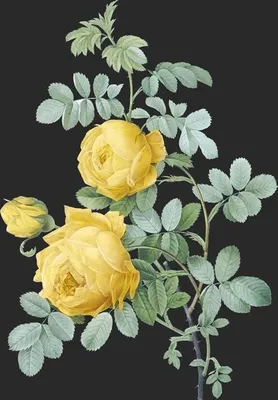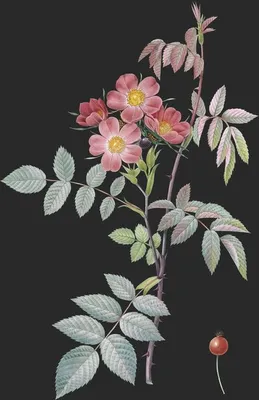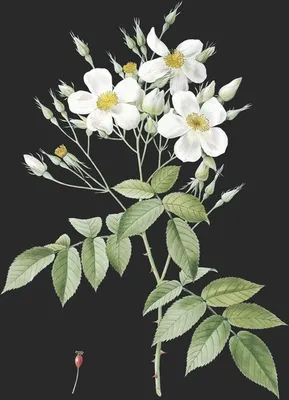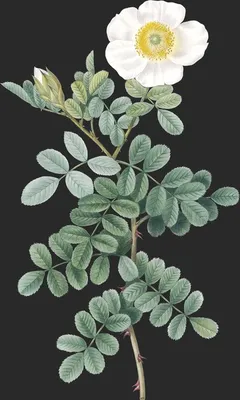
Rosa Pinpinellifolia Inermis
切叶蜂属
Le Rosier a Feuilles de Pimprenelle
About this plate
Description
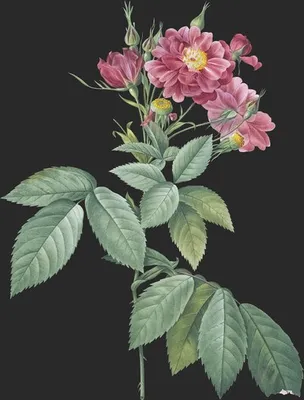
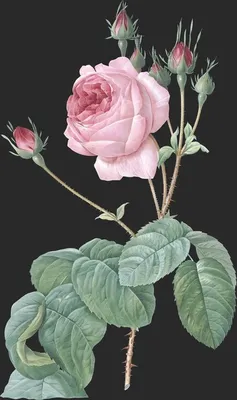
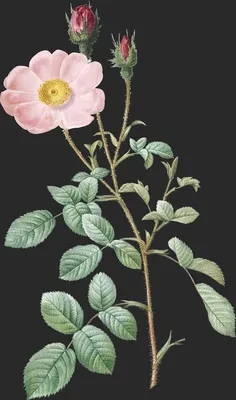
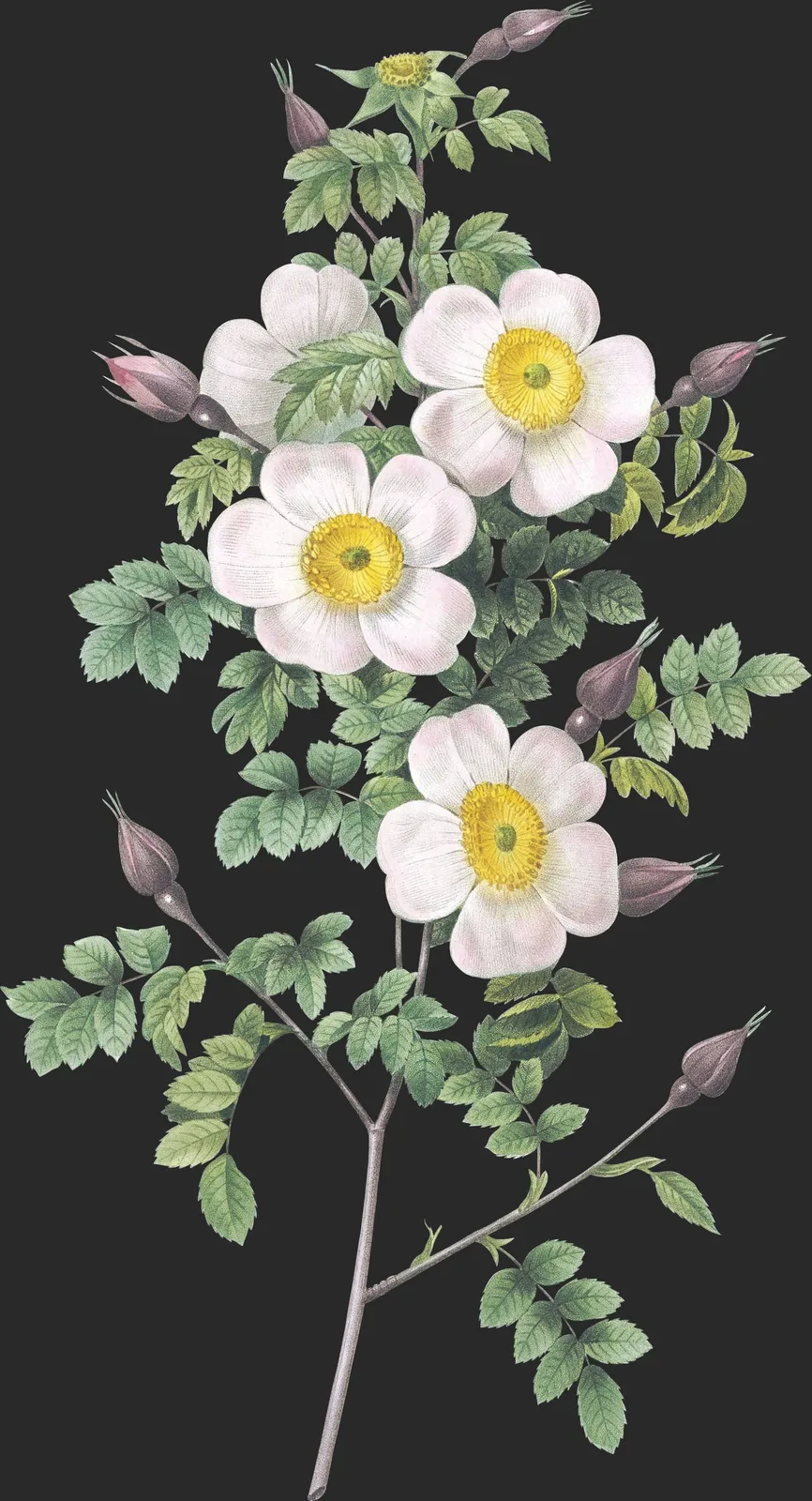
Rosier qui s’élève à trois pieds, et dont la tige est dépourvue d’aiguillons. Toutefois, les branches, dans leur extrême jeunesse, en présentent quelques petits; mais ils disparaissent à mesure qu’elles se développent, et l’arbrisseau en est entièrement privé au moment de la floraison. Les feuilles sont composées de sept, neuf, souvent de onze folioles ovales arron-dies, simplement dentées, glabres sur les deux faces; elles sont portées par un pétiole également glabre, ayant à sa base deux stipules bifides pointues au sommet. Les fleurs naissent solitaires à l’extrémité des ramuscules qui croissent le long des branches principales. Le tube du calice, le pédoncule qui les supporte, et les divisions du limbe, sont glabres; ces divisions sont étroites, égales et entières. Corolle de cinq pétales, assez grands, et dont la couleur varie du rouge clair au rouge plus foncé. Les étamines sont courtes, et les stigmates se réunissent en une tête convexe au centre de la fleur. Fruit pareil à celui des autres variétés de l’espèce.
Observations
Ce Rosier a été communiqué à M. De Candolle par M. Nestler, qui la trouvé sauvage sur la roche Neunerstein, au champ de feu, dans les Vosges. Il n’est pas rare d’en trouver quelques pieds dans le produit des semences faites des graines du pimprenelle épineux, et vice versâ; c’est un fait que nous avons eu l’occasion d’observer dans nos semis, comme dans ceux de M. Noisette. Au surplus cest une singularité que les amateurs recherchent, et qu’on rencontre dans beaucoup de jardins. L’arbrisseau n’exige aucune culture, mais il demande l’exposition au grand soleil.
- R. germinibus subglobosis pedunculisque glabris; foliolis urin-que glabris, basi integerrimis, simpliciter dentatis; floribus solitaris; caule inermi. (N.)
- R. Pimpinellifolia inermis. D. C. Fl. franç. édit. 3, ? 3697; var. γ. Desv. Journ. Bot. septembre 1813, p. 119, var. β. Thy. Prod. groupe V, p. 41, var. ε.
- R. Pimpinellifolia ramis inermibus. Nouv. Duham. vol. 7, p. 20, var. γ.
- La Pimprenelle sans épines. Hortul.
Twelve ways of seeing
- measured cast yellow-green
- upright 1.85 : 1
- published 1824
- Plate 125
Not a catalogue entry but a way of looking: how to stand, what to notice, how the line was cut, when it flowers, where it came from, who made it — and then the poems and the classics that taught China to see the same flower. Read the twelve in order and the plate opens.
-
First Look
真山水之川谷,远望之以取其势,近看之以取其质。
—— 宋·郭熙《林泉高致·山水训》
Mountains and valleys: from afar take their momentum, up close take their texture — the two distances from which any picture is read.
The sheet is vertical: the eye climbs and settles in the upper half. Let the plant stand before you look for detail. Then step in close: watch where colour meets line, and whether the line ever breaks. Third, find where the green is deepest: the whole tonal order is measured from that patch.
-
Name and Thing
Only the genus Rosa is given; species-level names came later. The Chinese name 切叶蜂属 is a modern rendering of the Latin, not an old garden name.
-
Form and Colour
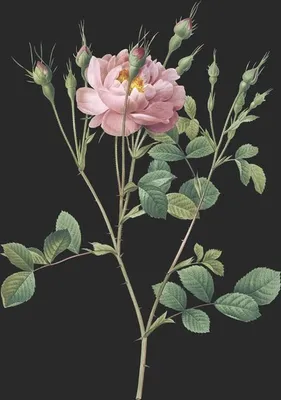
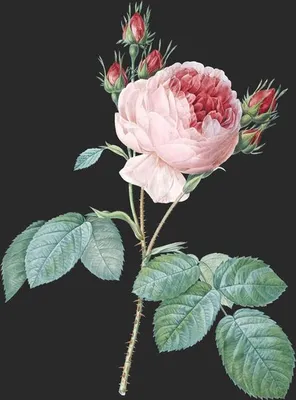
Measured on this plate: flower colour covers 2.5% of the sheet, foliage 7.9%, the cast yellow-green. No other plate shares exactly this measure. Roses are shrubs or scramblers with pinnate leaves of three to seven serrated leaflets; the double flowers open in crumpled, inward-curling layers around a small knot of yellow stamens. Filed under green — a moss green, a colour that comes mostly from leaf and stem. Read the outline, then the colour layers, then the brush.
-
Composition
Tall and narrow, the plant rising in one movement with generous margins — the upright format of most floras. (about 1.85 : 1) No details are appended: a plate for looking, not for keying out. The plant takes about 36% of the sheet, centred near the centre — the easy measure most florists kept to. Cover the margins with your thumb and the plate suffocates; uncover them and the flower breathes again.
-
Line and Colour
The first half of the nineteenth century moved from copper to steel to lithography; stipple could render the softest transition. Take a loupe to three places: petal edge, leaf vein, caption. An unbroken line means engraving; colour crossing the outline means a hand.
-
Season
Late spring into early summer, peaking in May — the first flush of the garden year. The year 1824 on the plate is that of publication, not of flowering — the gathering came a year or two earlier. The plate records ten days of peak; the other three hundred are leaf, fruit and rest.
-
Provenance
Widespread in the temperate north. Chinese gardeners knew roses since the Han; the ever-blooming modern rose is a nineteenth-century crossing of European and Chinese stock. In the same volume the kin are shelved together; set several plates side by side.
-
The Book and the Hand
“Les Roses” was drawn by Pierre-Joseph Redouté and published 1817-1824. This plate is Plate 125, book page 125. The image is public domain; the hand-colouring is still one person's hand.
-
Poetic Resonance
常记东园按舞时,春风一架晚蔷薇。
—— 宋·陆游《感昔二首 其一》
The poem gives the mood first and the picture supplies the form; set the line beside the plate and the green the corolla becomes its resting point.
-
The Written Tradition
天地与我并生,而万物与我为一。
—— 《庄子·齐物论》
Heaven and earth were born with me, and the ten thousand things are one with me.
Tradition places roses in the Han imperial park; Song and Ming manuals named the double forms 'Baoxiang' and 'Ten Sisters', and Qing compendia separated rose, rugosa and monthly rose. The difference is not of quality but of question: Europe asks what it is, China asks whom it resembles.
-
Symbolism
In Europe the rose means love and secrecy ('sub rosa'); in Chinese verse the rambling rose leans and clings — lingering attachment rather than ardour. Meanings change their tune: the same flower can say opposite things within a century.
-
What to Take Away
Next time you stand before a flowering plant, give it three minutes: leaf arrangement, direction of the flower, the darkest patch. The flower of that year is dust, yet its image on paper has outlived every living cousin.