Petasophora Anais
Petasophora Anais
Columbian Violet-Ear
- 学名
- Petasophora Anais
- 合集
- 古尔德蜂鸟图谱
- 绘者
- John Gould(约翰·古尔德)
- 年代
- 1854
- 图版号
- Pl. 224, Vol. IV
- 原书页码
- p.224
- 授权
- CC0 1.0 Universal (Public domain)
关于本图版
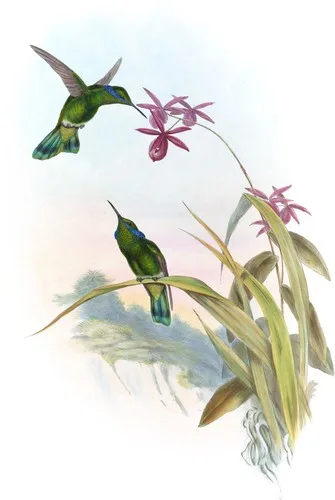
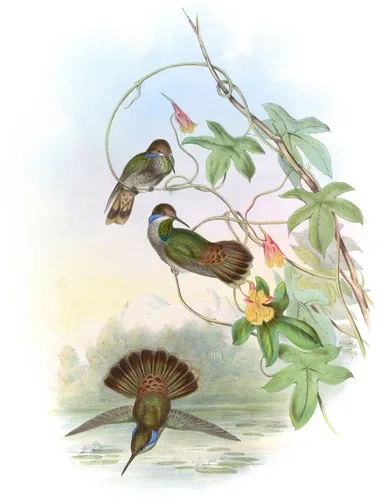
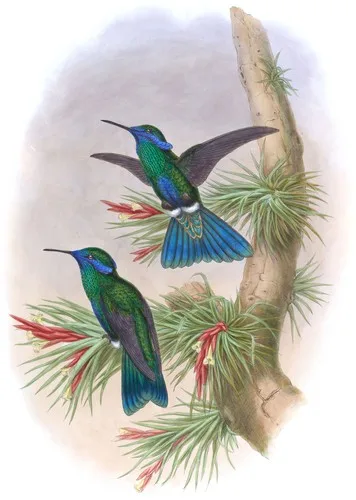
此图原刊于《古尔德蜂鸟图谱》(Gould's Hummingbirds),绘者为约翰·古尔德,成书于 1849—1887 年间。图中描绘的是 Petasophora Anais,归入蜂鸟科(Trochilidae)。
全编共收录 421 幅图版,本图是其中一幅,原书将其列为 Pl. 224, Vol. IV,见第 224 页,版式为纵幅。扫描件取自公有领域原件,经高分辨率修复与色彩校正,可按原大放大查看线条与设色。
原书文字(英文 / 法文)
New Granada and Venezuela
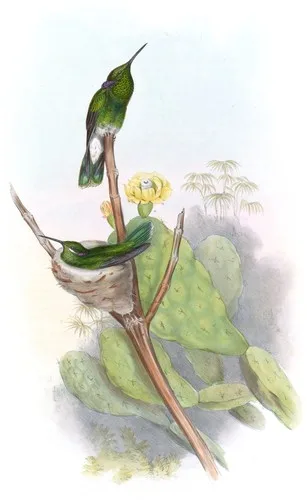
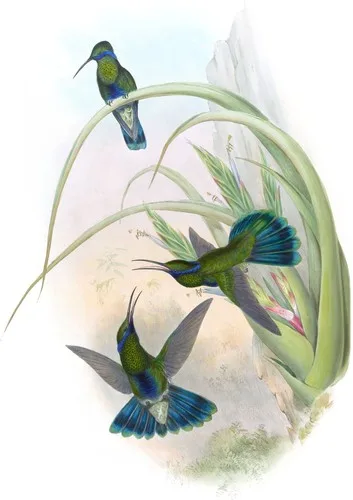
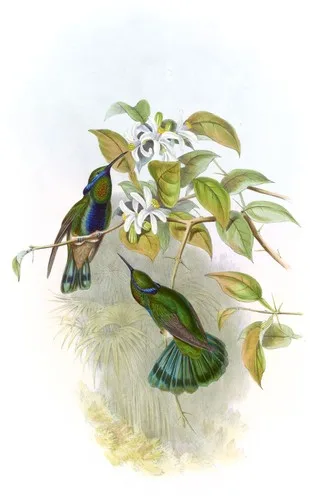
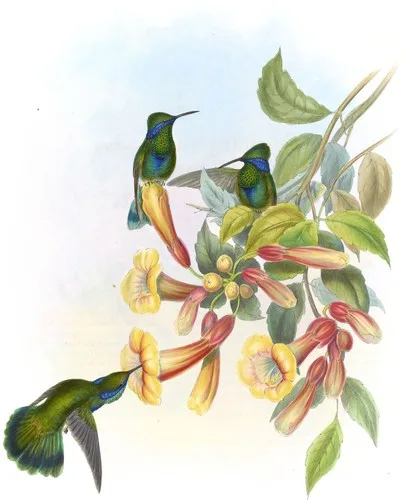
Great confusion exists with respect to the synonymy of the birds to which the term nats has been applied, and which is chiefly, if not solely, attributable to the carelessness of M. Lesson, who, not perceiving their specific differences, has published at least three species of this genus under that name,—has described another bird of a totally different form in the “Revue Zoologique” for 1838 and 1839 under the same appellation,—and has moreover added considerably to the confusion by giving incorrect habitats to the birds his figures are intended to represent; this confusion I have endeavoured to unravel, by assigning the various synonyms to the birds to which they appear respectively to belong; and by retaining the term Anais as the specific distinctive for the one so commonly sent as such in collections from Santa Fé de Bogota, and which will be more readily recognized by a reference to the accompanying Plate than by the most accurate description.
This species, which appears to be strictly confined to the mountainous districts of Columbia, is especially abundant in the neighbourhood of Bogota, whence its range extends northwards to the Caraccas and southwards to the confines of Peru; it neither descends to the hot plains below nor upwards to the bleak mountain sierras, but dwells in the luxuriant and temperate regions lying between these extremes, and where it is so numerous that it is more commonly met with than any other species. I have never seen an example from the Mexican side of the Isthmus of Panama, consequently the habitat of Mexico assigned to it by M. Lesson would seem to be incorrect. Little or nothing has been recorded of its habits, and we only know that it is very pugnacious and drives every other species from its feeding-ground. It will be seen that the nestling birds, which are drawn from specimens in my collection, assume much of the fine colouring of the adults before they have left the nest; the blue colouring of the ear-coverts, the chin and the abdomen, and the verditer hue of the tail, being nearly as rich as in the adults. In this early stage of their existence, however, there is no trace of the rich chequered metallic green plumage of the breast; that part being clothed with a velvety blackish green hue, which is not exchanged for the gayer colouring until the bird has attained a size nearly equal to that of the adult, probably not until the spring moult of the following year. Much difference exists in the size of the sexes, the females being nearly a third less than the males, but in colour they are precisely alike.
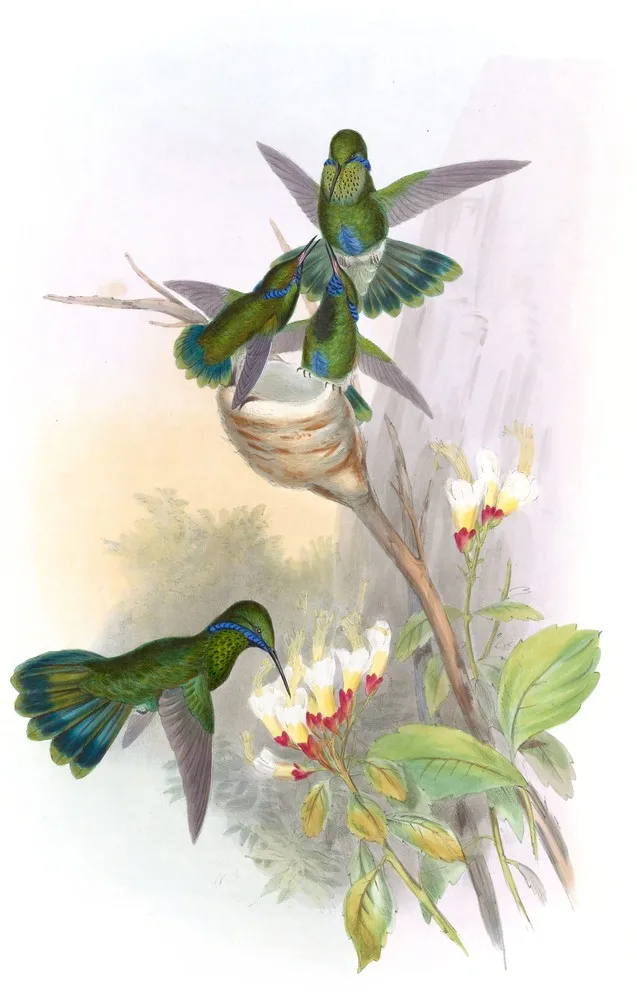
Head, all the upper surface, including the wing-coverts and the flanks, rich shining green; wings purplish brown; tail deep bluish green, crossed near the tip with a broad chalybeate band; the two central feathers washed with bronze, and the tips of all shining green; chin, line under the eye, ear-coverts and centre of the abdomen rich shining purplish blue; fore part of the neck and breast luminous green, with a streak of a darker hue down the centre of each feather, giving the whole a sparkling chequered appearance; under tail-coverts grey, washed on the centre with green; bill black; feet blackish brown.
In immature birds the upper surface is bronzy green, and the luminous green of the throat is at first entirely wanting, but is afterwards gradually assumed as the bird approaches to maturity; in other respects the plumage is similar to that of the adult.
The figures represent a male, a female, two young birds and a nest, all of the natural size. The beautiful plant is the Cantua pyrifolia.
References
- Ramphodon Anais, Less. Hist. Nat. des Troch., p. 146. pl. 55.
- Petasophora Anais, Gould in Proc. of Zool. Soc., Part xv. p. 8.
- Polytmus Anais, Gray and Mitch. Gen. of Birds, vol.1. p. 108, Polytmus, sp. 27.
- Colibri Anais, Bonap. Consp. Gen. Av., p. 69, Colibri, sp. 3.
- Trochilus thalassinus, Jard. Nat. Lib. Humming Birds, vol. ii. p. 47.
- Trochilus Anais, Jard. ib. p. 1.
十二观
- 纵幅 1.57∶1
- 1854 年刊
- 图版 224, Vol. IV
这不是词条,是一条看画的次序:先站定看整体,再看名字与形色、构图与刀工,然后问它几时开、从哪里来、经了谁的手;最后是中国诗文——同一朵花,中国古人是怎么看的。十二观读完,这幅图就打开了。
-
第一眼
夫象物必在于形似,形似须全其骨气。
—— 唐·张彦远《历代名画记》
形似只是门槛,骨气才是要害。看一株植物,先看它立不立得住——这就是骨气。这一幅是竖的:眼睛从下往上走,落点在中段那只鸟身上。先别急着看羽毛,让姿态先立起来。第二步凑近一寸:看线与色的交界,色有没有压住线,线有没有断。第三步,把视线放到最深的那一小块:整幅的用色秩序,都是从那里排开的。
-
名与实
学名 Petasophora anais:前一词是属,管它归在哪一类;后一词是种加词,管它在这一类里凭什么与众不同。名字是通行证,也是懒办法——记住两个词,就抓住了一整个物种。此幅尚无通行中文名,姑以学名相称;在没有本地名字的地方,学名就是它唯一的身份证。
-
形与色
蜂鸟为美洲最小之鸟,喙细长如针,舌分叉成管,可伸入花心吸蜜;翼小而振频极高,能悬停、能倒飞。此幅未作色相归档,只能就形制论。别只看花:叶脉的走向、萼片的长短、甚至茎上的毛,都是画家用来区分物种的证据。
-
构图与呼吸
画幅高而窄,鸟栖在枝的中段,上下留白多——十九世纪鸟谱的标准版式,留给它飞走的余地。(高宽比约 1.57∶1)全幅只画一只,不作解剖附图——这类图更近于“观赏”,而非“鉴定”。空白不是没画完,是给眼睛留的落脚处:一张图若四边都塞满,花反而会闷。
-
一刀一色
十九世纪后半叶,石版与彩色石印渐成主流:颜色可以直接印出,不再依赖手工,线条反倒退居其次。图像的“准确”提高了,手性却淡了。先判断它是“印”的还是“画”的,再谈好不好看——这是看老版画最实用的一条规矩。
-
时序
热带美洲几乎全年可见,花期即其季节;温带种类的蜂鸟则随花北迁,一年往返数千公里。图上所记的 1854 年是刊行之年,不是采到那只鸟的年份;真正的观察记录通常比出版早一两年。要判断一幅图的季节,不必看题跋:看叶的老嫩、花与果是否同在枝上,也就八九不离十了。
-
故土
仅产美洲,自阿拉斯加南部至火地岛,以安第斯山最为繁盛。中土无蜂鸟,汉籍不载,晚清海外游记始见其名。今天再看,图上的产地已是一百多年前的产地;植物会迁徙,地方也会改名字。
-
书与人
《古尔德蜂鸟图谱》(Gould's Hummingbirds)由约翰·古尔德绘,成于1849-1887。此幅为其中图版 224, Vol. IV,见原书第 224 页。一本书的“作者”常常是主编;真正决定这幅图好不好看的,是没留下名字的刻工与上色人。
-
诗境
穿花蛱蝶深深见,点水蜻蜓款款飞。
—— 唐·杜甫《曲江二首》
中土无蜂鸟,然“穿花”之态,杜甫早已写过:贴着花心走,是采蜜者的共同姿态。古人写到这一层,已不只是赏花,是借花说人;画面则只负责把那朵花留住。
-
文心
竖划三寸,当千仞之高;横墨数尺,体百里之迥。
—— 南朝宋·宗炳《画山水序》
三寸的竖线可当千仞高山,几尺横墨能容百里之远。一只蜂鸟只有拇指大,画家却要在几厘米里放下整片花丛——尺度从来不是障碍。古尔德《蜂鸟图谱》(1849—1887)以石版手工上色,金箔衬底,使羽色在纸上仍有金属光;这套图册本身就是十九世纪印刷与收藏狂热合流的产物。读古文不必求全解,先认下这一句:它把“看花”换成了“看人”,你再看这幅图,眼里就多了一层。
-
花语
阿兹特克以蜂鸟为战神与太阳的化身;欧洲维多利亚时代则以蜂鸟为收藏与装饰的极致,百万只羽毛被做成胸饰。中国旧籍无此鸟,故无象征——这空白本身,就是一部博物学交流史。花语是后人添上去的,花本身并不知道;但这层“不知道”,正是它最动人的地方。
-
带走一双眼睛
把这三件事带走:先整体后细节;先线后色;先看画再翻书。任何一张老图版,都可以用这三条读。图谱的用意是“以备查考”,看久了却会忘记查考:1854 年的一个人,为一只鸟花了整整一天。