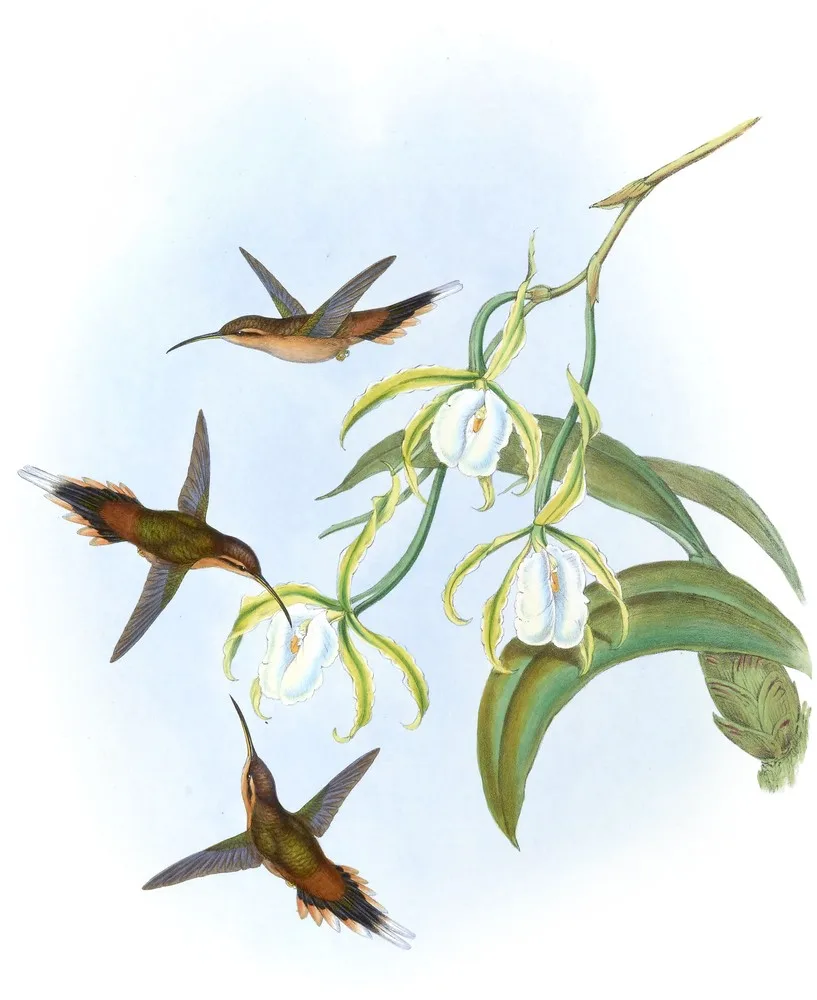
Paëthornis zonura
Paëthornis zonura
Southern Hermit
- 合集
- 古尔德蜂鸟图谱
- 绘者
- John Gould(约翰·古尔德)
- 年代
- 1849
- 图版号
- Pl. 34, Vol. I
- 原书页码
- p.34
- 授权
- CC0 1.0 Universal (Public domain)
关于本图版
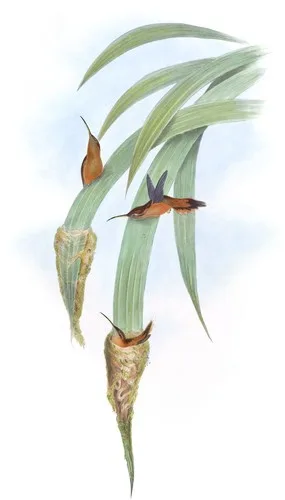
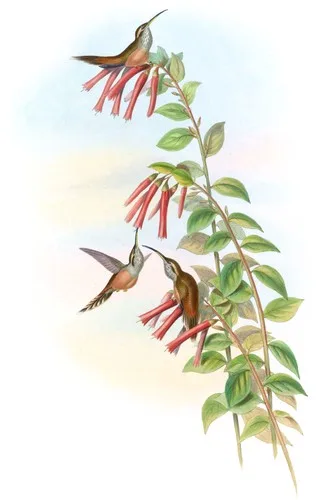
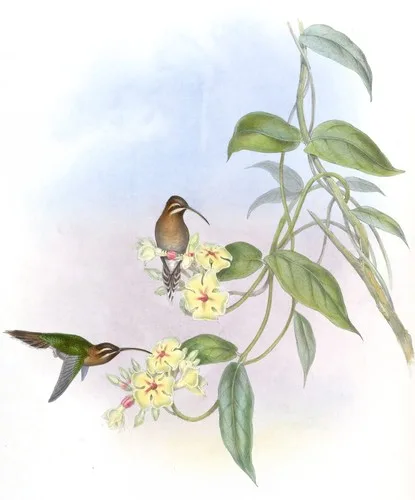
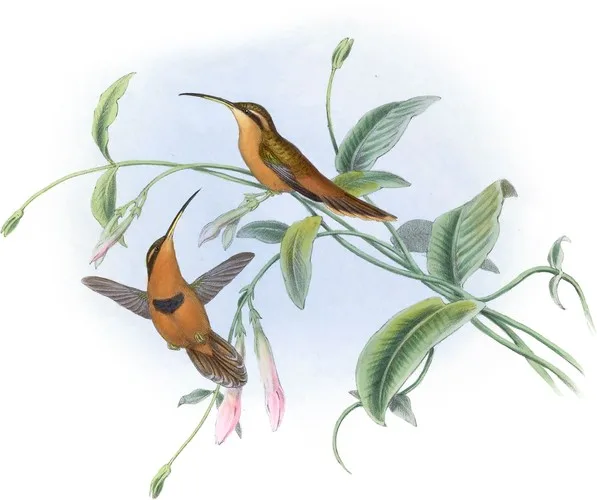
《古尔德蜂鸟图谱》(Gould's Hummingbirds)由约翰·古尔德绘制,1849—1887 年间印行,本图即其中一幅。画面主体为 Paëthornis zonura,在分类体系中列于蜂鸟科(Trochilidae)。
该合集全编共 421 幅图版,此图为其中之一,图版编号 Pl. 34, Vol. I,对应原书第 34 页,版式为纵幅。图像由公有领域原件扫描修复而来,细节在放大视图中仍清晰可辨。
原书文字(英文 / 法文)
Peru
The group of little Hermits to which Bonaparte applied the generic name of Pygmornis appear to have representatives in every part of South America; at least species exist in all the hotter and temperate portions of that great country.
One of them, P. Adolphi, flies to the northward of the Isthmus of Panama and even enters the confines of Mexico; some occur in New Granada and Ecuador; while others, again, inhabit the Guianas, Cayenne, and Brazil. The bird to which | have given the name of P. zonura appears to be the southern representative of the genus, since it is an inhabitant of Peru, and, I believe, of Bolivia; for it was in one or other of these countries that M. Warszewicz killed the specimen which graces my collection. I have also a single, much-mutilated specimen from Ecuador, which appears to belong to this species. The P. zonura must rank among the larger and more powerful of these little birds; it is more distinctly marked than any of them; and when its tail is outspread in flight, the rich rust colouring of the lower part of the back must present a striking contrast to the deep-black colouring of the tail-feathers. This species is somewhat allied to the P. griseogularis; but its great size, and also the characters above alluded to, will serve to distinguish it from that and every other species.
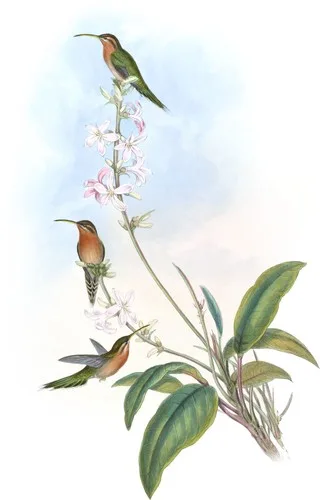
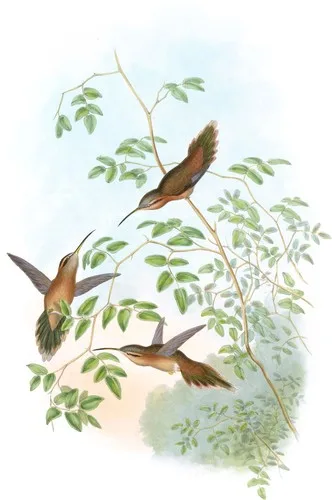
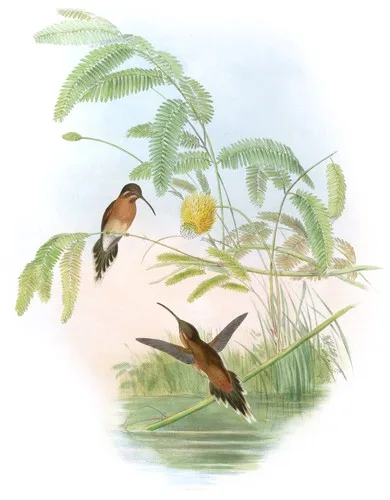
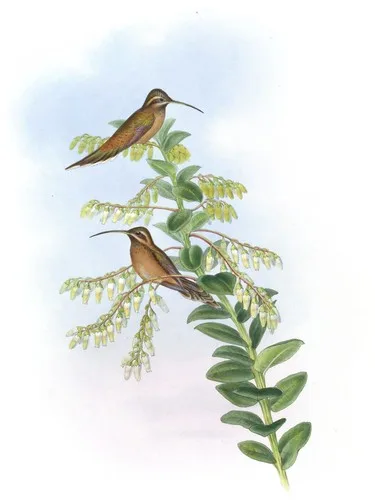
Crown of the head brown; back of the neck, back, and shoulders bronzy green; rump and upper tailcoverts rich reddish buff; all the under surface buff, palest on the throat; three outer tail-feathers on each side black at the base, with rich buffy tips; the fourth feather the same, except at the tip, where the outer half is buff and the inner half white; the two central prolonged feathers black at the base, largely tipped with white; bill black, except the basal half of the lower mandible, which is either yellow or flesh-colour; feet yellow.
Total length 3
The figures are of the size of life. The plant is the Piumna fragrans.
References
- Phaëthornis zonura, Gould in Proc. of Zool. Soc., part xxviii. p. 305.