Valerianaceæ
Valerianaceæ
The Valerian Tribe
- 合集
- 植物自然目
- 绘者
- Elizabeth Twining(伊丽莎白·特温宁)
- 年代
- 1868
- 图版号
- Order 75
- 原书页码
- p.75
- 主色
- 绿
- 授权
- CC BY-SA 4.0
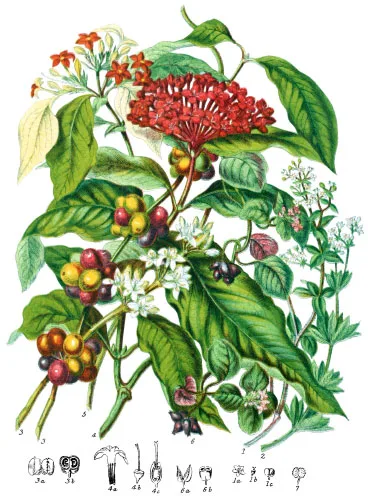
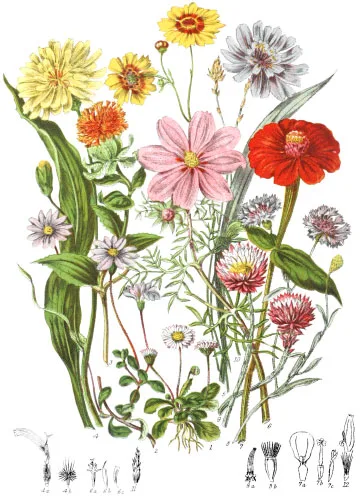
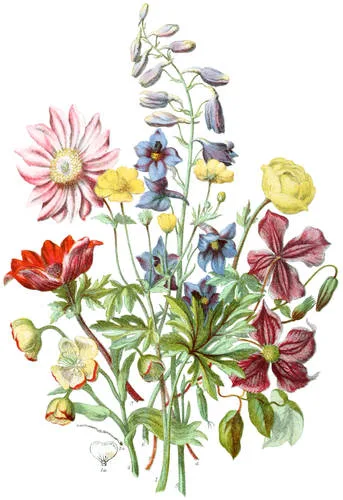
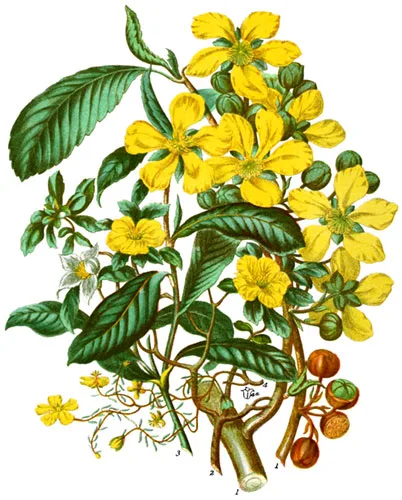
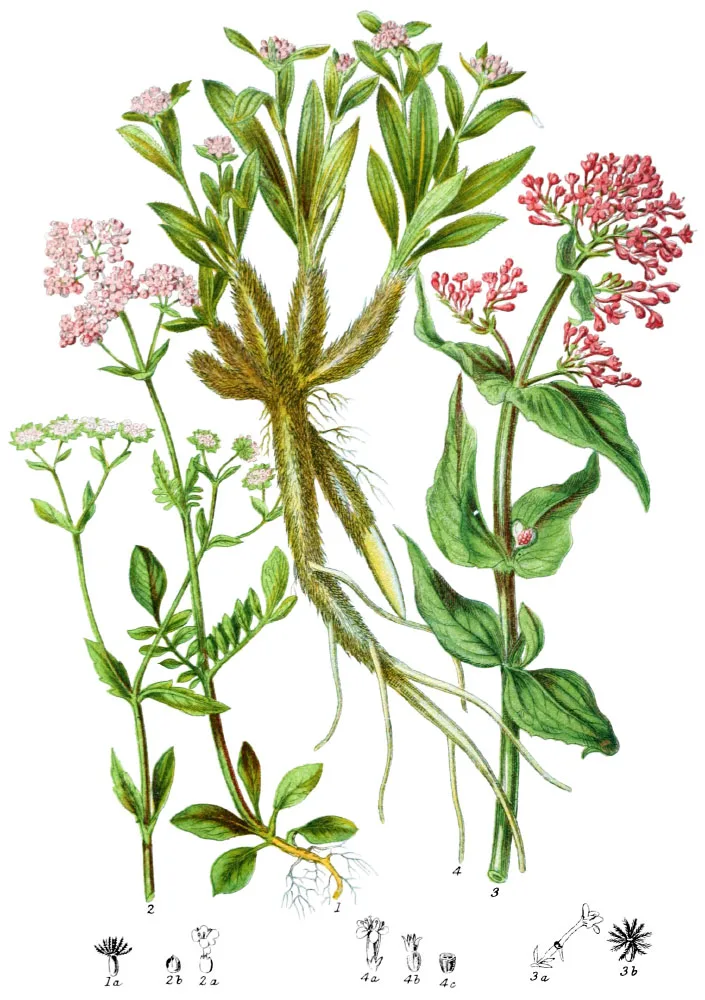
图中植物与部位
-
1.
Valeriana dioica
, Marsh Valerian Bogs, England
- 1a. Unnamed*
-
2.
Fedia olitoria
, Corn-Salad Corn-fields, England
- 2a. Flower
- 2b. Fruit
-
3.
Centrathus ruber
, Red Centranthus England
- 3a. Flower
- 3b. Fruit and Calyx
-
4.
Nardostachys Jatamansi
, Spikenard Himalayas
- 4a. Flower
- 4b. Fruit and Calyx
- 4c. Section of Fruit
关于本图版
此图原刊于《植物自然目》(Natural Orders of plants),绘者为伊丽莎白·特温宁,成书于 1849 年。原书题作“Valerianaceæ”。此类图版是当时记录物种形态的主要方式。
全编共收录 160 幅图版,本图是其中一幅,原书将其列为 Order 75,见第 75 页,版式为纵幅,画面以黄绿为主色。此图由原件扫描修复而成,使用时请遵循页面标注的授权条款。
原书文字(英文 / 法文)
Key characteristics
Annual or perennial herbs, occasionally of a climbing nature; the leaves are opposite, entire at the edges, or variously divided, generally crowded at the base of the stem near the root. The flowers are sometimes imperfect in stamens and pistil. The calyx is above the ovary; the lobes membranous, or converted into a feathery down as the seed ripens. The corolla is composed of one petal, of a tubular form, inserted into the top of the ovary, having from three to six division, either regular or irregular, sometimes spurred at the base. The stamens are from one to five, inserted into the tube of the corolla, alternate with its lobes. The ovary is below the calyx, with one or three cells; the style is simple, terminated by one or three stigmas, according to the number of the cells. The fruit is dry, not gaping when ripe, one cell bearing a seed, the others empty; the seed is solitary, pendulous, without albumen.
These herbs have most connexion with the Teasel tribe; but are distinguished by the absence of small leaflets at the base of each floret, and the want of albumen in the seed.
Aromatic and medicinal properties, and a strong scent prevail in the Tribe.
Select plants in this order
Not all plants listed are illustrated and not all plants illustrated are listed.
- Valeriana includes several European species, two of which are frequent in England, in moist, marshy localities.
- V. pyrenaica is chiefly found in the south of Scotland.
- V. dioica (1) grows generally in bogs or wet meadows; it has a creeping perennial root, and flowers in June; the stamens and pistil are sometimes united in the same flowers, although usually separate in plants. The root is thought to possess slightly medicinal properties, inferior to those of V. officinalis, which is a larger plant, growing frequently about the borders of pools and rivers. In France, it is also very common in woods, especially in the neighbourhood of Paris, and the root is much employed in medicine.
- The species named Phu, from the Arabic, is the true medicinal Valerian of Dioscorides, and was highly valued by the ancients; the scent of this and V. officinalis is extremely repulsive, but is so agreeable to cats, that the plants are with difficulty preserved from their attacks.
- The oil of the root is, however, in some instances of pleasant odour, and that of V. celtica is esteemed as perfume; the roots are collected by the poor peasants, at a considerable risk, from the precipitous rocks on the Alps of Styria and Carinthia, and sold to the merchants, who pass them on from Trieste to Turkey and Egypt, and to all the Eastern nations, for their aromatic baths.
- V. Hardwickii is a native of the Himalayas, growing on the margins of fields and in fissures of rocks; it is about three feet in height; the stalk, and leaves, like most mountain plants, are hairy; the root-leaves heart-shaped, on long stalks, and decumbent on the ground; the flowers are small and scentless.
- Fedia olitoria (2) appears in early spring in cornfields, and is cultivated in gardens as an useful salad-herb; the French use it commonly for this purpose.
- Centranthus ruber (3) prefers dry situations, old walls and chalk pits; on the cliffs of the Kentish coast it is not unfrequent, and remains in flower throughout the summer months.
- Nardostachys Jatamansi (4) of the Hindoos was ascertained by Dr. Royle to be the true Spikenard of anitquity, mentioned by Horace as of extreme rarity and costliness, and by the Evangelists as “very precious,” the price of the ointment poured on the head of Christ being “more than three hundred pence,” the value of a whole year’s earnings of a labourer in that time and country: it was not only reserved for the most solemn purposes of anointing, but considered as highly valuable in medicine. Dioscorides and Ptolemy describe the localities of the Indian Nard, which agree with those where it still grows on the mountains bordering Bootan. On the lofty ranges of the Himalaya it is found at an elevation of 9000 feet, amongst various alpine plants which can endure the rigour of a climate where the snow rests on the ground for six months. The roots are clothed with dark hairs, giving them the appearance of an ermine’s tail; they are gathered together and brought down in large quantities, to be sold in the bazaars at Saharunpore and elsewhere, for the sake of the agreeable scent, as well as for medicinal purposes.
- Astrephia is esteemed in Peru for its healing qualities.
- Patrinia is a Siberian genus with yellow flowers, found also in northern India and Japan.
- Triplostegia of the Himalayas forms a connecting link with the Honeysuckle tribe, the flowers being furnished with a small involucre show peculiar resemblance to the Teasel tribe.
Locations
This Tribe exists in nearly all countries where the climate is temperate, but is rare in Africa and North America. It abounds in Europe, and on the mountains of South America and Northern India. Valeriana grows on the Andes at 13,000 feet.
Legend
- Valeriana dioica, Marsh Valerian. Bogs, England.
- Fedia olitoria, Corn-Salad. Corn-fields, England.
- Flower.
- Fruit.
- Centranthus ruber, Red Centranthus. England.
- Flower.
- Fruit and Calyx.
- Nardostachys Jatamansi, Spikenard. Himalayas.
- Flower.
- Fruit and Calyx.
- Section of Fruit.
本图涉及的植物
- Valeriana dioica
- Fedia olitoria
- Centranthus ruber
- Nardostachys Jatamansi
属索引
- Astrephia
- Centranthus
- Fedia
- Nardostachys
- Patrinia
- Triplostegia
- Valeriana