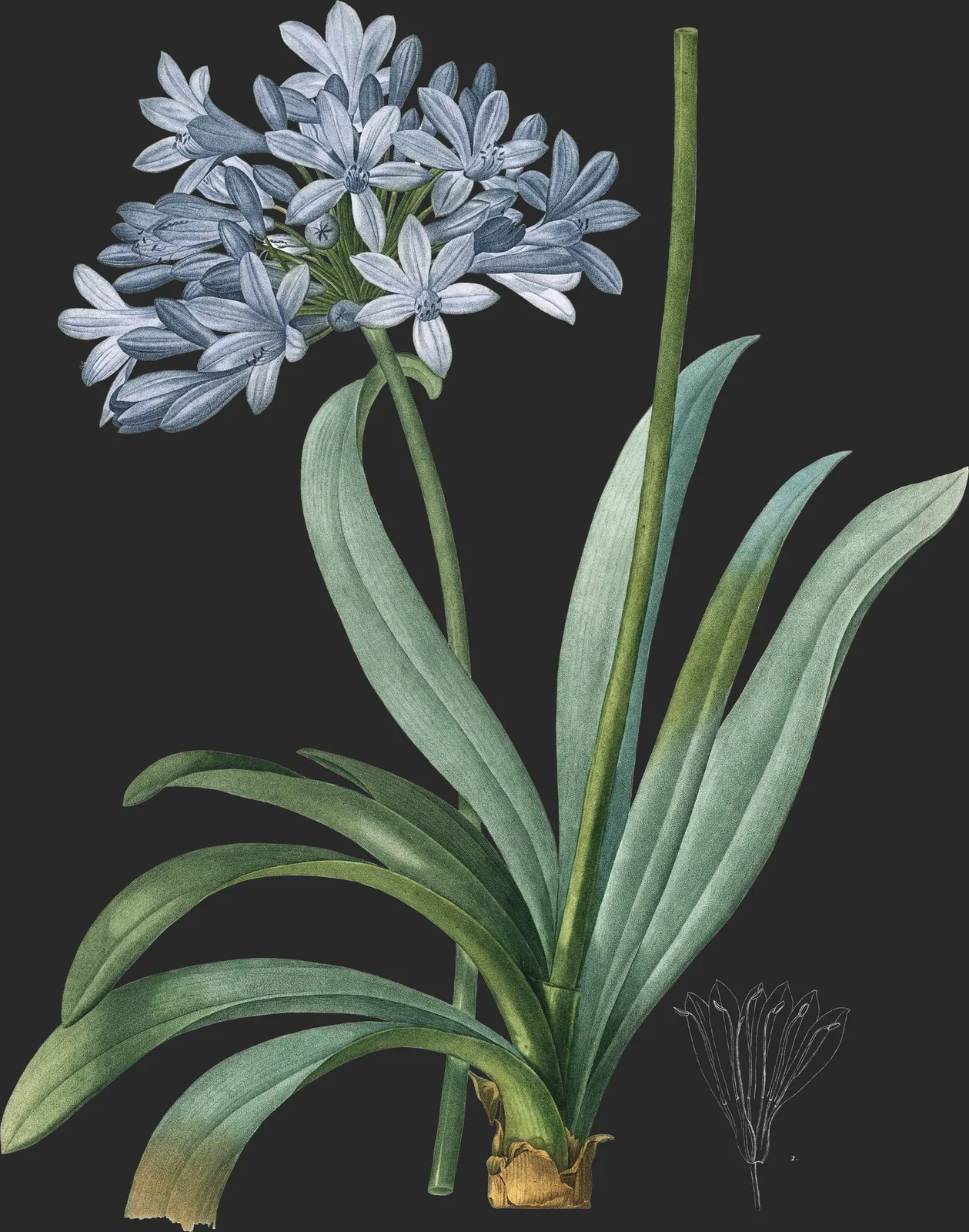
Agapanthus Umbellatus
百子莲属
Agapanthe en Ombelle
Ten ways of seeing
- measured cast blue
- slightly upright 1.27 : 1
First Look
江馆清秋,晨起看竹,烟光日影露气,皆浮动于疏枝密叶之间。
—— 清·郑板桥《题画竹》
On an autumn morning at the river lodge I looked at the bamboo: mist, sunlight, dew, all drifting among the sparse and dense leaves.
Slightly taller than wide; the eye lands above centre. Then step in close: watch where colour meets line, and whether the line ever breaks. Third, find where the green is deepest: the whole tonal order is measured from that patch.
Name and Thing
The binomial is Agapanthus umbellatus: the first word is the genus it belongs among, the second the epithet that sets it apart. Two words carry a whole provenance. The older system filed it under Amaryllidaceæ by overall affinity; Linnaeus, counting stamens only, placed it in Hexandria — two ways of asking what a plant is. The Chinese name 百子莲属 is a modern rendering of the Latin, not an old garden name.
Form and Colour
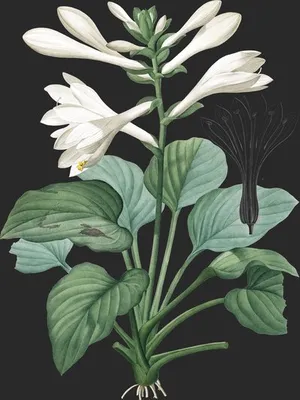
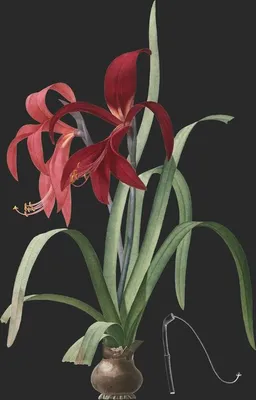
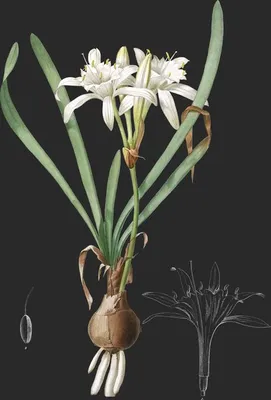
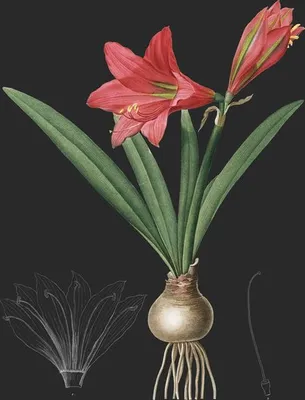
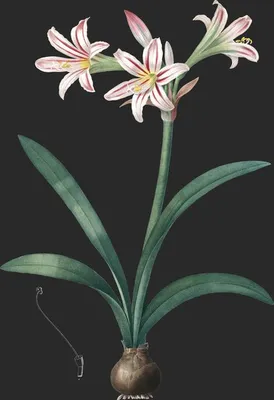
Measured on this plate: flower colour covers 3.3% of the sheet, foliage 9.9%, the cast blue with a second note of yellow-green. No other plate shares exactly this measure. Bulbous plants store the year underground — bulb, corm or tuber — then send up a few thick leaves and a single scape, with six tepals in cup, funnel or star. a moss green. Three things fix the habit: leaf arrangement, tepal count, and how the flower is borne.
Composition
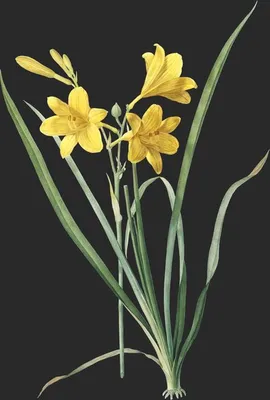
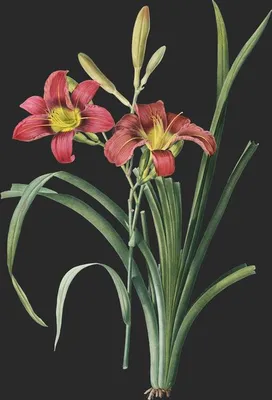
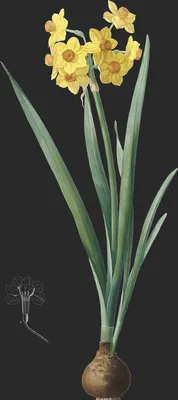
The sheet is slightly tall. No details are appended: a plate for looking, not for keying out. The plant takes about 33% of the sheet, centred near the centre — the easy measure most florists kept to.
Line and Colour
The first half of the nineteenth century moved from copper to steel to lithography; stipple could render the softest transition. Decide first whether it was printed or painted; only then discuss whether it is beautiful. If you mean to copy it: take its skeleton, its margins and the order of its colours; the burin's hatching is the language of copper — suggest it with pencil density, do not imitate it stroke for stroke.
Poetic Resonance
郁金香是兰陵酒,枉入诗人赋咏来。
—— 宋·王安石《答熊本推官金陵寄酒》
The poem gives the mood first and the picture supplies the form; set the line beside the plate and the green the corolla becomes its resting point.
Symbolism
The tulip was an imperial emblem in Istanbul and a speculative bubble in Amsterdam; the hyacinth sprang from a boy's blood in Greek myth. What bulbs share is concealment: next year kept underground. In a flora it is a species first and a symbol second; the order is worth keeping.
Season and Place
Early spring to early summer, genus by genus: tulips and hyacinths first, gladiolus and amaryllis later. Three homelands: the Mediterranean, Central Asia and South Africa. The tulip came from Ottoman gardens and became a Dutch mania. The year 1802 on the plate is that of publication, not of flowering — the gathering came a year or two earlier. The bud and the ripe fruit on one branch tell the season; the name in the title often tells the journey.
The Book and the Hand
“The Liliaceae” carries only Pierre-Joseph Redouté's name. A plate is collective work: drawer, engraver and colourist were different hands, and the unnamed ones decided how good it looks.
What to Take Away
If you keep one line, keep Guo Xi's: from afar its momentum, up close its texture. Two centuries on, the plant may still flower in some garden; the one on this sheet stopped in the season of 1802.
About this plate
Description
Cette belle plante réunit le port des Amaryllis, la disposition des fleurs des Crimums et la couleur bleue des Jacinthes.
De sa racine, qui est tabéreuse, sortent des feuilles longues, étroites, peu pointues, disposées sans ordre autour de la plante, étalées, mais non couchées sur la terre.
Entre les feuilles séleve une hampe nue, haute de 7–8 décimètres, cylindri-que, glabre, verte, ferme. Cette hampe porte à son sommet 15–20 fleurs d’un bleu de Jacinthe, disposées en ombelle. Chaque fleur est portée sur un pédicelle cylindrique, vert, glabre, long de 2 centimètres.
La corolle est en forme d’entonnoir, régulière, placée sous l’ovaire: son tube est à peu près eylindrique, un peu évasé par le haut, court, c’esta-dire, qu’il ne dépasse pas 13 millimètres de longueur: le limbe est à six divisions oblongues, obtuses, égales, longues de 35 millimètres.
Les étamines sont un peu déjetées du côté supérieur: on en compte six; les filets adhèrent au tube pendant sa longueur, et alors ils sont blancs, puis ils deviennent libres, peu plus courts que la corolle, et portent des anthères ovales, jaunes, noirâtres après la fleurai-son; les trois plus longues étamines sont placées devant les divisions extérieures de la corolle, lesquelles sont calleuses au sommet.
L’ovaire est blanc, droit, trigone, de la longueur du tube; le style est bleu, plus court que les étamines; le stigmate est simple, obtus.
Je n’ai pu voir le fruit de cette plante.
Histoire
L’Agapanthe en ombelle, que les jardiniers nomment Tubéreuse bleue, fleurit en été dans nos jardins. Il en fait l’ornement par la beauté de ses fleurs, mais on regrette, en les voyant, qu’elles soient dépourvues d’odeur.
Cette plante est originaire d’Afrique. ♃.
Fam. des Narcisses. Juss.—Hexandrie monogynie. Lin.
- Agapanthas umbellatus. A. scapo foliis linearibus longiore, floribus umbellatis, tabo brevissimo. Wild. Spec. 9. p. 47.
- Agapanthus umbellatus. L’Her. sert. angl. 18. Cart. Mag. t. 500.
- Agapanthus tuberosas. Lin. mss. ined.
- Maublia africana. Dahl. obs. 26.
- Maublia linearis. Thunb. prodr. 6o.
- Crinum africanum, Lin. Spec. 419. Knorr. del. 1. t. L. 10.
- Crinole d’Afrique. Lam. Dict. 2. p. 189.
- Polyanthes Moribos ambellatis. Lin. Vir. Cliff. 29. Mill. Icon. t. 210.
- Talbaghia Heisteri. Fabr. helmst. 4.
- Talbaghia. Heist. Brunsiv. 10.
- Hyacinthas africanas tuberosus flore cæruleo umbellato. Breyn. prodr. 1. p. 39. ic. 23. t. 10. Comm. hort. 2. p. 133, t. 67. Seb. Thes. 1. p. 29. t. 19. f. 4.
- Hyacintho allinis tuberosà radice africanà, umbellà ecruleà inodorà. Pluk. alm. 187. t. 195. f. 1.