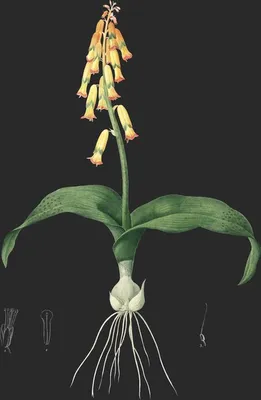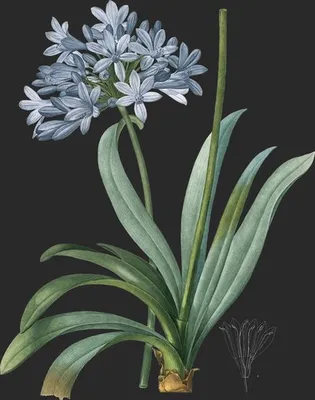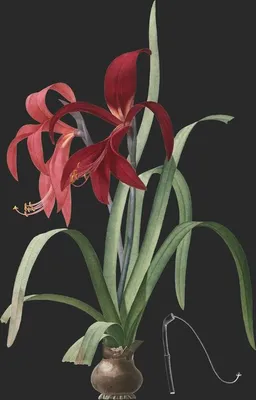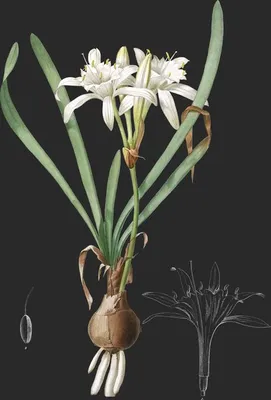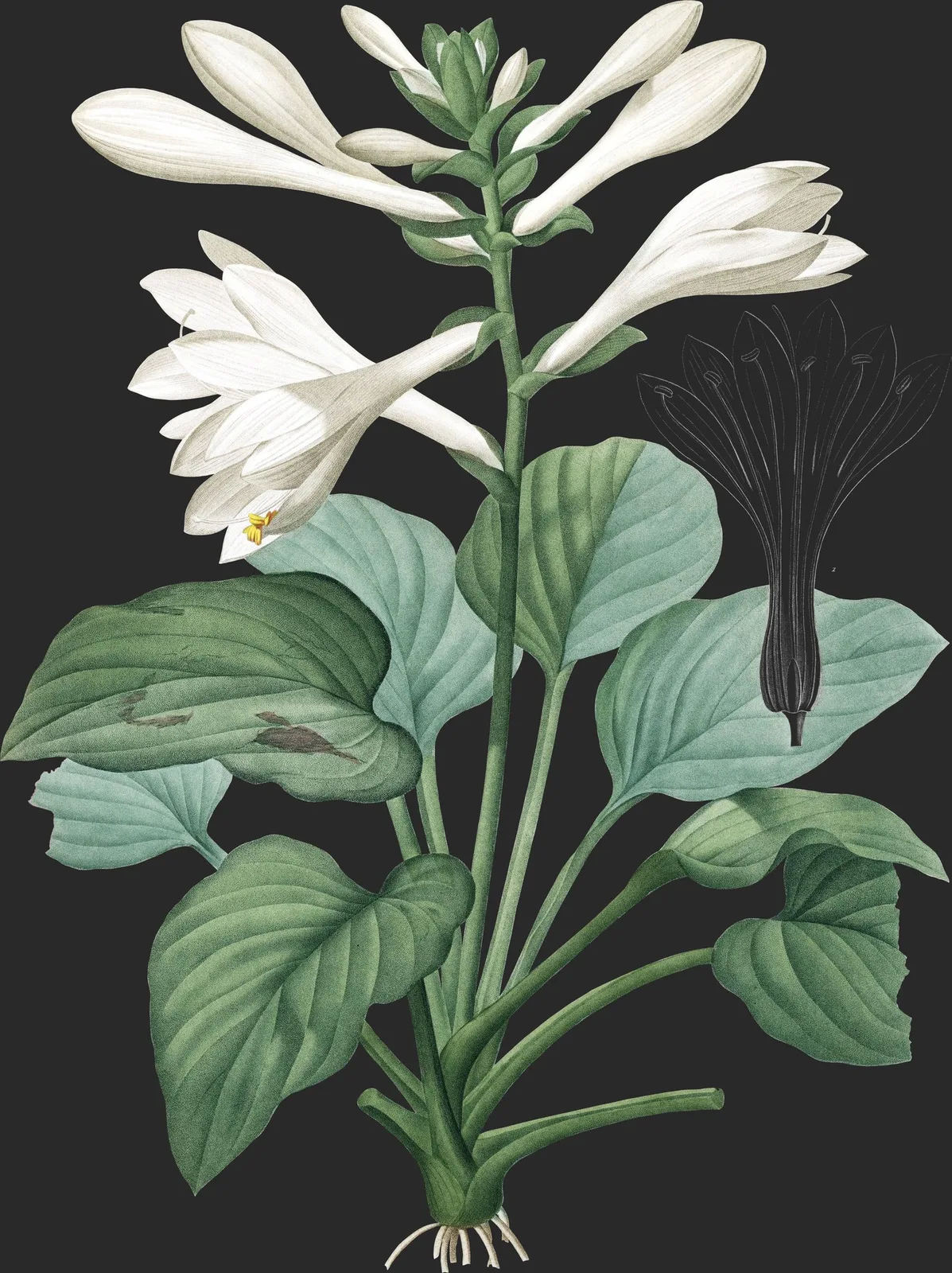
Hemerocallis Japonica
萱草属
Hemerocalle du Japon
Ten ways of seeing
- measured cast yellow-green
- upright 1.34 : 1
First Look
真山水之川谷,远望之以取其势,近看之以取其质。
—— 宋·郭熙《林泉高致·山水训》
Mountains and valleys: from afar take their momentum, up close take their texture — the two distances from which any picture is read.
The sheet is vertical: the eye climbs and settles in the upper half. Let the plant stand before you look for detail. Then step in close: watch where colour meets line, and whether the line ever breaks. Third, find where the green is deepest: the whole tonal order is measured from that patch.
Name and Thing
The binomial is Hemerocallis japonica: the first word is the genus it belongs among, the second the epithet that sets it apart. Here the epithet japonica means “of Japan” — the name records the feature the namer noticed first. The older system filed it under Amaryllidaceæ by overall affinity; Linnaeus, counting stamens only, placed it in Hexandria — two ways of asking what a plant is. The Chinese name 萱草属 is a modern rendering of the Latin, not an old garden name.
Form and Colour
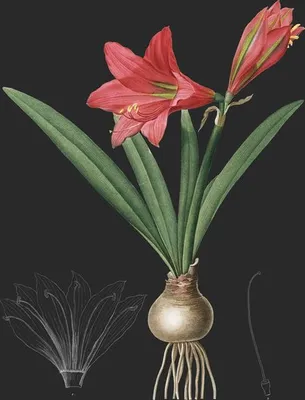
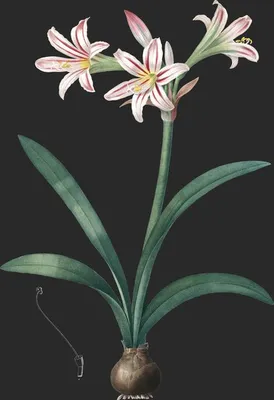
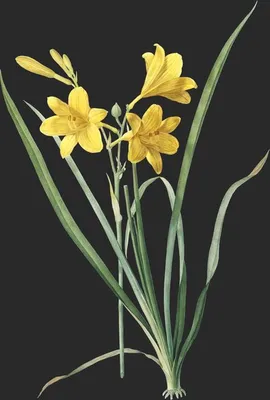
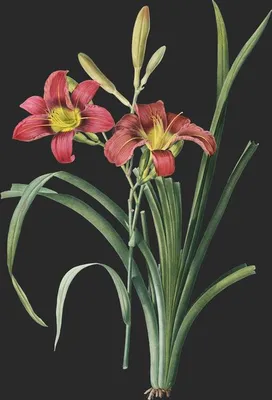
Measured on this plate: flower colour is sparing, 0.1% of the sheet against 17.7% of foliage, the cast tending yellow-green — as with pale or white blooms, outline and tone do the talking. Bulbous plants store the year underground — bulb, corm or tuber — then send up a few thick leaves and a single scape, with six tepals in cup, funnel or star. a moss green. A single plant, laid out with nothing hidden.
Composition
The sheet is tall. No details are appended: a plate for looking, not for keying out. The plant fills 43% of the sheet, centred near the centre — the herbarium way, drawn to be read whole.
Line and Colour
The first half of the nineteenth century moved from copper to steel to lithography; stipple could render the softest transition. Take a loupe to three places: petal edge, leaf vein, caption. An unbroken line means engraving; colour crossing the outline means a hand. If you mean to copy it: take its skeleton, its margins and the order of its colours; the burin's hatching is the language of copper — suggest it with pencil density, do not imitate it stroke for stroke.
Poetic Resonance
仙衣才试郁金黄,便觉秋风满院芳。
—— 宋·朱熹《次劉彥集木犀韻三首 其二》
The poem gives the mood first and the picture supplies the form; set the line beside the plate and the green the corolla becomes its resting point.
Symbolism
The tulip was an imperial emblem in Istanbul and a speculative bubble in Amsterdam; the hyacinth sprang from a boy's blood in Greek myth. What bulbs share is concealment: next year kept underground. In a flora it is a species first and a symbol second; the order is worth keeping.
Season and Place
Early spring to early summer, genus by genus: tulips and hyacinths first, gladiolus and amaryllis later. South African bulbs filled European glasshouses after 1800. The year 1802 on the plate is that of publication, not of flowering — the gathering came a year or two earlier. Read the locality and the flowering season both with a discount: one is hearsay, the other a ten-day peak.
The Book and the Hand
“The Liliaceae” carries only Pierre-Joseph Redouté's name. The image is public domain; the hand-colouring is still one person's hand.
What to Take Away
Appreciation is not knowledge but habit — one more look each time. Two centuries on, the plant may still flower in some garden; the one on this sheet stopped in the season of 1802.
About this plate
Description
Cette Liliacée se distingue au premier aspect par la grandeur de ses fleurs, et surtout par la largeur de ses feuilles, qui, au lieu d’être alongées et étroites comme celles de la plupart des monocotyledones, sont au contraire larges et rétrécies en pétiole.
Les racines sont nombreuses, fibreuses, épaisses, cylindriques, blanchâtres: la tige est herbacée, cylindrique, glabre, droite, simple, et ne s’élève pas au-delà de 4–5 décimètres; à sa base seulement elle porte quelques feuilles éparses: ces feuilles sont à peu près en forme de cœur; elles sont aigués, luisantes en dessous, rétrécies en un pétiole creusé en gouttière, et qui embrasse la tige par sa base; les nervures partent du pétiole; elles se contournent parallèlement aux bords de la feuille, et viennent se réunir au sommet.
Au sommet de la tige se trouvent 10–12 fleurs disposées en épi läche, portées sur un pédicelle court, épais, blanc, et de nature analogue à la fleur; à la base de ce pédicelle sont deux bractées; l’une estérieure, plas grande, oblongue, aigué, verte, embrasse la tige et la base de la fleur; l’autre intérieure, plus petite, souvent avortée.
La corolle est grande, blanche, en cloche alongée; son tube est cylindrique, long de 9–10 centimètres; le limbe est divisé jusqu’au milieu en six divisions, dont trois extérieures un peu étalées, et trois intérieures.
Les étamines sont insérées sur le tube, un peu inclinées, blanches, cylindriques, un peu plus courtes que la corolle: elles portent des anthères hannatres, ovales, à deux loges, insérées par le milien de leur longueur, émettant une poussière séminale jaune par deux fentes placées sur le côté opposé au pistil.
Lovaire est cylindrique, blane, à six sillons, placé sous la fleur; le style est blanc, un pen incliné, égal à la corolle en longueur: il se termine par un stig mate en tête, à trois angles obtus, un peu barbu.
Je n’ai pu voir le fruit, qui est sans doute une capsule à trois loges et à trois valves.
Histoire
Cette plante est originaire du Japon. ♃.
On la cultive dans les jardins de botanique, et elle commence à se répandre dans ceux des amateurs.
On la multiplie par la division de ses racines.
Elle doit être placée dans la serre chaude.
Explication de la planche
La Plante de grandeur naturelle.
- Corolle ouverte et étalée.
Fam. des Narcisses. Juss.—Hexandrie monogynie. Lin.
- Hemerocallis japonica. H. foliis subrotundo-ovatis acuminatis. Wild. Spec. 2. p. 198.
- Hemerocallis japonica. H. foliis ovatis undulatis multinervis. Thunb. Act. soc. Lin. Lond. 2. p. 335.
- Jacksan. Kœmpf amen. 863. Banks. Icon. Kœmpf. t. 11.