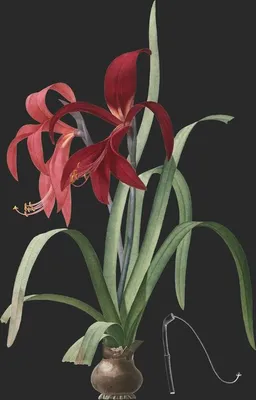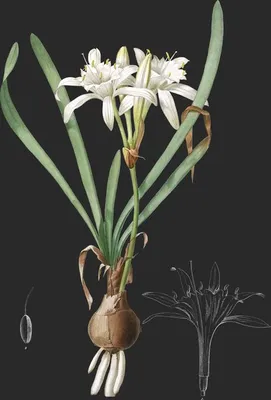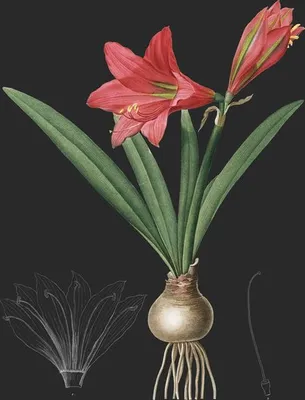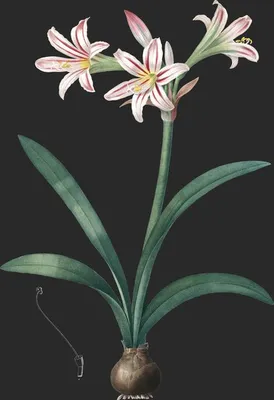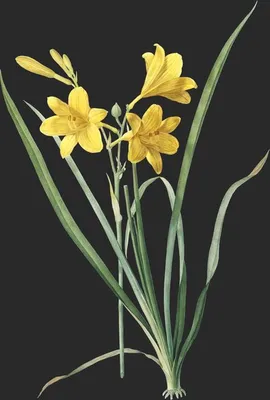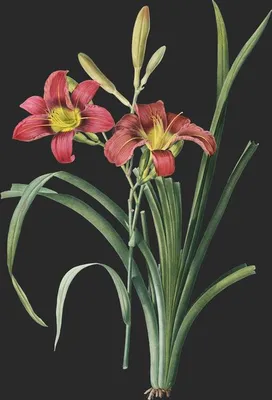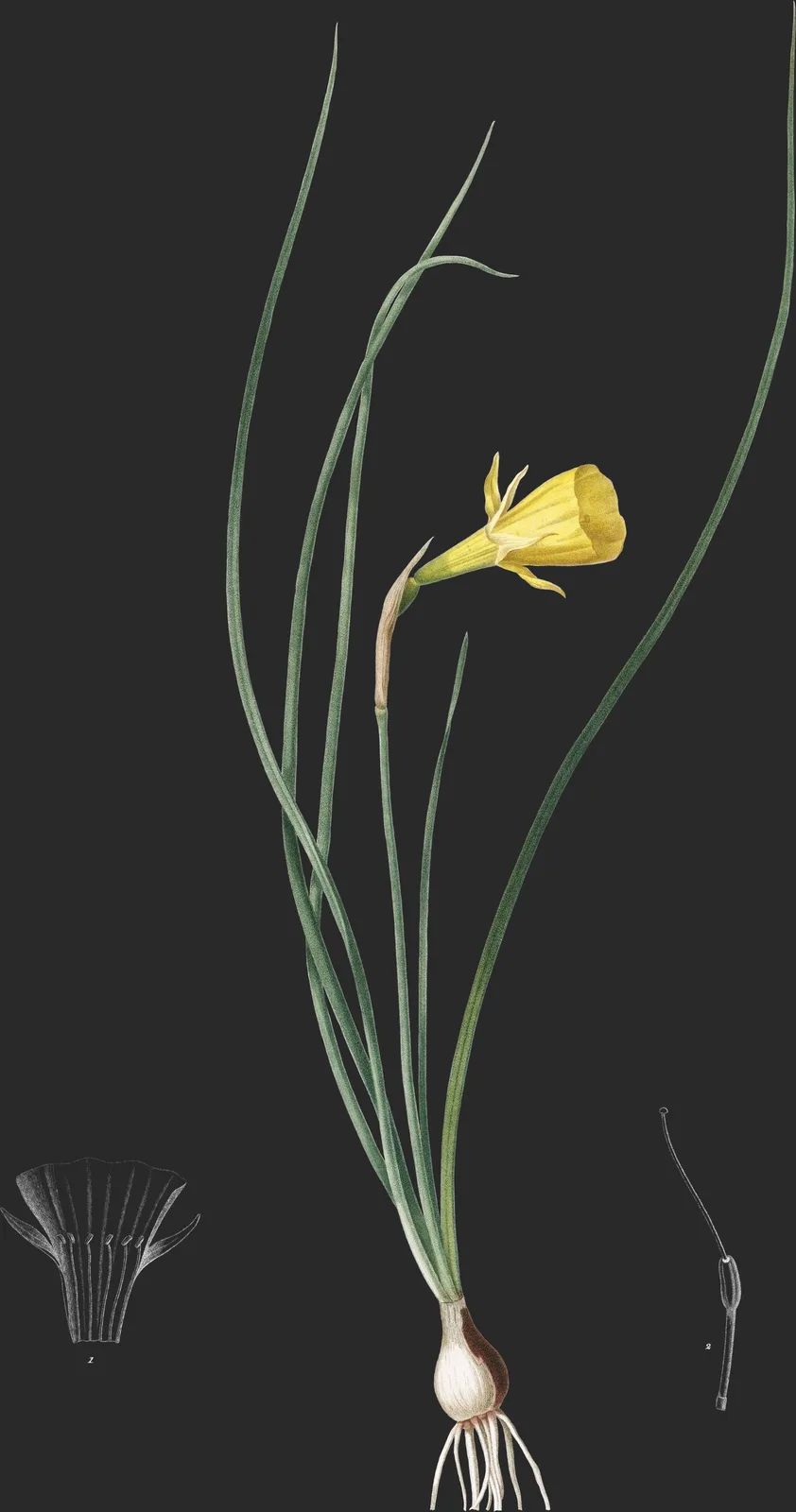
Narcissus Bulbocodium
水仙属·Narcissus Bulbocodium
Narcisse Bulbocode
Ten ways of seeing
- measured cast yellow-green
- upright 1.90 : 1
First Look
搜尽奇峰打草稿。
—— 清·石涛《苦瓜和尚画语录》
Exhaust the strange peaks, and then make the sketch.
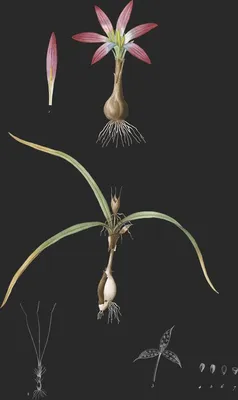
The sheet is vertical: the eye climbs and settles in the upper half. Let the plant stand before you look for detail. Then step in close: watch where colour meets line, and whether the line ever breaks. Third, find where the yellow is deepest: the whole tonal order is measured from that patch. The pose leans right: the upper half carries 9 points further right than the lower — a living thing, not a diagram.
Name and Thing
The binomial is Narcisse bulbocode: the first word is the genus it belongs among, the second the epithet that sets it apart. Two words carry a whole provenance. The older system filed it under Amaryllidaceæ by overall affinity; Linnaeus, counting stamens only, placed it in Hexandria — two ways of asking what a plant is. No established Chinese name exists, so it is cited by its binomial alone.
Form and Colour
Measured on this plate: flower colour covers 1.4% of the sheet, foliage 1.3%, the cast yellow-green with a second note of amber. No other plate shares exactly this measure. Bulbous plants store the year underground — bulb, corm or tuber — then send up a few thick leaves and a single scape, with six tepals in cup, funnel or star. Filed under yellow — a honey-yellow, built in washes from a pale ground. Read the outline, then the colour layers, then the brush.
Composition
The sheet is tall. No details are appended: a plate for looking, not for keying out. The plant covers only 8% of the sheet, centred near the centre; the emptiness is where the eye rests.
Line and Colour
The first half of the nineteenth century moved from copper to steel to lithography; stipple could render the softest transition. Take a loupe to three places: petal edge, leaf vein, caption. An unbroken line means engraving; colour crossing the outline means a hand. If you mean to copy it: take its skeleton, its margins and the order of its colours; the burin's hatching is the language of copper — suggest it with pencil density, do not imitate it stroke for stroke.
Poetic Resonance
仙衣才试郁金黄,便觉秋风满院芳。
—— 宋·朱熹《次劉彥集木犀韻三首 其二》
The poem gives the mood first and the picture supplies the form; set the line beside the plate and the yellow the corolla becomes its resting point.
Symbolism
The tulip was an imperial emblem in Istanbul and a speculative bubble in Amsterdam; the hyacinth sprang from a boy's blood in Greek myth. What bulbs share is concealment: next year kept underground. This plate leans yellow, which in flower language adds one more degree of feeling. Flower language was added later; the flower knows nothing of it, and that innocence is part of its power.
Season and Place
Early spring to early summer, genus by genus: tulips and hyacinths first, gladiolus and amaryllis later. Three homelands: the Mediterranean, Central Asia and South Africa. The tulip came from Ottoman gardens and became a Dutch mania. The year 1802 on the plate is that of publication, not of flowering — the gathering came a year or two earlier. See this kind of plate in the flowering season if you can: once you have met the living flower, you stop reading only colour.
The Book and the Hand
“The Liliaceae” carries only Pierre-Joseph Redouté's name. From drawing to plate the sheet passed through several hands — the engraver aimed at accuracy, the colourist at speed, and between them lies each plate's unevenness.
What to Take Away
Carry three rules away: whole before detail; line before colour; picture before book. The flower of that year is dust, yet its image on paper has outlived every living cousin.
About this plate
Description
De toutes les espèces de Narcisses, il en est peu qui se distingue avec autant de facilité que le Narcisse bulbocode: sa hampe ne porte qu’une fleur dont le nectaire est plus long que la corolle; à ce seul caractère, on peut le recon-naitre avec certitude: esquissons cependant les traits principaux qu’offre la structure de cette plante.
Sa fleur est jaune, solitaire au sommet d’une hampe nue et cylindrique, entourée d’une spathe composée d’une seule feuille scarieuse. Cette feuille est le plus souvent droite, quelquefois plas ou moins penchée; sa corolle est d’une seule pièce, en entonnoir, découpée vers son sommet en six lanières étroites, courtes et pointues, et prolongée intérieurement en un nectaire presque ey-lindrique, évasé au sommet, plus long que les divisions de la corolle.
Les étamines sont insérées sur le tube de la corolle; elles sont renfermées dans le nectaire, et se déjettent un peu du côté inférieur, c’est-à-dire, du côté où la spathe est fendue; l’ovaire est sous la corolle; le style se déjette de côté avec les étamines, et atteint à peu près leur longueur.
Ajoutons encore à cette description que la plante est munie d’une racine bulbeuse, arrondie; on trouve quelquefois deux ou trois bulbes à côté l’un de l’autre: chacun d’eux pousse une hampe florale telle que nous l’avons décrite, et avec elle cinq ou six feuilles étroites, linéaires, glabres, droites et plus longues que la hampe; celle-ci atteint communément 10–12 centimètres de longueur.
Cette espèce diffère du Narcisse tardif par la grandeur de son nectaire.
Histoire
Le Narcisse bulbocode est originaire du Portugal, et croit aux environs de Lisbonne. ♃.
Il fleurit d’ordinaire au printemps dans nos jardins.
Explication de la planche
La Plante de grandeur naturelle.
- La corolle étalée.
- Le pistil.
Fam. des Narcisses. Juss.—Hexandrie monogynie. Linn.
- Narcissus bulbocodium. N. spathâ uniflorâ, nectario turbinato petalis majore, genitalibus declinatis. Lin. Spec. 650. Mill. Dict. n. 6. Curt. Mag. 88.
- Narcissus foliis subulatis, nectario maximo patulo, genitalibus declinatis. Lin. Hort. Cliff. 134. Roy. Lugd-b. 35.
- Narcissus montanus alter flore fimbriato. C. B. Pin. 53.
- Narcissas montanus juncifolius calyce aureo. C. B. Pin. 53. Rudb. Elys. 3. p. 75. f. 5. 7.
- Pseudo-Narcissus juncifolias a Ilavo flore. Clas. Hist. 1. p. 166.
- Narcissus montanus juncifolius minimus alter flore luteo. Lob. Icon. t. 118. f. 1. 2.