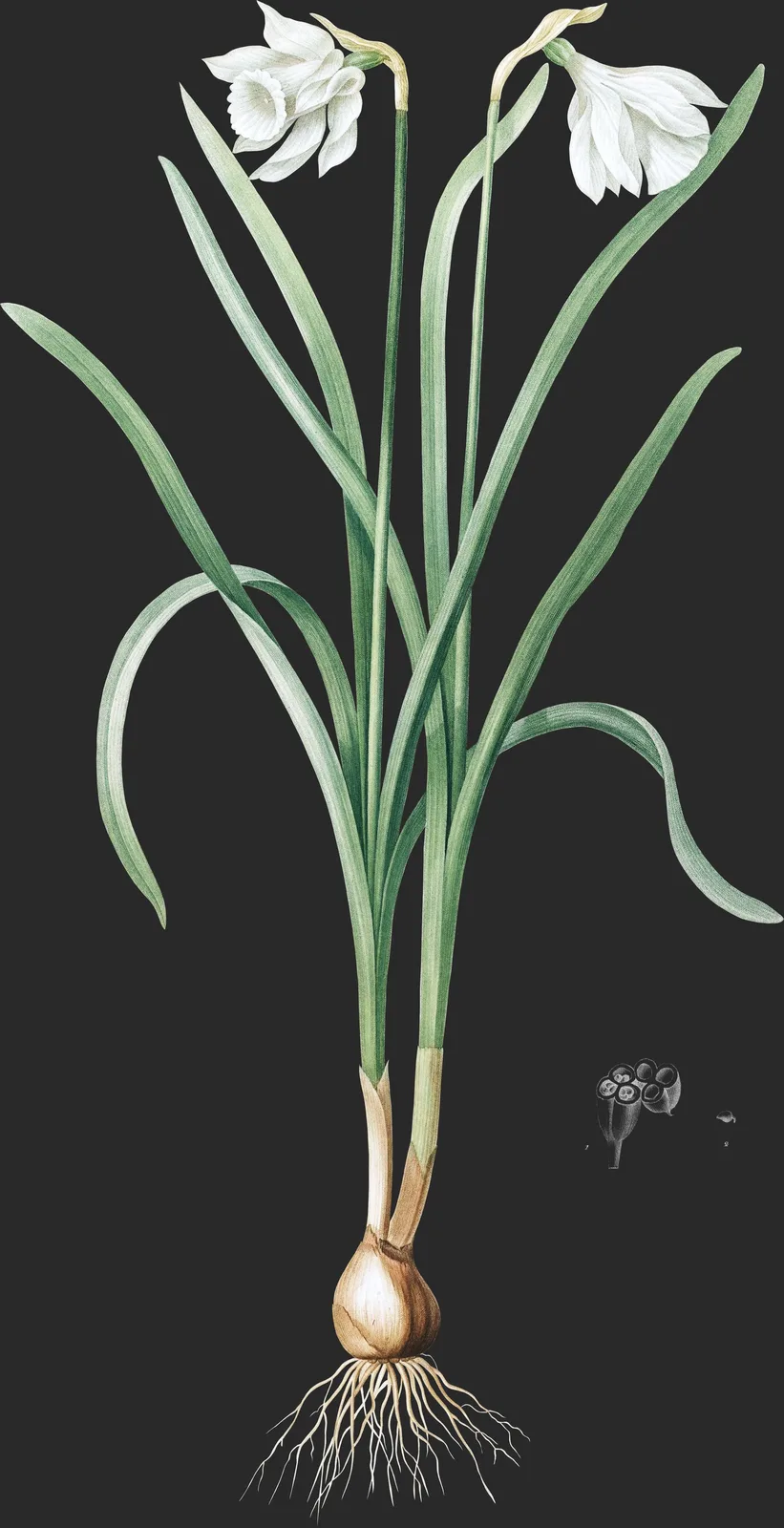
Narcissus Candidissimus
水仙属·Narcissus Candidissimus
Narcisse Blanc
Ten ways of seeing
- measured cast amber
- upright 1.95 : 1
First Look
论画以形似,见与儿童邻。
—— 宋·苏轼《书鄢陵王主簿所画折枝》
To judge painting by likeness alone is the view of a child.
The sheet is vertical: the eye climbs and settles in the upper half. Let the plant stand before you look for detail. Then step in close: watch where colour meets line, and whether the line ever breaks. Third, find where the green is deepest: the whole tonal order is measured from that patch.
Name and Thing
The binomial is Narcisse blanc: the first word is the genus it belongs among, the second the epithet that sets it apart. Two words carry a whole provenance. The older system filed it under Amaryllidaceæ by overall affinity; Linnaeus, counting stamens only, placed it in Hexandria — two ways of asking what a plant is. No established Chinese name exists, so it is cited by its binomial alone.
Form and Colour
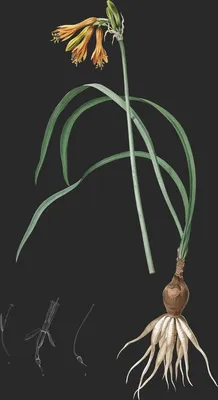
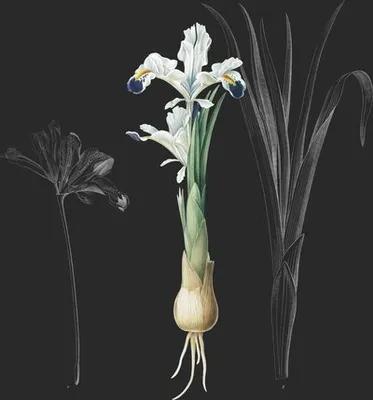
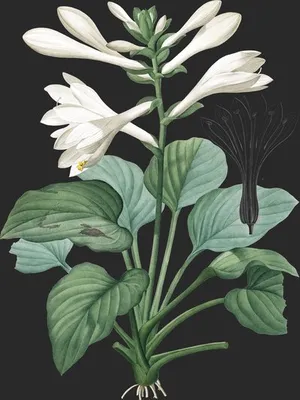
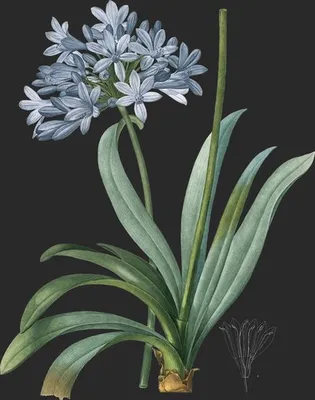
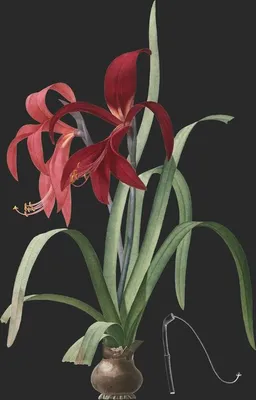
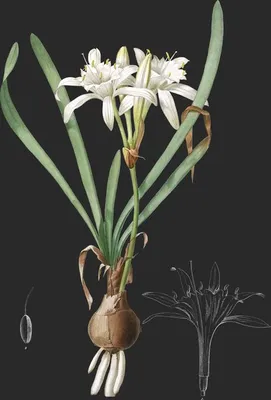
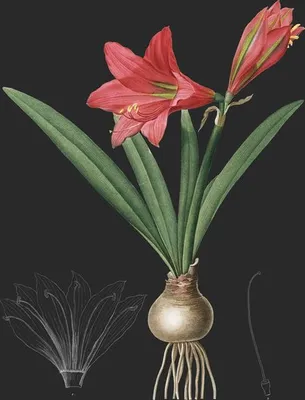
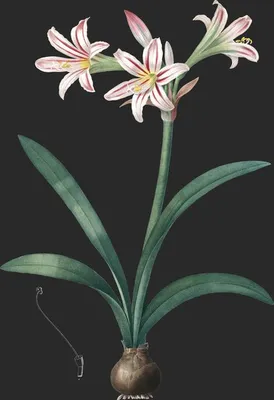
Measured on this plate: flower colour is sparing, 1.2% of the sheet against 4.9% of foliage, the cast tending amber — as with pale or white blooms, outline and tone do the talking. Bulbous plants store the year underground — bulb, corm or tuber — then send up a few thick leaves and a single scape, with six tepals in cup, funnel or star. a moss green. A single plant, laid out with nothing hidden.
Composition
The sheet is tall. No details are appended: a plate for looking, not for keying out. The plant covers only 18% of the sheet, centred above centre; the emptiness is where the eye rests.
Line and Colour
The first half of the nineteenth century moved from copper to steel to lithography; stipple could render the softest transition. There is evidence on the back too: the plate mark pressed into the paper, the slight relief of the pigment, lines worn shallow in a later printing. If you mean to copy it: take its skeleton, its margins and the order of its colours; the burin's hatching is the language of copper — suggest it with pencil density, do not imitate it stroke for stroke.
Poetic Resonance
郁金垂嫩柳,罯画委高笼。
—— 唐·元稹《春六十韻》
The poem gives the mood first and the picture supplies the form; set the line beside the plate and the green the corolla becomes its resting point.
Symbolism
The tulip was an imperial emblem in Istanbul and a speculative bubble in Amsterdam; the hyacinth sprang from a boy's blood in Greek myth. What bulbs share is concealment: next year kept underground. Flower language was added later; the flower knows nothing of it, and that innocence is part of its power.
Season and Place
Early spring to early summer, genus by genus: tulips and hyacinths first, gladiolus and amaryllis later. South African bulbs filled European glasshouses after 1800. The year 1807 on the plate is that of publication, not of flowering — the gathering came a year or two earlier. Read the locality and the flowering season both with a discount: one is hearsay, the other a ten-day peak.
The Book and the Hand
“The Liliaceae” carries only Pierre-Joseph Redouté's name. A plate is collective work: drawer, engraver and colourist were different hands, and the unnamed ones decided how good it looks.
What to Take Away
If you keep one line, keep Guo Xi's: from afar its momentum, up close its texture. Two centuries on, the plant may still flower in some garden; the one on this sheet stopped in the season of 1807.
About this plate
Observations
Cette plante, dont nous devons la première connaissance à l’Ecluse, a été décrite ou mentionnée par plusieurs des botanistes qui l’ont suivi; mais ensuite elle a été tout-à-fait oubliée, et il n’en est fait mention dans aucun ouvrage postérieur aux institutions de botanique de Tournefort. Il parait qu’elle était cultivée autrefois au jardin du Muséum d’Histoire naturelle, et il en existe un dessin très-soigné, quoique sans nom de peintre, dans la collection des vélins de cet établissement. Nous ne la connaissons nous-mêmes que par ce dessin, dont la planche ci-jointe est une copie. Elle se rapproche beaucoup du Narcisse faux Narcisse, par son port, par la forme de ses feuilles, par sa hampe uniflore et par la grandeur de son nectaire, qui atteint celle des segments du limbe du périgone; mais elle en dillère par ses tiges, réunies le plus souvent deux à deux sur la même bulbe, par ses fleurs un peu plus petites et entièrement blanches, et surtout par son nectaire, dont le bord n’est que légèrement crénelé, et à peine crispé. Ces dernières considérations nous engagent à nous ranger à l’opinion de M. Desfontaines, qui a regardé cette plante comme une espèce dis-tincte, et lui a assigné le nom sous lequel nous la désignons.
La patrie du Narcisse blane est peu connue. L’Ecluse regardait cette plante comme originaire des Pyrénées. Elle mérite d’être introduite de nouveau dans les jardins, où elle pourra occuper une place aussi distinguée qu’aucune autre plante de ce genre. Il sera facile alors de reconnaitre si c’est une espèce dis-tincte, ou si elle n’est qu’une simple variété du Narcisse faux Narcisse.
Explication de la planche
La Plante de grandeur naturelle.
- La capsule ouverte avec ses graines.
- Une graine séparée.
Fam. des Narcisses. Juss.—Hexandrie monogynie. Lin.
- Narcissus candidissimus, N. spathâ uniflorâ, nectario campanulato obscurè crenato aquante petala ovata.
- Narcissus candidissimus. Desf. in vél, du Mus. d’Hist. natur. x. 1. 49.
- Narcissus albus oblongo calyce. Bauh. pin. 53. Moris. hist. 2. p. 362. Tournef. instit. 356.
- Narcissus oblongo tubo totus albus. Swert. floril. t. 21. f. 7.
- Pseudo Narcissus totus albus. Hort. Eyst. vern. ord. 2. t. 2.
- Pseudo Narcissus albo flore. Clus. hist. append. atl. J. Bauh. hist. 2. p. 597.