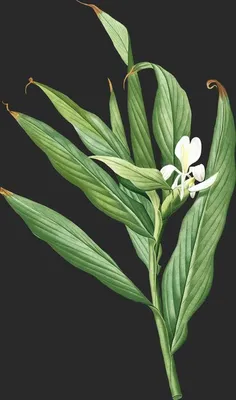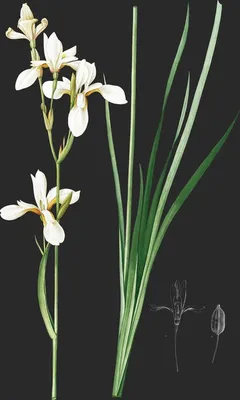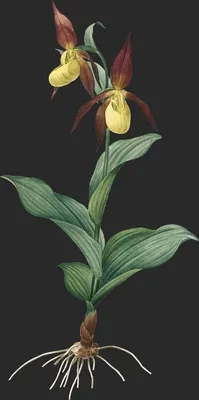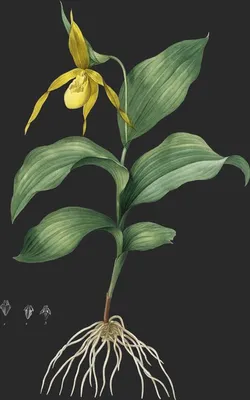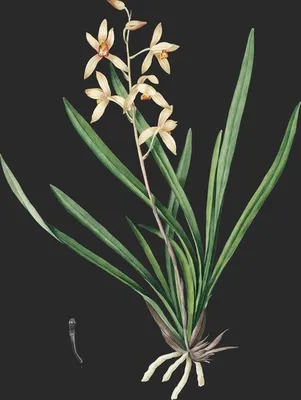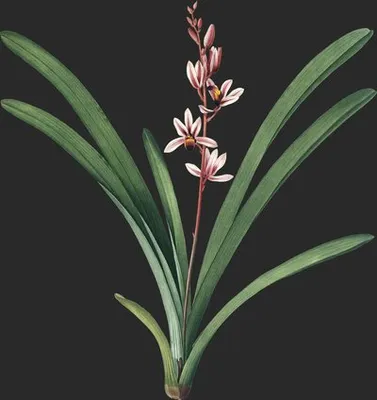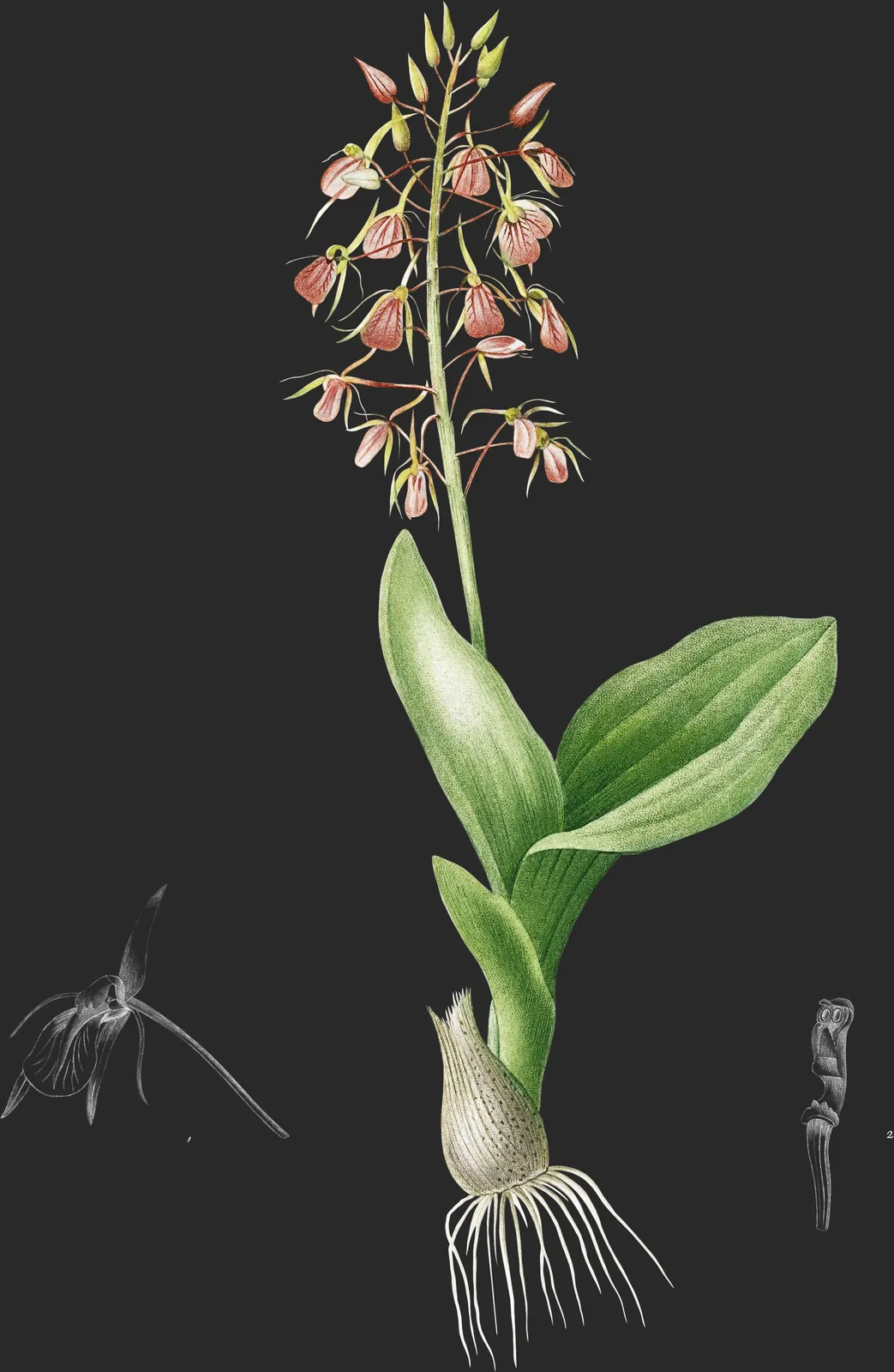
Ophrys Lilifolia var A
头蕊兰
Ophrys a Feuilles en Lis
About this plate
Description
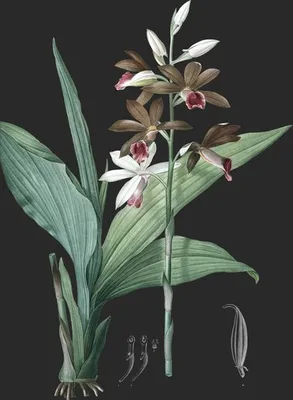
La bulbe de cet Ophrys est arrondie et plus grosse qu’une noisette. Les feuilles sont radicales, et il n’y en a que deux de bien remarquables, et assez grandes; une troisième, beaucoup plus petite, est inférieure et pliée en carène. Les deux feuilles, plus grandes et supérieures, sont ovales, en gouttière par leur base, glabres, très-entières, un peu obtuses, longues de huit centimètres (trois pouces). Leur nervure moyenne est épaisse et d’un vert pale, en carène tranchante au dos de la feuille.
La portion de la hampe, qui est nue, égale les feuilles en hauteur. Cette hampe se termine en une grappe d’environ vingt-cing fleurs, laches, portées par des pédicelles filiformes, longs d’un à deux centimètres (quatre lignes et demi à neuf lignes), striés, colorés, un peu pendants lorsque la fleur s’ouvre, se redressant ensuite, sontenus par une petite bractée ovale, aigué, blanchâtre.
Trois divisions extérieures du périgone sont oblongues, aiguës, d’une couleur verdâtre-violette, qui devient ensuite tout-i-fait verte. Deux divisions inté-rieures, très-étroites et filiformes, rejetées de côté, sont violettes. La troisième division est large, ovale-renversée, obtuse ou un peu échancrée, non tachetée, et d’un violet pâle.
Le style est arqué et violet à sa base, verdâtre au sommet, creusé en gouttière par-devant.
Les deux loges de l’anthère sont pratiquées sur le style au-dessous d’une petite lame recourbée, jaune, oblongue et aiguë.
Observations
L’Ophys lilifolia, dont Andrew a donné la première fois une figure dans le Bovanist’s reposiory, venait du riche jardin de M. Hamilton, propriétaire de la plantation de Woodlands en Pensylvanie, auprès de Philadelphie, et non moins connu des botanistes Frangais qui ont royage aus Eiats-Unis que des Anglais. Cet Ophrys est, suivant les botanistes, le même que celui décrit par Clayton, dans la Flore de Virginie, pag. 138. Nous avons indiqué notre plante comme une variété, parce qu’elle présente le tablier de la fleur arrondi, au lieu d’être acumine, Elle Meurit au Jardin des plantes du Muscum d Histoire naturelle, au mois de juin, et est cultivée en plein air dans la terre de bruyère. Ses fleurs ne sont point odorantes.
L’Ophrys lilifolia d’Europe, réuni par Linné dans le Species plantarum, p. 1341, à celui d’Amérique, est très-probablement une espèce distinete qu’il en faut séparer. C’est pourquoi nous n’avons accompagné notre description que des synonymes qui appartenaient à la plante d’Amérique.
Explication de la planche
La Plante de grandeur naturelle.
- Une fleur plus grande que nature.
- Le pistil.
Fam. des Orchidées. Juss.—Gynandrie diandrie. Lin.
- Ophrys lilifolia. O. foliis radicalibus ovatis, binis, obtusiusculis, nervo medio acutè carinato; scapo anguloso; laciniis perigonii duobus filiformibus; labello dilatato.
- A. Labello obtuso, sub-emarginato.
- B. Labello acuminato.
- Ophrys lilifolia. Andrew. bot. rep. tab. 65.
- Ophrys lilifolia. O. scapo nudo; foliis radicalibus ovato-oblongis, dimidii scapi longitudine. Gron. fl. Virg. 138. ubi descript. à Cl. Clayton.
- Malaxis lilifolia. M. foliis binis, ovato-lanceolatis; scapo triquetro; petalis interioribus reflexis, discoloribus; labello concavo, obovato; apice acuto. Swartz. Act. holm. 1800. p. 235. Willd. sp. pl. t. 4. p. 92.
Ten ways of seeing
- measured cast amber
- upright 1.53 : 1
- published 1814
- Plate 437
Not a catalogue entry but a way of looking: how to stand, what to notice, how the line was cut — then, halfway, a line of Chinese poetry: how the ancients saw this same flower. After it, the flower's language, its season and homeland, its book; and at the end one line of classical prose — and a pair of eyes to take away.
-
First Look
六法者何?一、气韵生动是也;二、骨法用笔是也;三、应物象形是也;四、随类赋彩是也;五、经营位置是也;六、传移模写是也。
—— 南齐·谢赫《古画品录》
The six laws: spirit resonance alive; bone-method in the brush; matching form; colour by kind; planning the placing; copying the masters.
The sheet is vertical: the eye climbs and settles in the upper half. Let the plant stand before you look for detail. Then step in close: watch where colour meets line, and whether the line ever breaks. Third, find where the green is deepest: the whole tonal order is measured from that patch.
-
Name and Thing
The binomial is Ophrys lilifolia: the first word is the genus it belongs among, the second the epithet that sets it apart. Two words carry a whole provenance. The older system filed it under Orchidaceæ by overall affinity; Linnaeus, counting stamens only, placed it in Gynandria — two ways of asking what a plant is. The Chinese name 头蕊兰 is a modern rendering of the Latin, not an old garden name.
-
Form and Colour
Measured on this plate: flower colour covers 2.7% of the sheet, foliage 6.8%, the cast amber with a second note of yellow-green. No other plate shares exactly this measure. Orchids carry pseudobulbs or fleshy roots; six tepals, one modified into a lip that serves as a landing stage, and a column uniting stamens and pistil — a structure unique to the family. Filed under green — a moss green, a colour that comes mostly from leaf and stem. Read the outline, then the colour layers, then the brush.
-
Composition
Tall and narrow, the plant rising in one movement with generous margins — the upright format of most floras. (about 1.53 : 1) No details are appended: a plate for looking, not for keying out. The plant covers only 14% of the sheet, centred a little right of centre; the emptiness is where the eye rests. Cover the margins with your thumb and the plate suffocates; uncover them and the flower breathes again.
-
Line and Colour
The first half of the nineteenth century moved from copper to steel to lithography; stipple could render the softest transition. There is evidence on the back too: the plate mark pressed into the paper, the slight relief of the pigment, lines worn shallow in a later printing. If you mean to copy it: take its skeleton, its margins and the order of its colours; the burin's hatching is the language of copper — suggest it with pencil density, do not imitate it stroke for stroke.
-
Poetic Resonance
红兰莫笑青青色,曾向龙山泛酒来。
—— 唐·韦庄《庭前菊》
The poem gives the mood first and the picture supplies the form; set the line beside the plate and the green the corolla becomes its resting point.
-
Symbolism
In China the orchid is the gentleman who blooms unseen; in Victorian Europe it was luxury and obsession, a single new species worth a fortune. Flower language was added later; the flower knows nothing of it, and that innocence is part of its power.
-
Season and Place
Varies by genus: temperate terrestrials flower in spring and summer, tropical epiphytes almost year-round. Worldwide, richest on tropical mountains. Chinese cymbidiums come from the hills of the south. The year 1814 on the plate is that of publication, not of flowering — the gathering came a year or two earlier. The bud and the ripe fruit on one branch tell the season; the name in the title often tells the journey.
-
The Book and the Hand
“The Liliaceae” was drawn by Pierre-Joseph Redouté and published 1802-1816. This plate is Plate 437, book page 437. The image is public domain; the hand-colouring is still one person's hand.
-
The Written Tradition
论画以形似,见与儿童邻。
—— 宋·苏轼《书鄢陵王主簿所画折枝》
To judge a painting by likeness alone is the view of a child.
Confucius, finding an orchid flowering alone in a valley, is said to have composed the 'Lament for the Orchid'; in the Li Sao, orchids are worn as a girdle of virtue. Keep the line; it will surface the next time you meet the same plant.
What to Take Away
Appreciation is not knowledge but habit — one more look each time. A flora exists to be consulted; look long enough and you forget to consult — someone in 1814 gave a whole day to a single flower.