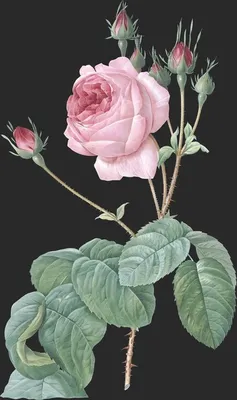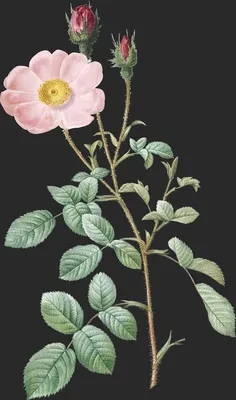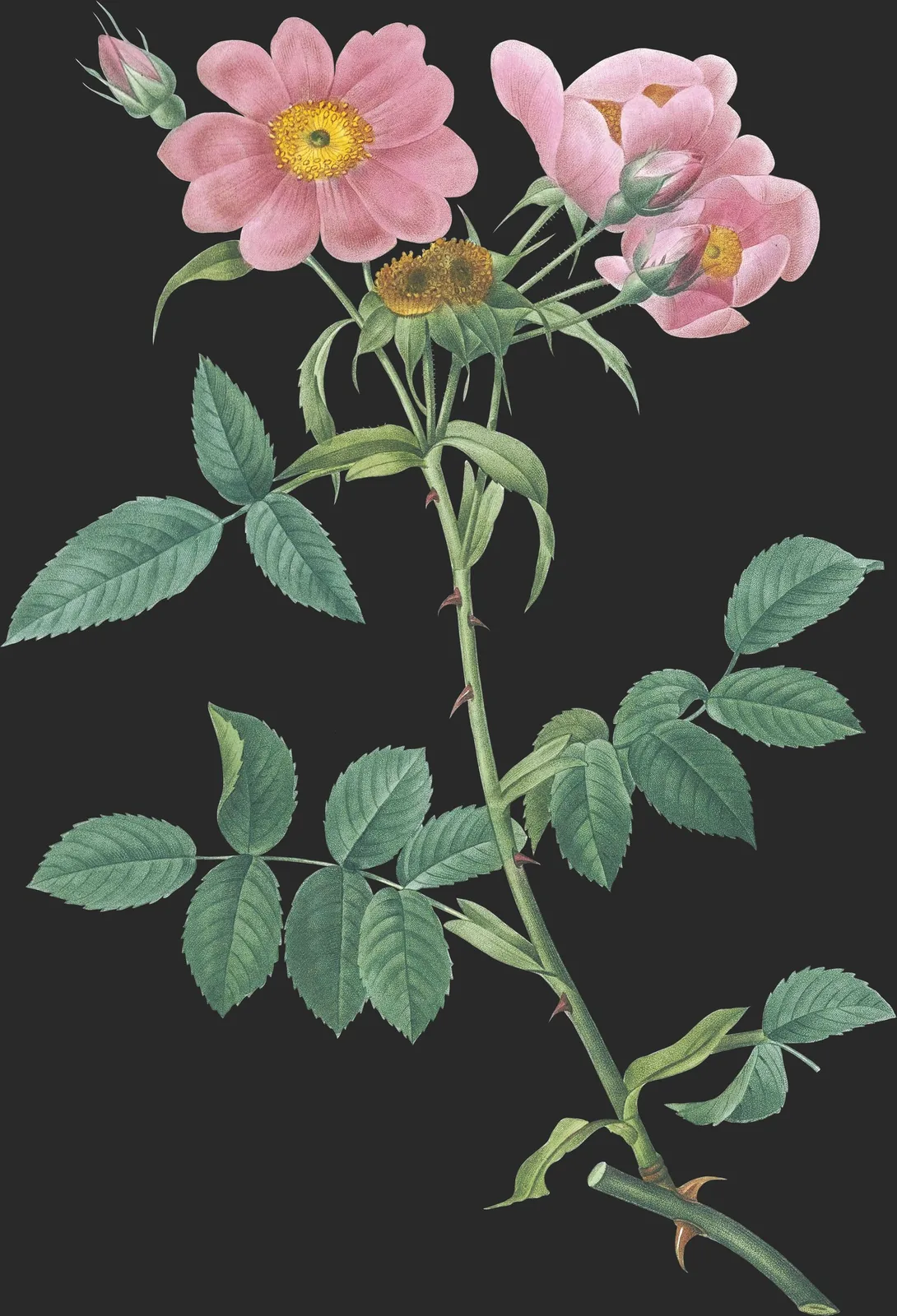
Rosa Collina Monsoniana
狗牙蔷薇
Le Rosier de Lady Monson
Ten ways of seeing
- measured cast red
- upright 1.47 : 1
First Look
六法者何?一、气韵生动是也;二、骨法用笔是也;三、应物象形是也;四、随类赋彩是也;五、经营位置是也;六、传移模写是也。
—— 南齐·谢赫《古画品录》
The six laws: spirit resonance alive; bone-method in the brush; matching form; colour by kind; planning the placing; copying the masters.
The sheet is vertical: the eye climbs and settles in the upper half. Let the plant stand before you look for detail. Then step in close: watch where colour meets line, and whether the line ever breaks. Third, find where the green is deepest: the whole tonal order is measured from that patch.
Name and Thing
Only the genus Rosa is given; species-level names came later. The Chinese name 狗牙蔷薇 is a modern rendering of the Latin, not an old garden name.
Form and Colour
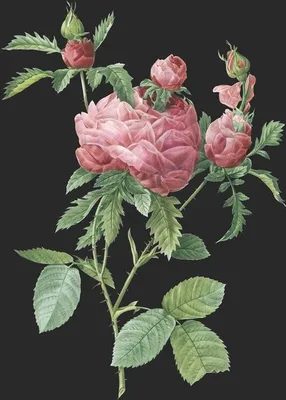
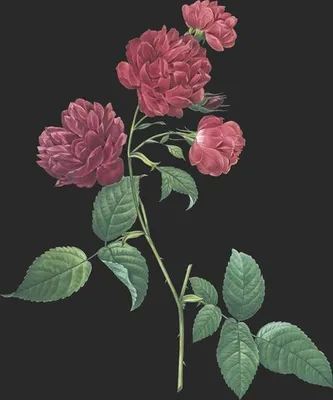
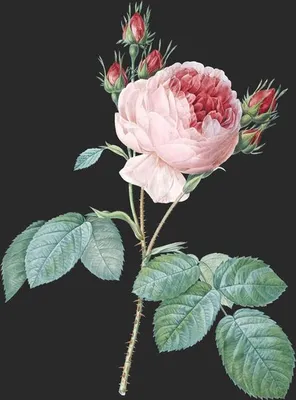
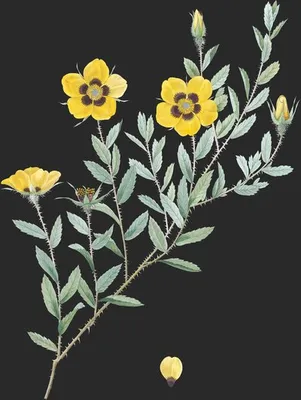
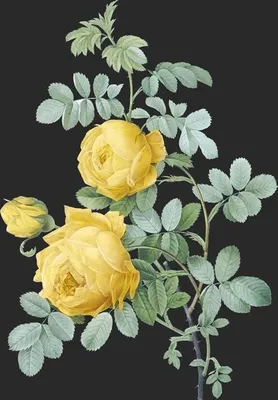
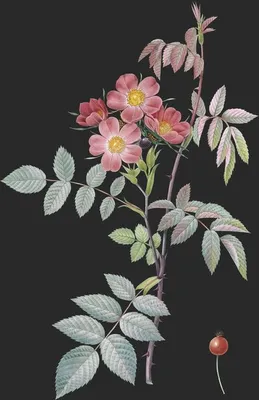
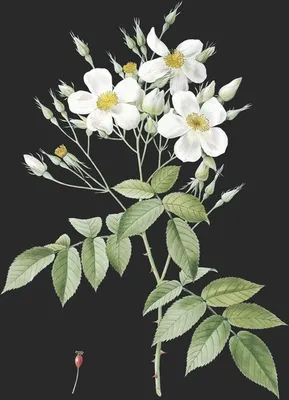
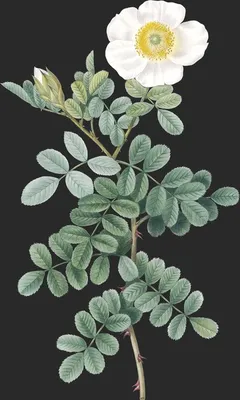
Measured on this plate: flower colour covers 7.2% of the sheet, foliage 14.2%, the cast red with a second note of amber. No other plate shares exactly this measure. Roses are shrubs or scramblers with pinnate leaves of three to seven serrated leaflets; the double flowers open in crumpled, inward-curling layers around a small knot of yellow stamens. a moss green. A single plant, laid out with nothing hidden.
Composition
The sheet is tall. No details are appended: a plate for looking, not for keying out. The plant takes about 31% of the sheet, centred above centre — the easy measure most florists kept to.
Line and Colour
The first half of the nineteenth century moved from copper to steel to lithography; stipple could render the softest transition. Decide first whether it was printed or painted; only then discuss whether it is beautiful. If you mean to copy it: take its skeleton, its margins and the order of its colours; the burin's hatching is the language of copper — suggest it with pencil density, do not imitate it stroke for stroke.
Poetic Resonance
春残红粉厌梳妆。
—— 宋·吴潜《浣溪沙》
The poem gives the mood first and the picture supplies the form; set the line beside the plate and the green the corolla becomes its resting point.
Symbolism
In Europe the rose means love and secrecy ('sub rosa'); in Chinese verse the rambling rose leans and clings — lingering attachment rather than ardour. In a flora it is a species first and a symbol second; the order is worth keeping.
Season and Place
Late spring into early summer, peaking in May — the first flush of the garden year. Widespread in the temperate north. Chinese gardeners knew roses since the Han. The year 1824 on the plate is that of publication, not of flowering — the gathering came a year or two earlier. The bud and the ripe fruit on one branch tell the season; the name in the title often tells the journey.
The Book and the Hand
“Les Roses” carries only Pierre-Joseph Redouté's name. A plate is collective work: drawer, engraver and colourist were different hands, and the unnamed ones decided how good it looks.
What to Take Away
Next time you stand before a flowering plant, give it three minutes: leaf arrangement, direction of the flower, the darkest patch. A flora exists to be consulted; look long enough and you forget to consult — someone in 1824 gave a whole day to a single flower.
About this plate
Description
Arbrisseau qui sélève à trois pieds, et plus. Ses rameaux élancés, glabres, sont armés d’aiguillons forts et crochus. Les feuilles se composent de cing à sept folioles, ovales-arrondies à la base, pointues au sommet, glabres en-dessus, légèrement pubescentes en-dessous et sur la bordure. Le pétiole qui les supporte est hispide-glanduleux, garni de petits aiguillons crochus et jaunâtres. A sa base sont deux stipules bifides denticulées et glanduleuses en leur bord. Les fleurs sont disposées, plusieurs ensemble, à l’extrémité des rameaux qui croissent le long des branches principales. Les tubes des calices sont ovoï des et glabres. Les pédoncules qui les supportent sont hérissés de poils glanduleux. A la base de chaque pédicelle sont des bractées ovales-allongées, à bords garnis de petites glandes sessiles. Les divisions du limbe, trois pinnatifides et deux simples, sont cotonneuses à l’intérieur et recouvertes de glandes à l’extérieur. Corolle de cinq pétales, assez grands, échancrés au sommet, d’un beau rose-clair. Styles courts, réunis par leurs stigmates, mais non soudés. Les fruits sont d’un rouge-orangé à la maturité.
Observations
Nous cultivons ce Rosier qui a fleuri cette année dans nos deux collections. Nous le devons à la complaisance de M. Sabine, secrétaire perpétuel de la société horticultural de Londres, qui a découvert cette intéressante variété du Collina dans le iardin de Lady Monson, et qui lui a donné le nom de cette dame.
Le R. Systylla séloigne de ce Rosier par ses folioles glabres sur les deux faces, et par ses styles soudés.
Le R. Canina en diffère par ses folioles glabres sur les deux faces, et autres caractères.
Enfin le R. Montana s’en éloigne par ses folioles également glabres, mais, seulement, ciliées et glanduleuses en leur bordure.
Le R. Collina Monsoniana semblerait avoir quelques rapports avec le R. Andegavensis de Bastard, à cause des pédoncules munis de poils glanduleux dans les deux espèces; mais ce dernier Rosier offre encore des folioles glabres sur les deux cotés.
- R. germinibus ovatis glabris; pedunculis glanduloso-hispidis; foliolis supra glabris, subtus margineque pubescentibus; stylis fasciculatis. (N.)
- R. Collina pilosiuscula. Thy. Prod. groupe XII, p. 70, var. γ.
- R. Canina pilosiuscula. Desv. Journ. Bot. sept. 1813, p. 115, var. λ.
- R. Monsoniæ (falso systylla). Lind. Mon. p. 111, var. γ.