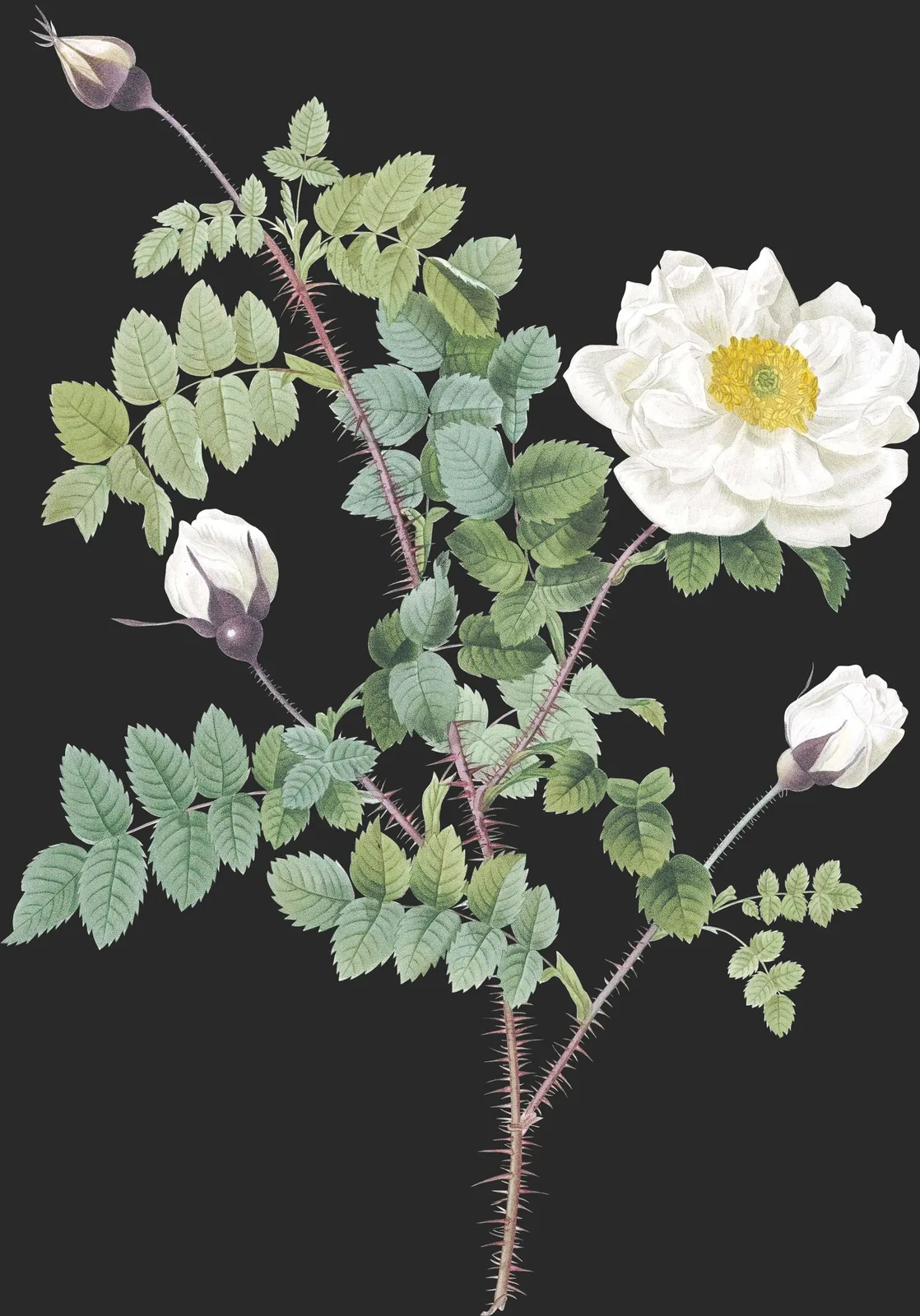
Rosa Pimpinellifolia var Flore Albo Submultiplici
Rosa Pimpinellifolia var Flore Albo Submultiplici
Le Rosier Pimprenelle Blanc
Ten ways of seeing
- measured cast yellow-green
- upright 1.43 : 1
First Look
江馆清秋,晨起看竹,烟光日影露气,皆浮动于疏枝密叶之间。
—— 清·郑板桥《题画竹》
On an autumn morning at the river lodge I looked at the bamboo: mist, sunlight, dew, all drifting among the sparse and dense leaves.
The sheet is vertical: the eye climbs and settles in the upper half. Let the plant stand before you look for detail. Then step in close: watch where colour meets line, and whether the line ever breaks. Third, find where the green is deepest: the whole tonal order is measured from that patch.
Name and Thing
The binomial is Rosa pimpinellifolia: the first word is the genus it belongs among, the second the epithet that sets it apart. The genus name Rosa: Rosa is simply the Latin for rose, from Greek rhodon. No established Chinese name exists, so it is cited by its binomial alone.
Form and Colour
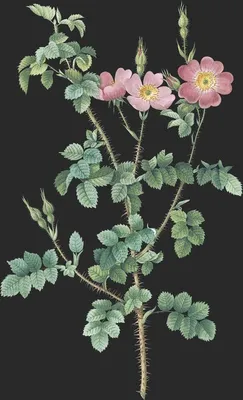
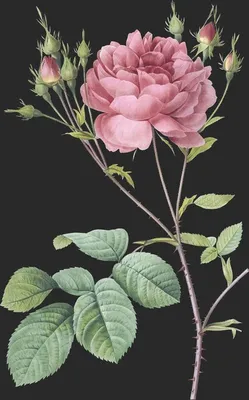
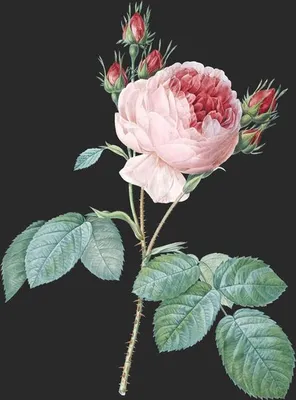
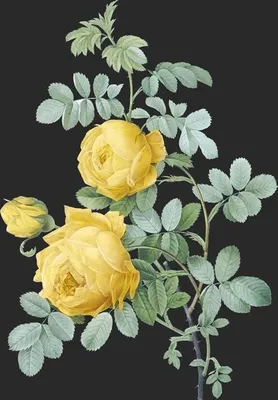
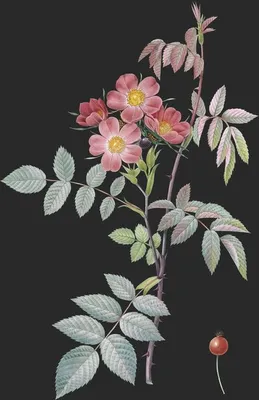
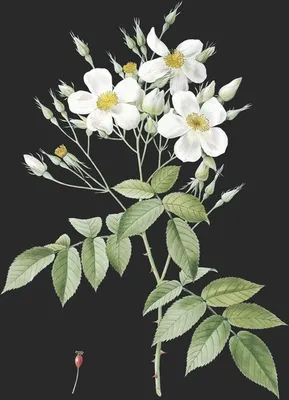
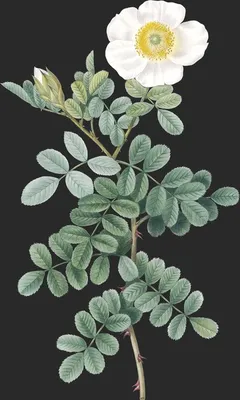
Measured on this plate: flower colour is sparing, 1.1% of the sheet against 7.7% of foliage, the cast tending yellow-green — as with pale or white blooms, outline and tone do the talking. Roses are shrubs or scramblers with pinnate leaves of three to seven serrated leaflets; the double flowers open in crumpled, inward-curling layers around a small knot of yellow stamens. a moss green. Read the outline, then the colour layers, then the brush.
Composition
The sheet is tall. No details are appended: a plate for looking, not for keying out. The plant takes about 32% of the sheet, centred above centre — the easy measure most florists kept to.
Line and Colour
The first half of the nineteenth century moved from copper to steel to lithography; stipple could render the softest transition. Decide first whether it was printed or painted; only then discuss whether it is beautiful. If you mean to copy it: take its skeleton, its margins and the order of its colours; the burin's hatching is the language of copper — suggest it with pencil density, do not imitate it stroke for stroke.
Poetic Resonance
白云枝叶白玉英,此花莫是琳琅精。
—— 唐·徐積《瓊花歌》
The poem gives the mood first and the picture supplies the form; set the line beside the plate and the green the corolla becomes its resting point.
Symbolism
In Europe the rose means love and secrecy ('sub rosa'); in Chinese verse the rambling rose leans and clings — lingering attachment rather than ardour. Flower language was added later; the flower knows nothing of it, and that innocence is part of its power.
Season and Place
Late spring into early summer, peaking in May — the first flush of the garden year. Widespread in the temperate north. Chinese gardeners knew roses since the Han. The year 1821 on the plate is that of publication, not of flowering — the gathering came a year or two earlier. See this kind of plate in the flowering season if you can: once you have met the living flower, you stop reading only colour.
The Book and the Hand
“Les Roses” carries only Pierre-Joseph Redouté's name. The image is public domain; the hand-colouring is still one person's hand.
What to Take Away
Appreciation is not knowledge but habit — one more look each time. A flora exists to be consulted; look long enough and you forget to consult — someone in 1821 gave a whole day to a single flower.
About this plate
Description
Arbrisseau rameux qui s’élève en buisson à la hauteur de deux pieds et demi, ou environ. Ses tiges sont armées d’un grand nombre d’aiguillons inégaux, les uns droits, les autres recourbés. Les folioles, au nombre de cinq, sept, ou neuf, d’un vert-gai en-dessus, plus pâles et quelquefois rougeâtres en-dessous, sont rondes ou ovales-arrondies, profondement dentées. Elles sont portées par des pétioles quelquefois gla-bres, plus souvent munis de petits aiguillons jaunâtres et cro-chus, ayant à leur base deux stipules bifides, assez larges, denticulées en leur bord. Les fleurs naissent solitaires à l’extrémité des rameaux qui croissent le long des branches principales. Le pédoncule qui les supporte, en général renflé au sommet et aminci à la base, est couvert de poils spinuliformes, surmontés de petites glandes. Le tube du calice, presque rond, est entièrement glabre, et coloré en partie, à l’extérieur, d’une teinte de rouge-brun. Les divisions du limbe, entières, pointues au sommet, sont également glabres à l’extérieur, et cotonneuses intérieurement. Corolle de huit à dix rangs de pétales blancs, les uns pointus, les autres échancrés en cœur au som-met. Les fruits arrondis de cet arbrisseau, d’abord d’un rouge-vif, noircissent à la maturité.
Observations
C’est à M. Descemet que les amateurs doivent ce Rosier remarquable par son élégance et la beauté de ses fleurs. Il a été long-temps rare et cher; mais aujourd’hui on le trouve dans presque toutes les pépinières, où il reçoit le nom de pompon blanc. Il fait un très-bel effet, greffé, un peu bas, sur le canina: alors il pousse vigoureusement, et donne, dès la seconde année, des têtes magnifiques. Pour avoir des fleurs d’un beau volume, et en plus grande quantité, il faut le cultiver au levant, mais sur-tout ne point le tailler, et se contentér de le débarrasser du bois mort, soins nécessaires à sa conservation. Il n’est pas rare de le voir remonter, ’est-à-dire donner de nouvelles fleurs à l’automne.