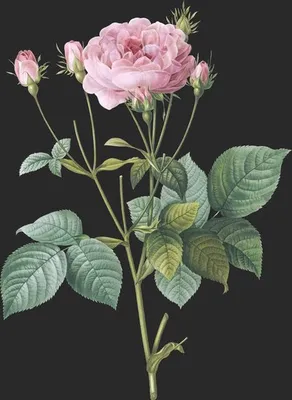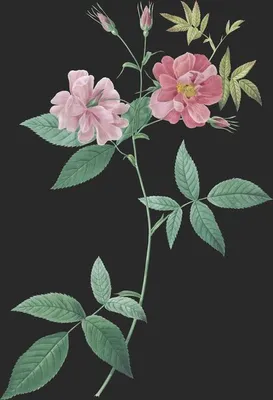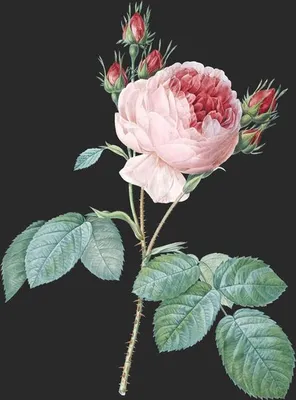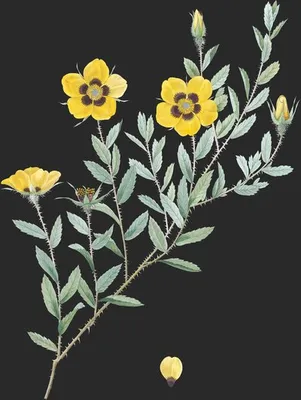
Rosa Sepium var Flore Submultiplici
狗牙蔷薇
Le Rosier des Haies
Ten ways of seeing
- measured cast red
- upright 1.57 : 1
First Look
竖划三寸,当千仞之高;横墨数尺,体百里之迥。
—— 南朝宋·宗炳《画山水序》
A vertical stroke of three inches stands for a cliff of a thousand fathoms; a few feet of ink holds a hundred li.
The sheet is vertical: the eye climbs and settles in the upper half. Let the plant stand before you look for detail. Then step in close: watch where colour meets line, and whether the line ever breaks. Third, find where the green is deepest: the whole tonal order is measured from that patch.
Name and Thing
The binomial is Rosa sepium: the first word is the genus it belongs among, the second the epithet that sets it apart. The genus name Rosa: Rosa is simply the Latin for rose, from Greek rhodon. The Chinese name 狗牙蔷薇 is a modern rendering of the Latin, not an old garden name.
Form and Colour
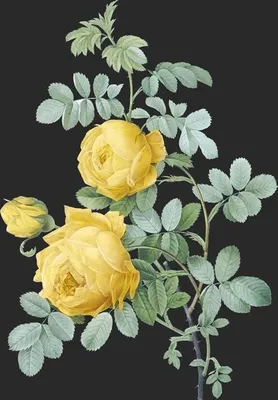
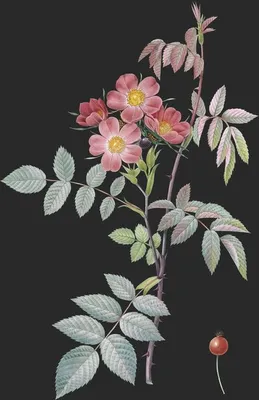
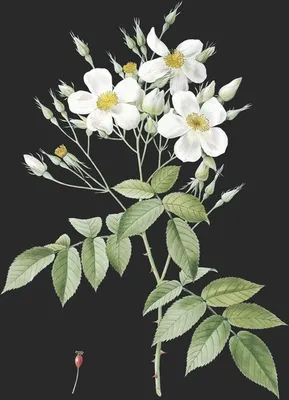
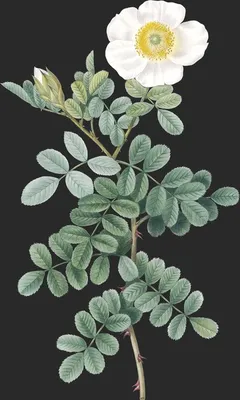
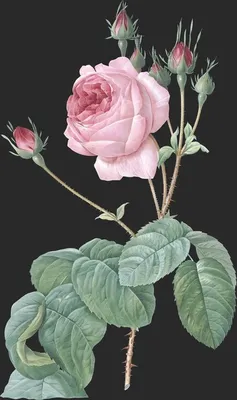
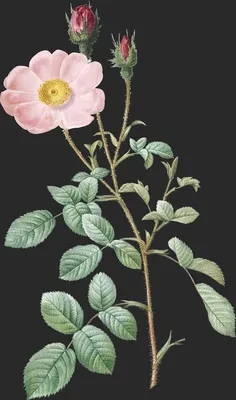
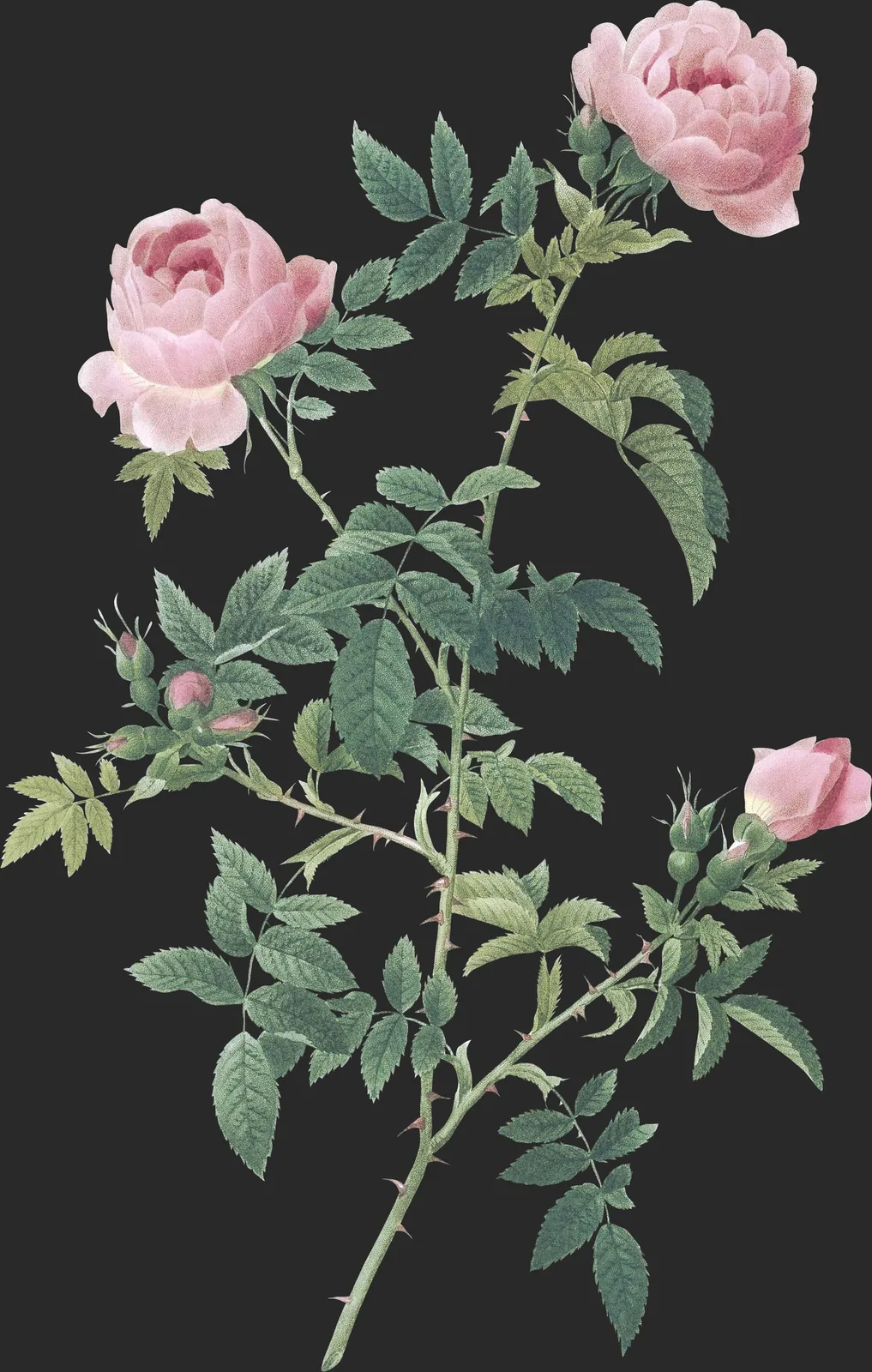
Measured on this plate: flower colour covers 2.3% of the sheet, foliage 7.6%, the cast red. No other plate shares exactly this measure. Roses are shrubs or scramblers with pinnate leaves of three to seven serrated leaflets; the double flowers open in crumpled, inward-curling layers around a small knot of yellow stamens. a moss green. Three things fix the habit: leaf arrangement, tepal count, and how the flower is borne.
Composition
The sheet is tall. No details are appended: a plate for looking, not for keying out. The plant takes about 31% of the sheet, centred near the centre — the easy measure most florists kept to.
Line and Colour
The first half of the nineteenth century moved from copper to steel to lithography; stipple could render the softest transition. Craft leaves franker evidence than inscriptions. If you mean to copy it: take its skeleton, its margins and the order of its colours; the burin's hatching is the language of copper — suggest it with pencil density, do not imitate it stroke for stroke.
Poetic Resonance
花名乐府三千辈,惟君第一娇姿容。
—— 唐·孫次翁《嬌娘行》
The poem gives the mood first and the picture supplies the form; set the line beside the plate and the green the corolla becomes its resting point.
Symbolism
In Europe the rose means love and secrecy ('sub rosa'); in Chinese verse the rambling rose leans and clings — lingering attachment rather than ardour. In a flora it is a species first and a symbol second; the order is worth keeping.
Season and Place
Late spring into early summer, peaking in May — the first flush of the garden year. Widespread in the temperate north. Chinese gardeners knew roses since the Han. The year 1821 on the plate is that of publication, not of flowering — the gathering came a year or two earlier. See this kind of plate in the flowering season if you can: once you have met the living flower, you stop reading only colour.
The Book and the Hand
“Les Roses” carries only Pierre-Joseph Redouté's name. From drawing to plate the sheet passed through several hands — the engraver aimed at accuracy, the colourist at speed, and between them lies each plate's unevenness.
What to Take Away
Appreciation is not knowledge but habit — one more look each time. The flower of that year is dust, yet its image on paper has outlived every living cousin.
About this plate
Description
Arbrisseau rameux qui, comme son type, s’élève à la hauteur de quatre ou cinq pieds. Ses branches sont armées d’aiguillons assez nombreux, recourbés, un peu blanchâtres. Ses feuilles se composent de cinq, ou de sept folioles, petites, chaque paire écartée l’une de l’autre, un peu moins, cepen-dant, que dans l’espèce à cinq pétales; elles sont pointues au sommet et à la base, lisses en-dessus, munies, en-dessous, de quelques glandes, à dents serraturées et glanduleuses. Le pétiole qui les supporte, également glanduleux, est garni de petits aiguillons. A sa base se trouvent deux stipules bifides denticulées en leur bord. Les fleurs sont quelquefois solitaires; mais à l’extrémité des rameaux les plus vigoureux, on en trouve souvent trois ou quatre réunies. Le pédoncule qui les supporte, ainsi que le tube ovoïde du calice, sont glabres. Les divisions du limbe, deux pinnatifides et deux simples, sont garnies, à l’intérieur, d’un duvet blanchâtre. Corolle de quatre à cinq rangs de pétales d’un rouge-pâle, blancs vers l’onglet, échancrés en cœur au sommet. Styles presque glabres, comme réunis en faisceau.
Observations
Cet arbrisseau a fleuri, pour la première fois, l’été dernier, chez M. Cugnot, qui l’a obtenu de semence. Ses fleurs sont élégantes et se montrent au commencement de juin: il est très-robuste, et n’exige aucune culture; tous les terrains et toutes les expositions lui conviennent. Il ne faut pas le tailler.
- R. sepium Rosea flore submultiplici. Thy. Prod. p. 114.