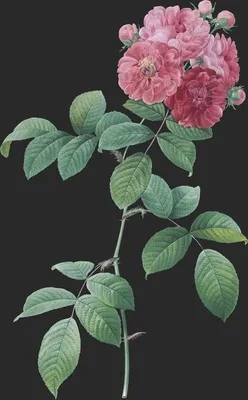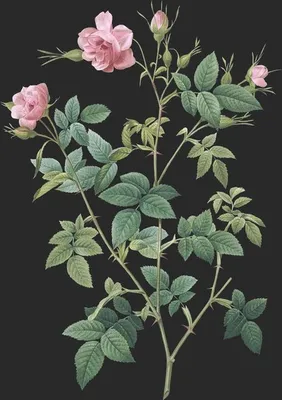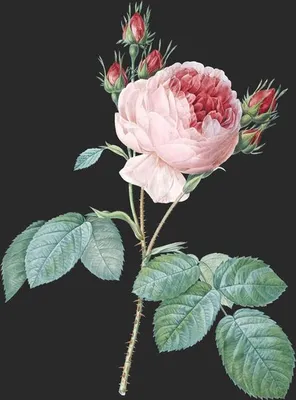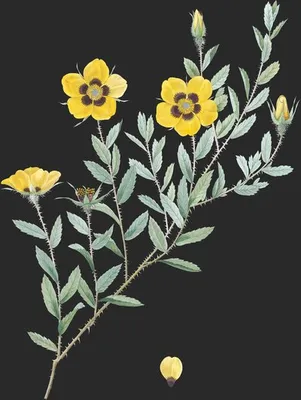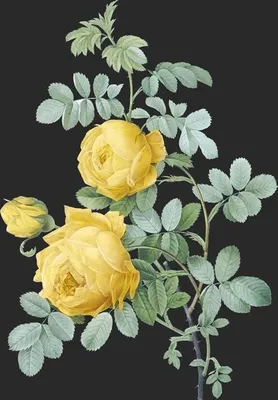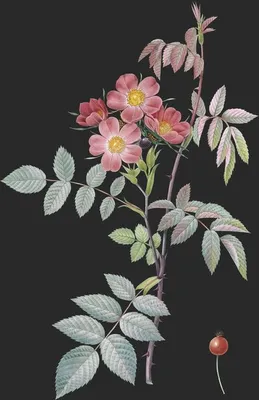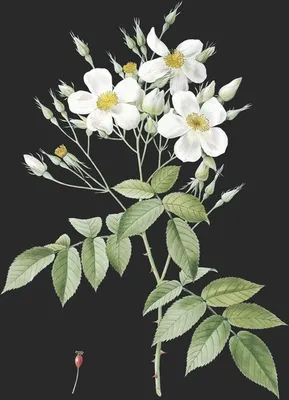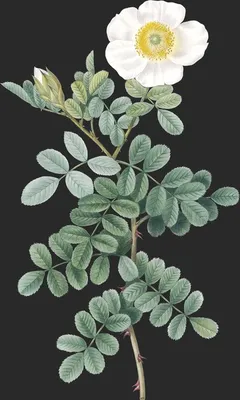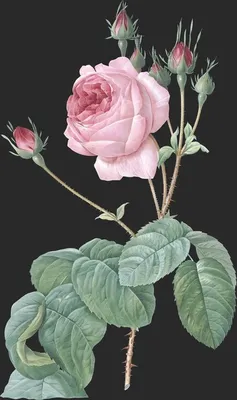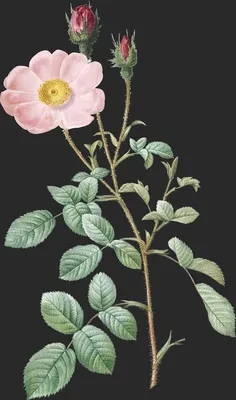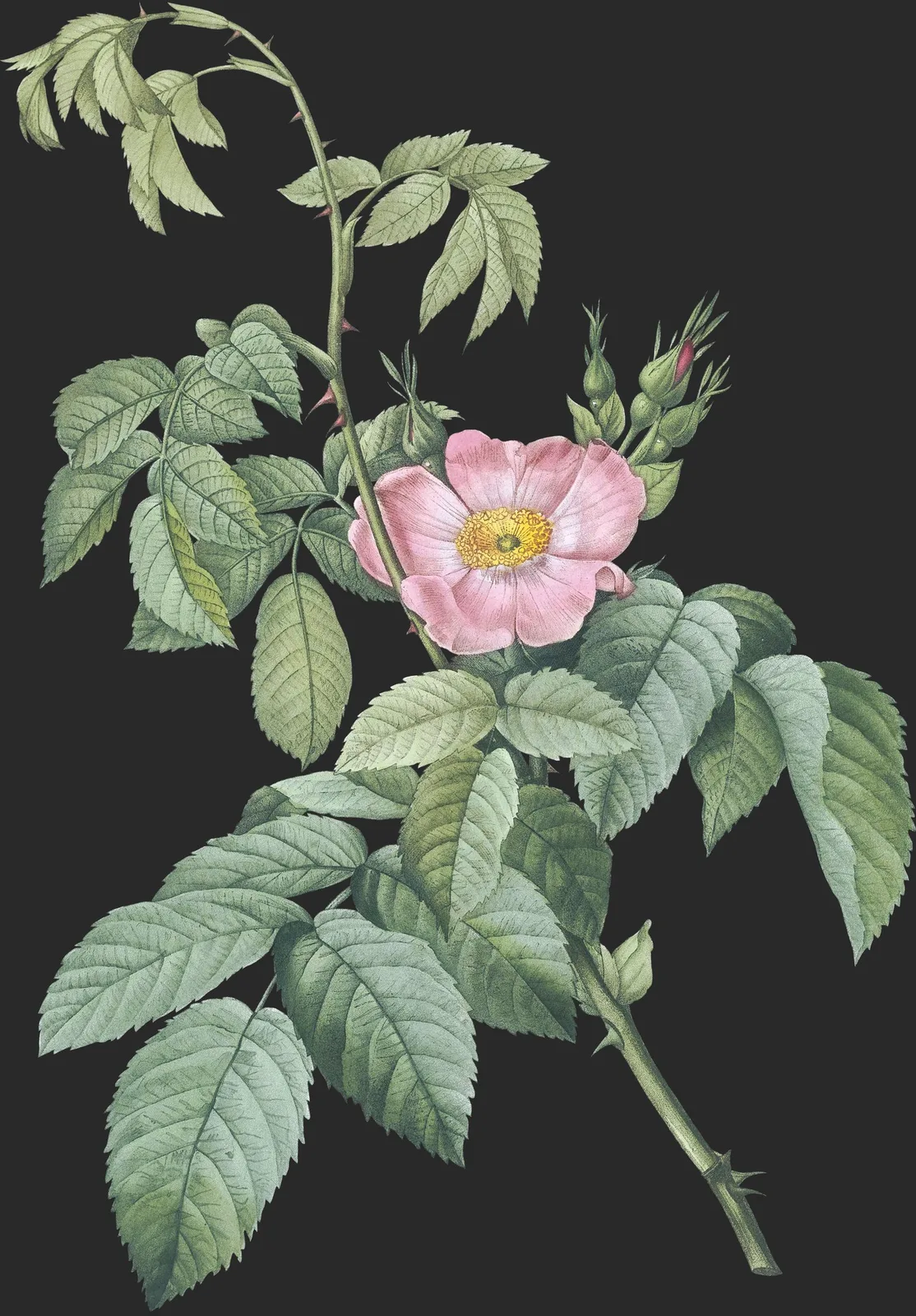
Rosa Villosa var Terebenthina
Rosa Villosa var Terebenthina
Le Rosier Velu
Ten ways of seeing
- measured cast red
- upright 1.44 : 1
First Look
夫象物必在于形似,形似须全其骨气。
—— 唐·张彦远《历代名画记》
Likeness is the threshold; bone-and-breath is the point.
The sheet is vertical: the eye climbs and settles in the upper half. Let the plant stand before you look for detail. Then step in close: watch where colour meets line, and whether the line ever breaks. Third, find where the green is deepest: the whole tonal order is measured from that patch. The pose leans left: the upper half carries 8 points further left than the lower — a living thing, not a diagram.
Name and Thing
The binomial is Rosa villosa: the first word is the genus it belongs among, the second the epithet that sets it apart. The genus name Rosa: Rosa is simply the Latin for rose, from Greek rhodon. No established Chinese name exists, so it is cited by its binomial alone.
Form and Colour
Measured on this plate: flower colour covers 1.5% of the sheet, foliage 9.4%, the cast red with a second note of yellow-green. No other plate shares exactly this measure. Roses are shrubs or scramblers with pinnate leaves of three to seven serrated leaflets; the double flowers open in crumpled, inward-curling layers around a small knot of yellow stamens. a moss green. A single plant, laid out with nothing hidden.
Composition
The sheet is tall. No details are appended: a plate for looking, not for keying out. The plant fills 39% of the sheet, centred near the centre — the herbarium way, drawn to be read whole.
Line and Colour
The first half of the nineteenth century moved from copper to steel to lithography; stipple could render the softest transition. There is evidence on the back too: the plate mark pressed into the paper, the slight relief of the pigment, lines worn shallow in a later printing. If you mean to copy it: take its skeleton, its margins and the order of its colours; the burin's hatching is the language of copper — suggest it with pencil density, do not imitate it stroke for stroke.
Poetic Resonance
南花清斗素靥,画船应不载,坡静诗卷。
—— 宋·吴文英《齐天乐》
The poem gives the mood first and the picture supplies the form; set the line beside the plate and the green the corolla becomes its resting point.
Symbolism
In Europe the rose means love and secrecy ('sub rosa'); in Chinese verse the rambling rose leans and clings — lingering attachment rather than ardour. Flower language was added later; the flower knows nothing of it, and that innocence is part of its power.
Season and Place
Late spring into early summer, peaking in May — the first flush of the garden year. the ever-blooming modern rose is a nineteenth-century crossing of European and Chinese stock. The year 1821 on the plate is that of publication, not of flowering — the gathering came a year or two earlier. The bud and the ripe fruit on one branch tell the season; the name in the title often tells the journey.
The Book and the Hand
“Les Roses” carries only Pierre-Joseph Redouté's name. A plate is collective work: drawer, engraver and colourist were different hands, and the unnamed ones decided how good it looks.
What to Take Away
Next time you stand before a flowering plant, give it three minutes: leaf arrangement, direction of the flower, the darkest patch. A flora exists to be consulted; look long enough and you forget to consult — someone in 1821 gave a whole day to a single flower.
About this plate
Description
Arbrisseau touffu, qui sélève en buisson à la hauteur de quatre ou cinq pieds. Ses rameaux glabres sont armés d’aiguillons jau-nâtres, presque droits, épars sur les branches adultes, et géminés sur les rameaux jeunes et florifères. Les feuilles se composent de cing ou de sept folioles très-grandes, à-peu-près ovales, d’un verd obseur en dessus, glauques en dessous, profondément et inégalement dentées, couvertes sur les deux faces et sur leur bordure, de poils glanduleux et visqueux. Ces folioles, froissées dans les doigts, donnent une forte odeur de térébenthine. Elles sont portées par un pétiole velu, muni de quelques petits aiguillons recourbés et jaunâtres, ayant à sa base deux stipules élargies, décurrentes, denticulées, glanduleuses et velues. Les fleurs latérales et terminales, petites, presque inodores, tantôt solitaires, tantôt réunies par trois ou quatre en une espèce d’ombelle, sont supportées par des pédoncules courts, hérissés de poils roides et glanduleux: chaque pédicelle est muni de bractées pointues au sommet, élargies à la base. Le tube du calice, de forme presque ronde, est hérissé de pareils poils. Les divisions du limbe, prolongées en pointe, sont tantôt simples, tantôt munies de quelques pin-nules. La corolle présente cinq pétales de couleur rouge, qui se dégrade en couleur blanchâtre vers la base: ils sont irrégulie rement échancrés au sommet, et souvent surmontés d’une petite pointe. Styles peu saillants, à stigmates agglomérés en une tête arrondie au centre de la fleur.
Observations
Ce Rosier est très-remarquable par la grande dimension de ses folioles et leur odeur résineuse; il n’est pas encore très-commun; mais, quand il sera multiplié, il deviendra propre à orner les parcs et les jardins anglais. Nous l’avons observé chez MM. Noisette et Cels, et dans quelques jardins d’amateurs qui le confondent avec le Rosier qu’on nomme vulgairement Muscade rouge (R. Evratina Bosc. R. villosa Evratina Du P. Gym. Ros.); mais, si. ce dernier Rosier a quelque rapport avec le nôtre, comme avec toutes les variétés du Villosa, par ses pédoncules et ses tubes hérissés, il en diffère par ses folioles, et par beaucoup d’autres caractères qui l’éloignent du R. Villosa terebenthina. Nous considérons, considérons, au reste, le R. Evratina comme une production anomale issue du R. Alba et du Villosa, dont il participe évidemment. On le dit naturel au sol de l’Amérique septentrionale; cependant M. Nuttall n’en fait aucune mention dans sa nomenclature.
Le R. Villosa terebenthina ne réussit bien qu’à l’ombre et sous les grands arbres. Sa végétation est moins vigoureuse lorsqu’il est exposé au soleil.
R. Germinibus globosis pedunculisque hispidis; foliolis (resinam terebenthinam redolentibus) glaucis, glutinosis, utrinque villosis, duplicato-serratis, serraturis ciliatis; caule aculeis subrectis. (N.)