Phaëthornis nigricinctus
Phaëthornis nigricinctus
Belted Hermit
- 合集
- 古尔德蜂鸟图谱
- 绘者
- John Gould(约翰·古尔德)
- 年代
- 1849
- 图版号
- Pl. 39, Vol. I
- 原书页码
- p.39
- 授权
- CC0 1.0 Universal (Public domain)
关于本图版
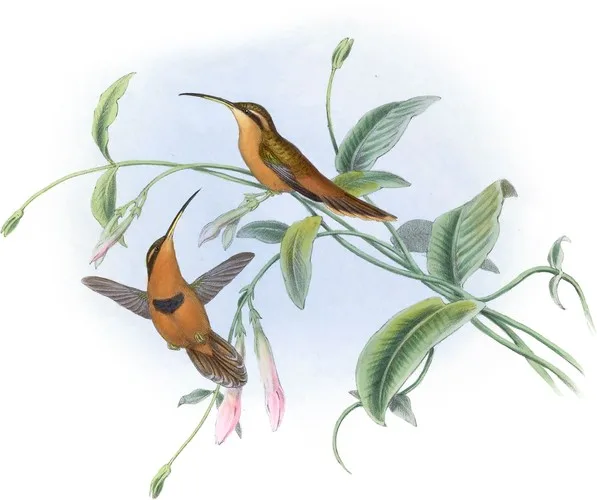
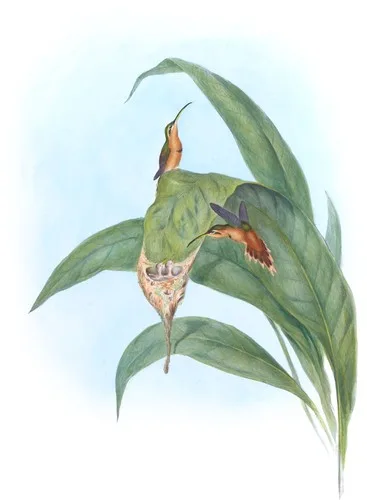
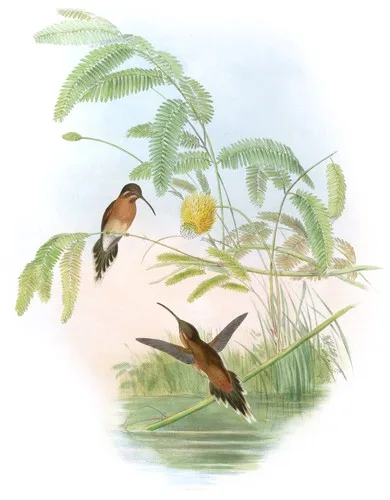
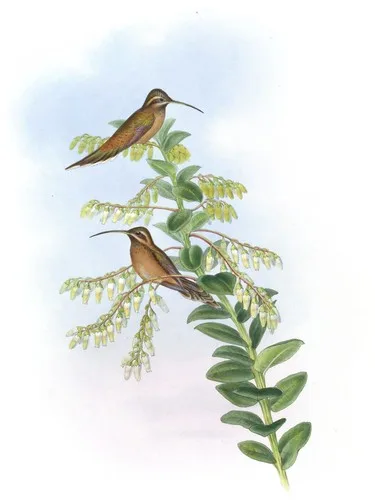
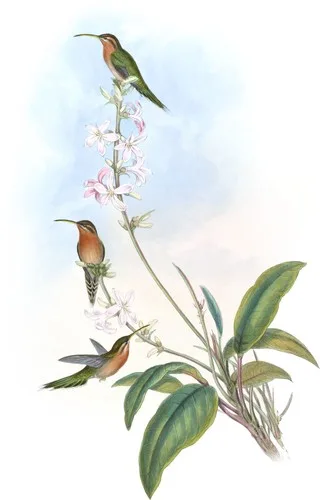
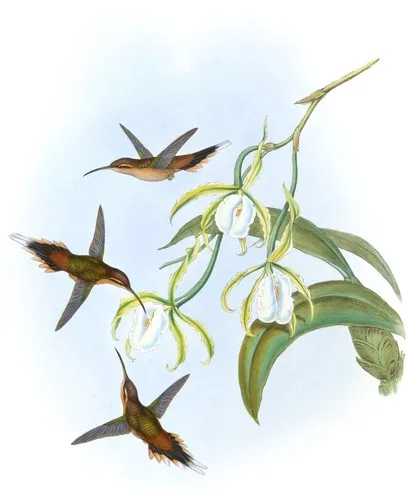
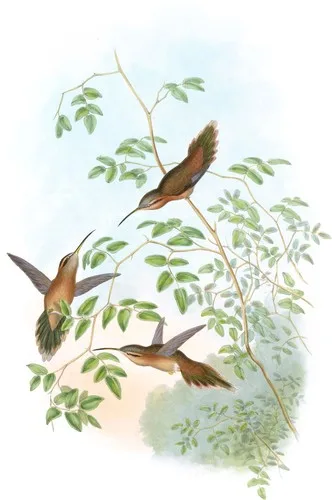
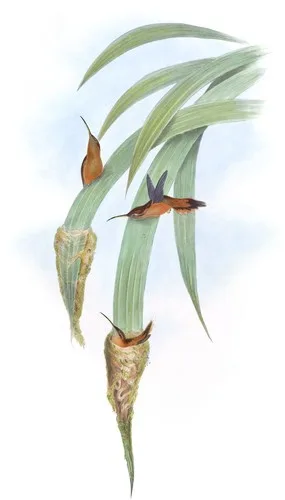
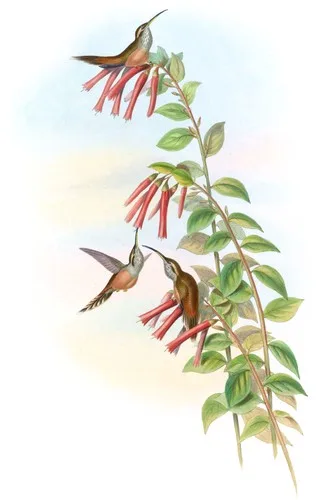
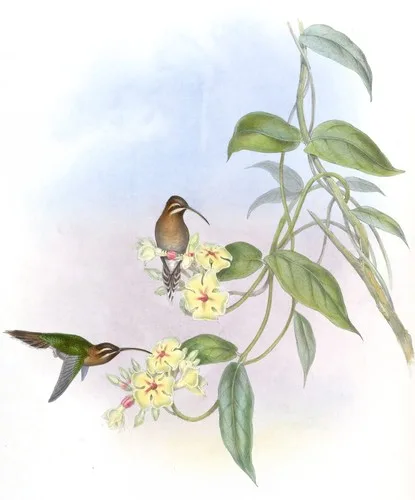
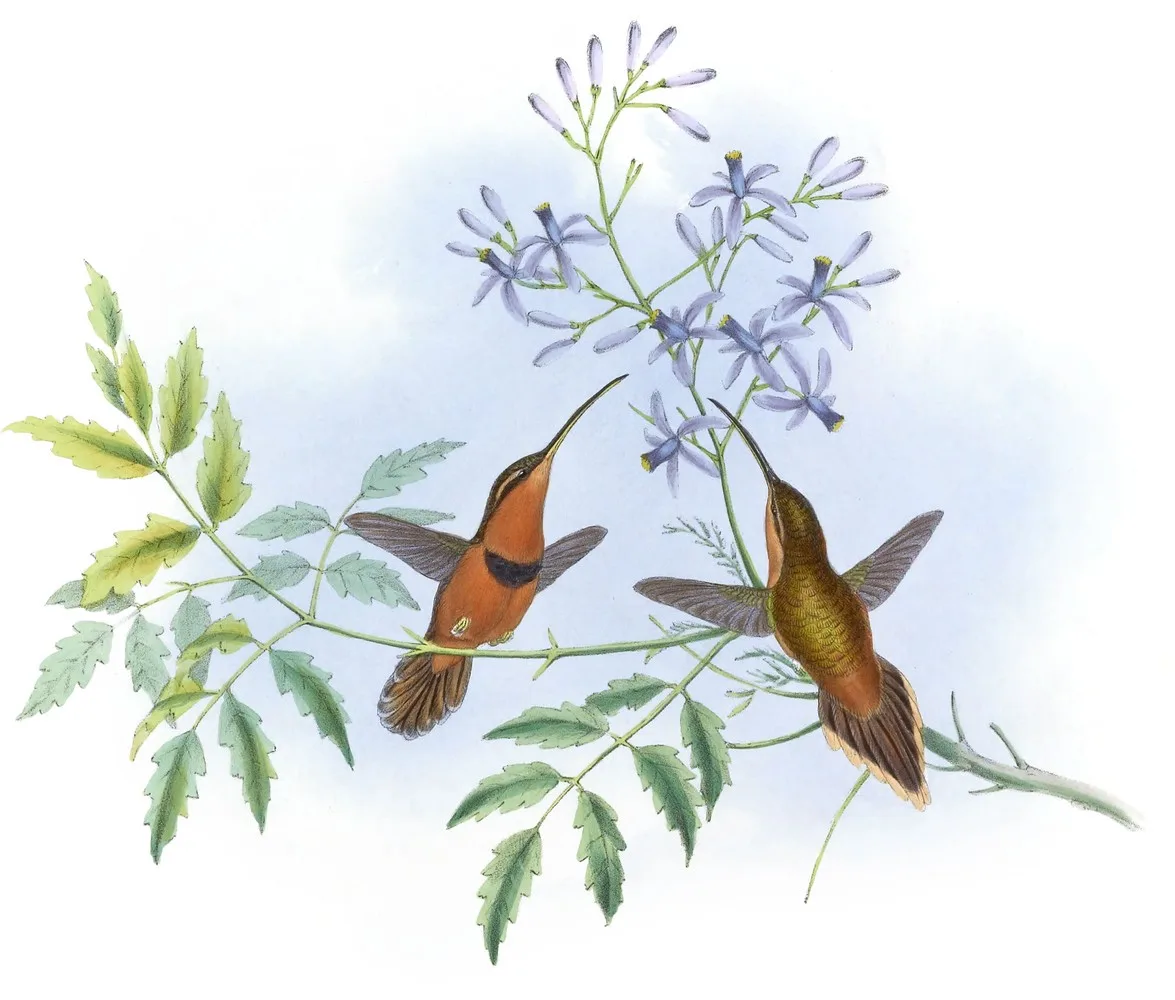
这幅图版出自《古尔德蜂鸟图谱》(Gould's Hummingbirds),由约翰·古尔德绘制,1849—1887 年间出版。图中描绘的是 Phaëthornis nigricinctus,归入蜂鸟科(Trochilidae)。
全编共收录 421 幅图版,本图是其中一幅,原书将其列为 Pl. 39, Vol. I,见第 39 页,版式为横幅。扫描件取自公有领域原件,经高分辨率修复与色彩校正,可按原大放大查看线条与设色。
原书文字(英文 / 法文)
The forests bordering the upper part of the River Amazon
No group of birds requires greater care in discriminating its various members than the little Phaëthorni, of which there are evidently several very distinct species, but which, from their minute size and their very great similarity of colour, it is most difficult to distinguish the one from the other.
These various species are distributed over the wide area extending from Mexico to Peru on the western, and from the Brazils to the Caraccas on the eastern part of the great continent of America. Diminutive as they all are, the present species may be regarded as the very smallest of the group. I have long had a female specimen of this little bird in my possession, sent from the neighbourhood of the Rio Negro by Mr. Wallace, but deferred describing it until I had seen the male: this sex is, I believe, at length before me, having been sent by Mr. Lawrence of New York as the type of his Phaëthornis nigricinctus. Both Mr. Lawrence’s specimens and my own have very lengthened bills, with the yellow colouring of the under mandible extending almost to the end, in which respect ‘they differ from all the other members of the genus, and especially from the species I have named P. Episcopus, but to which they are otherwise most nearly allied. Mr. Lawrence’s specimen was collected by Mr. Moore while descending one of the tributaries of the Amazon from Quito to Para: we may therefore infer that the little-known countries of the Upper Amazon are its true habitat.
The male has the upper surface bright bronzy green, browner on the head; upper tail-coverts bright ferruginous; tail bronzed coppery brown, the outer margin of the external feathers, the tips of the two central feathers and the two next pairs on each side greyish white; wings purplish brown; under surface deep rufous, with a broad purplish-black band across the breast; ear-coverts black; above the eye a line of rufous; upper mandible black; lower mandible orange-red, becoming paler towards the extreme end.
The female is coppery bronze above; has the tail-feathers of a more lengthened and cuneate form and largely tipped with buff; the whole of the under surface rich buff; under mandible, with the exception of the extreme tip, yellow.
References
- Phæthornis mgricinctus, Lawr. in Ann. Lyc. Nat. Hist. New York, vol. vi. p. 260.
十二观
- 近方 0.85∶1
- 1849 年刊
- 图版 39, Vol. I
这不是词条,是一条看画的次序:先站定看整体,再看名字与形色、构图与刀工,然后问它几时开、从哪里来、经了谁的手;最后是中国诗文——同一朵花,中国古人是怎么看的。十二观读完,这幅图就打开了。
-
第一眼
竖划三寸,当千仞之高;横墨数尺,体百里之迥。
—— 南朝宋·宗炳《画山水序》
三寸的竖线可当千仞高山,几尺横墨能容百里之远。尺幅从来不是障碍,取舍才是本事。这一幅近方,四个角都有东西可看,先看它们怎么摆。第二步凑近一寸:看线与色的交界,色有没有压住线,线有没有断。第三步,把视线放到最深的那一小块:整幅的用色秩序,都是从那里排开的。
-
名与实
没有学名可依,就看题名:题名里往往藏着产地、赠者或一句形容。此幅既无通行中文名,学名也不可靠,只能以原书题名相称——图谱里总有几幅这样的图,只能靠画面本身说话。
-
形与色
蜂鸟为美洲最小之鸟,喙细长如针,舌分叉成管,可伸入花心吸蜜;翼小而振频极高,能悬停、能倒飞。此幅未作色相归档,只能就形制论。没有解剖图,就靠主株一处一处看过去:叶怎么排,花怎么着生,果在哪里。
-
构图与呼吸
画幅近方,鸟与枝叶各占一角,是“图版”而不是“画”的排法。(高宽比约 0.85∶1)全幅只画一只,不作解剖附图——这类图更近于“观赏”,而非“鉴定”。空白不是没画完,是给眼睛留的落脚处:一张图若四边都塞满,花反而会闷。
-
一刀一色
十九世纪上半叶是铜版、钢版与石版交替的时期。点刻能把明暗过渡做得极细,雷杜德的玫瑰即以此著称;石版则更宜表现柔和的色层。还有一种证据在纸背:铜版压进纸里的那道痕、上色处微微凸起的颜料、再版时磨浅的线。扫描件里也能看出七分。
-
时序
热带美洲几乎全年可见,花期即其季节;温带种类的蜂鸟则随花北迁,一年往返数千公里。图上所记的 1849 年是刊行之年,不是采到那只鸟的年份;真正的观察记录通常比出版早一两年。记下这一季:物候是最好用的鉴赏工具,见过一次活的花,再看图就不会只看颜色。
-
故土
仅产美洲,自阿拉斯加南部至火地岛,以安第斯山最为繁盛。中土无蜂鸟,汉籍不载,晚清海外游记始见其名。今天再看,图上的产地已是一百多年前的产地;植物会迁徙,地方也会改名字。
-
书与人
《古尔德蜂鸟图谱》(Gould's Hummingbirds)由约翰·古尔德绘,成于1849-1887。此幅为其中图版 39, Vol. I,见原书第 39 页。图版今属公有领域,可以自由取用;但纸上那层手工上色,仍是两百年前某一个人的手。
-
诗境
穿花蛱蝶深深见,点水蜻蜓款款飞。
—— 唐·杜甫《曲江二首》
中土无蜂鸟,然“穿花”之态,杜甫早已写过:贴着花心走,是采蜜者的共同姿态。古人写到这一层,已不只是赏花,是借花说人;画面则只负责把那朵花留住。
-
文心
竖划三寸,当千仞之高;横墨数尺,体百里之迥。
—— 南朝宋·宗炳《画山水序》
三寸的竖线可当千仞高山,几尺横墨能容百里之远。一只蜂鸟只有拇指大,画家却要在几厘米里放下整片花丛——尺度从来不是障碍。古尔德《蜂鸟图谱》(1849—1887)以石版手工上色,金箔衬底,使羽色在纸上仍有金属光;这套图册本身就是十九世纪印刷与收藏狂热合流的产物。读古文不必求全解,先认下这一句:它把“看花”换成了“看人”,你再看这幅图,眼里就多了一层。
-
花语
阿兹特克以蜂鸟为战神与太阳的化身;欧洲维多利亚时代则以蜂鸟为收藏与装饰的极致,百万只羽毛被做成胸饰。中国旧籍无此鸟,故无象征——这空白本身,就是一部博物学交流史。在图谱里,它首先是一个物种,其次才是一种象征——这个次序值得记住。
-
带走一双眼睛
如果只能记一句,就记郭熙那八个字:远望取其势,近看取其质。看图、看花、看人,都一样。1849 年的那只鸟早已化作尘土,它留在纸上的样子,却比任何一只活着的同类都长寿。