Pittosporaceæ
Pittosporaceæ
The Pittosporum Tribe
- 合集
- 植物自然目
- 绘者
- Elizabeth Twining(伊丽莎白·特温宁)
- 年代
- 1868
- 图版号
- Order 20
- 原书页码
- p.20
- 授权
- CC BY-SA 4.0
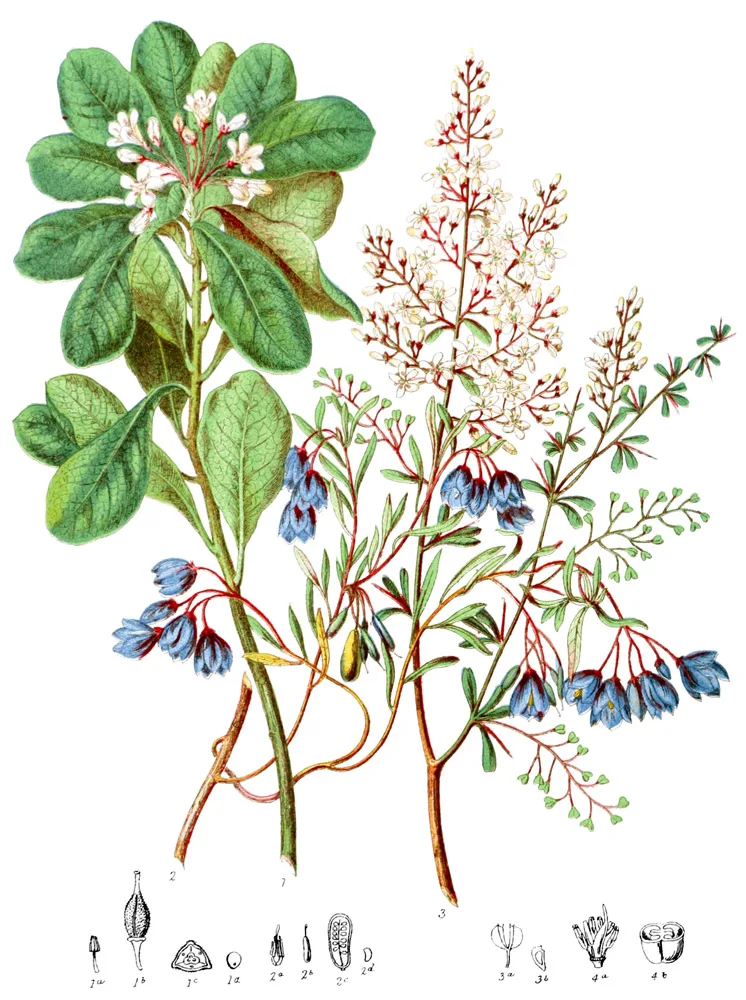
图中植物与部位
-
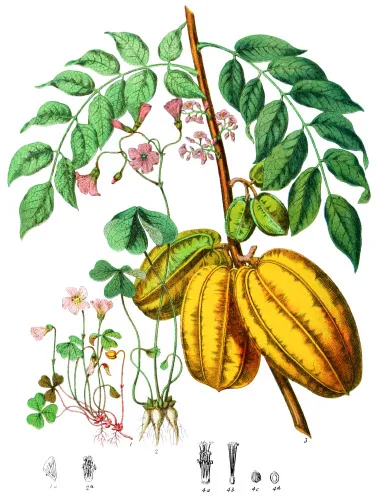
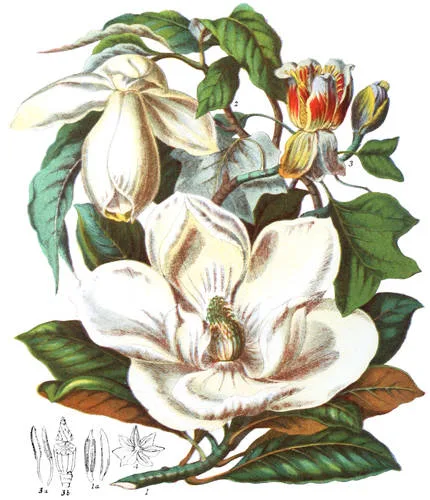
1.
Pittosporum Tobira
, Glossy-leaved Pittosporum China
- 1a. Stamen
- 1b. Ovary and Pistil
- 1c. Section of Ovary
- 1d. Seed
-
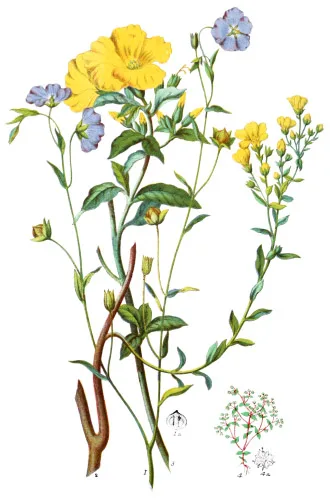
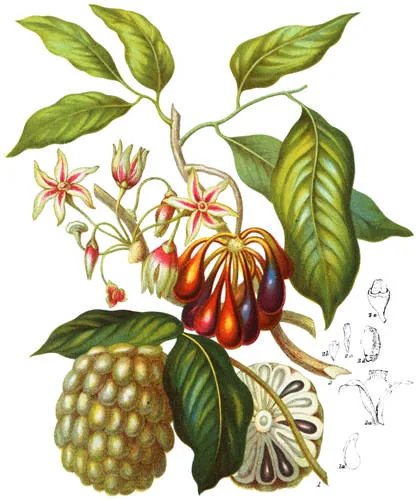
2.
Billardiera linearis
, Slender-leaved Apple-berry Swan River
- 2a. Stamen and Pistil
- 2b. Pistil
- 2c. Section of Fruit
- 2d. Seed
-
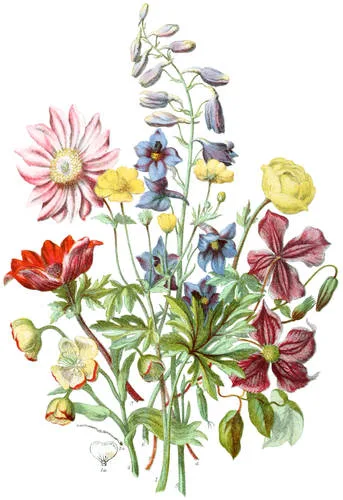
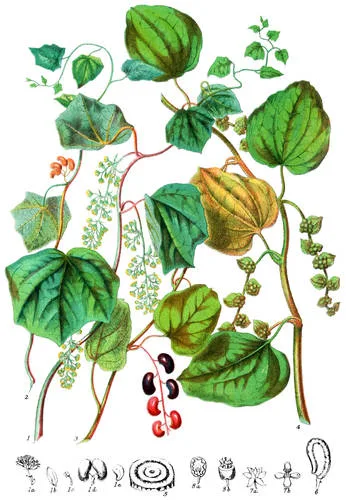
3.
Bursaria spinosa
, Thorny Bursaria New South Wales
- 3a. Seed-vessel
- 3b. Seed
-
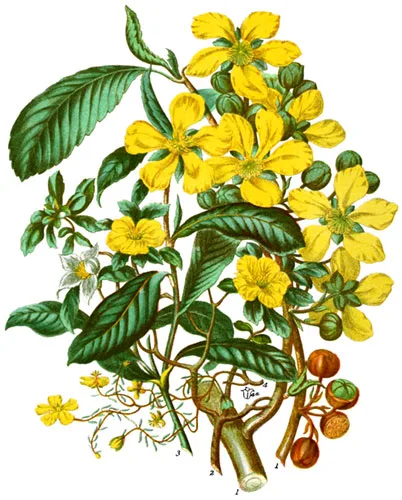
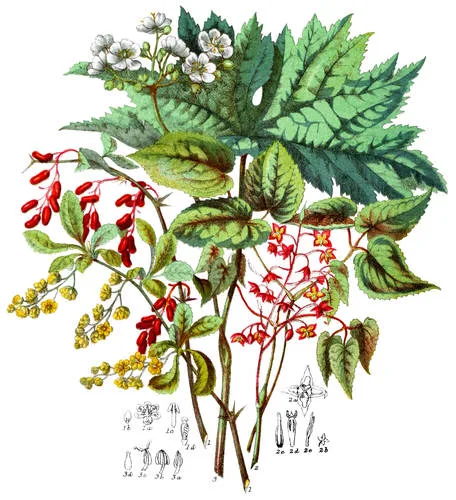
- 4a. Stamens and Pistil
- 4b. Section of Fruit
关于本图版
这幅图版出自《植物自然目》(Natural Orders of plants),由伊丽莎白·特温宁绘制,1849 年出版。原书题作“Pittosporaceæ”。这是该物种在早期博物学出版物中的图像记录之一。
全编共收录 160 幅图版,本图是其中一幅,原书将其列为 Order 20,见第 20 页,版式为纵幅。此图由原件扫描修复而成,使用时请遵循页面标注的授权条款。
原书文字(英文 / 法文)
Key characteristics
Tree and shrubs, the leaves of which are simple, alternate, without stipules, usually entire at the edges, sometimes serrated. The flowers are at the ends of the branches, or proceed from the base of the leaf-stalks, imbricated in the bud. The sepals of the calyx are four or five, either distinct or partially cohering, falling off when the flower expands. The petals are four or five, attached to the base of the ovary, sometimes slightly cohering. The stamens are five, growing from the base of the ovary, alternate with the petals. The anthers are two-cells, opening longitudinally or by a pore. The ovary is single, distinct, having two or more cells, in which are many sees; the style is single, the stigmas equal in number to the plates on which the seeds are affixed. The fruit is a capsule or a berry, with many-seeded cells, which are sometimes incomplete. The seeds are often covered with a pulp of a glutinous or resinous nature, and contains a large proportion of albumen.
This Order has some points of resemblance to Polygalaceæ and Frankeniaceæ,* and in Cheiranthera is shown an affinity with Dilleniaceæ.
A slightly fragrant resin in the bark and seeds, and a bitter, acide taste, are the chief properties of these plants.
Select plants in this order
Not all plants listed are illustrated and not all plants illustrated are listed.
- Pittosporum was named from the Greek for resin and seed, in allusion to the resinous pulp of the capsule usually investing the seeds.
- P. Tobira (1) is a shrub with fine glossy foliage and pleasantly fragrant flowers, sufficiently hearty to bear the English climate, consequently an agreeable addition to our shrubberies; the bark contains a portion of resin.
- P. viridiflorum and a few other species are of nearly similar aspect.
- Billardiera, so called after La Billardière, a celebrated French botanist who travelled in Syria and afterwards in New Holland: several species have been introduced from thence, all of elegant from and climbing habit of growth: the pendent blue flowers of some are extremely beautiful.
- The most abundant blossoms are produced on the graceful B. linearis (2); their bright colour, and the slender foliage, render it one of the favourite shrubs of the conservatory.
- B. longiflora of Tasmania has solitary flowers with greenish petals; the berries are of a long shape, and become blue when ripe, and, hanging in drooping clusters, have an extremely pleasaing appearance. The reason of these plants having been called apple-berry is not obvious, as there is no resemblance in form or colour, neither is the flavour of the fruit the same.
- The berry of B. mutabilis is said to be eatable, but the numerous hard seeds fill up a large portion of the interior, and leave very little pulp.
- Bursaria differs from the rest of this Tribe in the form of the seed-vessel, which as the name records, is that of a pouch; when first discovered with the capsules ripe, it was supposed to belong to the cruciferous group of plants. B. spinosa (3) is an ornamental shrub, three or four feet in height, bearing profusely its delicate white flowers.
- Cheiranthera (4)† is a singular little plant with very fine heath-like leaves; the arrangement of the six stamens on one side of the ovary and pistil forms a curious link with some genera of the Dillenia Tribe.
- Citriobatus is a genus inhabiting New Holland.
Locations
The plants of this Tribe belong chiefly to Australia, a few only are natives of Africa and the neighbouring islands; one species has been discovered in Nepal. Pittosporum is the most extensively dispersed, being found in New Holland, New Zealand, Norfolk Island, the isles of the Pacific Ocean, the Moluccas, China, Japan, and Madeira; none have yet been found in America, and they are entirely unknown to Europe.
Legend
- Pittosporum, Tobira, Glossy-leaved Pittosporum. China.
- Stamen.
- Ovary and Pistil.
- Section of Ovary.
- Seed.
- Billardiera linearis, Slender-leaved Apple-berry. Swan River.
- Stamen and Pistil.
- Pistil.
- Section of Fruit.
- Seed.
- Bursaria spinosa, Thorny Bursaria. New South Wales.
- Seed-vessel.
- Seed.
- Cheiranthera linearis. Australia.*
- Stamens and Pistil.
- Section of Fruit.
本图涉及的植物
- Pittosporum Tobira
- Billardiera linearis
- Bursaria spinosa
- Cheiranthera linearis
属索引
- Billardiera
- Bursaria
- Cheiranthera
- Citriobatus
- Pittosporum