Rhamnaceæ
Rhamnaceæ
The Buckthorn Tribe
- 合集
- 植物自然目
- 绘者
- Elizabeth Twining(伊丽莎白·特温宁)
- 年代
- 1868
- 图版号
- Order 47
- 原书页码
- p.47
- 主色
- 绿
- 授权
- CC BY-SA 4.0
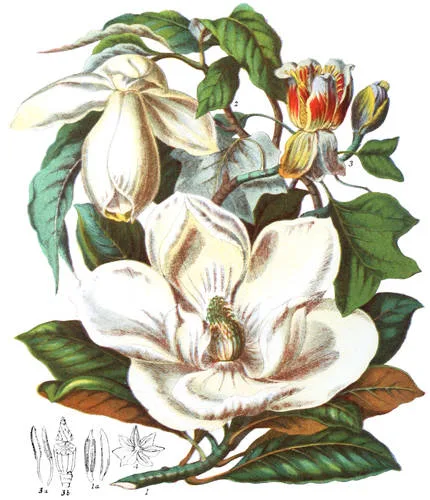
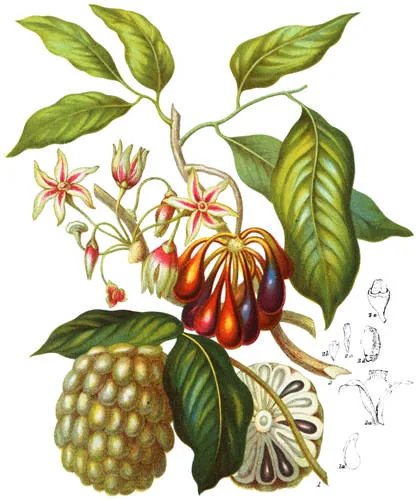
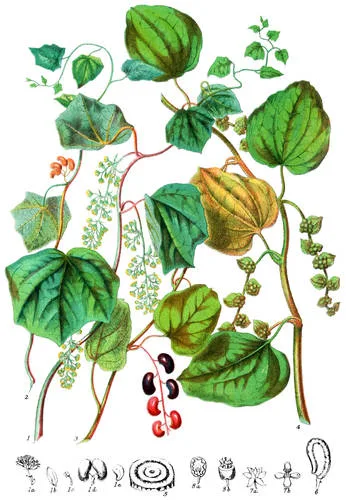
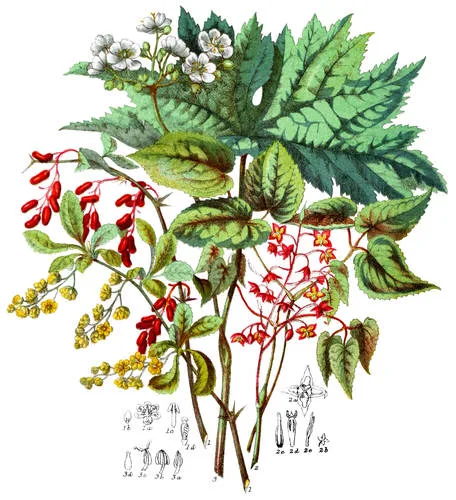
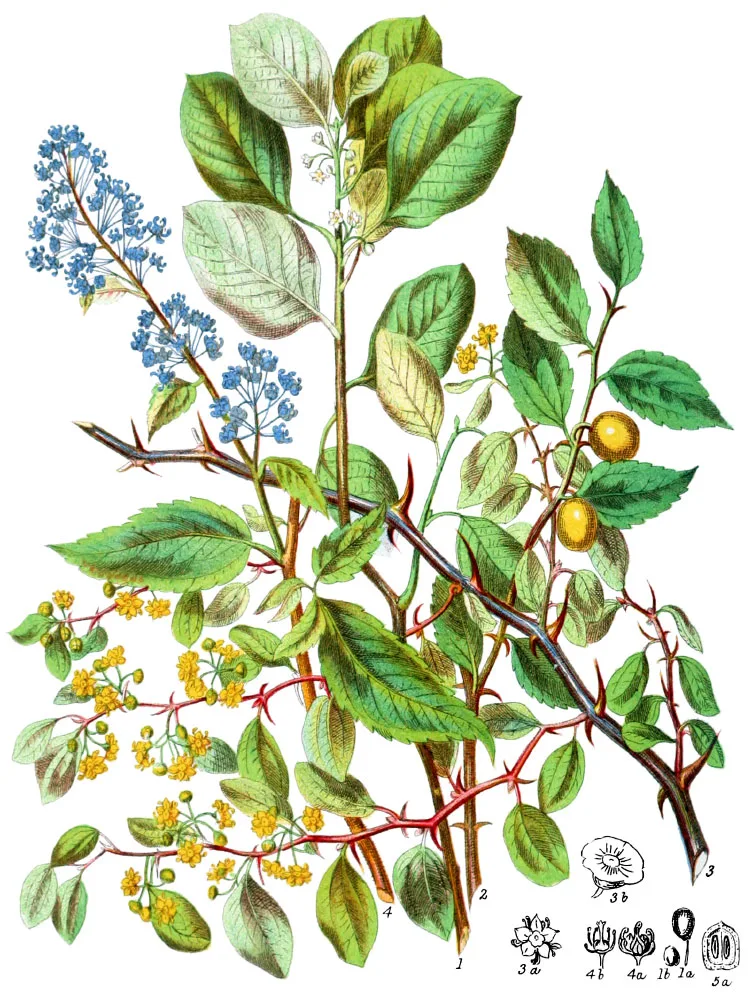
图中植物与部位
-
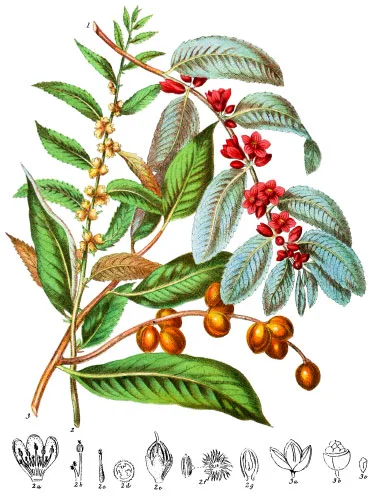
1.
Rhamnus Frangula
, Alder Buckthorn England
- 1a. Berry
- 1b. Seed
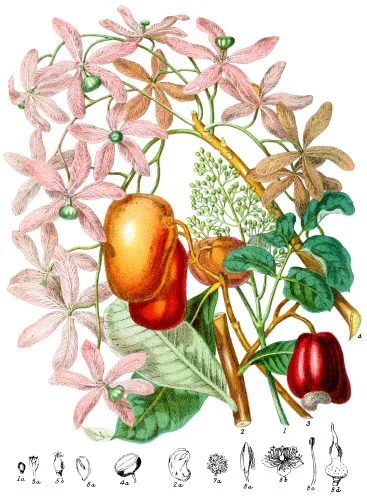
- 2. Zizyphus lotus , Lote-tree Africa
-
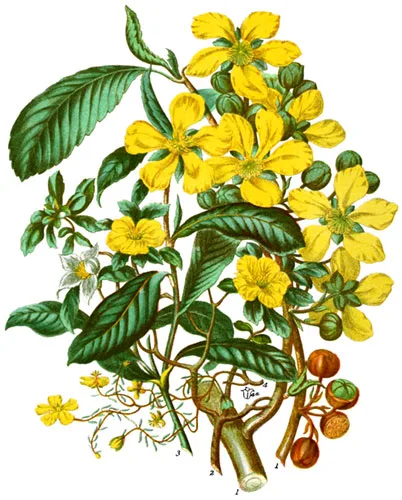
3.
Paliurus australis
, Christ’s-Thorn South Europe
- 3a. Flower, magnified
- 3b. Seed-vessel
-
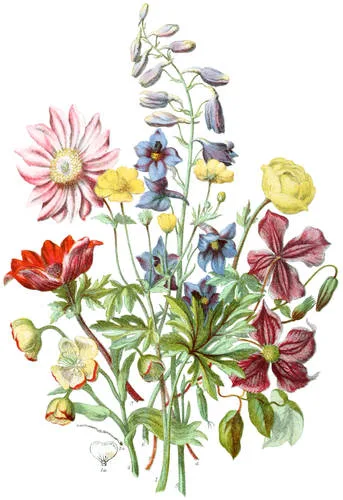
4.
Ceanothus azurea
, Blue Ceanothus Mexico
- 4a. Flower without the Stamens
- 4b. Pistil and Stamens
-
- 5a. Section of Fruit of Zizyphus Baclei
关于本图版
此图原刊于《植物自然目》(Natural Orders of plants),绘者为伊丽莎白·特温宁,成书于 1849 年。原书题作“Rhamnaceæ”。这是该物种在早期博物学出版物中的图像记录之一。
全编共收录 160 幅图版,本图是其中一幅,原书将其列为 Order 47,见第 47 页,版式为纵幅,整幅以黄绿为主调。此图由原件扫描修复而成,使用时请遵循页面标注的授权条款。
原书文字(英文 / 法文)
Key characteristics
Trees an shrubs, which are often spiny; leaves simple, alternate, very seldom opposite, occasionally having minute stipules. Flowers small, generally green, growing either from the base of the leaf-stalk, or at the ends of the branches, sometimes not containing both stamens and pistils, the calyx is four or five cleft, the petals are distinct, hooded, or twisted, inserted into the orifice of the calyx, occasionally wanting. The stamens are five, placed opposite the petals, the fruit is fleshy and whole as in Rhamnus, or dry and separating into three divisions as in Ceanothus, the seeds are erect with fleshy albumen.
The bark and berries of Rhamnus contain dyeing properties, as well as medicinal remedies.
This Order has affinity with Byttneriaceæ.
Select plants in this order
Not all plants listed are illustrated and not all plants illustrated are listed.
- Rhamnus is supposed to be named from the old Celtic word ram, signifying branching, a derivation which may be traced in several modern languages; in old French it is called reim, and the arms of the city of Rheims are two branches intertwined. The berries of several species have medicinal properties, those of Rhamnus Frangula (1) are used in an unripe state for dyeing wool yellow and green; when ripe, they yield a blue colour: the bark also dyes yellow and black. The flowers are peculiarly grateful to bees; goats and sheep are fond of the leaves.
- The berries of R. cathartica yield likewise a yellow dye, as well as medicine; the ripe juice, when prepared with alum, is the sap green of painters; later in the autumn, a purple dye is obtained from them, the colouring matter apparently being influenced by the state of maturity of the fruit.
- R. saxitalis is one of the plants employed to dye morocco leather yellow.
- R. virgatus grows plentifully on the Himalaya, and would doubtless yield from its abundant berries a valuable dye to the natives.
- R. Alaternus is a hardy evergreen shrub, common in European gardens, the glossy foliage forming rapidly a close and sheltering hedge; the honey-baring flowers are much frequented by bees.
- The wood of several species is compact and durable, that of R. lycioides is selected by the Mongols to make their images, on account of its hardness and orange red colour.
- Zizyphus derives its name from the Arabic, the fruit is destitute of any strong medicinal qualities, and is often eatable and wholesome.
- Z. Lotus (2) is the true Lotus fruit of the Lotophagi, and is still eaten by the Arabs of Barbary. Travellers in Africa have found it growing in different countries; Mungo Park describes the fruit as delicious, and relates the manner in which the natives made a kind of bread of the dried and pounded fruit, separating the farinaceous portion from the stone, mixing it with water, and making it into thin cakes, which when dried in the sun resemble gingerbread in flavour and colour.
- From the fruit of Z. Jujuba and Z. vulgaris the well known Jujube lozenges for coughs are prepared.
- The berries of several other species are eaten by the natives of India and China; those of Z. Baclei are considered poisionous by the Negroes of the Gambia, but they make a kind of wine from the fruit of Z. orthocanthus.
- Paliurus australis (3) is a remarkably beautiful tree, the pliant branches with their strong thorns and delicate flowers bending gracefully downwards; the singular shape of the seed-vessel has caused it to be named by the French porte-chapeau. It is generally believed to be the plant from which Christ’s crown of thorns was made, as it abounds in Judea, and from the nature of the branches is peculiarly fitted to be woven into any form.
- Ceanothus is a genus named by Theophrastus; C. americana is called New Jersey Tea, from the leaves being dried and used as Tea in Carolina; the root yields a buff dye for wool.
- Two species of Berchemia are employed medicinally by the Chinese.
- The acrid root of Discaria febrifuga affords a remedy in the fevers of Brazil.
- Hovenia dulcis is remarkable for the enlarged and esculent flower-stalks, which after the petals are fallen, become filled with a red pulp and are esteemed as a fruit in China.
- Sageretia Theezans has aromatic leaves which serve as Tea to the poor Chinese.
Locations
This Tribe is found in nearly every part of the world, except in the Arctic Zone. The largest portion is said to be dispersed through the hottest countries of the United States, the south of Europe, the north of Africa, Persia, India, the Cape of Good Hope, and New Holland. A few genera appear to be limited to particular countries, as Ceanothus to N. America, Phylica to the Cape, Cryptandra and Pomaderris to New Holland.
Legend
- Rhamnus Frangula, Alder Buckthorn. England.
- Berry.
- Seed.
- Zizyphus lotus, Lote-tree. Africa.
- Paliurus australis, Christ’s-Thorn. South Europe.
- Flower, magnified.
- Seed-vessel.
- Ceanothus azurea, Blue Ceanothus. Mexico.
- Flower without the Stamens.
- Pistil and Stamens.
-
- Section of Fruit of Zizyphus Baclei.
本图涉及的植物
- Rhamnus Frangula
- Zizyphus lotus
- Paliurus australis
- Ceanothus azurea
- Zizyphus Baclei
属索引
- Berchæmia
- Ceanothus
- Cryptandra
- Discaria
- Hovenia
- Paliurus
- Phylica
- Pomaderris
- Rhamnus
- Sageretia
- Zizyphus