Samydaceæ
Samydaceæ
The Samyda Tribe
- 合集
- 植物自然目
- 绘者
- Elizabeth Twining(伊丽莎白·特温宁)
- 年代
- 1868
- 图版号
- Order 46
- 原书页码
- p.46
- 主色
- 绿
- 授权
- CC BY-SA 4.0
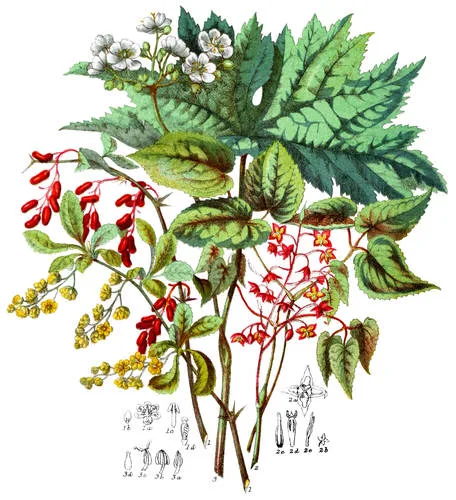
图中植物与部位
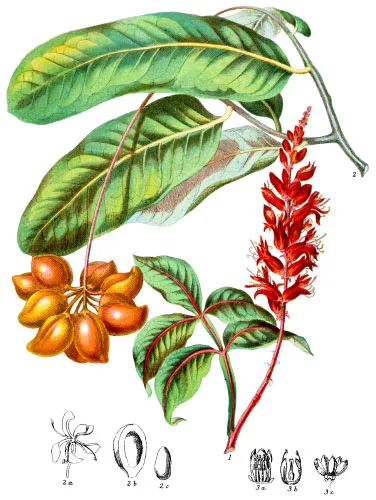
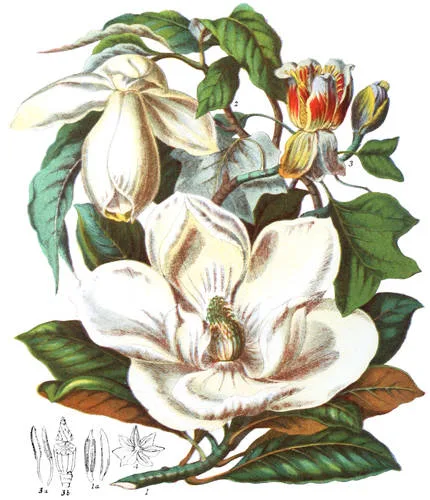
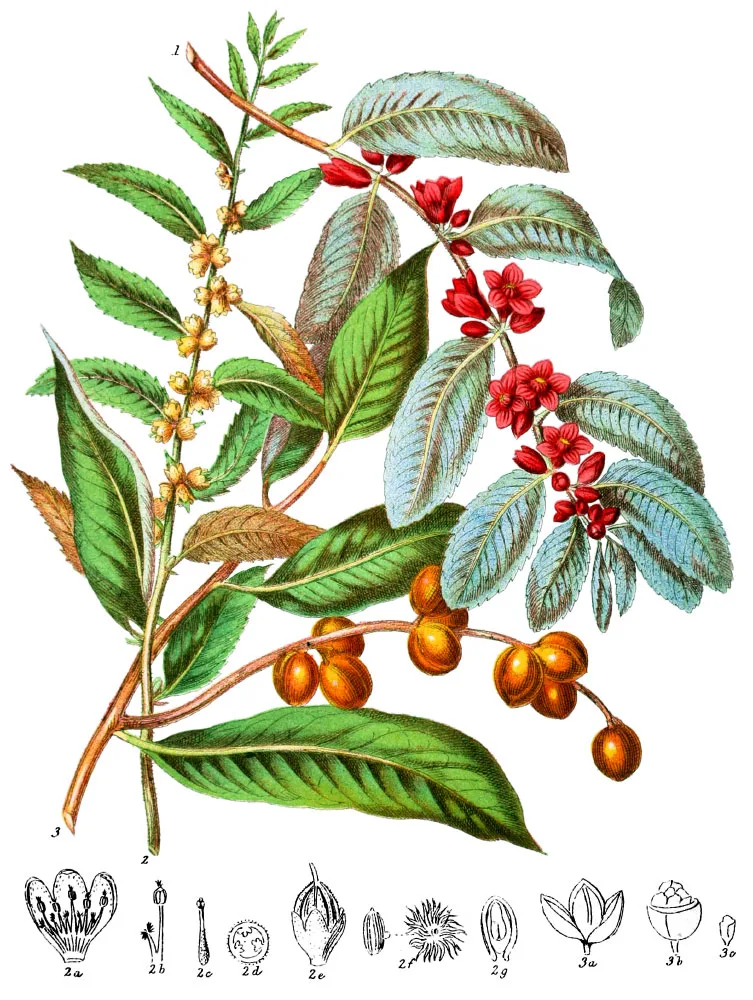
- 1. Samyda rosea , Rose-coloured Samyda West Indies
-
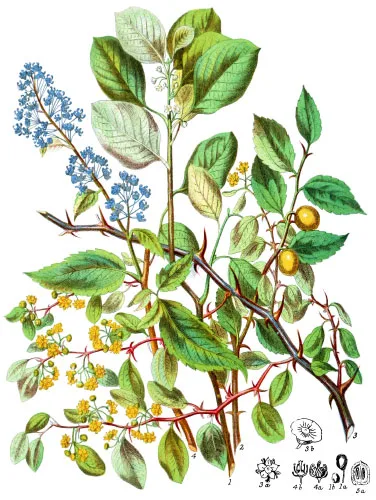
2.
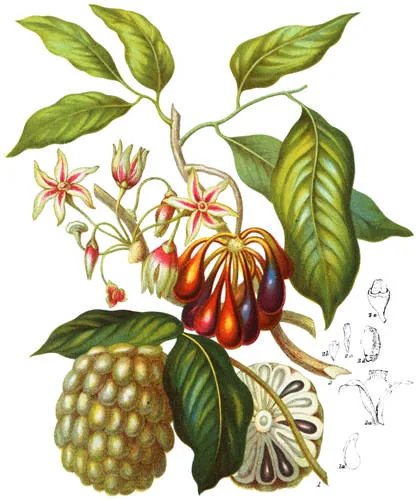
Casearia grandiflora
, Large-flowered Casearia Minas Geraes, Brazil
- 2a. Portion of calyx, opened
- 2b. Stamen
- 2c. Pistil
- 2d. Section of Ovary
- 2e. Seed-vessel
- 2f. Seed and Aril
- 2g. Section of Seed
-
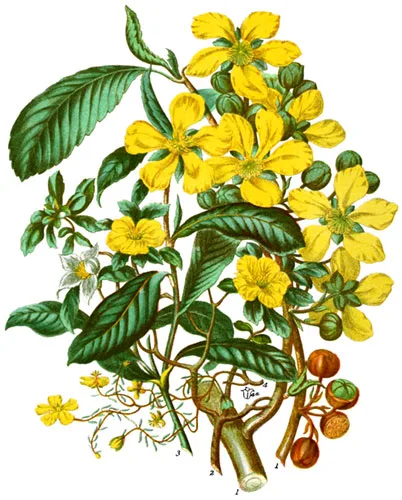
3.
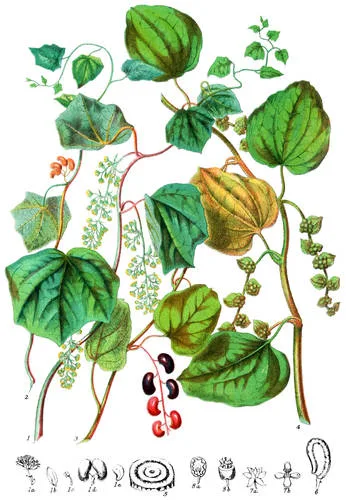
Pitumba guianensis
Guiana
- 3a. Seed-vessel, opened
- 3b. Section showing Seeds
- 3c. Seed
关于本图版
《植物自然目》(Natural Orders of plants)由伊丽莎白·特温宁绘制,1849 年印行,本图即其中一幅。原书题作“Samydaceæ”。此类图版是当时记录物种形态的主要方式。
该合集全编共 160 幅图版,此图为其中之一,图版编号 Order 46,对应原书第 46 页,版式为纵幅,整幅以绿为主调。图像自原件扫描修复,构图与设色未经改动,授权方式见页面下方。
原书文字(英文 / 法文)
Key characteristics
Trees and shrubs; the leaves are alternate, on short stalks, simple, entire at the edges or toothed, evergreen, with stipules at their base; usually having pellucid dots and small oblong lines. The flower-stalks grow from the base of the leaf-stalks, and are solitary or numerous; the calyx has four or five sepals more or less cohering at their base, usually coloured inside, and folded over each other in the bud; the petals are wanting. The stamens arise from the tube of the calyx, and are two, three, or four times as many as the sepals. The filaments are united at the base, and either all bear anthers, or are alternately shorter and surmounted by a tuft of hairs; the anthers are erect and ovate, two-celled. The ovary is above the calyx, one-celled; the style single and thread-like; the stigma capitate or slightly lobed; the ovules many, attached to plates on the sides of the ovary. The capsule is leathery, with one call and three or five valves, many-seeded, the valves gaping imperfectly when ripe, often somewhat pulpy within. The seeds are fixed irregularly on the valves, with a fleshy fringed covering; they contain oily or fleshy albumen.
This small tribe has a few points of affinity with several others, but it is easily distinguished by the mingling of round and oblong pellucid dots on the leaves.
The bark and leaves have slightly astringent properties.
Select plants in this order
Not all plants listed are illustrated and not all plants illustrated are listed.
- Samyda was named from the Greek of the Birch, which it resembles partly in the manner of growth of the branches; it was introduced into this country from the West Indies before the end of the last century, but it is seldom seen in our conservatories; the species are of slow growth and have not gained much favour, although graceful in habit and of delicately coloured foliage: the calyx of S. rosea (1) assumes the form and hue of petals, and gives a pleasing appearance to the plant.
- Casearia grandiflora (2) is one of the common plants of Brazil; the leaves are covered on he lower surface with dense yellowish down, the prominent nerve is also downy on the upper surface; the calyx is clothed with yellowish hairs. This species has the largest flowers among the genus, but it does not rank high for beauty of aspect. The alternate filaments bearing no anthers, appear to indicate affinity with the rays of the crown of Passion-flowers: the finely fringed aril of the seed is a curious appendage; the meadows of Minas Geraes afford a locatlity suitable to this species.
- In that part of the same province, called Distrito do diamantes, on the rocks bounding the Rio Pardo, is found another species, C. adamantinum, the small ovate leaves of which are excessively hairy.
- C. ulmifolia is valued by the Brazilians as an antidote to the bite of poisonous snakes; they also boil the leaves to heal wounds, and employ the juice as a medicine.
- A decoction of C. lingua is used as a remedy in malignant fevers and other disorders.
- The acrid yet mucilaginous bark of C. astringens is also considered to have peculiarly healing properties.
- C. Anavinga yields a medicine from its pulpy fruit, and the bitter leaves are thought efficacious in baths.
- The root of C. esculenta is too bitter for food, but serves as medicine, and the foliage is eaten.
- Pitumba guianensis (3) is a small tree, seven or eight feet in height, growing on the margins of fields in Guiana: the Caribbean name, Pitumba-rana, was adopted by Aublet, one of the first French botanists who explored the country; the fruit contains many irregularly shaped seeds.
Locations
This Tribe belongs entirely to the Tropical regions of the world; the South American species are most abundant; those of Asia and Africa are few and little known.
Legend
- Samyda rosea, Rose-coloured Samyda. West Indies.
- Casearia grandiflora, Large-flowered Casearea. Minas Geraes, Brazil.
- Portion of calyx, opened.
- Stamen.
- Pistil.
- Section of Ovary.
- Seed-vessel.
- Seed and Aril.
- Section of Seed.
- Pitumba guianensis. Guiana.
- Seed-vessel, opened.
- Section showing Seeds.
- Seed.
本图涉及的植物
- Samyda rosea
- Casearia grandiflora
- Pitumba guianensis
属索引
- Casearia
- Pitumba
- Samyda