Strychnaceæ
Strychnaceæ
The Strychnos Tribe
- 合集
- 植物自然目
- 绘者
- Elizabeth Twining(伊丽莎白·特温宁)
- 年代
- 1868
- 图版号
- Order 91
- 原书页码
- p.91
- 主色
- 黄
- 授权
- CC BY-SA 4.0
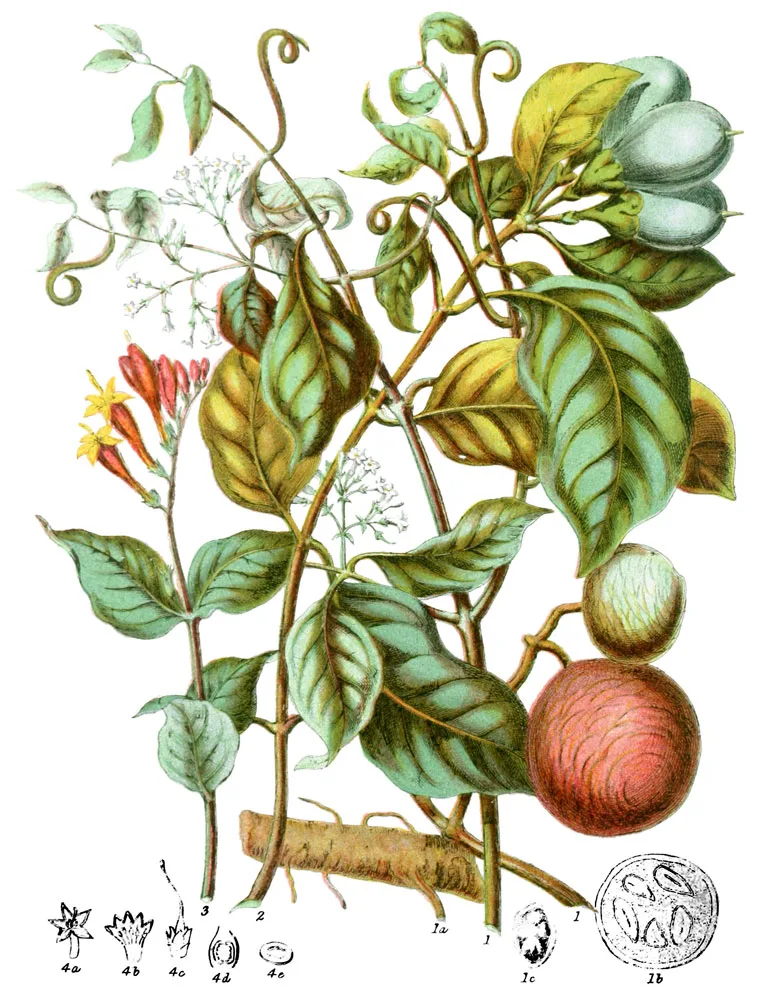
图中植物与部位
-
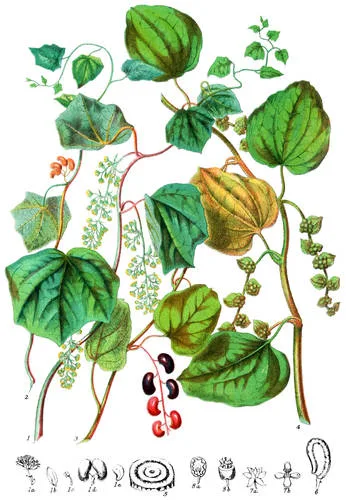
1.
Strychnos Tieute
, Poisonous Strychnos Java
- 1a. Root
- 1b. Section of Fruit
- 1c. Seed
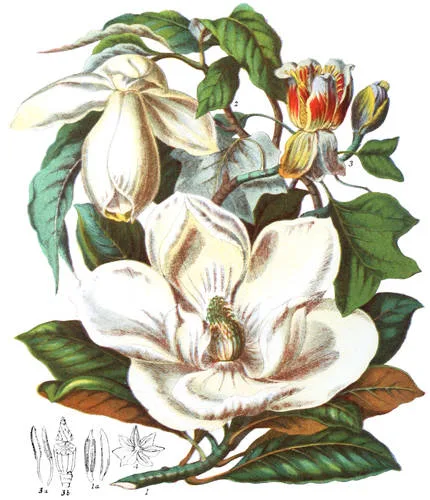
- 2. Fagræa littoralis , Indian Fagræa E. Indies
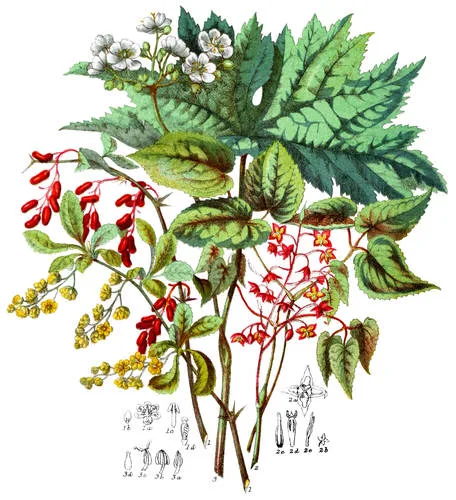
- 3. Spigelia marilandica , Pink-root N. America
-
- 4a. Strychnos ligustrina flower
- 4b. Flower, opened
- 4c. Calyx and Pistil
- 4d. Section of Ovary
- 4e. Cross section of Ovary
关于本图版
《植物自然目》(Natural Orders of plants)由伊丽莎白·特温宁绘制,1849 年印行,本图即其中一幅。原书题作“Strychnaceæ”。此类图版是当时记录物种形态的主要方式。
该合集全编共 160 幅图版,此图为其中之一,图版编号 Order 91,对应原书第 91 页,版式为纵幅,设色以橙黄为基调。图像自原件扫描修复,构图与设色未经改动,授权方式见页面下方。
原书文字(英文 / 法文)
Key characteristics
Trees, shrubs, and herbaceous plants. The leaves are opposite, entire at the edges, usually having stipules which adhere to the leaf-stalks, or are combined into sheaths. The flowers are on branching stalks, or solitary. The calyx is below the ovary, four or five-parted; the corolla is regular or irregular, four or five or ten-parted. The stamens arise from the corolla, all placed on the same line. The ovary is above the calyx, two-celled, the style continuous with it: the stigma simple. The fruit is either a capsule with two cells, or a drupe with one or two-seeded stones, or a berry with the seeds immersed in pulp. The seeds are sometimes winged, they contain fleshy or cartilaginous albumen.
These plants have affinity with Apocynaceæ, but are distinguished by not having milky juice, nor a glandular stigma.
Strong venomous properties exist in the seeds.
Select plants in this order
Not all plants listed are illustrated and not all plants illustrated are listed.
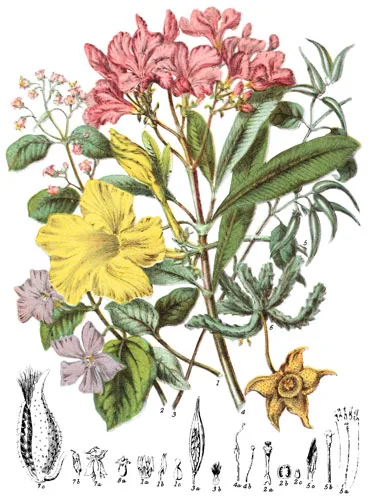
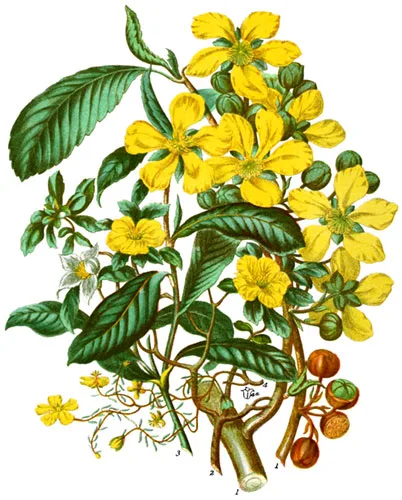
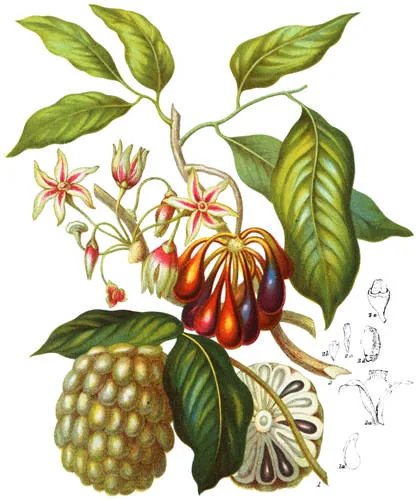
- The genus Strychnos includes several highly poisonous species, fatal to man and animals; S. Tieute (1) is remarkable for the virulent poison obtained from the bark of the root; it grows abundantly in Java, where it is called by the natives Tjettek.
- The seed of S. nux vomica, the Koochla, or Poison-nut of the East Indies, is one of the strongest known poisions; it has been found to contain two distinct principles, both acrid narcotics, and energetic in action. It is a small tree, bearing fruit with a brittle shell, full of gelatinous pulp, in which the seeds are embedded. The pulp is eaten by birds without injury, but the seeds contain the poisonous juices; in a small quantity they are used medicinally to cure the fever of the country, and the bites of venomous snakes, and are also employed in the distillation of spirits; their texture is so hard, they can only be broken by a rasp or file.
- S. toxifera is the principal ingredient of the celebrated Wourali poison of Guiana.
- Amongst the various febrifuges of Brazil is S. pseudoquina, said to be equal the famous Peruvian bark; the whole plant, except the fruit, which is eatable, is intensely bitter and astringent.
- S. potatorum, the clearing-nut of India, is a larger tree, and is of great value to the natives, who use the ripe seeds to purify the pond or river water, which they drink in preference to that of wells. They rub the inside of an unglazed earthen vessel with seeds, which soon causes the impure particles of the water to separate and fall to the bottom, thus rendering it pure and wholesome. The pulpy fruit is eatable, though not thought agreeable by Europeans.
- The fruit of S. spinosa is eaten by pigs in Madagascar; that of S. brachiata affords food to deer in Peru.
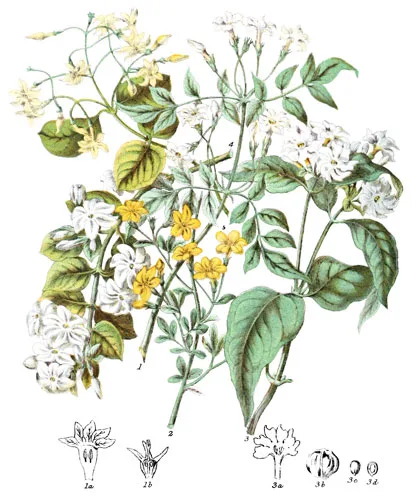
- Fagræa littoralis (2) bears a small white flower, much resembling that of Strychnos; it is occasionally found growing in a parasitic manner upon other trees.
- F. zeylanica has been introduced into English conservatories, but is rarely seen. All the species are found in the isles of the Indian Archipelago, as well as in India.
- Spigelia was named by Linnæus in honour of Adrian Spigelius, a Fleming, afterwards professor at Padua, in the beginning of the 17th century.
- S. marilandica (3) is considered highly valuable for its medicinal properties, both in the root and leaves in North America; it is sufficiently hardy to bear our climate in the open air, yet is not much known in gardens.
- S. anthelmia is one of the medicinal plants of the West Indies.
- S. glabrata is one of the poisonous plants of Brazil.
- The medicine called Papeeta, or St. Ignatius Beans, in India, is procured from the seeds of Ignatia amara.
- The leaves of Potalia resinifera yield a mucilaginous infusion, used as a lotion for the eyes in Brazil.
- P. amara forms a connecting link with the Gentians, possessing their bitter properties; it is at the same time acrid, like the Dog-bane tribe.
- Logania is a genus belonging to New Holland, the flowers small and white.
Locations
This Tribe inhabits chiefly the Tropics, a few species only are natives of New Holland and North and South America.
Legend
- Strychnos Tieute, Poisonous Strychnos. Java.
- Root.
- Section of Fruit.
- Seed.
- Fagræa littoralis, Indian Fagræa. E. Indies.
- Spigelia marilandica, Pink-root. N. America.
-
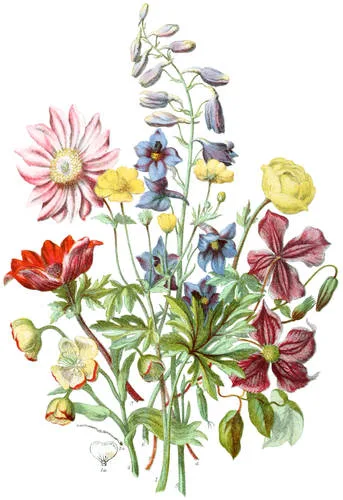
- Strychnos ligustrina flower.
- Flower, opened.
- Calyx and Pistil.
- Section of Ovary.
- Cross section of Ovary.
十二观
- 黄色主调
- 纵幅 1.32∶1
- 含 4 个物种
- 11 处解剖图
- 1868 年刊
- Order 91
这不是词条,是一条看画的次序:先站定看整体,再看名字与形色、构图与刀工,然后问它几时开、从哪里来、经了谁的手;最后是中国诗文——同一朵花,中国古人是怎么看的。十二观读完,这幅图就打开了。
-
第一眼
凡画山水,意在笔先。
—— 唐·王维《山水论》
下笔之前,心里已经有了整幅画。看画时可以反过来推:画家先定了什么,后添了什么。这一幅是竖的:眼睛从下往上走,落点在上半部。先让整株立起来,再看细节。第二步凑近一寸:主线之外另有 11 处解剖小图——那是画家怕你看不清,替你把花剖开了。第三步,找黄色最重的一小块:整幅的明暗秩序,是从那里排开的。
-
名与实
学名缺席时,画面本身就是唯一的证据。此幅既无通行中文名,学名也不可靠,只能以原书题名相称——图谱里总有几幅这样的图,只能靠画面本身说话。
-
形与色
此图为一幅博物插画:一株植物被从山野或温室中取出,安置在纸的中央,根、茎、叶、花、果依次交代,务求可辨、可据、可传。此幅属黄一路,黄如蜜蜡,浅处几乎透光。上色时先铺一层淡底,再在瓣基与背光处加深——层次是这样一层层叠出来的。颜色不是平涂的:最浅处近乎纸色,最深处在花瓣重叠的缝里。把这两处找到,画面的呼吸就出来了。
-
构图与呼吸
画幅高而窄,主株一路向上,上下留白多,是图谱中最常见的立轴式构图。(高宽比约 1.32∶1)另附 11 处局部解剖,主体与细部互为注脚。老图谱爱把主株摆在偏中线的位置,左右留得不一样多:这一点偏心,正是画面活起来的原因。
-
一刀一色
十九世纪后半叶,石版与彩色石印渐成主流:颜色可以直接印出,不再依赖手工,线条反倒退居其次。图像的“准确”提高了,手性却淡了。先判断它是“印”的还是“画”的,再谈好不好看——这是看老版画最实用的一条规矩。
-
时序
图版多标花期,因花期是植物一年中最容易被辨认的十余日;其余月份,它只是一丛叶。图上所记的 1868 年是刊行之年,不是花期;真正的花藏在原书的采集记录里,通常比出版早一两年。要判断一幅图的季节,不必看题跋:看叶的老嫩、花与果是否同在枝上,也就八九不离十了。
-
故土
来源不一,或本地山野,或远洋引种。十九世纪的植物园与温室,是这些植物离开故土后的第一个住所。同一部图谱里,同类往往排在一起;把几幅并看,差别比单看一幅清楚得多。
-
书与人
《植物自然目》(Natural Orders of plants)由伊丽莎白·特温宁绘,成于1849。此幅为其中Order 91,见原书第 91 页。一本书的“作者”常常是主编;真正决定这幅图好不好看的,是没留下名字的刻工与上色人。
-
诗境
天地有大美而不言,四时有明法而不议。
—— 《庄子·知北游》
博物画所做的,正是替不言者立言。诗以气行,画以形立;两种“看”叠在一起,才是看画的意思。
-
文心
六法者何?一、气韵生动是也;二、骨法用笔是也;三、应物象形是也;四、随类赋彩是也;五、经营位置是也;六、传移模写是也。
—— 南齐·谢赫《古画品录》
一千五百年前,谢赫给了六条看画的标准:气韵、用笔、形似、设色、构图、临摹。前五条今天仍然管用——在这幅图版上一样样对过去,就是一次完整的读画。中国有《本草纲目》《植物名实图考》,欧洲有从《本草》插图到彩色石印的谱系;两条传统都相信:图能补文字的不足。中外的分别不在谁高明,而在问的问题不同:欧洲问它是什么,中国问它像谁。两个问题都答了,一幅图才算读完。
-
花语
博物画的象征不在花语,而在“记录”本身:它相信一株植物值得被准确画下,这份信念是科学时代最朴素的道德。此幅偏黄,在花语里总要再加重一分情绪。象征会随世道改口:同一株植物,在一个世纪里可以说完全相反的话。
-
带走一双眼睛
把这三件事带走:先整体后细节;先线后色;先看画再翻书。任何一张老图版,都可以用这三条读。二百年后,这株植物的后代或许仍在某处活着;而纸上这一株,永远停在 1868 年的那个季节。
本图涉及的植物
- Strychnos Tieute
- Fragræa littoralis
- Spigelia marylandica
- Strychnos ligustrina
属索引
- Fagræa
- Ignatia
- Logania
- Potalia
- Spigelia
- Strychnos