Zingiberaceæ
Zingiberaceæ
The Ginger Tribe
- 合集
- 植物自然目
- 绘者
- Elizabeth Twining(伊丽莎白·特温宁)
- 年代
- 1868
- 图版号
- Order 133
- 原书页码
- p.133
- 主色
- 黄
- 授权
- CC BY-SA 4.0
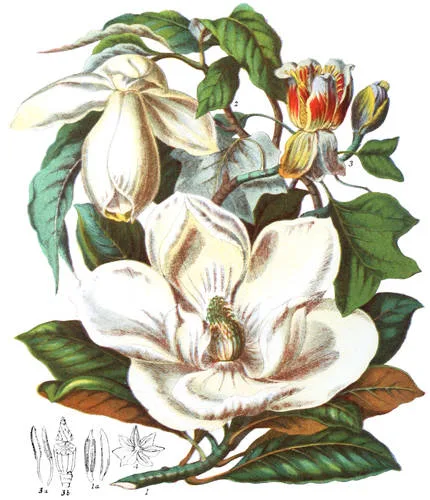
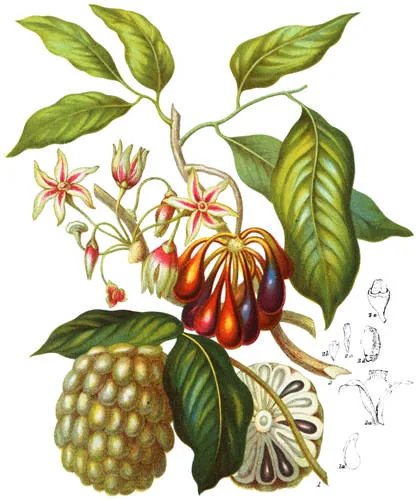
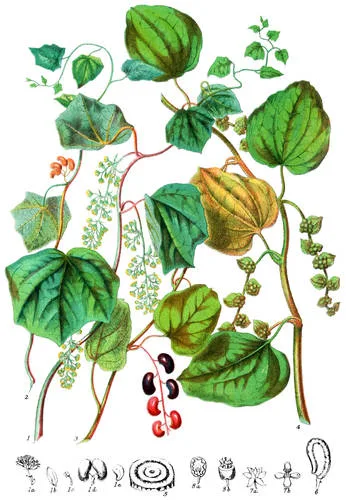
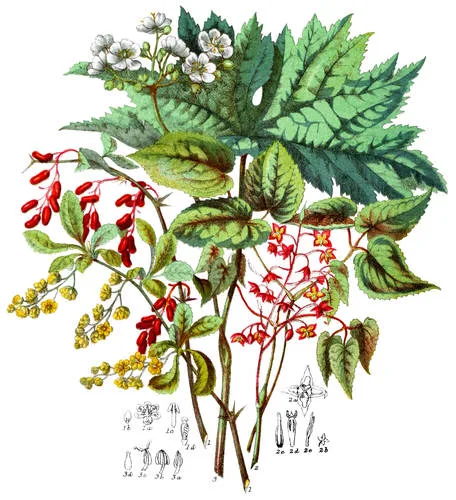
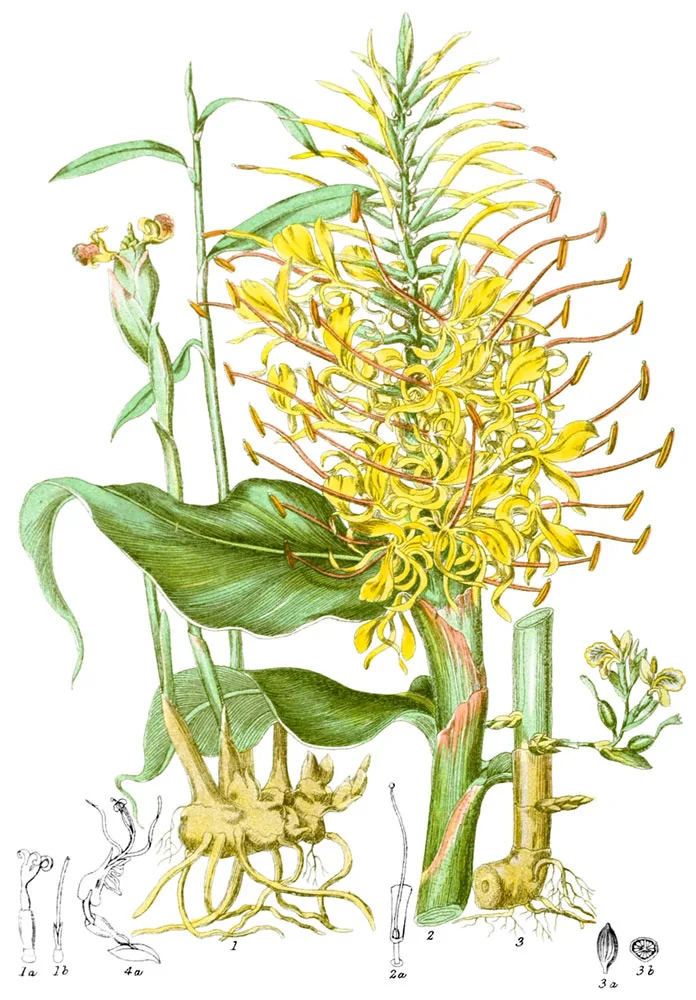
图中植物与部位
-
1.
Zingiber officinale
, Ginger East Indies
- 1a. Calyx and outer Petals
- 1b. Ovary and Pistil
-
2.
Hedychium speciosum
, Splendid Hedychium East Indies
- 2a. Ovary and Pistil
-
3.
Alpinia Cardamomum
, Cardamoms East Indies
- 3a. Seed-vessel
- 3b. Section
-
- 4a. Mantisia saltatoria , Flower E. Indies
关于本图版
本图选自伊丽莎白·特温宁的《植物自然目》(Natural Orders of plants),原书 1849 年出版。原书题作“Zingiberaceæ”。原书为这一物种留下了成幅的彩色图像记录。
该合集全编共 160 幅图版,此图为其中之一,图版编号 Order 133,对应原书第 133 页,版式为纵幅,画面以橙黄为主色。图像自原件扫描修复,构图与设色未经改动,授权方式见页面下方。
原书文字(英文 / 法文)
Key characteristics
Herbaceous plants with creeping jointed root-stalks; the stem is formed of the united bases of the leaves, usually single, and sometimes branching. The leaves are simple, sheathing at the base, with a single mid-rib, and numerous fine veins diverging to the edge. The flowers arise from amongst membranous bracts, usually in pairs. The calyx is above the ovary, tubular, three-lobed, short; the corolla is tubular, irregular, six-parted, in two rows, one petal usually larger than the rest, often three-lobed. The stamens are three, the central one only perfect. The filament is often extended beyond the anther, sometimes petal-like; the anther is one or two-celled, opening longitudinally, its lobes often enclosing the upper part of the style, sometimes spurred. The ovary is one to three-celled, the style slender, or expanded. The stigma dilated, hollow, or hooded. The fruit is usually a capsule, three-celled, many-seeded, or imperfect and one-celled, occasionally a berry. The seeds are round or angular, with or without an aril; they contain mealy albumen.
In some points of structure this Tribe resembles Musaceæ, and it has also affinity with Orchidaceæ.
The roots of Zingiber are aromatic and pungent, others contain a large portion of wholesome starchy substance.
Select plants in this order
Not all plants listed are illustrated and not all plants illustrated are listed.
- Zingiber is derived from the Indian name of the plant, and so likewise are all the European appellations.
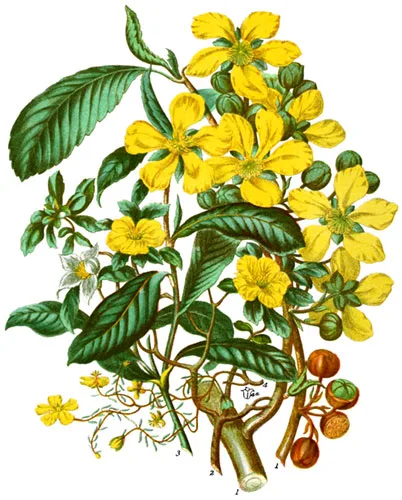
- The root of Zingiber officinale, ginger (1), is known and esteemed in all countries as a medicine and condiment. In the West Indies the plants are cultivated in trenches, and there frequently eaten in a fresh state as salad. If the roots are required for preserving in sugar, they are taken up at about two months growth, but to be dried as a spice they remain in the ground until the stems are withered, when they are taken out and scraped and carefully dried in the sun, for what is commonly called white ginger. The kind, called black ginger, is boiled, which disperses the oil contained in the roots, and causes them to acquire a dark colour. A large quantity of both sorts, as well as the preserved kind, is prepared in the East and West Indies and sent thence to parts of the world.
- Several other species are natives of the East Indies, Z. mioga belongs to Japan.
- The beautiful genus Hedychium is exclusively native of the East Indies, China, and the Malay islands; it appears to extend westwards as far as 30° N. lat. in Western Hindustan; being found at intermedia stations along the shores of the Irawaddy, in Assam, in the mountain valleys of Sikkim and Nepal. In Malabar also some species exist, and on the hills in the interior.
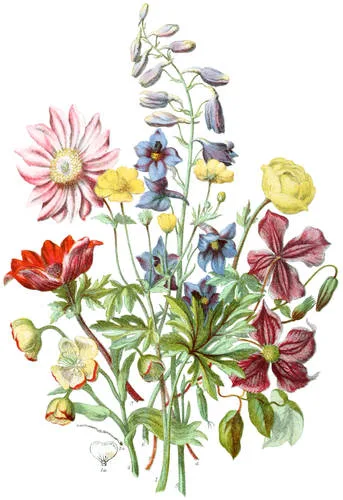
- H. speciosum (2) is like another species, liable to great diversity of colour and even growth, but it is one of the most fragrant and graceful of the genus, noble in general aspect, and extremely elegant in the form and arrangement of the flowers. The plant is as much as five feet in height in our conservatories, and probably attains to greater magnitude in its native situations. The scent is delicious, and as the flowers expand gradually, it remains many days extremely ornamental, yet it is much less frequent in conservatories than it deserves to be. On the Himalaya it has been found at 6000 feet elevation.
- H. coronarium, generally known as the garland-flower in India, has white flowers, producing them abundantly throughout the summer in the gardens of Bengal, where the flowers are used as ornaments for the head.
- H. spicatum is one of the most common species in Nepal.
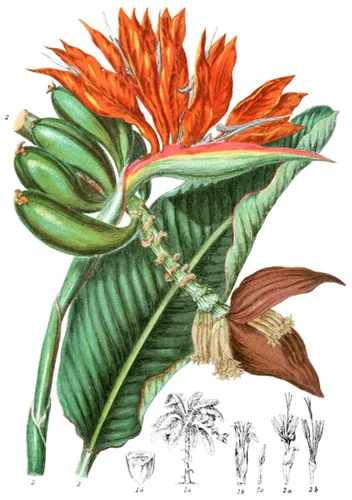
- Alpinia cardamomum (3) was valued in ancient times by Hindoos, Persians, and Arabians, for its aromatic seeds; they still form an important article of commerce, 15,000 lbs. weight being annual sold in London. It grows plentifully on the mountains of Malabar, and the gathering and packing the seeds occupies native women and children from October till December.
- Several other species yield equally valuable seeds, in Ceylon and other parts of India.
- The genus Curcuma is known by the horns on the anther; the root of C. longa is Tumeric, a chief ingredient in Curry powder, and a constant article of food in the East.
- Kæmpferia galanga* is the medicinal Galangale, of pleasant aromatic flavour.
- K. candida is the finest species in regard to its flower, but the root is not valuable. Of that class of this Tribe which has wholesome though tasteless roots.
- Maranta is the principal, yielding arrow-root in great abundance.
- Canna, the Indian Shot, has also roots full of starch.
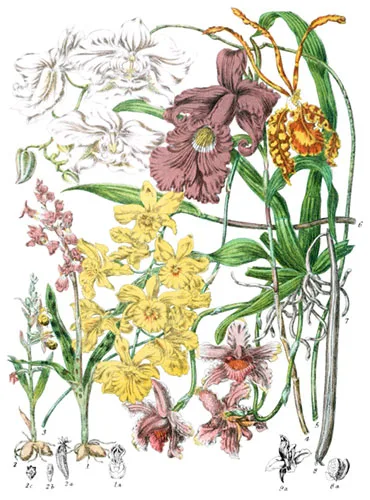
- The strangely-formed flowers of Mantisia (4)† resemble an insect in shape, and seem to connect this Tribe with the Orchids.
Locations
This Tribe belongs almost exclusively to the Tropics, most abundant in the East Indies; rare in Africa and America.
Legend
- Zingiber officinale, Ginger. East Indies.
- Calyx and outer Petals.
- Ovary and Pistil.
- Hedychium speciosum, Splendid Hedychium. East Indies.
- Ovary and Pistil.
- Alpinia Cardamomum, Cardamoms. East Indies.
- Seed-vessel.
- Section.
-
- Mantisia saltatoria. Flower. E. Indies.
本图涉及的植物
- Zingiber officinale
- Hedychium spciosum
- Alpinia cardamomum
- Mantisia saltatoria
属索引
- Alpinia
- Canna
- Curcuma
- Hedychium
- Kæmphferia
- Mantisia
- Maranta
- Zingiber