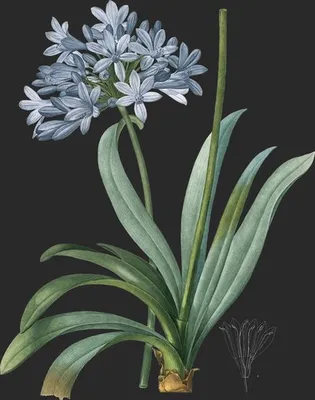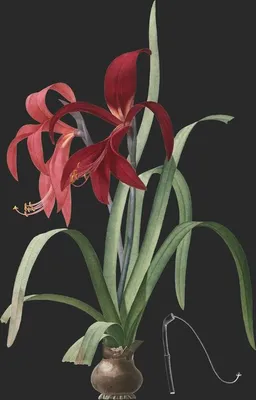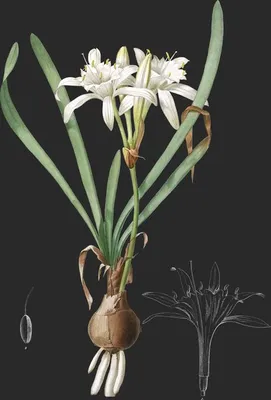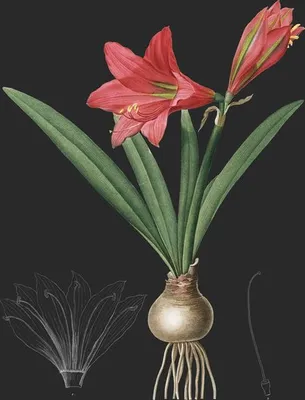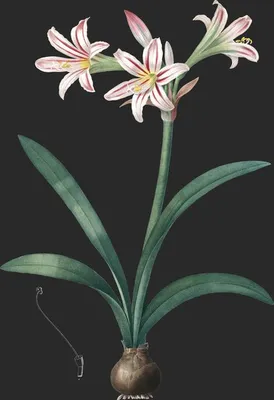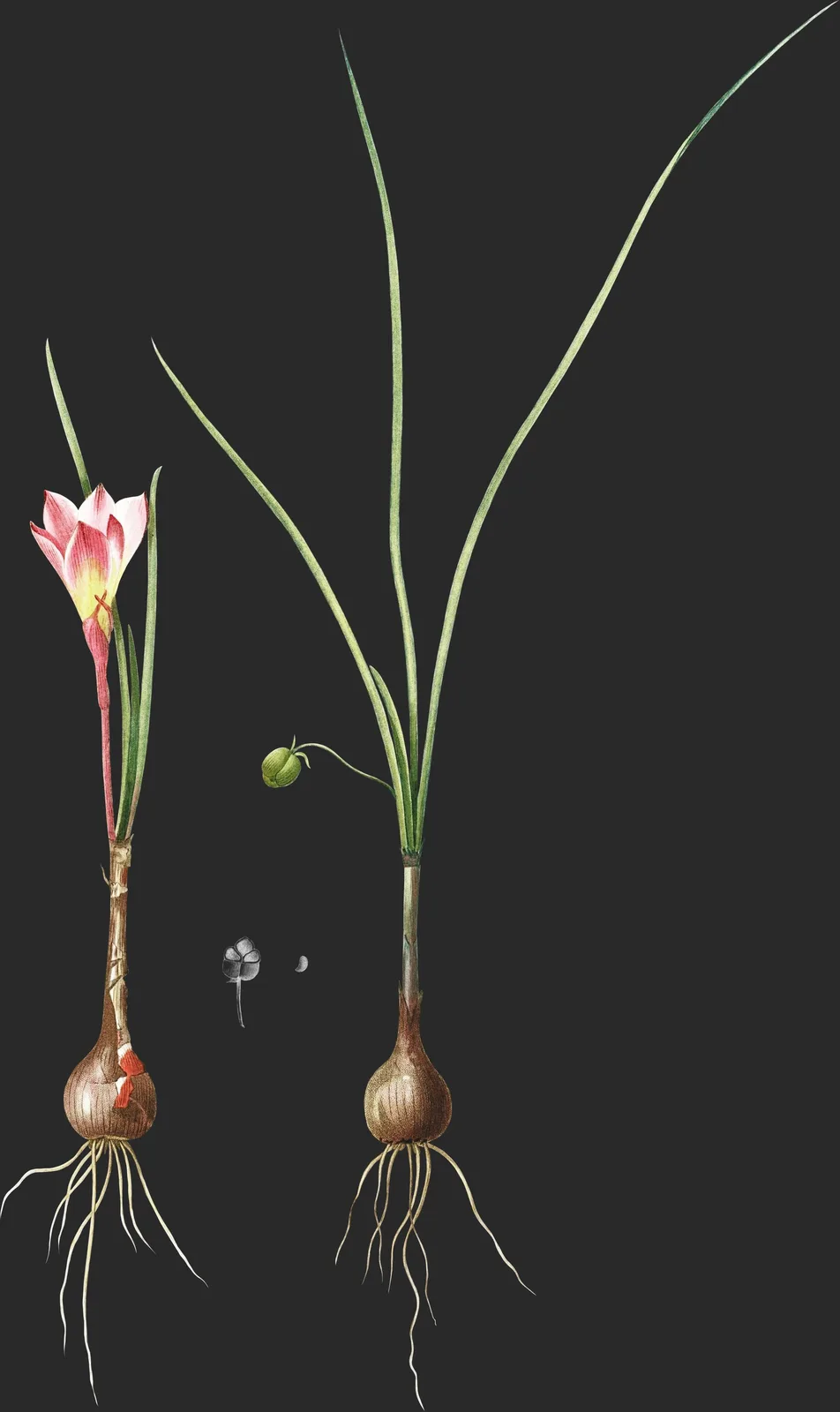
Amaryllis Atamasco var B. Minor
南方火眼蝶
Amaryllis de Vriginie
Ten ways of seeing
- measured cast amber
- upright 1.68 : 1
First Look
六法者何?一、气韵生动是也;二、骨法用笔是也;三、应物象形是也;四、随类赋彩是也;五、经营位置是也;六、传移模写是也。
—— 南齐·谢赫《古画品录》
The six laws: spirit resonance alive; bone-method in the brush; matching form; colour by kind; planning the placing; copying the masters.
The sheet is vertical: the eye climbs and settles in the upper half. Let the plant stand before you look for detail. Then step in close: watch where colour meets line, and whether the line ever breaks. Third, find where the yellow is deepest: the whole tonal order is measured from that patch.
Name and Thing
The binomial is Amaryllis atamasco: the first word is the genus it belongs among, the second the epithet that sets it apart. Two words carry a whole provenance. The older system filed it under Amaryllidaceæ by overall affinity; Linnaeus, counting stamens only, placed it in Hexandria — two ways of asking what a plant is. The Chinese name 南方火眼蝶 is a modern rendering of the Latin, not an old garden name.
Form and Colour
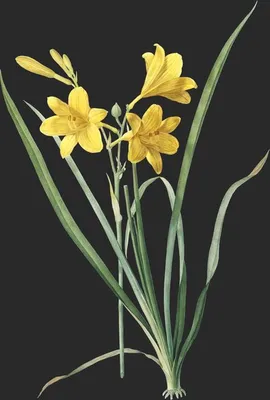
Measured on this plate: flower colour covers 2.1% of the sheet, foliage 1.7%, the cast amber with a second note of red. No other plate shares exactly this measure. Bulbous plants store the year underground — bulb, corm or tuber — then send up a few thick leaves and a single scape, with six tepals in cup, funnel or star. Filed under yellow — a honey-yellow, built in washes from a pale ground. Three things fix the habit: leaf arrangement, tepal count, and how the flower is borne.
Composition
The sheet is tall. No details are appended: a plate for looking, not for keying out. The plant covers only 6% of the sheet, centred a little left of centre; the emptiness is where the eye rests.
Line and Colour
The first half of the nineteenth century moved from copper to steel to lithography; stipple could render the softest transition. Decide first whether it was printed or painted; only then discuss whether it is beautiful. If you mean to copy it: take its skeleton, its margins and the order of its colours; the burin's hatching is the language of copper — suggest it with pencil density, do not imitate it stroke for stroke.
Poetic Resonance
不语亭亭俨薄妆,画裙双凤郁金香。
—— 唐·杜牧《偶呈鄭先輩》
The poem gives the mood first and the picture supplies the form; set the line beside the plate and the yellow the corolla becomes its resting point.
Symbolism
The tulip was an imperial emblem in Istanbul and a speculative bubble in Amsterdam; the hyacinth sprang from a boy's blood in Greek myth. What bulbs share is concealment: next year kept underground. This plate leans yellow, which in flower language adds one more degree of feeling. Flower language was added later; the flower knows nothing of it, and that innocence is part of its power.
Season and Place
Early spring to early summer, genus by genus: tulips and hyacinths first, gladiolus and amaryllis later. Three homelands: the Mediterranean, Central Asia and South Africa. The tulip came from Ottoman gardens and became a Dutch mania. The year 1814 on the plate is that of publication, not of flowering — the gathering came a year or two earlier. See this kind of plate in the flowering season if you can: once you have met the living flower, you stop reading only colour.
The Book and the Hand
“The Liliaceae” carries only Pierre-Joseph Redouté's name. A plate is collective work: drawer, engraver and colourist were different hands, and the unnamed ones decided how good it looks.
What to Take Away
Next time you stand before a flowering plant, give it three minutes: leaf arrangement, direction of the flower, the darkest patch. A flora exists to be consulted; look long enough and you forget to consult — someone in 1814 gave a whole day to a single flower.
About this plate
Description
Nous n’avions point encore observé le fruit de l’Amaryllis Atomasco, lorsque nous avons précédemment décrit cette plante dans nos Liliacées. Nous avions particulièrement examiné la fleur, et nous avions taché de donner une explication des causes de la régularité des fleurs des Amaryllis uniflores, tandis que les fleurs sont irrégulières dans les espèces multillores de ce genre.
La variété d’Amaryllis Atamasco, que nous avons souvent vue en fruit, dif-fere de l’Amaryllis Atamasco ordinaire par la petitesse de la fleur moins épa-nouie, et par l’époque plus tardive de la floraison.
La bulbe est d’un brun rongeâtre, ronde et grosse comme l’extrémité du doigt. Elle pousse trois à quatre feuilles étroites, presque droites, et une hampe plus courte que ces feuilles, terminée par une seule fleur. Une spathe enveloppe la base de cette fleur, et se divise en deux lanières aigues au sommet; les divisions du périgone sont ovales, renversées ou en spatale, un peu concaves, et non aplaties en raban; elles sont un peu épaisses au sommet, et teintes en rose au-dehors; elles se rapprochent de manière à être peu évasées, et ne se rabattent pas en dehors comme dans l’Amaryllis Atamasco ordinaire. Les étamines et le pistil sont plus courts que ces divisions. La hampe ne s’allonge point sans le fruit; elle reste beaucoup plus courte que les feuilles, et s’incline fréquemment avec le fruit. Quelques débris de la fleur accompagoent ce frait, qui est une capsule à trois loges, de la grosseur d’un pois, à trois valves, et comme formée de trois coques, au dedans de laquelle sont des graines noires, ovoïdes, aplaties.
Observation
L’Amaryllis Atamasco à petites fleurs réussit très-bien dans des pots que l’on rentre en hiver dans la serre à orangerie. Les pots se garnissent de cette plante comme ils le seraient d’un Crocus ou Safran, dont le port est peu différent. Cet Amaryllis fleurit au mois d’août et de septembre, et est cultivé dans les couches du Jardin du Muséam d’Histoire naturelle, et dans quelques autres jardins. L’Amaryllis Atamasco ordinaire, qui fleurit dès le mois d’avril, venant de la Virginie, est jusquici la plante à laquelle nous rapportons comme variété l’Amaryllis Atamasco à petite fleur, et tardive, que nous ne connaissons que par la culture, et dont nous n’avons point découvert d’autre origine.
Fam. des Narcisses. Juss.—Hexandrie monogynie. Lin.
- Amaryllis Atamasco. A. spatha bifida, acuta; flore pedicellato, corollâ campamulatâ sub-æquali erectâ, basi breve tubulosâ; staminibus declinatis, æqualibus. Ait. Kew. 1. p. 416. Willd. spec. 2. p. 51.
- A. Amaryllis Atamasco vulgaris.
- Amaryllis atamasco. A. spatha bifidâ unillorâ; corollâ campanulatâ æquali, pistillo declinato. Lin. spec. 293. Persoon. enchir. 1. p. 352. Les Liliac. p. 31, cum synonymis et iconibus citatis.
- B. Amaryllis Atamasco minor.