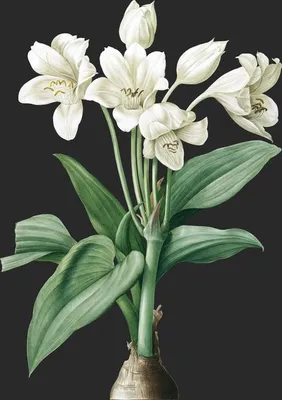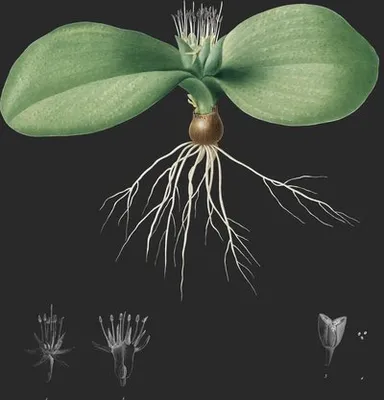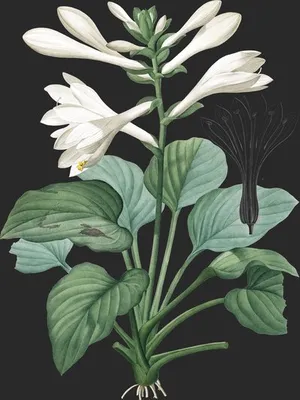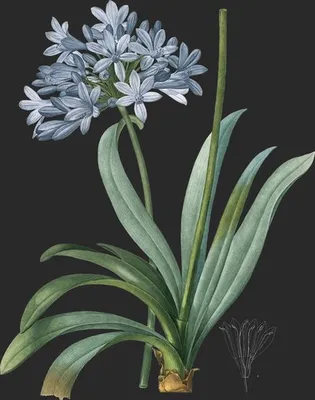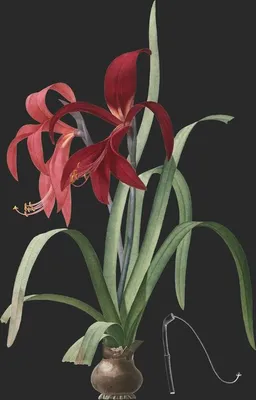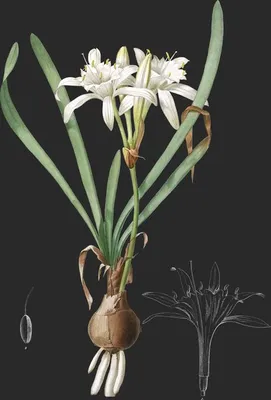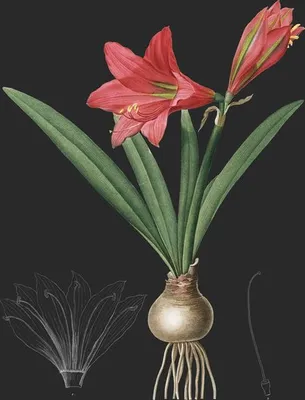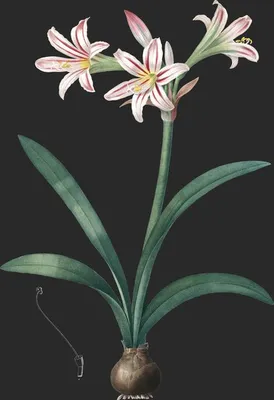
Cyrtanthus Vittatus
Cyrtanthe Rayé
Cyrtanthe Rayé
About this plate
Observations
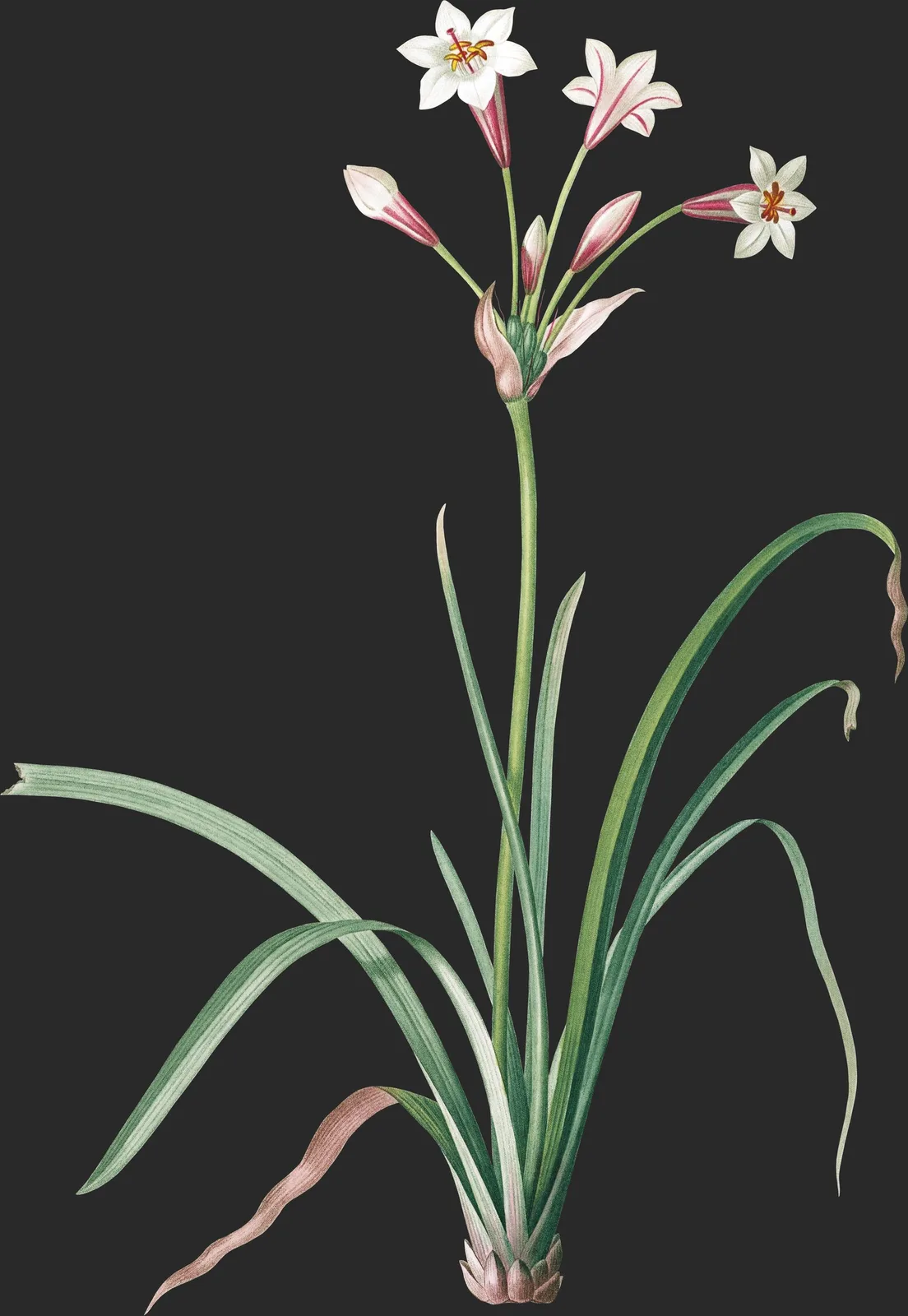
La planche que nous présentons ici est copiée d’un dessin fait par M.lle Basseporte, et conservé parmi les vélins du Muséum d’Histoire naturelle. Nous n’avons jamais vu la plante dont il est ici question; mais, d’aprés le dessin qui nous en reste, on voit évidemment que cette plante appartient au genre Cyrtanthe; et des le premier coup-d’œil, elle se distingue de toutes les espèces connues par les bandes rouges et longitudinales qui décorent le limbe de sa fleur.
Sa patrie est inconnue; l’analogie peut autoriser à penser qu’elle est indigène du Cap-de-Bonne-Espérance.
Quoique notre ouvrage soit exclusivement consacré aux Liliacées vivantes dans les jardins, nous avons cru devoir ici nous écarter de ce plan, et y insérer quelques espèces qui ont vécu autrefois au jardin du Muséum, qui y ont été dessinées par les peintres attachés à l’établissement, et sous les yeux des professeurs, qui sont, par conséquent, bien authentiques, et qui cependant seraient pour long-temps omises dans le catalogue général des végétaux, si nous ne profitions pas de l’occasion qui se présente de les publier. Nous devons aussi offrir nos remercimens & MM. les Professeurs-Administrateurs du Muséum, qui nous en ont accordé la permission.
Fam. des Narcisses. Juss.—Hexandrie monogynie. Lin.
- Cyrtanthus vittatus. C. foliis linearibus canaliculatis, floribus erectis vittatis, tubo cylindrico.
- Cyrtanthus vittatus. Desf, in vel. du Mus. d’Hist. nat. ix. t. 63.
Twelve ways of seeing
- measured cast amber
- upright 1.45 : 1
- published 1807
- Plate 182
Not a catalogue entry but a way of looking: how to stand, what to notice, how the line was cut, when it flowers, where it came from, who made it — and then the poems and the classics that taught China to see the same flower. Read the twelve in order and the plate opens.
-
First Look
凡画山水,意在笔先。
—— 唐·王维《山水论》
In painting, the intention precedes the brush.
The sheet is vertical: the eye climbs and settles in the upper half. Let the plant stand before you look for detail. Then step in close: watch where colour meets line, and whether the line ever breaks. Third, find where the green is deepest: the whole tonal order is measured from that patch. The pose leans right: the upper half carries 14 points further right than the lower — a living thing, not a diagram.
-
Name and Thing
The binomial is Cyrtanthus vittatus: the first word is the genus it belongs among, the second the epithet that sets it apart. Two words carry a whole provenance. The older system filed it under Amaryllidaceæ by overall affinity; Linnaeus, counting stamens only, placed it in Hexandria — two ways of asking what a plant is. No established Chinese name exists, so it is cited by its binomial alone.
-
Form and Colour
Measured on this plate: flower colour covers 1.5% of the sheet, foliage 4.4%, the cast amber with a second note of red. No other plate shares exactly this measure. Bulbous plants store the year underground — bulb, corm or tuber — then send up a few thick leaves and a single scape, with six tepals in cup, funnel or star. Filed under green — a moss green, a colour that comes mostly from leaf and stem. A single plant, laid out with nothing hidden.
-
Composition
Tall and narrow, the plant rising in one movement with generous margins — the upright format of most floras. (about 1.45 : 1) No details are appended: a plate for looking, not for keying out. The plant covers only 14% of the sheet, centred near the centre; the emptiness is where the eye rests. Cover the margins with your thumb and the plate suffocates; uncover them and the flower breathes again.
-
Line and Colour
The first half of the nineteenth century moved from copper to steel to lithography; stipple could render the softest transition. Decide first whether it was printed or painted; only then discuss whether it is beautiful.
-
Season
Early spring to early summer, genus by genus: tulips and hyacinths first, gladiolus and amaryllis later. The year 1807 on the plate is that of publication, not of flowering — the gathering came a year or two earlier. The plate records ten days of peak; the other three hundred are leaf, fruit and rest.
-
Provenance
Three homelands: the Mediterranean, Central Asia and South Africa. The tulip came from Ottoman gardens and became a Dutch mania; South African bulbs filled European glasshouses after 1800. In the same volume the kin are shelved together; set several plates side by side.
-
The Book and the Hand
“The Liliaceae” was drawn by Pierre-Joseph Redouté and published 1802-1816. This plate is Plate 182, book page 182. The image is public domain; the hand-colouring is still one person's hand.
-
Poetic Resonance
郁金香汗裛歌巾,山石榴花染舞裙。
—— 唐·白居易《盧侍御小妓乞詩座上留贈》
The poem gives the mood first and the picture supplies the form; set the line beside the plate and the green the corolla becomes its resting point.
-
The Written Tradition
天地与我并生,而万物与我为一。
—— 《庄子·齐物论》
Heaven and earth were born with me, and the ten thousand things are one with me.
Li Bai's 'orchid wine, fragrant with yujin' is often misread as tulips; the Tang yujin was a turmeric-like root used to scent wine — same name, different plant. The difference is not of quality but of question: Europe asks what it is, China asks whom it resembles.
-
Symbolism
The tulip was an imperial emblem in Istanbul and a speculative bubble in Amsterdam; the hyacinth sprang from a boy's blood in Greek myth. What bulbs share is concealment: next year kept underground. In a flora it is a species first and a symbol second; the order is worth keeping.
-
What to Take Away
Appreciation is not knowledge but habit — one more look each time. The flower of that year is dust, yet its image on paper has outlived every living cousin.