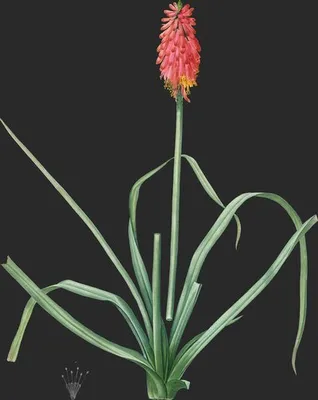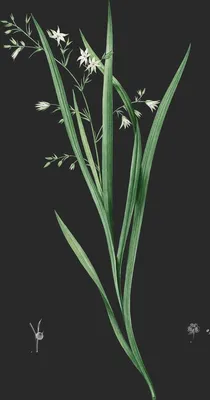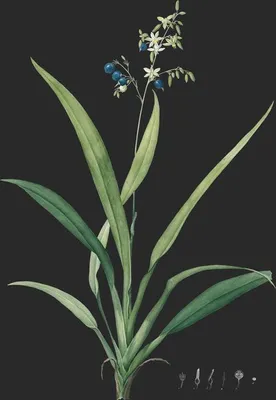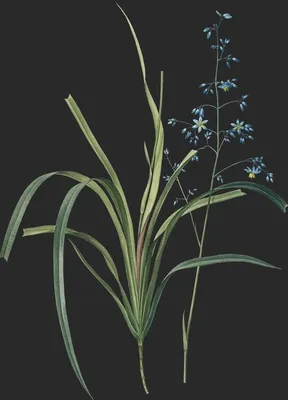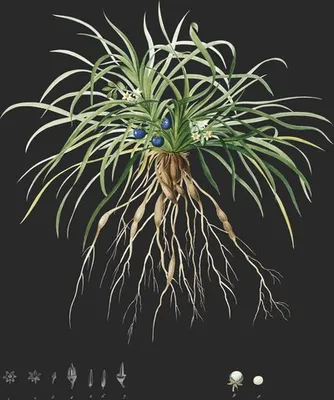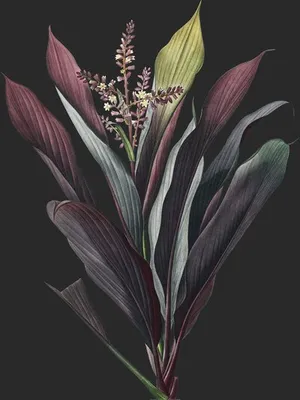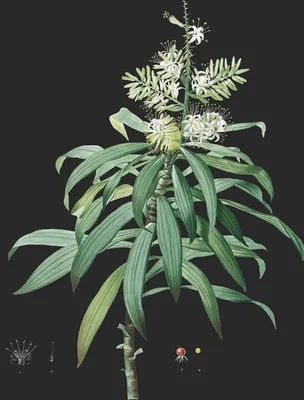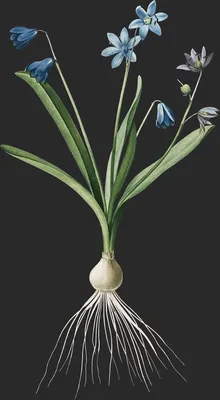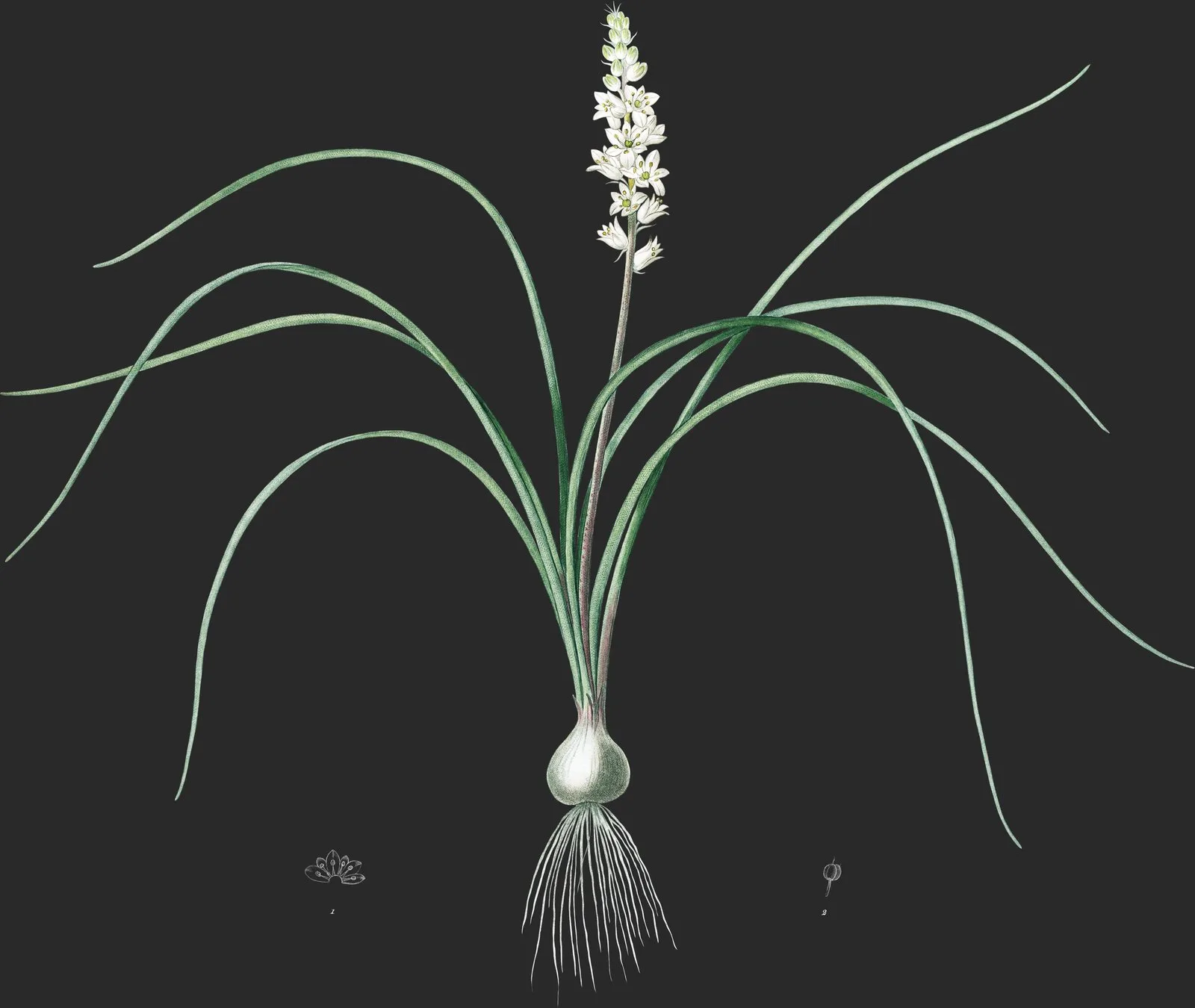
Lachenalia Angustifolia
Lachénale a Feuilles Étroites
Lachénale a Feuilles Étroites
Ten ways of seeing
- green key
- square 0.84 : 1
First Look
真山水之川谷,远望之以取其势,近看之以取其质。
—— 宋·郭熙《林泉高致·山水训》
Mountains and valleys: from afar take their momentum, up close take their texture — the two distances from which any picture is read.
Nearly square, plant and detail each holding a corner. Then step in close: watch where colour meets line, and whether the line ever breaks. Third, find where the green is deepest: the whole tonal order is measured from that patch.
Name and Thing
The binomial is Lachenalia angustifolia: the first word is the genus it belongs among, the second the epithet that sets it apart. Here the epithet angustifolia means “narrow-leaved” — the name records the feature the namer noticed first. The older system filed it under Asparagaceæ by overall affinity; Linnaeus, counting stamens only, placed it in Hexandria — two ways of asking what a plant is. No established Chinese name exists, so it is cited by its binomial alone.
Form and Colour
Bulbous plants store the year underground — bulb, corm or tuber — then send up a few thick leaves and a single scape, with six tepals in cup, funnel or star. Filed under green — a moss green, a colour that comes mostly from leaf and stem. A single plant, laid out with nothing hidden.
Composition
The sheet is square. No details are appended: a plate for looking, not for keying out. The plant covers only 6% of the sheet, centred near the centre; the emptiness is where the eye rests.
Line and Colour
The first half of the nineteenth century moved from copper to steel to lithography; stipple could render the softest transition. There is evidence on the back too: the plate mark pressed into the paper, the slight relief of the pigment, lines worn shallow in a later printing. If you mean to copy it: take its skeleton, its margins and the order of its colours; the burin's hatching is the language of copper — suggest it with pencil density, do not imitate it stroke for stroke.
Poetic Resonance
不语亭亭俨薄妆,画裙双凤郁金香。
—— 唐·杜牧《偶呈鄭先輩》
The poem gives the mood first and the picture supplies the form; set the line beside the plate and the green the corolla becomes its resting point.
Symbolism
The tulip was an imperial emblem in Istanbul and a speculative bubble in Amsterdam; the hyacinth sprang from a boy's blood in Greek myth. What bulbs share is concealment: next year kept underground. Meanings change their tune: the same flower can say opposite things within a century.
Season and Place
Early spring to early summer, genus by genus: tulips and hyacinths first, gladiolus and amaryllis later. Three homelands: the Mediterranean, Central Asia and South Africa. The tulip came from Ottoman gardens and became a Dutch mania. The year 1805 on the plate is that of publication, not of flowering — the gathering came a year or two earlier. See this kind of plate in the flowering season if you can: once you have met the living flower, you stop reading only colour.
The Book and the Hand
“The Liliaceae” carries only Pierre-Joseph Redouté's name. A plate is collective work: drawer, engraver and colourist were different hands, and the unnamed ones decided how good it looks.
What to Take Away
Carry three rules away: whole before detail; line before colour; picture before book. A flora exists to be consulted; look long enough and you forget to consult — someone in 1805 gave a whole day to a single flower.
About this plate
Description
Cette espèce, la plus petite do genre, se distingue facilement de toutes les autres Lachénales, a sa fleur en forme de cloche, et à ses feuilles longues, étroites, demi-cylindriques et dépourvues de taches.
Une bulbe blanche, ovoïde, de la grosseur d’une noisette, donne naissance à plusiears feuilles radicales, flasques, étalées, charnues, tresglabres, un peu lisses, demi-cylindriques et creusées en canal à leur base, tout-à-fait cylindriques vers l’extrémité. D’entre ces feuilles s’élève une hampe de moitié plus courte qu’elles, droite, cylindrique, glabre, mouchetée sur toute sa longueur de petites taches purpurines.
Les fleurs sont d’un blane sale, disposées en une grappe simple, droite, serrée: leurs pédicelles sont blancs, tres-courts, placés dans les concavités qui se trouvent à l’aisselle des bractées; celles-ci sont larges, courtes et comme tronquées.
Le périgone est libre, en forme de cloche, divisé jusqu’a la base, à six lanières blanches, avec le sommet d’un bran-verdatre, oblongues, obtuses, presque égales entre elles. Les trois extérieures sont droites et un peu plus courtes; les trois intérieures sont plus ovales, plus longues et un peu étalées au sommet.
Les six étamines sont un peu plus courtes que le périgone, insérées au bas de chacune de ses divisions; leurs filaments sont droits, blancs, en forme d’alène; leurs anthères sont droites, ovales, d’abord de couleur de brique, ensuite noirâtres: le pollen est jaune.
L’ovaire est ovale-triangulaire, de couleur verte, non-adhérent avec le périgone; chacun de ses angles est marqué d’un sillon longitudinal; le style est simple, blane, filiforme, terminé par un stigmate pointu placé à la hauteur des anthères.
Le fruit n’est pas parvenu à sa maturité. L’inspection de l’ovaire et la description de Jacquin montrent qu’il doit être une capsule à-peu-près ovale, obtuse, a trois angles saillants, à trois valves munies d’une cloison sur leur face interne, à trois loges, à plusieurs graines ovoides, un peu pointues et luisantes.
Histoire
Cette Lachénale croit au Cap-de-Bonne-Espérance, ainsi que toutes les autres espèces du même genre; je dis toutes, car il ne me parait pas douteux que les Lachenalia serotina et viridis, qui ont les lobes extérieurs de la fleur plus longs que les intérieurs, doivent ou rentrer parmi les Jacinthes, ou plutôt constituer un genre particulier, dont Thunberg a déjà proposé la formation sous le nom de Zuccangria.
La Lachénale à feuilles étroites fleurit dans nos serres à l’entrée du printemps. ♃.
Fam. des Asphodèles. Juss.—Hexandrie monogynie. Lin.
- Lachenalia angustifolia. L. foliis subulatis semiteretibos facie planiusculis immaculatis, racemo digitiformi, corollis campanulatis. Jacq. ic. rar. 2. t. 381. Collect. suppl. 57.
- Lachenalia angustifolia. L. corollis campanulatis brevissimè pedunculatis, petalis interioribus longioribus patulis obovatis obtusis, foliis lineari-subulatis, canaliculatis laxis scapo longioribus. Willd. Spec. 2. p. 173. Pers. ench. 376.
- Lachenalia angustifolia. L. foliis mumerosis crassis canaliculato-semiteretibus subulatim attenuatis extimis circa scapum breviorem projectis, racemo conferto cylindraceo, pedicellis capillaribus corolla crateroideo-campanulatâ duplò brevioribus. Gawl. in bot. mag. t. 735.