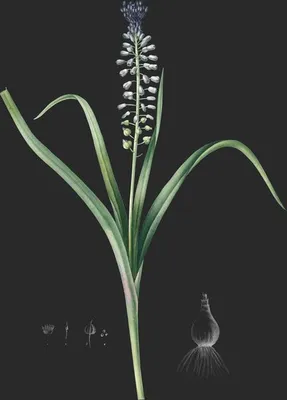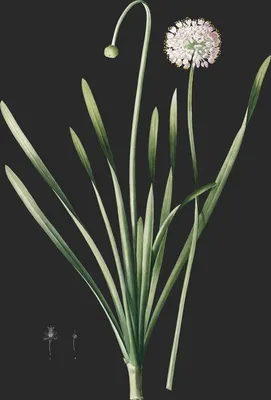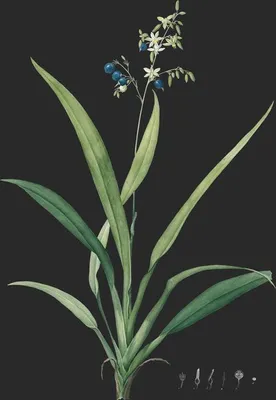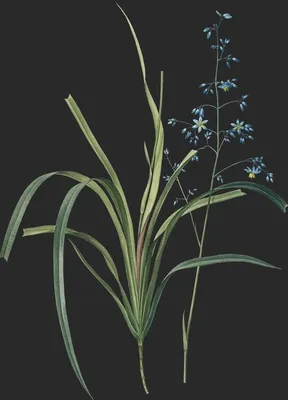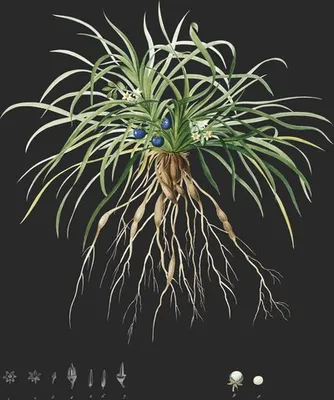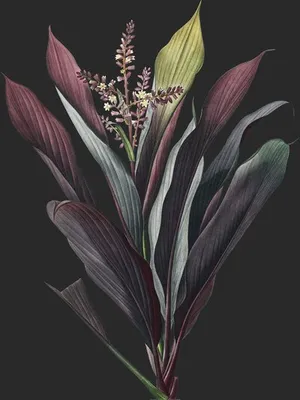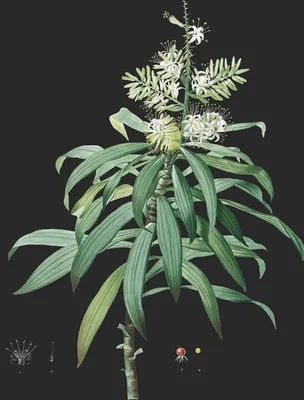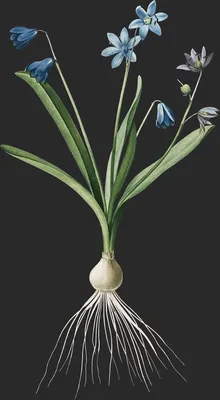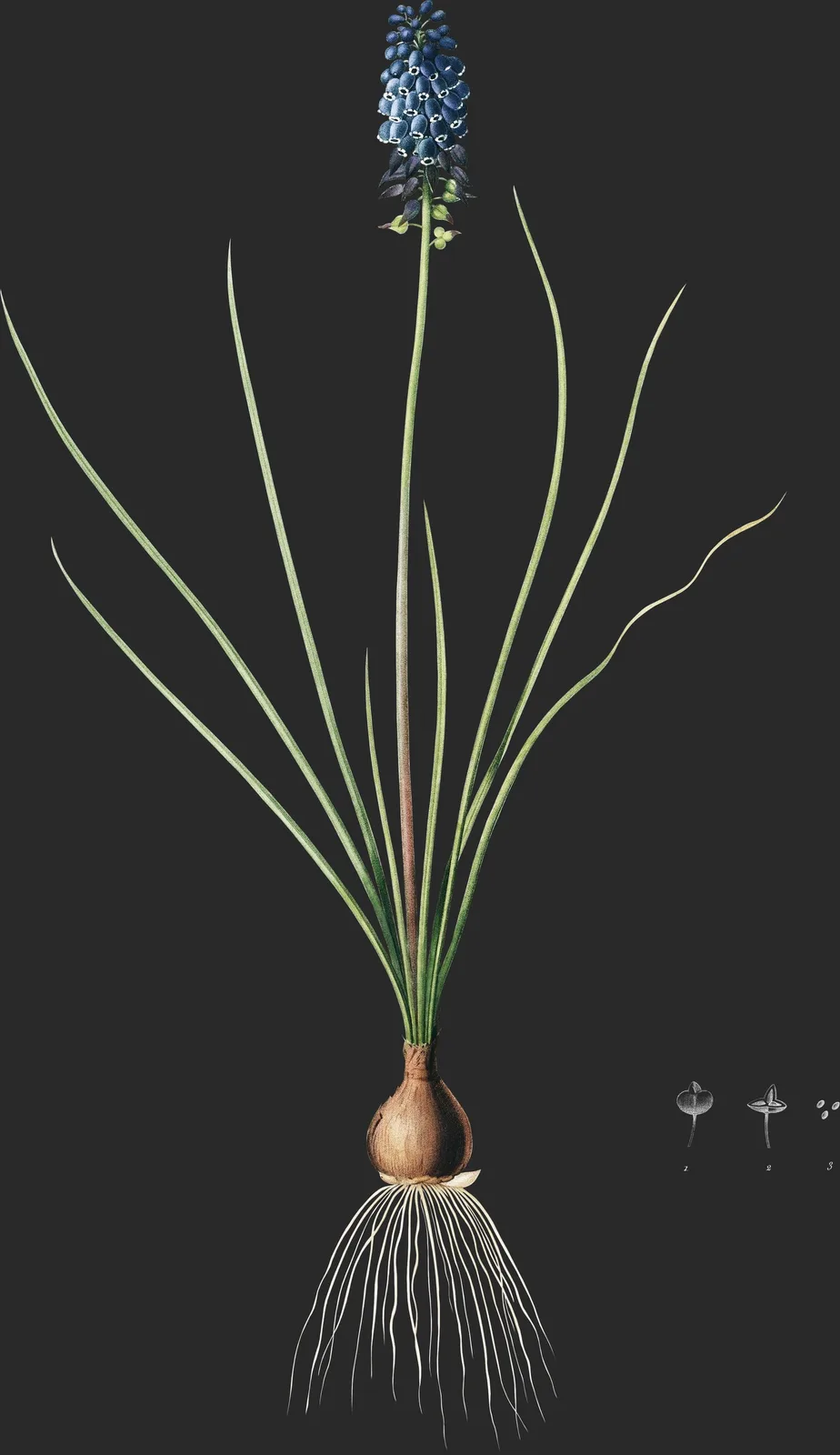
Muscari Racemosum
Muscari a Grappe
Ten ways of seeing
- measured cast amber
- upright 1.73 : 1
First Look
凡画山水,意在笔先。
—— 唐·王维《山水论》
In painting, the intention precedes the brush.
The sheet is vertical: the eye climbs and settles in the upper half. Let the plant stand before you look for detail. Then step in close: watch where colour meets line, and whether the line ever breaks. Third, find where the green is deepest: the whole tonal order is measured from that patch.
Name and Thing
The binomial is Muscari racemosum: the first word is the genus it belongs among, the second the epithet that sets it apart. Two words carry a whole provenance. The older system filed it under Asparagaceæ by overall affinity; Linnaeus, counting stamens only, placed it in Hexandria — two ways of asking what a plant is. No established Chinese name exists, so it is cited by its binomial alone.
Form and Colour
Measured on this plate: flower colour is sparing, 1.1% of the sheet against 1.9% of foliage, the cast tending amber — as with pale or white blooms, outline and tone do the talking. A bulb of overlapping fleshy scales gives the lily its Chinese name, 'hundred-fold'; six tepals reflex as the flower opens, around six stamens with long, T-shaped anthers. a moss green. Three things fix the habit: leaf arrangement, tepal count, and how the flower is borne.
Composition
The sheet is tall. No details are appended: a plate for looking, not for keying out. The plant covers only 6% of the sheet, centred near the centre; the emptiness is where the eye rests.
Line and Colour
The first half of the nineteenth century moved from copper to steel to lithography; stipple could render the softest transition. There is evidence on the back too: the plate mark pressed into the paper, the slight relief of the pigment, lines worn shallow in a later printing. If you mean to copy it: take its skeleton, its margins and the order of its colours; the burin's hatching is the language of copper — suggest it with pencil density, do not imitate it stroke for stroke.
Poetic Resonance
梨花淡白柳深青,柳絮飞时花满城。
—— 宋·苏轼《东栏梨花》
Pear blossoms pale white, willows deep green; when the catkins fly, flowers fill the town.
The poem gives the mood first and the picture supplies the form; set the line beside the plate and the green the corolla becomes its resting point.
Symbolism
In the West the white lily is Marian purity, held by the angel of the Annunciation; in China the name sounds like 'a hundred years in harmony', a wedding wish. In a flora it is a species first and a symbol second; the order is worth keeping.
Season and Place
Early to high summer, June and July. Temperate north — China, Japan, Europe. Long used in Chinese medicine, lilies were hunted in East Asia by nineteenth-century collectors and transformed European gardens. The year 1807 on the plate is that of publication, not of flowering — the gathering came a year or two earlier. Read the locality and the flowering season both with a discount: one is hearsay, the other a ten-day peak.
The Book and the Hand
“The Liliaceae” carries only Pierre-Joseph Redouté's name. From drawing to plate the sheet passed through several hands — the engraver aimed at accuracy, the colourist at speed, and between them lies each plate's unevenness.
What to Take Away
Carry three rules away: whole before detail; line before colour; picture before book. The flower of that year is dust, yet its image on paper has outlived every living cousin.
About this plate
Description
La bulbe de ce Muscari est ovoïde, recouverte de tuniques brunâtres et munie à sa base de plusieurs cayeux. Il en sort plusieurs feuilles grêles, li-néaires, un peu concaves et charnues, a peu près de la longueur de la hampe, mais faibles et un peu tombantes: la hampe est droite, cylindrique, haute de r-9 décimètres. Toute la plante est glabre. Les fleurs sont d’un bleu-violet foncé, disposées en grappes courtes et serrées. Leurs bractées sont très-petites, les pédicelles longs de cinq millimètres, et à peu près horizontaux. Les détails de la fleur et du froit n’offrent aucune particularité remarquable.
Histoire
Le Mascari à grappe est très-commun dans les champs, les jachères, les lieux mal cultivés. On le trouve dans toute la France. ♃.
Il porte le nom vulgaire d’Ail des chiens, parce qu’en effet ses feuilles froissées ont un peu l’odeur alliacée.
Observations
Cette espèce ressemble beaucoup au Muscari botride, dont elle n’est peut-être qu’une variété. On la distingue à ce que ses feuilles sont beaucoup plus étroites et plus faibles, et à ce que ses fleurs ont un rebord peu prononcé. Le Muscari botride ne croit que dans les provinces méridionales.
Fam. des Asphodèles. Juss.—Hexandrie monogynie. Lin.
- Muscari racemosum. M. lloribus confertis ovatis, summis sessilibus, foliis laxis dependentibus carinatis linearibus. Fl. fr. 3.e éd. 3. p. 208. syn. n. 1926. non Mill.
- Hyacinthos racemosas. H. corollis ovatis, summis sessilibus, foliis laxis. Lin. Spec. 455. Sauv. Monsp. 17. Jacq. Fl. austr. 2. t. 187.
- Hyacinthos juncifolins. H. corollis ovatis deorsùm imbricatis, summis sessilibas, foliis angustis canaliculato-cylindricis. Lam. Dict. 3. p. 194.
- Muscari arvense juncifoliam caraleum minus. Tourn. inst. 348.
- Hyacinthus racemosus cæruleus minor juncifolios. C. Bauh. pin. 43.
- Hyacindos vernus hoteyoides minor cæruleus angustioribus foliis odoratus. J. Bauh. hist. 2. p. 571.
- Hyacinthas botryoides 1. Clas. hist. 1. p. 181. ic.
- Hyacinthus racemosus. Dod. pempt. 217.
- Hyacinthas boteyoides vulgaris. Lob. icon. 107. ic. Clus.
- Hyacinthus botryoides minor ezeruleus obscurus. Ray. hist. 1161.
- Hyacinthus folis carinatis, spicâ ovatâ, floribus globosis. Hall. helv. n. 1245.
- Alliam caninum exiguum. Trag. p. 750.
- B. flore albo. Morion. North. 380. ex Hall.