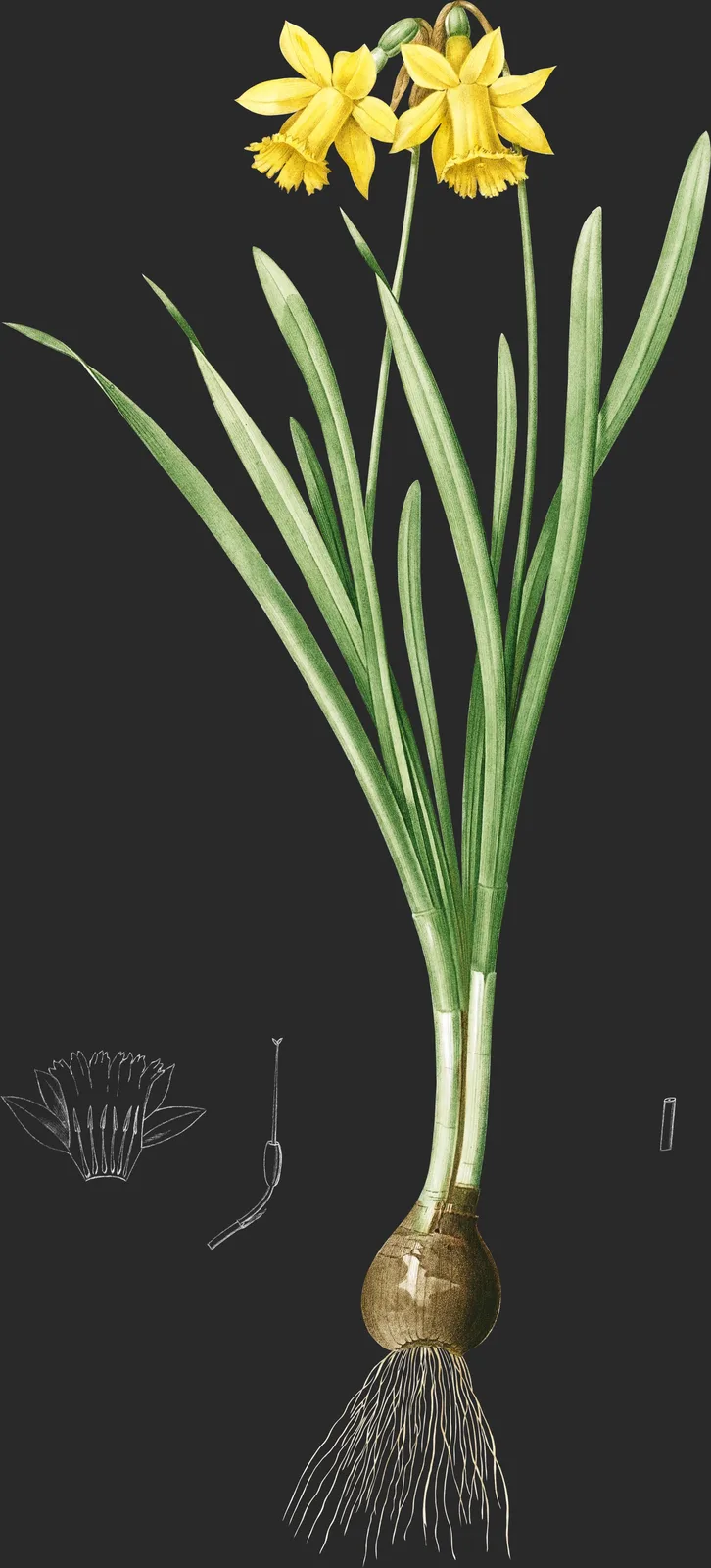
Narcissus Minor
水仙属·Narcissus Minor
Narcisse Petit
Ten ways of seeing
- measured cast yellow-green
- upright 2.20 : 1
First Look
真山水之川谷,远望之以取其势,近看之以取其质。
—— 宋·郭熙《林泉高致·山水训》
Mountains and valleys: from afar take their momentum, up close take their texture — the two distances from which any picture is read.
The sheet is vertical: the eye climbs and settles in the upper half. Let the plant stand before you look for detail. Then step in close: watch where colour meets line, and whether the line ever breaks. Third, find where the green is deepest: the whole tonal order is measured from that patch.
Name and Thing
The binomial is Narcisse petit: the first word is the genus it belongs among, the second the epithet that sets it apart. Two words carry a whole provenance. The older system filed it under Amaryllidaceæ by overall affinity; Linnaeus, counting stamens only, placed it in Hexandria — two ways of asking what a plant is. No established Chinese name exists, so it is cited by its binomial alone.
Form and Colour
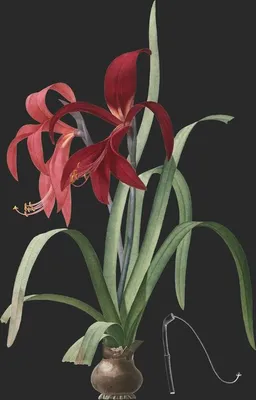
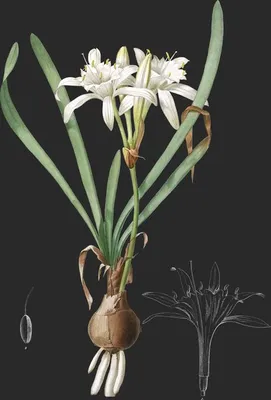
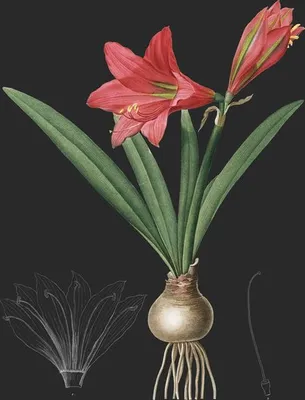
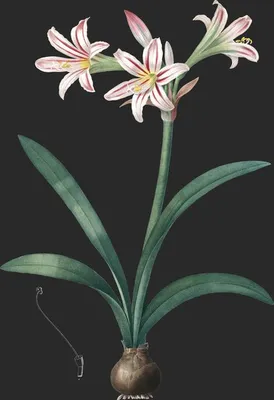
Measured on this plate: flower colour covers 4.3% of the sheet, foliage 9.9%, the cast yellow-green with a second note of amber. No other plate shares exactly this measure. Bulbous plants store the year underground — bulb, corm or tuber — then send up a few thick leaves and a single scape, with six tepals in cup, funnel or star. a moss green. Three things fix the habit: leaf arrangement, tepal count, and how the flower is borne.
Composition
The sheet is tall. No details are appended: a plate for looking, not for keying out. The plant covers only 17% of the sheet, centred a little right of centre; the emptiness is where the eye rests.
Line and Colour
The first half of the nineteenth century moved from copper to steel to lithography; stipple could render the softest transition. Take a loupe to three places: petal edge, leaf vein, caption. An unbroken line means engraving; colour crossing the outline means a hand. If you mean to copy it: take its skeleton, its margins and the order of its colours; the burin's hatching is the language of copper — suggest it with pencil density, do not imitate it stroke for stroke.
Poetic Resonance
郁金裳浥蔷薇露,知是仙人萼绿华。
—— 宋·方岳《巖桂花》
The poem gives the mood first and the picture supplies the form; set the line beside the plate and the green the corolla becomes its resting point.
Symbolism
The tulip was an imperial emblem in Istanbul and a speculative bubble in Amsterdam; the hyacinth sprang from a boy's blood in Greek myth. What bulbs share is concealment: next year kept underground. Meanings change their tune: the same flower can say opposite things within a century.
Season and Place
Early spring to early summer, genus by genus: tulips and hyacinths first, gladiolus and amaryllis later. Three homelands: the Mediterranean, Central Asia and South Africa. The tulip came from Ottoman gardens and became a Dutch mania. The year 1814 on the plate is that of publication, not of flowering — the gathering came a year or two earlier. See this kind of plate in the flowering season if you can: once you have met the living flower, you stop reading only colour.
The Book and the Hand
“The Liliaceae” carries only Pierre-Joseph Redouté's name. From drawing to plate the sheet passed through several hands — the engraver aimed at accuracy, the colourist at speed, and between them lies each plate's unevenness.
What to Take Away
Carry three rules away: whole before detail; line before colour; picture before book. A flora exists to be consulted; look long enough and you forget to consult — someone in 1814 gave a whole day to a single flower.
About this plate
Description
Bulbe simple, ovoïde, grosse comme une noisette, et quelquefois plus épaisse par la réunion de plusieurs cayeux; la bulbe, n’ayant qu’un seul plateau inférieur d’où partent les radicules, produit d’une à trois et quatre tiges.
Les feuilles ont le port de celles du Galanthus nivalis; elles sortent deux à trois, par faisceaux, d’une gaîne blanche, tubulée, comprimée, tronquée transversalement au sommet; ces feuilles sont glauques, linéaires, obtuses, avec une extrémité cartilagineuse, planes, un peu en gouttière, étalées ou médiocrement redressées, longues d’environ un décimètre (trois pouces et demi).
La hampe est uniflore, ordinairement un peu plus longue que les feuilles, droite, striée, cylindrique, un peu comprimée, à deux tranchants, de même couleur que les feuilles.
La fleur est horizontale, ou un peu penchée sur son pédicelle, qui se coude sous l’ovaire. Elle sort d’une spathe scarieuse, monophylle, fendue d’un seul côté, soit en dessus, soit en dessous, émarginée à l’extrémité.
Le périgone est à six divisions égales, aiguës, longues de deux centimètres (neuf lignes), calleuses et un peu cotonneuses au sommet en dedans, dont les trois extérieures sont un peu plus grandes que les trois intérieures. Le tube est conique-renversé, à plis creux vers la partie supérieure, et qui se rendent à chacun des intervalles qui séparent les divisions. La couronne intérieure est cylindrique et un peu évasée au sommet, à six lobes, qui sont eux-mêmes sinueux et frisés. Elle est un peu plus longue que les divisions du limbe.
Les filets des étamines sont cylindriques, subulés, insérés au fond du tube, et très-peu plus longs que ce tube, à la base duquel ils sont adnés sur une longueur de trois millimètres (une ligne).
Les anthères sont terminales, subulées, comprimées, moitié plus courtes que les filets, droites, jaunes très-pâles, en fer de flèche, à deux oreillettes pendantes, collées contre le filet.
Ovaire infère, ovoïde, long comme le pédicule de la fleur, un peu aplati en dessus et en dessous; style inclus dans la couronne du périgone, jaunâtre, lisse, en colonne, plus long que les étamines, à trois côtes arrondies et à trois sillons; le stigmate est en trompe, à trois lobes horizontaux, arrondis, creusés en dessus et élevés dans la couronne jusqu’à la base de ses lobes plissés.
Histoire
Ce Narcisse est, de toutes les espèces cultivées, la plus hâtive, et mérite à cet égard l’attention des fleuristes. Ses fleurs sont uniformément jaunes et sans odeur; elles s’épanouissent dans les premiers jours du printemps, presque aussitôt que celles du Leucoium vernum.
On le cultive au Jardin des Plantes, dans un des parterres du nord; il est indigène d’Espagne, suivant l’histoire qu’en donnait L’Ecluse, il y a dejà deux siècles.
Explication de la planche
La Plante de grandeur naturelle.
- Le périgone fendu et étalé, pour faire voir les étamines.
- Le pistil.
- Portion de la hampe.
Fam. des Narcisses. Juss.—Hexandrie monogynie. Lin.
- Narcissus minor. N. spathâ uniflorâ; nectario obconico, erecto, crispo, sexfido, quante petala lanceolata. Lin. spec. pl. p. 415. Curt. bot. mag. 6. Willd. spec. 2. p. 36. Persoon. synops 1. p. 350.
- Narcisse petit. Lamarck, Dict. encycl. 4. p. 423.
- Narcissus parvus totus luteus. Bauh. pin. 53. Rudb. elys. 2. p. 82. f. 11.
- Narcissus sylvestris totus luteus minor. Barrel, Ic. 975?
- Pseudonarcissus minor hispanicus latifolius. Clus. hist. 1. p. 165.
- Bulbocodium minus. Bauh. hist. 2. p. 597.