Narcissus Tenuifolius
水仙属·Narcissus Tenuifolius
Narcisse a Feuilles Menues
Ten ways of seeing
- measured cast yellow-green
- slightly upright 1.24 : 1
First Look
真山水之川谷,远望之以取其势,近看之以取其质。
—— 宋·郭熙《林泉高致·山水训》
Mountains and valleys: from afar take their momentum, up close take their texture — the two distances from which any picture is read.
Slightly taller than wide; the eye lands above centre. Then step in close: watch where colour meets line, and whether the line ever breaks. Third, find where the yellow is deepest: the whole tonal order is measured from that patch.
Name and Thing
The binomial is Narcissus tenuifolius: the first word is the genus it belongs among, the second the epithet that sets it apart. The genus name Narcissus: Narcissus is the youth of Greek myth who fell in love with his own reflection. The older system filed it under Amaryllidaceæ by overall affinity; Linnaeus, counting stamens only, placed it in Hexandria — two ways of asking what a plant is. No established Chinese name exists, so it is cited by its binomial alone.
Form and Colour
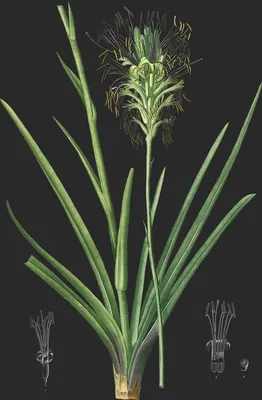
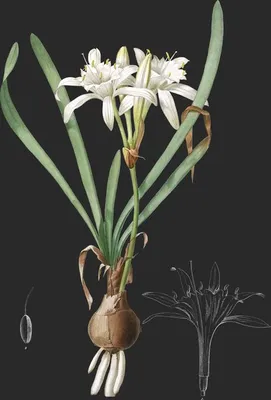
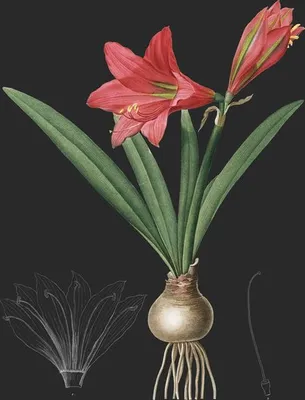
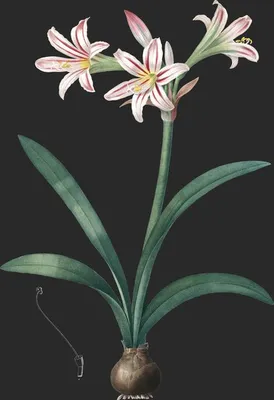
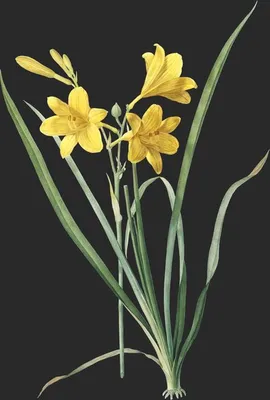
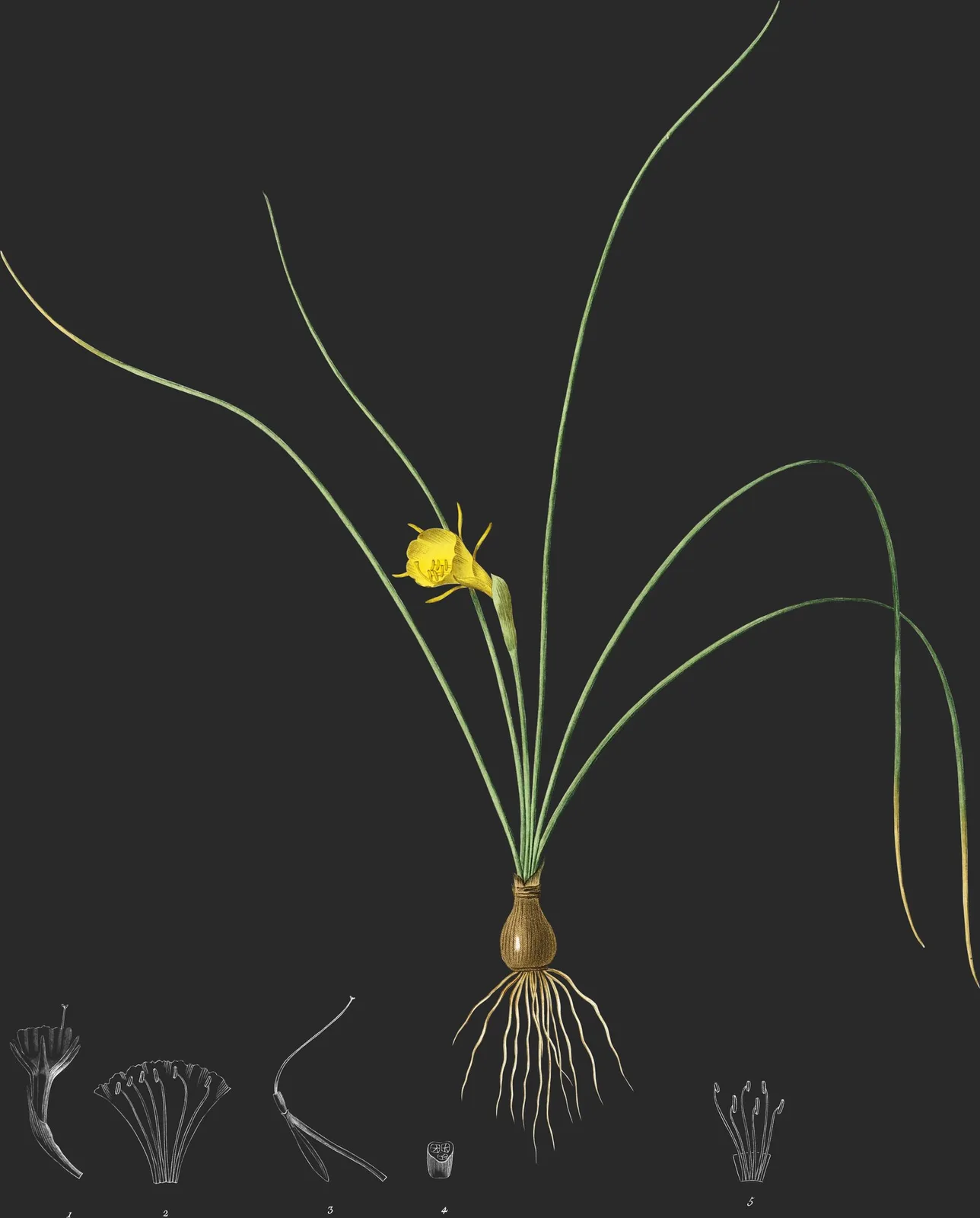
Measured on this plate: flower colour is sparing, 1.0% of the sheet against 1.4% of foliage, the cast tending yellow-green — as with pale or white blooms, outline and tone do the talking. A layered bulb, upright strap leaves, six white tepals and a small golden cup — the Chinese name is 'silver terrace with a golden cup'. Filed under yellow — a honey-yellow, built in washes from a pale ground. Read the outline, then the colour layers, then the brush.
Composition
The sheet is slightly tall. No details are appended: a plate for looking, not for keying out. The plant covers only 4% of the sheet, centred below centre; the emptiness is where the eye rests.
Line and Colour
The first half of the nineteenth century moved from copper to steel to lithography; stipple could render the softest transition. There is evidence on the back too: the plate mark pressed into the paper, the slight relief of the pigment, lines worn shallow in a later printing. If you mean to copy it: take its skeleton, its margins and the order of its colours; the burin's hatching is the language of copper — suggest it with pencil density, do not imitate it stroke for stroke.
Poetic Resonance
含香体素欲倾城,山矾是弟梅是兄。
—— 宋·黄庭坚《王充道送水仙花五十枝》
Fragrant, white-bodied, all but city-toppling; the snowbell is its younger brother, the plum its elder.
The poem gives the mood first and the picture supplies the form; set the line beside the plate and the yellow the corolla becomes its resting point.
Symbolism
In China it is the New Year's offering — clear, fragrant, a little otherworldly; in Europe, because of Narcissus, it means self-love and the gaze turned inward. This plate leans yellow, which in flower language adds one more degree of feeling. In a flora it is a species first and a symbol second; the order is worth keeping.
Season and Place
Late winter into early spring: forced in water in the twelfth month, blooming at the New Year. Zhangzhou in Fujian has grown it since Ming times. The year 1814 on the plate is that of publication, not of flowering — the gathering came a year or two earlier. The bud and the ripe fruit on one branch tell the season; the name in the title often tells the journey.
The Book and the Hand
“The Liliaceae” carries only Pierre-Joseph Redouté's name. The image is public domain; the hand-colouring is still one person's hand.
What to Take Away
Carry three rules away: whole before detail; line before colour; picture before book. Two centuries on, the plant may still flower in some garden; the one on this sheet stopped in the season of 1814.
About this plate
Description
Cette espèce ressemble beaucoup au Narcisse bulbocode (figuré planche 24); mais, outre qu’elle est plus petite dans toutes ses parties, elle s’en distingue encore par son godet, qui dépasse à peine la longueur des segments, et par son style saillant.
Sa bulbe est ovoïde, petite, d’un brun foncé; ses feuilles sont droites, fili-formes, d’un vert foncé, trois fois plus longues que la hampe: celle-ci est cylin-drique, longue de deux à trois pouces, terminée par une seule fleur inclinée et d’un jaune doré; la spathe est membraneuse, fendue longitudinalement; la fleur est sans odeur, de moitié plus petite que celle du Narcisse bulbocode; le périgone est, à sa base, verdâtre, en forme de cône renversé, et à six faces peu prononcées; les lanières sont oblongues, pointues, d’abord droites, puis étalées, à peine plus courtes que le godet: celui-ci est en forme de cône renversé, long d’un demi-pouce, denticulé très-légèrement à son sommet: les étamines sont déclinées, toutes renfermées dans l’intérieur du godet; le style est saillant hors de la fleur, décliné, un peu courbé, terminé par un stigmate à trois lobes très-courts.
Histoire
Le Narcisse à feuilles menues croît en Espagne, sur les coteaux de la Biscaie, où il a été trouvé sauvage par L’Ecluse.
Il fleurit en février dans son sol natal. Je l’ai vu en fleur dans les premiers jours de mars, dans le Jardin de Montpellier. M. Salisbury dit qu’il passe l’hiver en pleine terre en Angleterre, et qu’il est plus précoce dans sa fleuraison que les espèces avec lesquelles il a du rapport.
Observations
Le genre des Narcisses, comme il est indiqué dans le supplément de la Flore française, se divise en six sections assez naturelles, et faciles cependant à caractériser; savoir:
- Les faux-Narcisses (pseudonarcissi). Feuilles planes, glauques; hampes uniflores; tube des fleurs court, en cône renversé; godet en forme de cloche ou de cylindre, rétréci à la base, denté ou lobé vers les bords.—N. minor Lin., pseudo-narcissus Lin., major Curt., Sibthorpii Haw., moschatus Lin., Gouani Roth, poculiformis Salisb., tubæflorus Salisb., obvallaris Salisb.
- Les Poétiques (poetici). Feuilles planes, glauques; hampe à une, deux ou trois fleurs; tube des fleurs cylindrique allongé; godet court en forme de roue, scarieux et crenelé sur les bords.—N. poeticus Lin., maialis Curt., biforus Curt.
- Les Tazettes (tazettæ). Feuilles planes, glauques; hampes multiflores; tube des fleurs cylindrique allongé; godet en forme de coupe, entier ou à peine denté sur les bords.—N. tazetta Lin., italicus Gawl., papyraceus Gawl., kewianus Gawl., anceps D.C.,1 bifrons Gawl., polyanthos Lois., dubius Gou., patulus Lois., stellatus D. C., chrysanthus D. C., serotinus Lin., longiforus Willd., calathinus Lin.
- Les Jonquilles (Jonquillæ). Feuilles vertes, demi-cylindriques ou en alêne, un peu creusées en gouttière; hampe à une ou plusieurs fleurs; godet campanulé, de moitié au moins plus court que les segments.—N. jonquilla Lin., viridiflorus Schousb., tenuior Curt., intermedius Lois., ochroleucus Lois., odorus Lin., lætus Salisb., trilobus Lin., nutans Haw.
- Les Cyclaminéens (cyclaminei). Feuilles vertes demi-cylindriques, un peu creusées en gouttière; hampe à une, deux ou trois fleurs; segments réfléchis, le plus souvent deux fois plus longs que le godet.—N. reflexus Brot., cernuus Salisb., albus Mill., triandrus Willd., triandrus Lin., coronalus D. C.,2 cyclamineus D. C.3
- Les Bulbocodiens (bulbocodii). Feuilles vertes demi-cylindriques; hampes à une, deux ou trois fleurs; segments étroits, plus courts que le godet, qui est ample et en forme de cône renversé.—N. aureus D. C.,4 infundibulum Lam., inflatus Haw., bulbocodium Lin., tenuifolius Salisb., cantabricus D. C.,5 coornei.6
D. C.
Fam. des Narcisses. Juss.—Hexandrie monogynie. Lin.
- Narcissus tenuifolius. N. folis filiformibus, erectis; scapo unifloro; floris segmentis rectis, patentibus, coronâ sub-brevioribus; corona obconica, apice denticulatâ. Decandol. Narc. Mon. ined.
- Narcissus tenuifolius. N. uniflorus, foliis erectis, pericarpio pyriformi, corollæ tubo ferè usque ad basin sex-angulo, laciniis rectis patentibus cuneiformibus, coronâ calathiformi sexfidè plicatâ. Salisb. prod. 222. Haw. in Trans. Lin. Soc. 5. ?. 243.
- Pseudonarcissus juncifolius 11. flavo flore. Clus. hist. 1. p. 166. f. 1.
- Narcissus montanus juncifolius minimus alter flore luteo fimbriato. Lob. icon. p. 118 f. 2. Icon. Clusii.
- Bulbocodium tenuifolium aliud flore luteo fimbriato. J. Bauh. hist. 2. p. 597. f. 1.
- Narcissus montanus alter flore fimbriato. C. Bauh. pin. 53.
- N. anceps. N. foliis planiusculis glaucescentibus; scapo compresso, ancipiti, nervis prominulis, bifloro; coronâ cyathiformi, integrà, ore constrictâ, segmentis dimidio breviore; segmentis ovatis, tubo ferè aqualibus. Hab. in Lusitaniâ? N. totus albus reflexus. Moris. s. 4. t. 9. f. 15?
- Narcissus montanus minimus coronatus. Lob. ic. 119. f. 2. J. Bauh. hist. 2. p. 5g6. f. 2.
- Narcissus hispanicus minor luteus, amplo calyce, folis reflexis. Theatr. flor. t. 20.
- Pseudonarcissus minimus aureus juncifolius. Moris. hist. s. 4. t. 9. f. 15.
- Pseudonarcissus junceis foliis 111, albo flore. Clus. hist. t. 1. p. 166. f. 2.—N. omnium minimus montanus albus. Lob. ic. 119. f. 1. ic. Clus.—N. montanus albus minimus. C. Bauh. pin. 55.— Bulbocodium minimum tenuifolium album. J. B. hist. 2. p. 598. f. 2. ic. Clus.
- Narcissus juncifolius albus calyce magno domini Coorna. Lob. adv. alt. 498. ic. J. Bauh. hist. 2. p. 599. ic. Lobelii. Moris. hist. s. 4. t. 23. fig. penult. Lobelii ic. addito bulbo.—Chabr. sciagr. 217. f. 2. ic. Lob.