Veltheimia Abyssinica
Veltheimia d’Abyssinica
Veltheimia d’Abyssinica
Ten ways of seeing
- measured cast red
- upright 1.75 : 1
First Look
真山水之川谷,远望之以取其势,近看之以取其质。
—— 宋·郭熙《林泉高致·山水训》
Mountains and valleys: from afar take their momentum, up close take their texture — the two distances from which any picture is read.
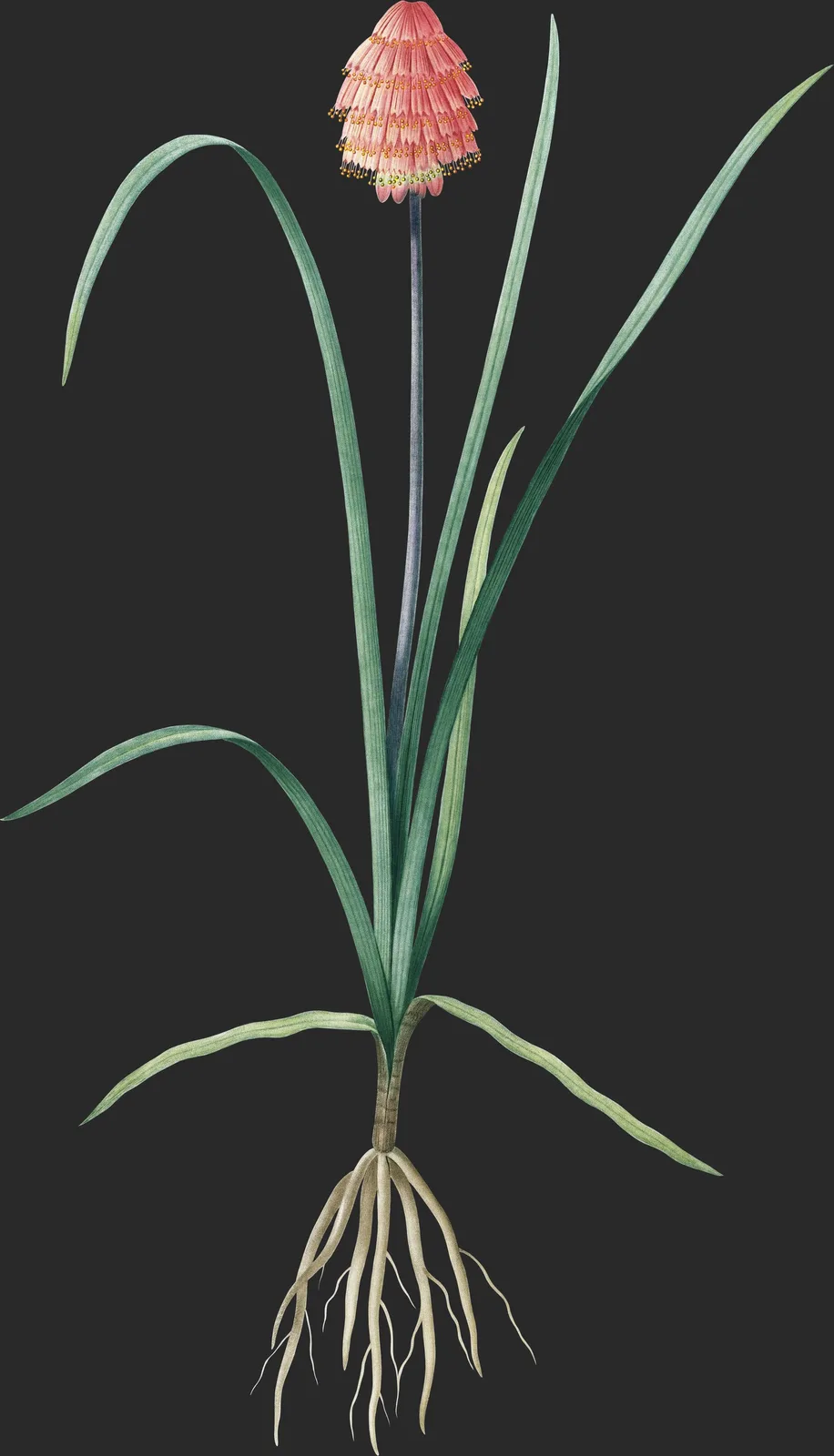
The sheet is vertical: the eye climbs and settles in the upper half. Let the plant stand before you look for detail. Then step in close: watch where colour meets line, and whether the line ever breaks. Third, find where the green is deepest: the whole tonal order is measured from that patch.
Name and Thing
The binomial is Veltheimia abyssinica: the first word is the genus it belongs among, the second the epithet that sets it apart. Two words carry a whole provenance. The older system filed it under Asparagaceæ by overall affinity; Linnaeus, counting stamens only, placed it in Hexandria — two ways of asking what a plant is. No established Chinese name exists, so it is cited by its binomial alone.
Form and Colour
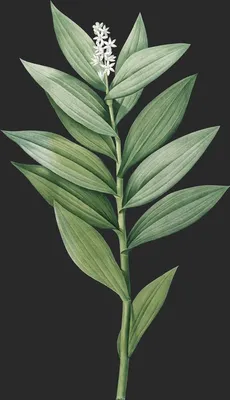
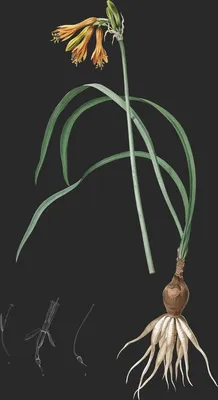
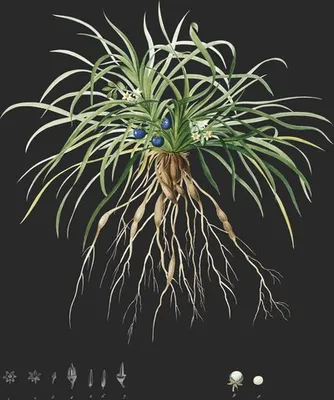
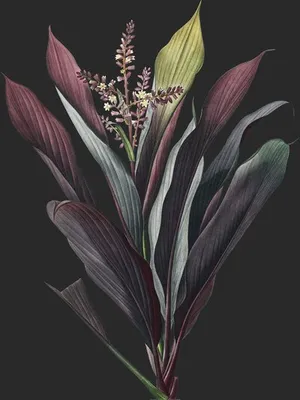
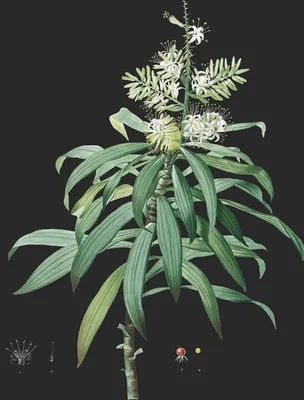
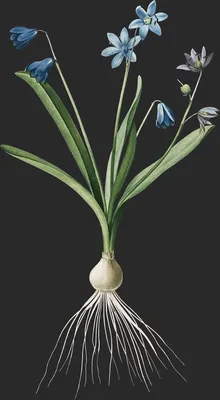
Measured on this plate: flower colour covers 2.1% of the sheet, foliage 3.6%, the cast red with a second note of yellow-green. No other plate shares exactly this measure. Bulbous plants store the year underground — bulb, corm or tuber — then send up a few thick leaves and a single scape, with six tepals in cup, funnel or star. a moss green. A single plant, laid out with nothing hidden.
Composition
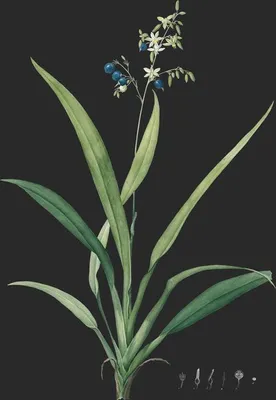
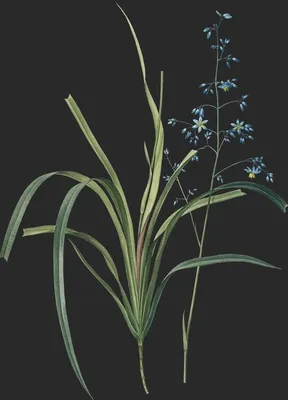
The sheet is tall. No details are appended: a plate for looking, not for keying out. The plant covers only 10% of the sheet, centred above centre; the emptiness is where the eye rests.
Line and Colour
The first half of the nineteenth century moved from copper to steel to lithography; stipple could render the softest transition. There is evidence on the back too: the plate mark pressed into the paper, the slight relief of the pigment, lines worn shallow in a later printing. If you mean to copy it: take its skeleton, its margins and the order of its colours; the burin's hatching is the language of copper — suggest it with pencil density, do not imitate it stroke for stroke.
Poetic Resonance
兰陵美酒郁金香,玉椀盛来琥珀光。
—— 唐·李白《客中行》
The poem gives the mood first and the picture supplies the form; set the line beside the plate and the green the corolla becomes its resting point.
Symbolism
The tulip was an imperial emblem in Istanbul and a speculative bubble in Amsterdam; the hyacinth sprang from a boy's blood in Greek myth. What bulbs share is concealment: next year kept underground. Meanings change their tune: the same flower can say opposite things within a century.
Season and Place
Early spring to early summer, genus by genus: tulips and hyacinths first, gladiolus and amaryllis later. Three homelands: the Mediterranean, Central Asia and South Africa. The tulip came from Ottoman gardens and became a Dutch mania. The year 1807 on the plate is that of publication, not of flowering — the gathering came a year or two earlier. See this kind of plate in the flowering season if you can: once you have met the living flower, you stop reading only colour.
The Book and the Hand
“The Liliaceae” carries only Pierre-Joseph Redouté's name. From drawing to plate the sheet passed through several hands — the engraver aimed at accuracy, the colourist at speed, and between them lies each plate's unevenness.
What to Take Away
Carry three rules away: whole before detail; line before colour; picture before book. A flora exists to be consulted; look long enough and you forget to consult — someone in 1807 gave a whole day to a single flower.
About this plate
Cette plante, que nous ne connaissons que par le dessin de M.lle Basseporte, renfermé dans la collection des vélins du Muséum d’Histoire naturelle, appartient au genre Veltheimia, par son port, par ses fleurs tubuleuses pendantes, et réunies en épi, et par ses étamines insérées au tube de la corolle. Elle se distingue facilement des espèces connues de ce genre, par ses feuilles linéaires et par ses fleurs écarlates, petites, nombreuses, disposées en un épi serré, court et tronqué au sommet.
Histoire
La patrie de la Veltheimia d’Abyssinie est suffisamment indiquée par son nom. Cette plante parait avoir été apportée en Europe par le voyageur Bruce: cultivée autrefois dans le jardin du Muséum d’Histoire naturelle, elle ne s’y retrouve plus maintenant.
Observations
Les Veltheimia sont un démembrement du genre Aletris, dont elles ont été séparées par Gleditsch; elles s’en distinguent par leur corolle tubuleuse, au tabe, de laquelle sont insérées les étamines; et par leur capsule à trois ailes, dont chaque loge ne renferme qu’une graine.
Explication de la planche
- La corolle fendue en long et étalée.
Fam. des Asphodèles. Juss.—Hexandrie monogynie. Lin.
- Veltheimia abyssinica. V. foliis linearibus spicis densis brevibus apice truncatis.
- Veltheimia abyssinica. Vel. du Mus. d’Hist. nat. 8. 55.