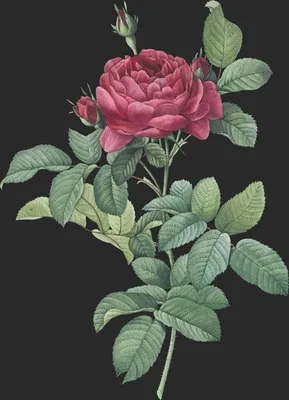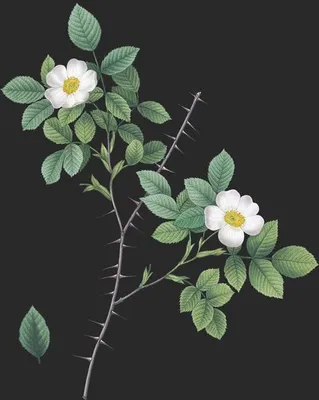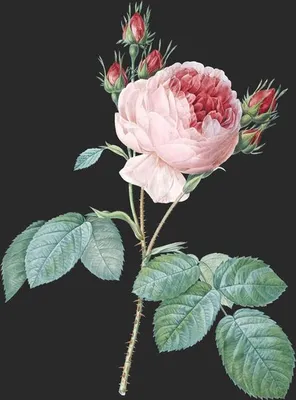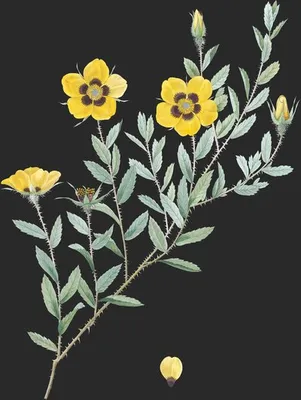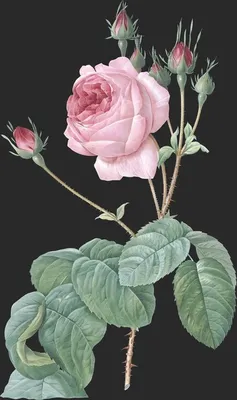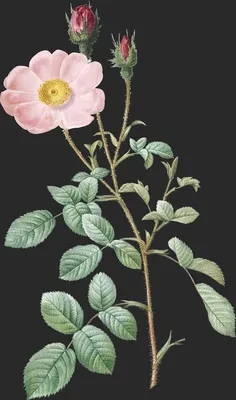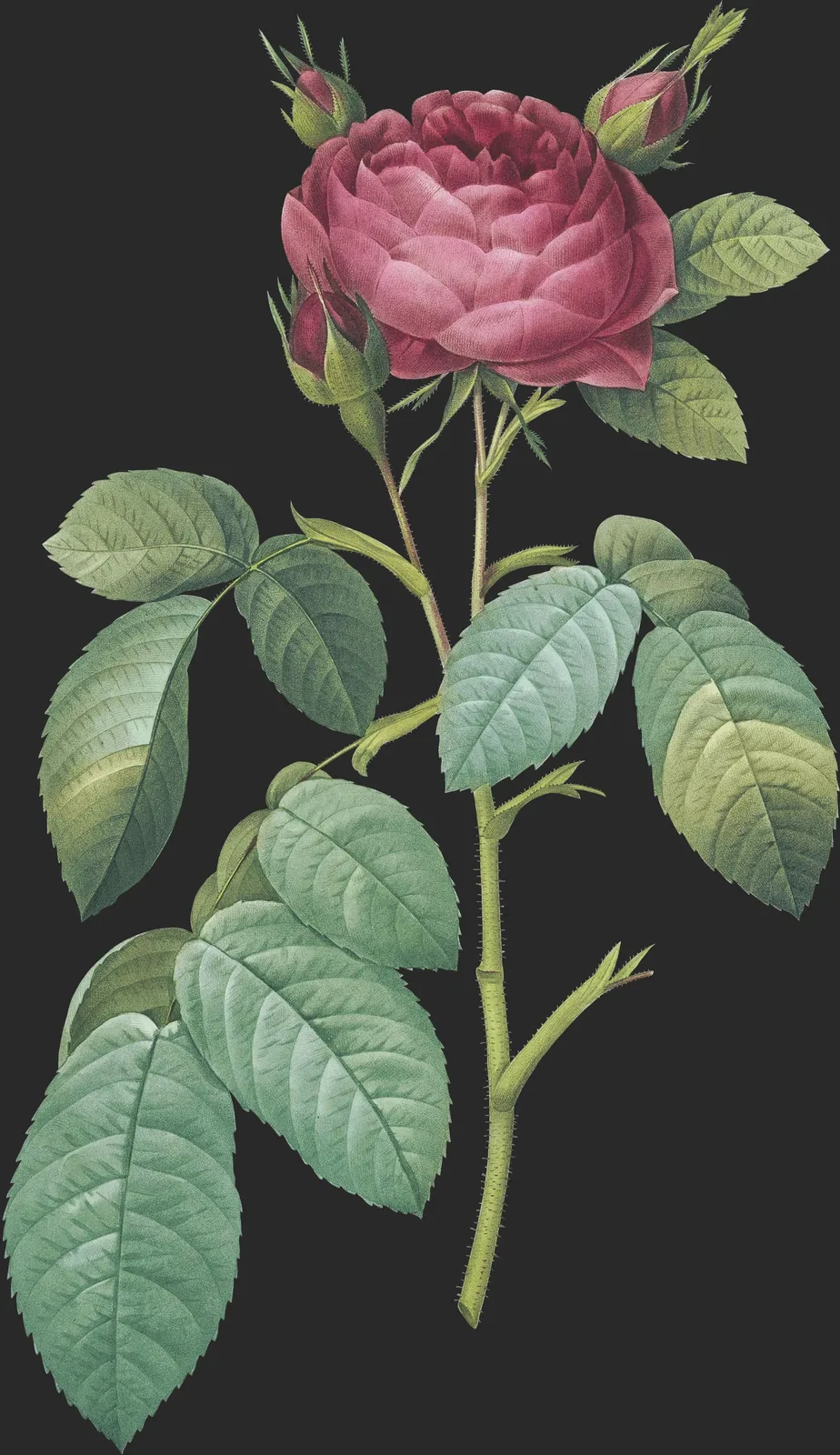
Rosa Gallica var Latifolia
狗牙蔷薇
Le Rosier de Provins
Ten ways of seeing
- measured cast red
- upright 1.73 : 1
First Look
夫象物必在于形似,形似须全其骨气。
—— 唐·张彦远《历代名画记》
Likeness is the threshold; bone-and-breath is the point.
The sheet is vertical: the eye climbs and settles in the upper half. Let the plant stand before you look for detail. Then step in close: watch where colour meets line, and whether the line ever breaks. Third, find where the green is deepest: the whole tonal order is measured from that patch. The pose leans right: the upper half carries 20 points further right than the lower — a living thing, not a diagram.
Name and Thing
The binomial is Rosa gallica: the first word is the genus it belongs among, the second the epithet that sets it apart. Here the epithet gallica means “of Gaul” — the name records the feature the namer noticed first. The Chinese name 狗牙蔷薇 is a modern rendering of the Latin, not an old garden name.
Form and Colour
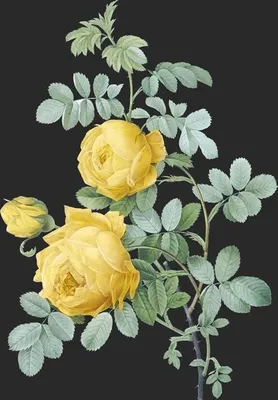
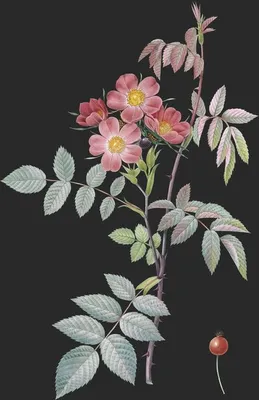
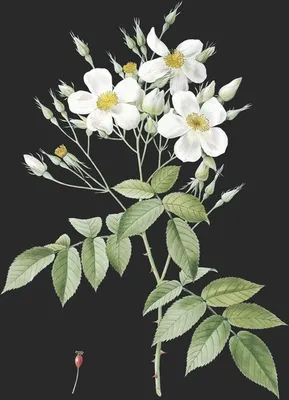
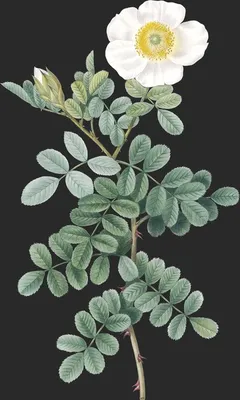
Measured on this plate: flower colour covers 8.4% of the sheet, foliage 17.1%, the cast red with a second note of yellow-green. No other plate shares exactly this measure. Roses are shrubs or scramblers with pinnate leaves of three to seven serrated leaflets; the double flowers open in crumpled, inward-curling layers around a small knot of yellow stamens. a moss green. A single plant, laid out with nothing hidden.
Composition
The sheet is tall. No details are appended: a plate for looking, not for keying out. The plant fills 41% of the sheet, centred near the centre — the herbarium way, drawn to be read whole.
Line and Colour
The first half of the nineteenth century moved from copper to steel to lithography; stipple could render the softest transition. Take a loupe to three places: petal edge, leaf vein, caption. An unbroken line means engraving; colour crossing the outline means a hand. If you mean to copy it: take its skeleton, its margins and the order of its colours; the burin's hatching is the language of copper — suggest it with pencil density, do not imitate it stroke for stroke.
Poetic Resonance
罗裙玉腕轻摇橹,叶屿花潭极望平。
—— 唐·王勃《採蓮曲》
The poem gives the mood first and the picture supplies the form; set the line beside the plate and the green the corolla becomes its resting point.
Symbolism
In Europe the rose means love and secrecy ('sub rosa'); in Chinese verse the rambling rose leans and clings — lingering attachment rather than ardour. Flower language was added later; the flower knows nothing of it, and that innocence is part of its power.
Season and Place
Late spring into early summer, peaking in May — the first flush of the garden year. the ever-blooming modern rose is a nineteenth-century crossing of European and Chinese stock. The year 1824 on the plate is that of publication, not of flowering — the gathering came a year or two earlier. The bud and the ripe fruit on one branch tell the season; the name in the title often tells the journey.
The Book and the Hand
“Les Roses” carries only Pierre-Joseph Redouté's name. The image is public domain; the hand-colouring is still one person's hand.
What to Take Away
If you keep one line, keep Guo Xi's: from afar its momentum, up close its texture. The flower of that year is dust, yet its image on paper has outlived every living cousin.
About this plate
Description
Ce Rosier s’élève, en un buisson touffu, à la hauteur de deux ou trois pieds. Ses tiges, divisées en rameaux nombreux, sont armées d’aiguillons rapprochés, assez courts, inégaux, faibles et presque droits. Les feuilles se composent de cinq, plus rarement de sept folioles d’un vert-foncé, glabres en-dessus, plus pâles et tomenteuses en-dessous. Ces folioles sont remarquables par leur grandeur, puisqu’elles présentent, pour la plupart, plus de quatre pouces de long sur près de deux pouces de large. Le pétiole qui les supporte est velu, rude au toucher, parfois, mais rarement, muni d’un ou de deux aiguillons très-petits. A sa base sont deux stipules décurrentes, bifides, pointues au sommet, tomenteuses en leur bord. Les fleurs se réunissent, plusieurs ensemble, à l’extrémité des ra-meaux. Les pédoncules et les pédicelles sont hérissés d’un grand nombre de poils roides spinuliformes. Les tubes du calice, parfois globuleux, parfois ovoïdes sur un même individu, sont garnis de pareils poils. Les divisions du limbe, trois pinnatifides et deux simples, sont tantôt pointues, tantôt spatulées au sommet, glanduleuses à l’extérieur, et munies inté rieurement d’un duvet blanchâtre. La corolle présente cinq à six rangs de pétales d’un rose-foncé, échancrés en cœur au sommet. Le fruit, presque ellipsoide, est d’un rouge-vif à la maturité.
Observations
Cette belle variété, remarquable par ses feuilles presque aussi grandes que celles du noyer, a été obtenue de semence, il y a quelques années, dans le jardin fleuriste. du Roi, à Sèvres, par M. Lelieur, alors administrateur de cet établisse-ment. Elle n’est pas encore très-répandue. On la rencontre, greffée, dans quelques jardins d’amateurs, mais on ne la trouve pas dans le commerce. Son feuillage, dans lequel réside son principal mérite, nous a paru plus grand sur les individus cultivés à l’ombre que sur ceux exposés au soleil.
- R. germinibus subglobosis; foliolis latis, ellipticis, supra glabris, subtus pubescentibus; serraturis ciliatis; calycinis lacinùs corolla brevioribus. (N.)