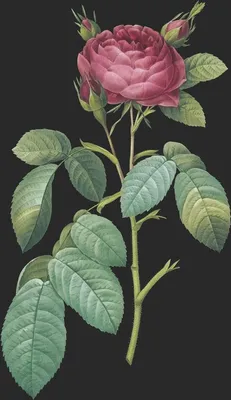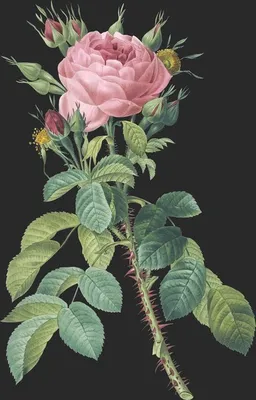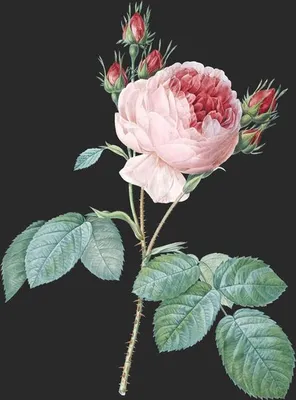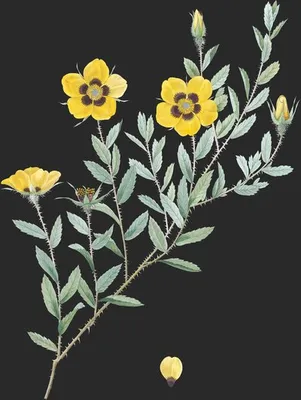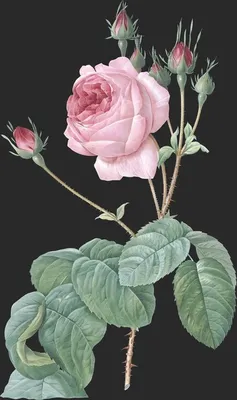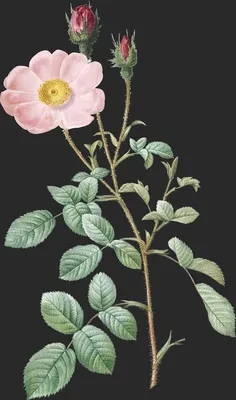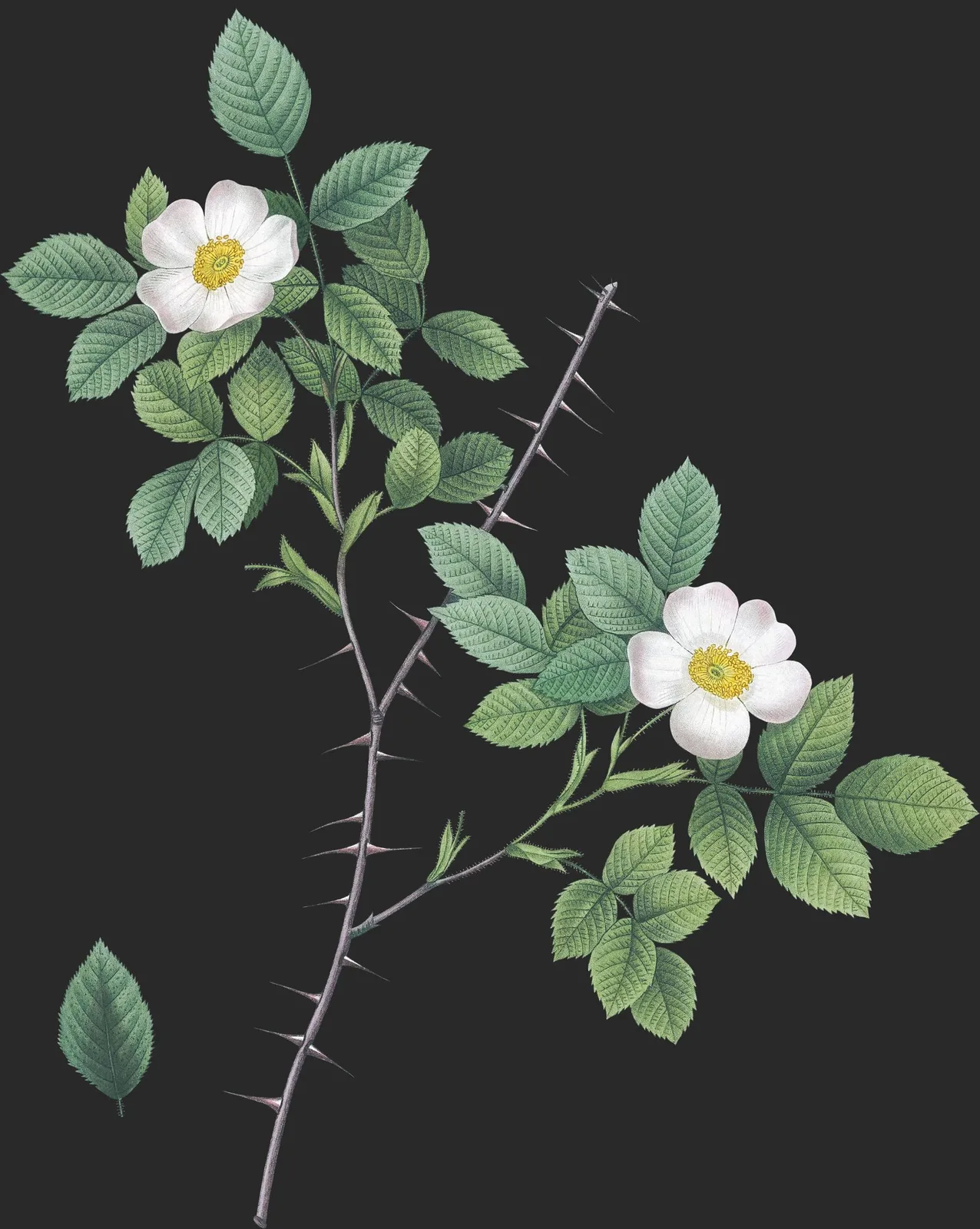
Rosa Spinulifolia var Dematratiana
Le Rosier Spinulé
Le Rosier Spinulé
Ten ways of seeing
- measured cast yellow-green
- slightly upright 1.25 : 1
First Look
六法者何?一、气韵生动是也;二、骨法用笔是也;三、应物象形是也;四、随类赋彩是也;五、经营位置是也;六、传移模写是也。
—— 南齐·谢赫《古画品录》
The six laws: spirit resonance alive; bone-method in the brush; matching form; colour by kind; planning the placing; copying the masters.
Slightly taller than wide; the eye lands above centre. Then step in close: watch where colour meets line, and whether the line ever breaks. Third, find where the green is deepest: the whole tonal order is measured from that patch. The pose leans left: the upper half carries 29 points further left than the lower — a living thing, not a diagram.
Name and Thing
The binomial is Rosa spinulifolia: the first word is the genus it belongs among, the second the epithet that sets it apart. The genus name Rosa: Rosa is simply the Latin for rose, from Greek rhodon. No established Chinese name exists, so it is cited by its binomial alone.
Form and Colour
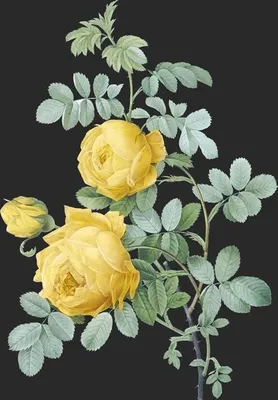
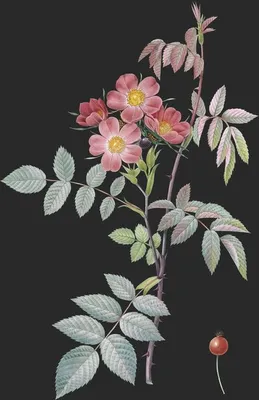
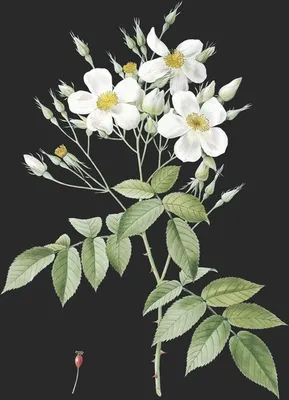
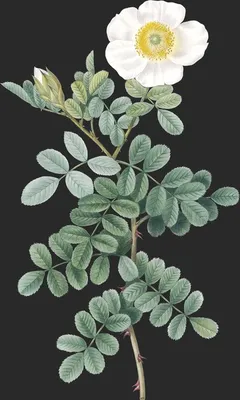
Measured on this plate: flower colour is sparing, 0.4% of the sheet against 10.0% of foliage, the cast tending yellow-green — as with pale or white blooms, outline and tone do the talking. Roses are shrubs or scramblers with pinnate leaves of three to seven serrated leaflets; the double flowers open in crumpled, inward-curling layers around a small knot of yellow stamens. a moss green. Read the outline, then the colour layers, then the brush.
Composition
The sheet is slightly tall. No details are appended: a plate for looking, not for keying out. The plant covers only 21% of the sheet, centred near the centre; the emptiness is where the eye rests.
Line and Colour
The first half of the nineteenth century moved from copper to steel to lithography; stipple could render the softest transition. Decide first whether it was printed or painted; only then discuss whether it is beautiful. If you mean to copy it: take its skeleton, its margins and the order of its colours; the burin's hatching is the language of copper — suggest it with pencil density, do not imitate it stroke for stroke.
Poetic Resonance
风吹榆荚叶,雨打木瓜花。
—— 唐·無名氏《無名氏之散句》
The poem gives the mood first and the picture supplies the form; set the line beside the plate and the green the corolla becomes its resting point.
Symbolism
In Europe the rose means love and secrecy ('sub rosa'); in Chinese verse the rambling rose leans and clings — lingering attachment rather than ardour. Flower language was added later; the flower knows nothing of it, and that innocence is part of its power.
Season and Place
Late spring into early summer, peaking in May — the first flush of the garden year. the ever-blooming modern rose is a nineteenth-century crossing of European and Chinese stock. The year 1824 on the plate is that of publication, not of flowering — the gathering came a year or two earlier. The bud and the ripe fruit on one branch tell the season; the name in the title often tells the journey.
The Book and the Hand
“Les Roses” carries only Pierre-Joseph Redouté's name. The image is public domain; the hand-colouring is still one person's hand.
What to Take Away
Appreciation is not knowledge but habit — one more look each time. A flora exists to be consulted; look long enough and you forget to consult — someone in 1824 gave a whole day to a single flower.
About this plate
Description
Ce Rosier s’élève en buisson à la hauteur de trois ou quatre pieds, ou environ. Ses rameaux, d’un rouge-brun, sont armés d’aiguillons solitaires, souvent opposés, longs, à-peu-près, de sept à huit lignes, peu dilatés à leur base, et droits. Les feuilles se composent de cinq, plus rarement de sept folioles ovales, pointues à la base et au sommet, d’un vert-gai et glabres en-dessus, plus pâles et munies en-dessous, tant sur les nervures ordinaires que sur les nervures confuses, d’une multitude de petites épines crochues, très-visibles à l’œil nu, à bordure inégale, cilicée et glanduleuse. Le pétiole qui les supporte est velu, muni de glandes et de quelques petits aiguillons: à sa base sont deux stipules bifides, pointues au sommet, glanduleuses en leur bord. Les fleurs latérales et terminales naissent solitaires à l’extrémité des ramuscules qui croissent le long des branches principales. Le pédoncule et le tube ovoïde du calice sont hérissés de poils spinuliformes. Les divisions du limbe sont tantôt simples, tantôt garnies de pinnulles très-déliées. Corolle de cinq pétales d’un rose-tendre. Styles libres.
- R. spinulifolia. Dem. Essay, p. 8, spec. 10.
- R. spinulifolia Dematratiana. Thy. Prod. p. 115, fig. 1
- Rosier à feuilles épineuses. Hortul.
Énumération des variétés de ce rosier
R. germinibus ovatis (globosisve) pedunculisque spinosis; calycibus pinnatis, pinnis linearibus; pedunculis (petiolis) villosis aculeatis; foliolis supra glabris, infra spinosulis. Dem. l. c.
Tubes ovoides, aiguillons droits
-
- R. spinulifolia Dematratiana. Thy. l. c.
- R. germinibus ovatis pedunculisque glanduloso-hispidis; foliolis orbiculato-ovalibus, supra glabris, subtus undique spinosulis; serraturis glanduloso-serratis; caule aculeis rectis, subgeminatis.
Habitus
Frtuex 3–4. pedalis, ramosus. Rami stricti, fusci, aculeis rectis, solitaris vel gemi-natis, etiam ternatis armati. Foliola quina rarius septenna, orbiculato ovalia, supra glabra, subtus, ad nervos et venas, spinulis glandulisque obsita, profunde serrata, serraturis subiterum serratis, villoso-glandulosis. Petioli tomentosi, aculeolati. Stipulæ acuminalæ, supra glabra, subtus villosulæ, margine glandulosa. Pedunculi terminales, solitari, glanduloso-hirsuti. Tubus calycis oviformis, glanduloso-setosus, setis subreflexis. Laciniæ calycinæ glandulis sessilibus præditæ, intus margineque albo-tomentosæ, appendiculatæ, appendicibus linearibus. Petala quinque, obcordata, pallide rubra. Fructus oviformis, hispidus, phæniceo-purpureus: maturus nigrescit. (N.)
Découvert près Châtel-sur-Montsalvens, dans le canton de Fribourg, en Suisse, par M. le doyen Dematra, curé de Corbières.
Tubes globuleux, aiguillons presque droits
-
- R. spinulifolia Foxiana. Thy. l. c. p. 116, fig. 2.
- R. germinibus globosis; foliolis oblongo-ovalibus, subtus dense spinosulis glandulosisque; caule aculeis subrectis.
Habitus
Frutex 4 pedalis et altior, erectus, ramosus. Rami aculeis subrectis, geminatis armati. Foliola oblongo-ovalia, subtus, dense, spinulis glandulisque obsita. Tubus calycis globosus. Laciniæ calycinæ lanceolatæ, apice dilutatce, appendiculatæ. Fructus globosus hirsutus. Cætera uti in variatione α. (N.)
Nous avons dédié cette variété à la mémoire du célèbre Fox (Ch.-J.), l’un des plus grands orateurs dont s’honore l’Angleterre: on sait que parmi ses délassements favoris, la Botanique était au premier rang, et qu’à sa campagne, Saint-Anne’s-hill, il cultivait particulièrement les Rosiers, même qu’il en possédait une riche collection, classée par espèces, et dans un ordre admirable.
Ce Rosier croît spontanément sur la bordure des bois, aux environs de Verviers (Pays-Bas), d’où il nous a été rapporté vivant, avec plusieurs autres, par M. Lemanceau, dans l’été de 181g. Les pétales sont plus grands et d’un rouge un peu plus vif que dans la var. α. Il nous a semblé ne différer en rien du R. Pseudo-rubiginosa de Lejeune, Fl. de Spa 1, p. 229, autant qu’il nous a été possible d’en juger d’après un exemplaire desséché de ce dernier Rosier qui nous a été envoyé par mademoiselle Libert de Malmedy.