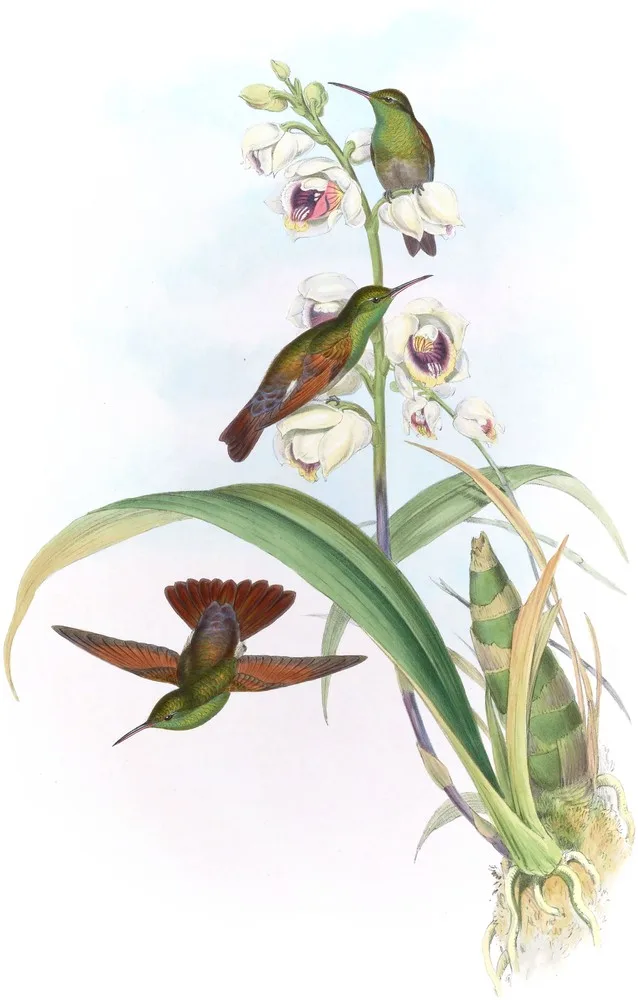
绿蜂鸟
Amazilia beryllina
Amazilia beryllina
Berylline Amazili
- 中文名
- 绿蜂鸟
- 学名
- Amazilia beryllina
- 合集
- 古尔德蜂鸟图谱
- 绘者
- John Gould(约翰·古尔德)
- 年代
- 1861
- 图版号
- Pl. 312, Vol. V
- 原书页码
- p.312
- 授权
- CC0 1.0 Universal (Public domain)
关于本图版
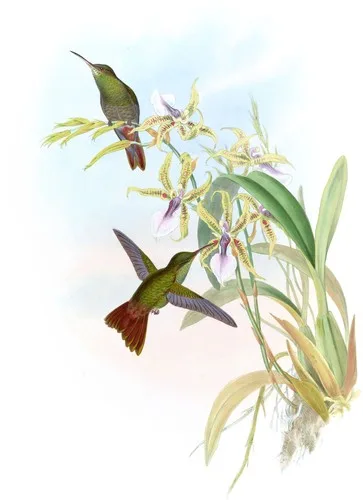
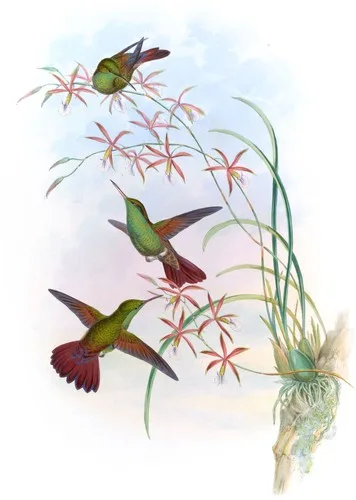
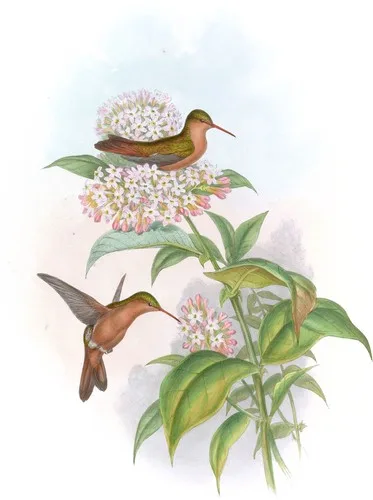
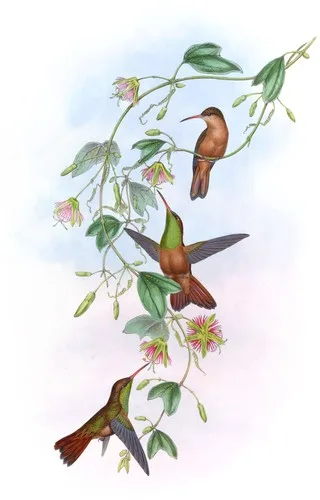
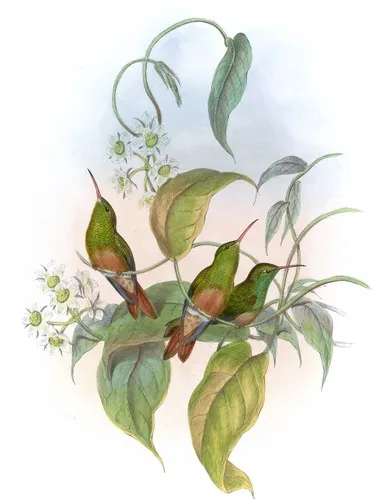
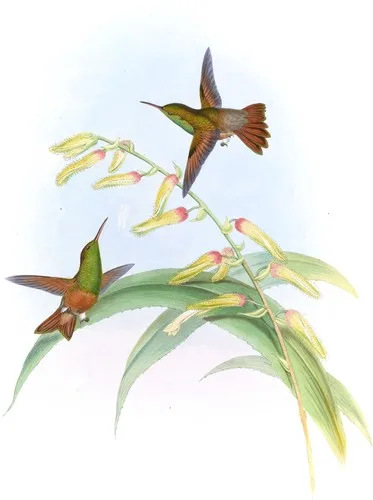
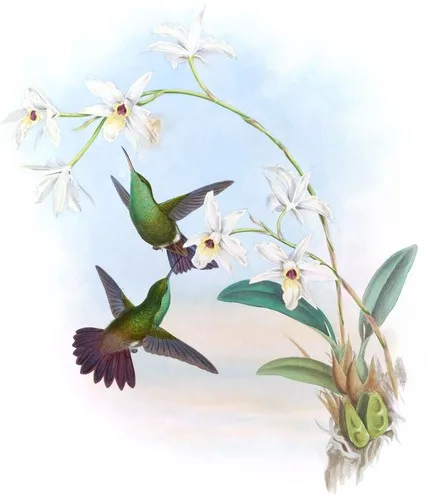
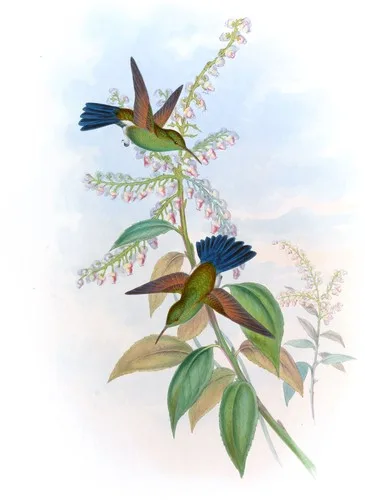
《古尔德蜂鸟图谱》(Gould's Hummingbirds)由约翰·古尔德绘制,1849—1887 年间印行,本图即其中一幅。画面主体是绿蜂鸟(Amazilia beryllina),在分类体系中列于蜂鸟科(Trochilidae)。
该合集全编共 421 幅图版,此图为其中之一,图版编号 Pl. 312, Vol. V,对应原书第 312 页,版式为纵幅。图像由公有领域原件扫描修复而来,细节在放大视图中仍清晰可辨。
原书文字(英文 / 法文)
Southern Mexico. M. Botta found it at Orizaba, and M. Sallé at Cordova.
This bird is generally known to Trochilidists by the specific name of Arsenoë; but the Berlin ornithologists tell us that it had been previously named beryllinus by the late Dr. Lichtenstein in his priced list of birds issued in 1830; and I have adopted the name proposed by my very old friend who so long filled the post of Director of the Zoological Museum of Berlin: at the same time I question the justice of the procedure, as it can scarcely be expected that names proposed in a catalogue of duplicate birds, even if accompanied by brief specific descriptions, are to be received and admitted by the scientific naturalist; for myself, I have never seen the pamphlet alluded to.
The native country of the Amazilia beryllina is Southern Mexico, where it appears to be numerous; it does not, however, seem to enjoy a very wide range, since I do not recollect ever seeing examples of it in any collection from Guatemala; if it be found there, it is but rarely, and only in the northern parts of the country, or those portions bordering on Mexico. Several specimens were collected by M. Botteri in the neighbourhood of Orizaba, and M. Sallé procured others at Cordova.
A considerable difference occurs in the extent of the green colouring of the under surface in different individuals; in some this colour spreads over the whole of the abdomen, while in others it merely covers the chest and the upper part of the flanks, the breast being of a deep brownish fawn-colour. This variation in the extent of the green colouring I at one time attributed to a difference of sex, the male being generally more clothed with green than the female, but I now think it is merely a local variation.
Head, sides and back of the neck, upper part of the back, and the anterior portion of the wing-coverts dark green, gradually passing into the rich deep golden and purplish bronze of the posterior portion of the wing-coverts, lower part of the back and upper tail-coverts; spurious wing very dark brown; primaries and secondaries dark chestnut-red at the base, and purplish brown for the remainder of their length; tail rich deep purplish bronze, the purple hue prevailing on the four central feathers; chin, throat, chest, and abdomen shining grass-green; under surface of the wing, vent, and under tail-coverts deep chestnut-red, the feathers of the latter part narrowly fringed with white; upper mandible black; under mandible fleshy with a black tip.
The figures are of the size of life. The plant is the Maxillarta Warreana.
References
- Trochilus beryllinus, Licht. Preis-Verz. Mexican. Thier. ges. v. Deppe und Schiede (Sept. 1830), no. 26.
- Ornismya Arsinoë, Less. Supp. Hist. Nat. des Ois. Mou., pp. 154, 156. pls. 28, 29.—Ib. Rev. et Mag. de Zool. 1838, p. 314, 1839, p. 18.
- Cynanthus Arsinoë, Jard. Nat. Lib. Humm.-Birds, vol. ui. p. 149. pl. 33.
- Polytmus Arsinoë, Gray and Mitch. Gen. of Birds, vol. i. p. 109, Polytmus, sp. 9.
- Amazilius arsinoë, Bonap. Consp. Gen. Av., tom. i. p. 77, Amazilius, sp. 2.—Ib. Rev. et Mag. de Zool. 1854, p. 254.
- Amazilia Arsinoë, Reich. Auf. der Col., p. 10.—Ib. Troch. Enum., p. 8. t. deelxxiv. figs. 4794–97?
- Pyrrhophaena beryllina, Cab. Mus. Hein., Theil iii. p. 36.
十二观
- 纵幅 1.57∶1
- 1861 年刊
- 图版 312, Vol. V
这不是词条,是一条看画的次序:先站定看整体,再看名字与形色、构图与刀工,然后问它几时开、从哪里来、经了谁的手;最后是中国诗文——同一朵花,中国古人是怎么看的。十二观读完,这幅图就打开了。
-
第一眼
竖划三寸,当千仞之高;横墨数尺,体百里之迥。
—— 南朝宋·宗炳《画山水序》
三寸的竖线可当千仞高山,几尺横墨能容百里之远。尺幅从来不是障碍,取舍才是本事。这一幅是竖的:眼睛从下往上走,落点在中段那只鸟身上。先别急着看羽毛,让姿态先立起来。第二步凑近一寸:看线与色的交界,色有没有压住线,线有没有断。第三步,把视线放到最深的那一小块:整幅的用色秩序,都是从那里排开的。
-
名与实
学名 Amazilia beryllina:前一词是属,管它归在哪一类;后一词是种加词,管它在这一类里凭什么与众不同。一百多年前的命名者,把一种植物的来历压进了两个词。中文名“绿蜂鸟”是后人据学名回译的通行叫法,与古书里的旧名未必对得上——名与物之间,总隔着一层翻译。
-
形与色
蜂鸟为美洲最小之鸟,喙细长如针,舌分叉成管,可伸入花心吸蜜;翼小而振频极高,能悬停、能倒飞。此幅未作色相归档,只能就形制论。没有解剖图,就靠主株一处一处看过去:叶怎么排,花怎么着生,果在哪里。
-
构图与呼吸
画幅高而窄,鸟栖在枝的中段,上下留白多——十九世纪鸟谱的标准版式,留给它飞走的余地。(高宽比约 1.57∶1)全幅只画一只,不作解剖附图——这类图更近于“观赏”,而非“鉴定”。老图谱爱把主株摆在偏中线的位置,左右留得不一样多:这一点偏心,正是画面活起来的原因。
-
一刀一色
十九世纪后半叶,石版与彩色石印渐成主流:颜色可以直接印出,不再依赖手工,线条反倒退居其次。图像的“准确”提高了,手性却淡了。还有一种证据在纸背:铜版压进纸里的那道痕、上色处微微凸起的颜料、再版时磨浅的线。扫描件里也能看出七分。
-
时序
热带美洲几乎全年可见,花期即其季节;温带种类的蜂鸟则随花北迁,一年往返数千公里。图上所记的 1861 年是刊行之年,不是采到那只鸟的年份;真正的观察记录通常比出版早一两年。记下这一季:物候是最好用的鉴赏工具,见过一次活的花,再看图就不会只看颜色。
-
故土
仅产美洲,自阿拉斯加南部至火地岛,以安第斯山最为繁盛。中土无蜂鸟,汉籍不载,晚清海外游记始见其名。这类植物的旅程比图版本身更长:从一座山到另一座山,从一种语言换到另一种语言。
-
书与人
《古尔德蜂鸟图谱》(Gould's Hummingbirds)由约翰·古尔德绘,成于1849-1887。此幅为其中图版 312, Vol. V,见原书第 312 页。一本书的“作者”常常是主编;真正决定这幅图好不好看的,是没留下名字的刻工与上色人。
-
诗境
穿花蛱蝶深深见,点水蜻蜓款款飞。
—— 唐·杜甫《曲江二首》
中土无蜂鸟,然“穿花”之态,杜甫早已写过:贴着花心走,是采蜜者的共同姿态。把这一句放回画面:画面就是诗句的落点——诗先写气,画后写形,两者在此处接上了。
-
文心
竖划三寸,当千仞之高;横墨数尺,体百里之迥。
—— 南朝宋·宗炳《画山水序》
三寸的竖线可当千仞高山,几尺横墨能容百里之远。一只蜂鸟只有拇指大,画家却要在几厘米里放下整片花丛——尺度从来不是障碍。古尔德《蜂鸟图谱》(1849—1887)以石版手工上色,金箔衬底,使羽色在纸上仍有金属光;这套图册本身就是十九世纪印刷与收藏狂热合流的产物。读古文不必求全解,先认下这一句:它把“看花”换成了“看人”,你再看这幅图,眼里就多了一层。
-
花语
阿兹特克以蜂鸟为战神与太阳的化身;欧洲维多利亚时代则以蜂鸟为收藏与装饰的极致,百万只羽毛被做成胸饰。中国旧籍无此鸟,故无象征——这空白本身,就是一部博物学交流史。花语是后人添上去的,花本身并不知道;但这层“不知道”,正是它最动人的地方。
-
带走一双眼睛
把这三件事带走:先整体后细节;先线后色;先看画再翻书。任何一张老图版,都可以用这三条读。二百年后,这只鸟的后代或许仍在某处活着;而纸上这一只,永远停在 1861 年的那个季节。