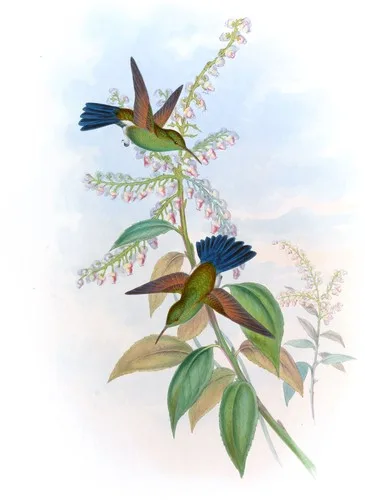
美洲蜂鸟属
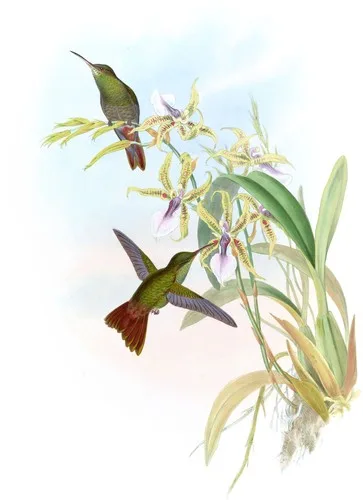
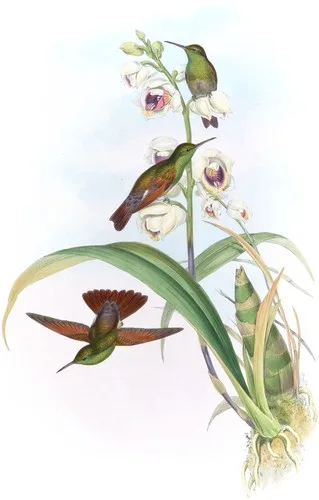
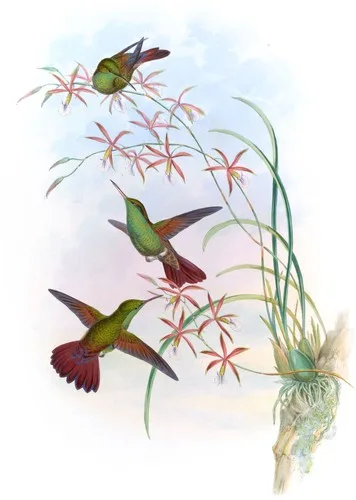
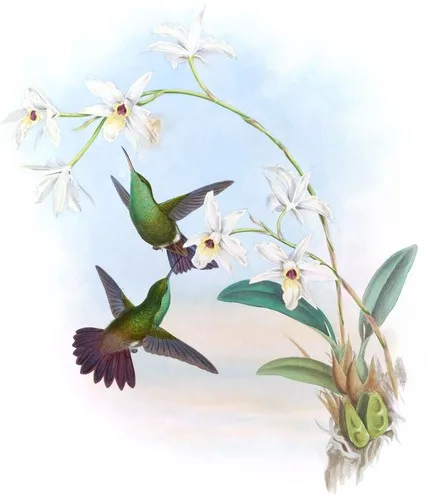
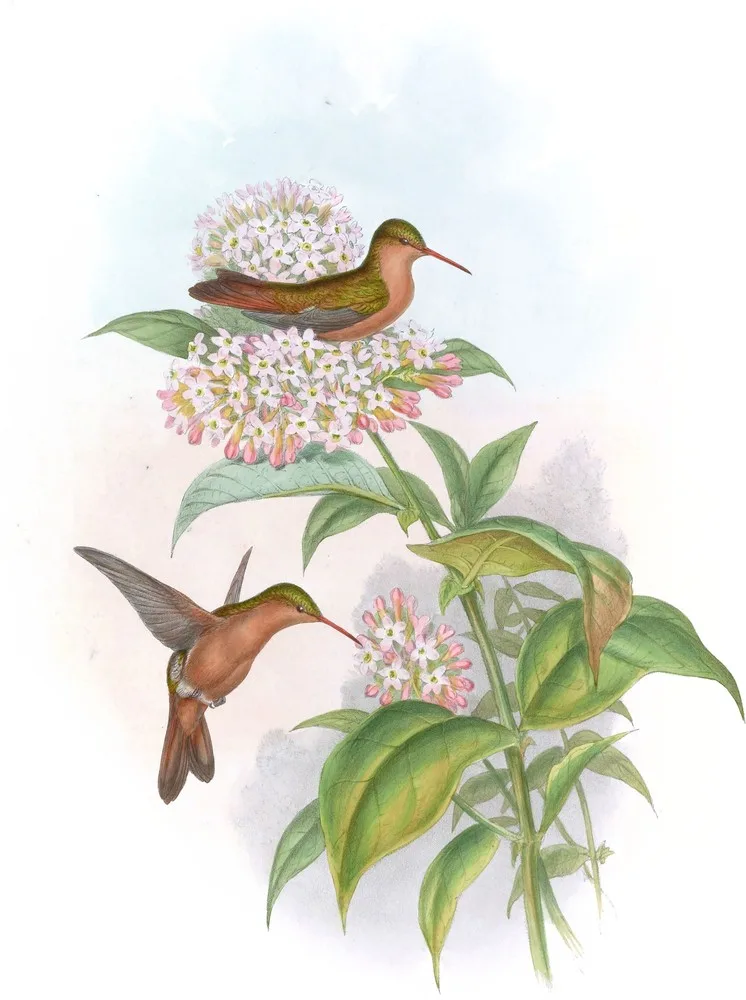
Amazilia corallirostris
Amazilia corallirostris
Coral-billed Amazili
- 中文名
- 美洲蜂鸟属
- 学名
- Amazilia corallirostris
- 合集
- 古尔德蜂鸟图谱
- 绘者
- John Gould(约翰·古尔德)
- 年代
- 1861
- 图版号
- Pl. 307, Vol. V
- 原书页码
- p.307
- 授权
- CC0 1.0 Universal (Public domain)
十观
- 纵幅 1.34∶1
第一眼
凡画山水,意在笔先。
—— 唐·王维《山水论》
下笔之前,心里已经有了整幅画。看画时可以反过来推:画家先定了什么,后添了什么。这一幅是竖的:眼睛从下往上走,落点在中段那只鸟身上。先别急着看羽毛,让姿态先立起来。第二步凑近一寸:看线与色的交界,色有没有压住线,线有没有断。第三步,把视线放到最深的那一小块:整幅的用色秩序,都是从那里排开的。
名与实
学名 Amazilia corallirostris:前一词是属,管它归在哪一类;后一词是种加词,管它在这一类里凭什么与众不同。名字是通行证,也是懒办法——记住两个词,就抓住了一整个物种。中文名“美洲蜂鸟属”是后人据学名回译的通行叫法,与古书里的旧名未必对得上——名与物之间,总隔着一层翻译。
形与色
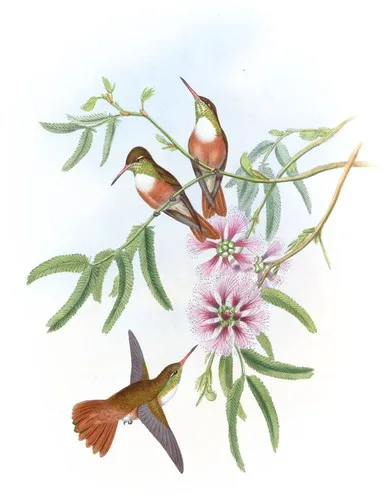
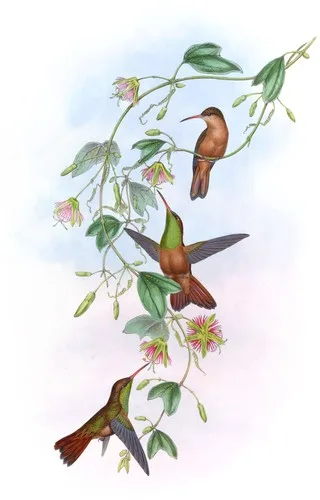
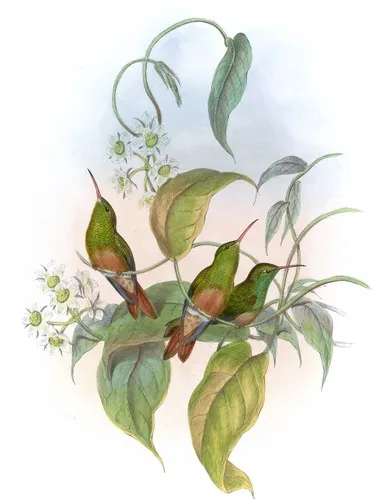
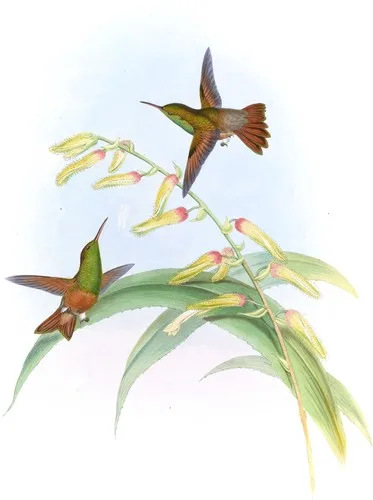
蜂鸟为美洲最小之鸟,喙细长如针,舌分叉成管,可伸入花心吸蜜;翼小而振频极高,能悬停、能倒飞。此幅未作色相归档,只能就形制论。此幅只画一个种,形制的每一处都摊在纸面上,没有遮掩。
构图与呼吸
画幅高而窄,鸟栖在枝的中段,上下留白多——十九世纪鸟谱的标准版式,留给它飞走的余地。全幅只画一只,不作解剖附图——这类图更近于“观赏”,而非“鉴定”。空白不是没画完,是给眼睛留的落脚处:一张图若四边都塞满,花反而会闷。
一刀一色
十九世纪后半叶,石版与彩色石印渐成主流:颜色可以直接印出,不再依赖手工,线条反倒退居其次。图像的“准确”提高了,手性却淡了。拿放大镜(或手机微距)看三处:喙缘、覆羽、题名。线若连续不断,是刻的;色若越过轮廓半毫米,是手涂的。想动笔临它的人记住一句:先铺大块的形与色,干后再收细部;石印的柔和层次来自薄涂与网点,水彩分两三遍淡铺即可逼近。
诗境
穿花蛱蝶深深见,点水蜻蜓款款飞。
—— 唐·杜甫《曲江二首》
中土无蜂鸟,然“穿花”之态,杜甫早已写过:贴着花心走,是采蜜者的共同姿态。诗以气行,画以形立;两种“看”叠在一起,才是看画的意思。
花语
阿兹特克以蜂鸟为战神与太阳的化身;欧洲维多利亚时代则以蜂鸟为收藏与装饰的极致,百万只羽毛被做成胸饰。中国旧籍无此鸟,故无象征——这空白本身,就是一部博物学交流史。花语是后人添上去的,花本身并不知道;但这层“不知道”,正是它最动人的地方。
时与地
热带美洲几乎全年可见,花期即其季节。仅产美洲,自阿拉斯加南部至火地岛,以安第斯山最为繁盛。中土无蜂鸟,汉籍不载,晚清海外游记始见其名。图上所记的 1861 年是刊行之年,不是采到那只鸟的年份;真正的观察记录通常比出版早一两年。那一代人对这类鸟的知识,多半来自标本与笼养。看这一类图,不妨把产地和季节都当“据说”来读。
书与人
《古尔德蜂鸟图谱》只署了约翰·古尔德一个人的名字。从画稿到成图要过好几双手:转刻的人求准,上色的人求快——快与准之间,就是各幅之间深浅不一的来历。
带走一双眼睛
把这三件事带走:先整体后细节;先线后色;先看画再翻书。任何一张老图版,都可以用这三条读。二百年后,这只鸟的后代或许仍在某处活着;而纸上这一只,永远停在 1861 年的那个季节。
关于本图版
这幅图版出自《古尔德蜂鸟图谱》(Gould's Hummingbirds),由约翰·古尔德绘制,1849—1887 年间出版。美洲蜂鸟(Amazilia corallirostris)是本图的主角,归入蜂鸟科(Trochilidae)。
全编共收录 421 幅图版,本图是其中一幅,原书将其列为 Pl. 307, Vol. V,见第 307 页,版式为纵幅。图为公有领域原件的修复扫描,构图与设色未经改动。
原书文字(英文 / 法文)
Central America
Few of the Humming-birds are more plainly coloured than the Amazilia corallirostris; the tints of the under surface, from the chin to the lower part of the abdomen, being uniform sandy-buff, while on the crown and all the upper surface, a similar uniformity of tint, although of a different hue, prevails; the chestnut-red tail, too, is only relieved by the bronzy tipping of the feathers.
In all the members of this genus, a tendency to a buffy style of plumage occurs, which appears to be carried to a greater extent in the present species than in any other.
The native habitat of this bird is Central America, whence numerous specimens were brought by M. Sallé and others. M. Bourcier gives Escuintla, in the republic of Guatemala, as one of its habitats. None of the examples of this species which have come under my notice present sufficient differences to suggest which are males and which females; the colouring of the sexes in fact appears to be precisely similar.
All the upper surface, wing- and tail-coverts bronzy-brown; wings purplish-brown; tail-feathers deep chestnut, glossed with bronze on their margins and tips; all the under surface sandy-buff; bill said to be red; feet apparently fleshy-brown.
The Plate represents the birds the size of life. The plant is the Rondeletia versicolor.
References
- Trochilus corallirostris, Bourc. et Muls. Ann. de la Soc. Sci. de Lyon, tom. ix. 1846, p. 328.
- Polytmus corallirostris, Gray and Mitch. Gen. of Birds, vol. i. p. 109, Polytmus, sp. 74.
- Amazilius corallirostris, Bonap. Consp. Gen. Av., p. 77, Amazilius, sp. 5.—Ib. Rev. et Mag. de Zool. 1854, p. 254.
- Amazilia corallirostris, Reich. Aufz. der Col., p. 10.