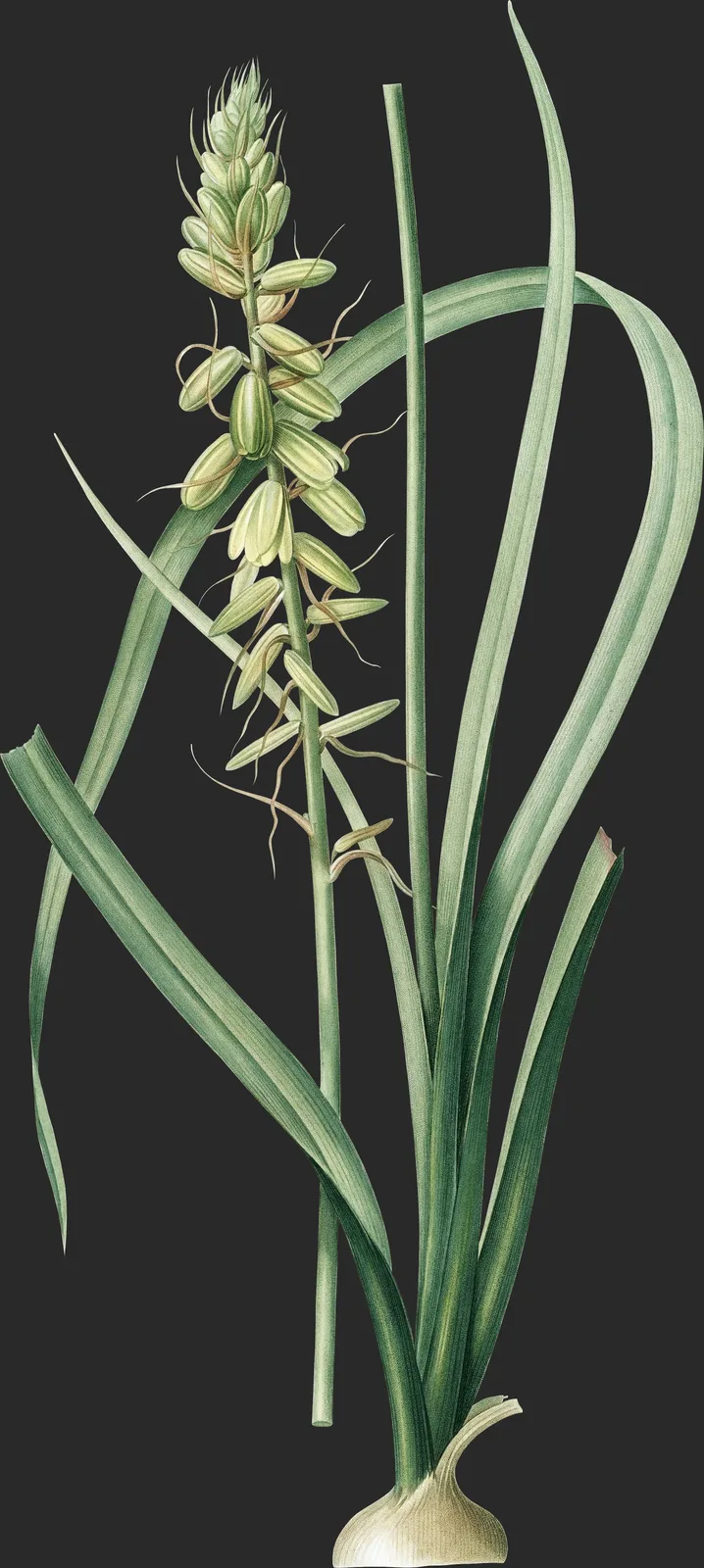
Albuca Abyssinica
Albuca d’Abyssinie
Albuca d’Abyssinie
Ten ways of seeing
- measured cast yellow-green
- upright 2.23 : 1
First Look
江馆清秋,晨起看竹,烟光日影露气,皆浮动于疏枝密叶之间。
—— 清·郑板桥《题画竹》
On an autumn morning at the river lodge I looked at the bamboo: mist, sunlight, dew, all drifting among the sparse and dense leaves.
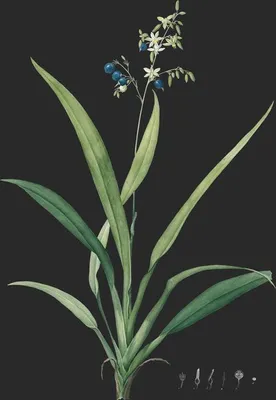
The sheet is vertical: the eye climbs and settles in the upper half. Let the plant stand before you look for detail. Then step in close: watch where colour meets line, and whether the line ever breaks. Third, find where the green is deepest: the whole tonal order is measured from that patch.
Name and Thing
The binomial is Albuca abyssinica: the first word is the genus it belongs among, the second the epithet that sets it apart. Two words carry a whole provenance. The older system filed it under Asparagaceæ by overall affinity; Linnaeus, counting stamens only, placed it in Hexandria — two ways of asking what a plant is. No established Chinese name exists, so it is cited by its binomial alone.
Form and Colour
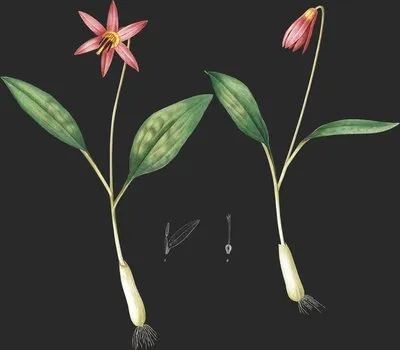
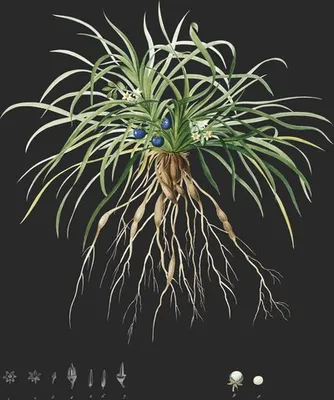
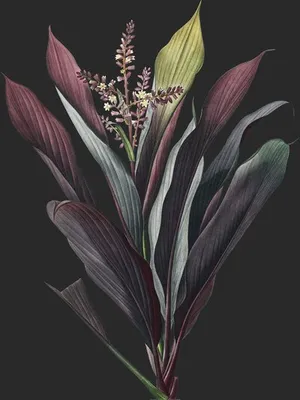
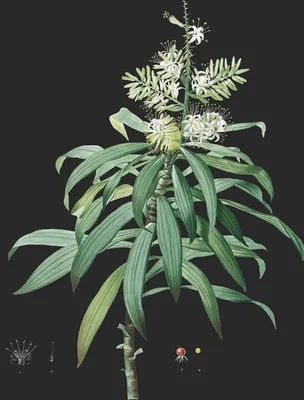
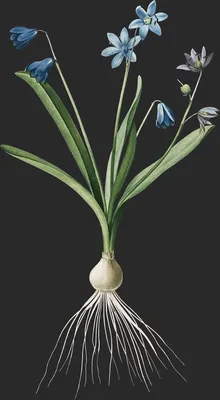
Measured on this plate: flower colour covers 2.6% of the sheet, foliage 10.1%, the cast yellow-green. No other plate shares exactly this measure. A bulb of overlapping fleshy scales gives the lily its Chinese name, 'hundred-fold'; six tepals reflex as the flower opens, around six stamens with long, T-shaped anthers. a moss green. Three things fix the habit: leaf arrangement, tepal count, and how the flower is borne.
Composition
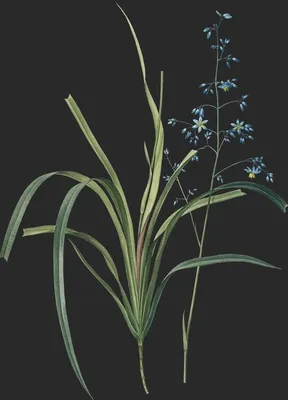
The sheet is tall. No details are appended: a plate for looking, not for keying out. The plant covers only 24% of the sheet, centred near the centre; the emptiness is where the eye rests.
Line and Colour
The first half of the nineteenth century moved from copper to steel to lithography; stipple could render the softest transition. Craft leaves franker evidence than inscriptions. If you mean to copy it: take its skeleton, its margins and the order of its colours; the burin's hatching is the language of copper — suggest it with pencil density, do not imitate it stroke for stroke.
Poetic Resonance
两丛香百合,一架粉长春。
—— 宋·陆游《北窗偶题四首 其一》
The poem gives the mood first and the picture supplies the form; set the line beside the plate and the green the corolla becomes its resting point.
Symbolism
In the West the white lily is Marian purity, held by the angel of the Annunciation; in China the name sounds like 'a hundred years in harmony', a wedding wish. Meanings change their tune: the same flower can say opposite things within a century.
Season and Place
the flowers last only days, so artists drew them just as they opened. Temperate north — China, Japan, Europe. Long used in Chinese medicine, lilies were hunted in East Asia by nineteenth-century collectors and transformed European gardens. The year 1807 on the plate is that of publication, not of flowering — the gathering came a year or two earlier. Read the locality and the flowering season both with a discount: one is hearsay, the other a ten-day peak.
The Book and the Hand
“The Liliaceae” carries only Pierre-Joseph Redouté's name. From drawing to plate the sheet passed through several hands — the engraver aimed at accuracy, the colourist at speed, and between them lies each plate's unevenness.
What to Take Away
Carry three rules away: whole before detail; line before colour; picture before book. Two centuries on, the plant may still flower in some garden; the one on this sheet stopped in the season of 1807.
About this plate
Description
L’Albuca d’Abyssinie se distingue facilement des autres espèces du même genre par ses fleurs presque sessiles, disposées en épi, et ressemble beaucoup par sou port à la Phalangère fausse Albuca, avec laquelle elle a quelquefois été confondue. Elle est entourée inféricurement par 6–8 feuilles linéaires, aigues, un peu courbées en canal, engainantes à leur base, longues de sept décimètres environ, larges de deux ou trois centimètres. La hampe est eylindrique, nue, lisse, de couleur verte, glabre comme le reste de la plante, haute d’un mètre, ou plus. Les fleurs forment à son sommet un épi alonge, fort lache dans sa partie inférieure, plus serré supérieurement. Elles sont redressées dans leur jeunesse, penchées après leur entier épanouissement, et supportées par des pédicelles très-courts, à la base desquels sont des bractées membraneuses, li-néaires, dont la longueur dépasse un peu celle de la fleur.
Le périgone est divisé jusqu’à sa base en six segments disposés sur deux rangs; les trois intérieurs sont appliqués les uns contre les autres; les trois extérieurs sont un peu ouverts: tous sont de forme ovale-lancéolée, concaves, légèrement courbés en voûte à leur sommet, verts et entourés d’un rebord jaune.
Les étamines sont au nombre de six, insérées à la base des divisions du périgone, et un peu plus courtes qu’elles. Les filaments sont larges, blancs et membraneux dans leur partie inférieure, verdâtres et en forme d’alêne à leur extrémité supérieure. Les anthères sont oblongues, vacillantes et de couleur jaunâtre.
L’ovaire est libre, vert, en forme de pyramide, à trois angles obtus, et comme tronqués. Il supporte un style prismatique, triangulaire, égal en longueur au périgone, marqué sur chaque face de deux sillons qui se réunissent dans le haut, et terminé par un stigmate peu distinct.
Histoire
Le nom donné à cette plante par Jacquin semble indiquer qu’elle est originaire d’Abyssinie; mais on manque de renseignements précis à cet égard. Nous en avons vu plusieurs pieds dans les serres du jardin du Muséum d’Histoire naturelle, où elle fleurit dans le milieu du printemps.
Fam. des Asphodèles. Juss.—Hexandrie monogynie. Lin.
- Albuca Abyssinica. A. petalis inferioribus apice fornicatis, foliis lineari-lanceolatis canaliculatis strietis, pedunculis flore cernuo brevioribus, bracteis lineari-lanceolatis flore longioribus. Willd. Spec. 2. p. 103. Pers. enchir. 1. ?. 361.
- Albuca Abyssinica. A. petalis interioribus apice fornicatis, foliis glabris, bracteis flore longioribus. Dryand. act. Holm. 1784. p. 297. Jacq. ic. 1. t. 64. collect. 1. p. 55.