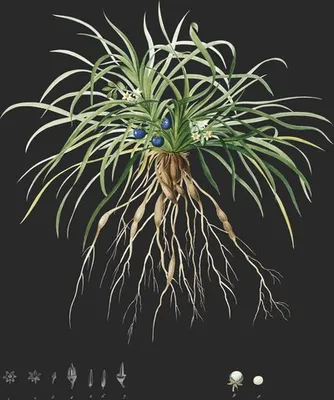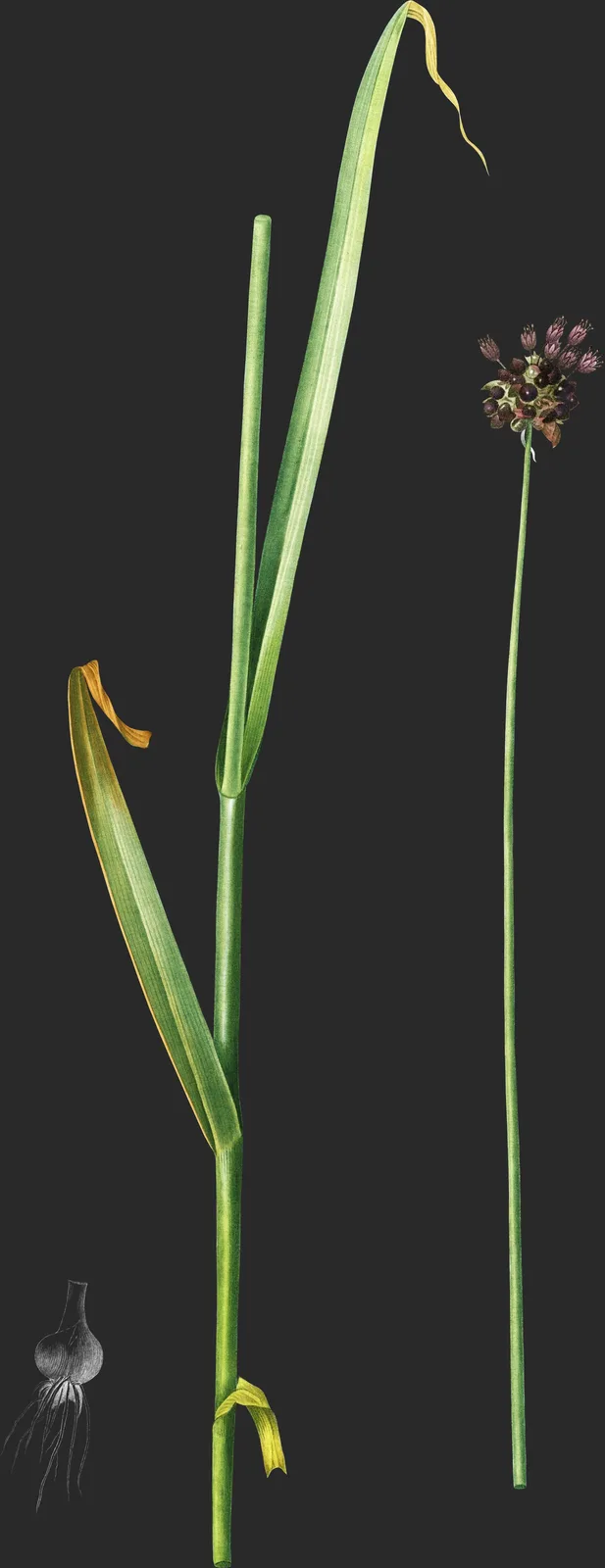
Allium Arenarium
熊韭
Ail des Sables
Ten ways of seeing
- measured cast yellow-green
- upright 2.59 : 1
First Look
江馆清秋,晨起看竹,烟光日影露气,皆浮动于疏枝密叶之间。
—— 清·郑板桥《题画竹》
On an autumn morning at the river lodge I looked at the bamboo: mist, sunlight, dew, all drifting among the sparse and dense leaves.
The sheet is vertical: the eye climbs and settles in the upper half. Let the plant stand before you look for detail. Then step in close: watch where colour meets line, and whether the line ever breaks. Third, find where the green is deepest: the whole tonal order is measured from that patch. The pose leans right: the upper half carries 12 points further right than the lower — a living thing, not a diagram.
Name and Thing
The binomial is Allium arenarium: the first word is the genus it belongs among, the second the epithet that sets it apart. Two words carry a whole provenance. The older system filed it under Asparagaceæ by overall affinity; Linnaeus, counting stamens only, placed it in Hexandria — two ways of asking what a plant is. The Chinese name 熊韭 is a modern rendering of the Latin, not an old garden name.
Form and Colour
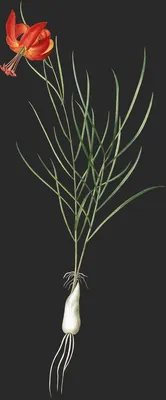
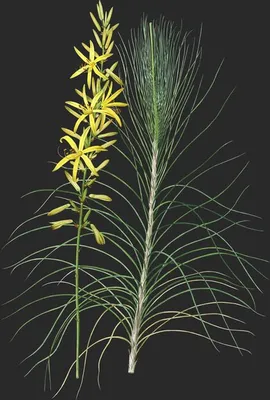
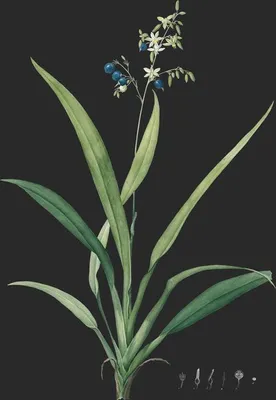
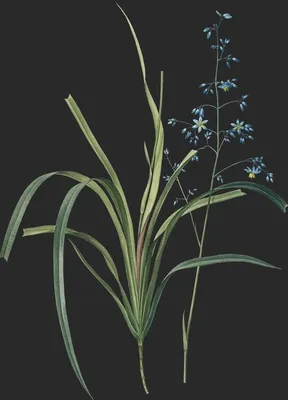
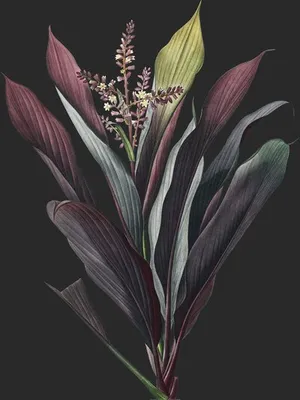
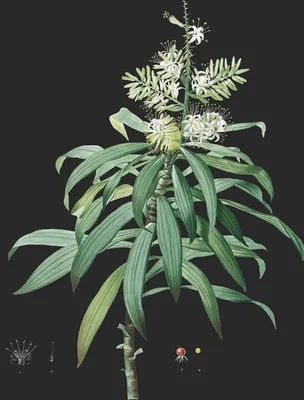
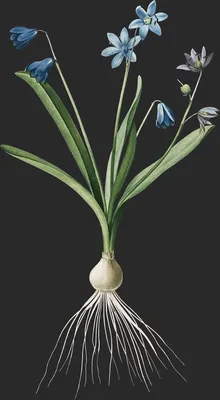
Measured on this plate: flower colour covers 1.4% of the sheet, foliage 7.0%, the cast yellow-green with a second note of amber. No other plate shares exactly this measure. Bulbous plants store the year underground — bulb, corm or tuber — then send up a few thick leaves and a single scape, with six tepals in cup, funnel or star. a moss green. Three things fix the habit: leaf arrangement, tepal count, and how the flower is borne.
Composition
The sheet is tall. No details are appended: a plate for looking, not for keying out. The plant covers only 9% of the sheet, centred near the centre; the emptiness is where the eye rests.
Line and Colour
The first half of the nineteenth century moved from copper to steel to lithography; stipple could render the softest transition. Take a loupe to three places: petal edge, leaf vein, caption. An unbroken line means engraving; colour crossing the outline means a hand. If you mean to copy it: take its skeleton, its margins and the order of its colours; the burin's hatching is the language of copper — suggest it with pencil density, do not imitate it stroke for stroke.
Poetic Resonance
兰陵美酒郁金香,玉椀盛来琥珀光。
—— 唐·李白《客中行》
The poem gives the mood first and the picture supplies the form; set the line beside the plate and the green the corolla becomes its resting point.
Symbolism
The tulip was an imperial emblem in Istanbul and a speculative bubble in Amsterdam; the hyacinth sprang from a boy's blood in Greek myth. What bulbs share is concealment: next year kept underground. Meanings change their tune: the same flower can say opposite things within a century.
Season and Place
Early spring to early summer, genus by genus: tulips and hyacinths first, gladiolus and amaryllis later. South African bulbs filled European glasshouses after 1800. The year 1812 on the plate is that of publication, not of flowering — the gathering came a year or two earlier. See this kind of plate in the flowering season if you can: once you have met the living flower, you stop reading only colour.
The Book and the Hand
“The Liliaceae” carries only Pierre-Joseph Redouté's name. A plate is collective work: drawer, engraver and colourist were different hands, and the unnamed ones decided how good it looks.
What to Take Away
Appreciation is not knowledge but habit — one more look each time. Two centuries on, the plant may still flower in some garden; the one on this sheet stopped in the season of 1812.
About this plate
Description
Cet Ail sort d’une bulbe arrondie, grosse mine une cerise. Sa tige s’élève à la hauteur de six à dis décimètres. Elle est grele, cylindrique, glabre, d’une couleur glauque, nue dans ses deux tiers sur ieurs, couserte dans le bas par les gaines des feuilles. Celles-ci sont eaulinaires, peu nombreuses, engainantes. Leur gaine est lisse, glabre, entière. Leur limbe est linéaire, plane, nullement oblique, aigo, presque imperceptiblement cilié sur le bord, surtout près du sommet, large de dix a quinze millimètres, long de deux ou trois décimètres. Sa nervare moyenne, plus grosse que les autres et finement ciliée, fait un peu saillie en dessous.
Les fleurs sont en général peu nombreuses, et leur reunion mérite à peine le nom d’ombelle: quelquefois même elles manquent entièrement. Elles sont remplacées par un grand nombre de petites balbes noires, ovales, arrondies, rétrécies en pointe au sommet et rassemblées en tête sphérique. La spathe est membraneuse et se divise en deux valves ovales, égales en longueur aux pé-dicelles; ceux-ci sont violets, un pen épais, longs de deux centimètres environ.
Le périgone est d’un pourpre violet. Ses segments sont ovales, obtas, longs de cing millimètres, peu écartés les uns des autres. Tous, mais surtout les extérieurs, qui sont un peu plas petits que les autres, sont hérisses de petits tubercules rudes au toucher, qui les font paraître pubescents.
Les filaments des étamines sont aplatis, blancs dans le bas, violets dans le haut. Trois d’entre eux, plas larges que les autres, se divisent en trois pointes, dont la movenne, beaucoup plas courte, porte l’anthere. Les deus autres plus longues se terminent par un filament capillaire. Les anthères sont ovales, noirâtres, enfermées dans le périgone. Souvent deux ou trois étamines avortent ou se sondent avec celles qui sont à côté d’elles.
L’ovaire est ovale, un peu rétréci en pointe, à six sillons, vert dans le bas, violatre dans le haut, surmonté par un style blanc beaucoup plus court que lui. Le stigmate est simple.
Histoire
L’Ail des sables croit naturellement en Suisse, en Allemagne, dans le nord de l’Europe. Nous ignorons si l’on en tire nalle part quelque parti. On le cultive dans le Jardin du Muséum d’Histoire naturelle. Il Ileurit au mois de juin.
Fam. des Asphodèles. Juss.—Hexandrie monogynie. Lin.
- Allium arenarium. A. caule planifolio balbifero, vaginis teretibus, spathâ maticâ, staminibus tricuspidatis. Lin. it. Scan. 227. Fl. Svec. ed. 2. 279. Sp. pl. 426. Mill. dict. n. 10. Fl. Dan. t. 290. Lam. dict 1. p. 66. Roth. Germ. 1. p. 146; 2. p. 381. Willd. sp. pl. 1. p. 66.
- Alliam Foliis ciliatis, umbellâ bulbiferâ, staminibus alternè trifidis. Hall. Helvet. 1222.
- Allium staminibus alternè trifidis, capite bulbifero, foltis gramineis leviter serratis. Hall. de All. 3.
- Porram planifolium, ataminibos alternè trifidis, umbellâ bulbiferâ. Rupp. ed. Haller. 154. t. 2. f. 2.
- Allium montanum bicorne latifolium, flore dilutè purpurascente. Bauh. pin. 74.