Allium Chamæ-Moly
Allium Chamæ-Moly
Ail Faux-Moly
About this plate
Description
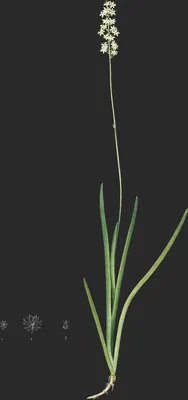
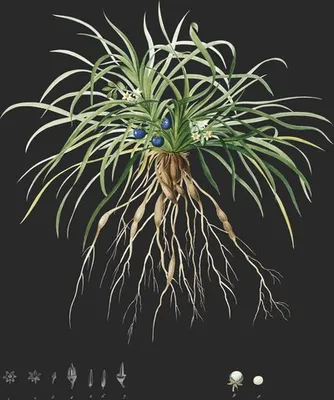
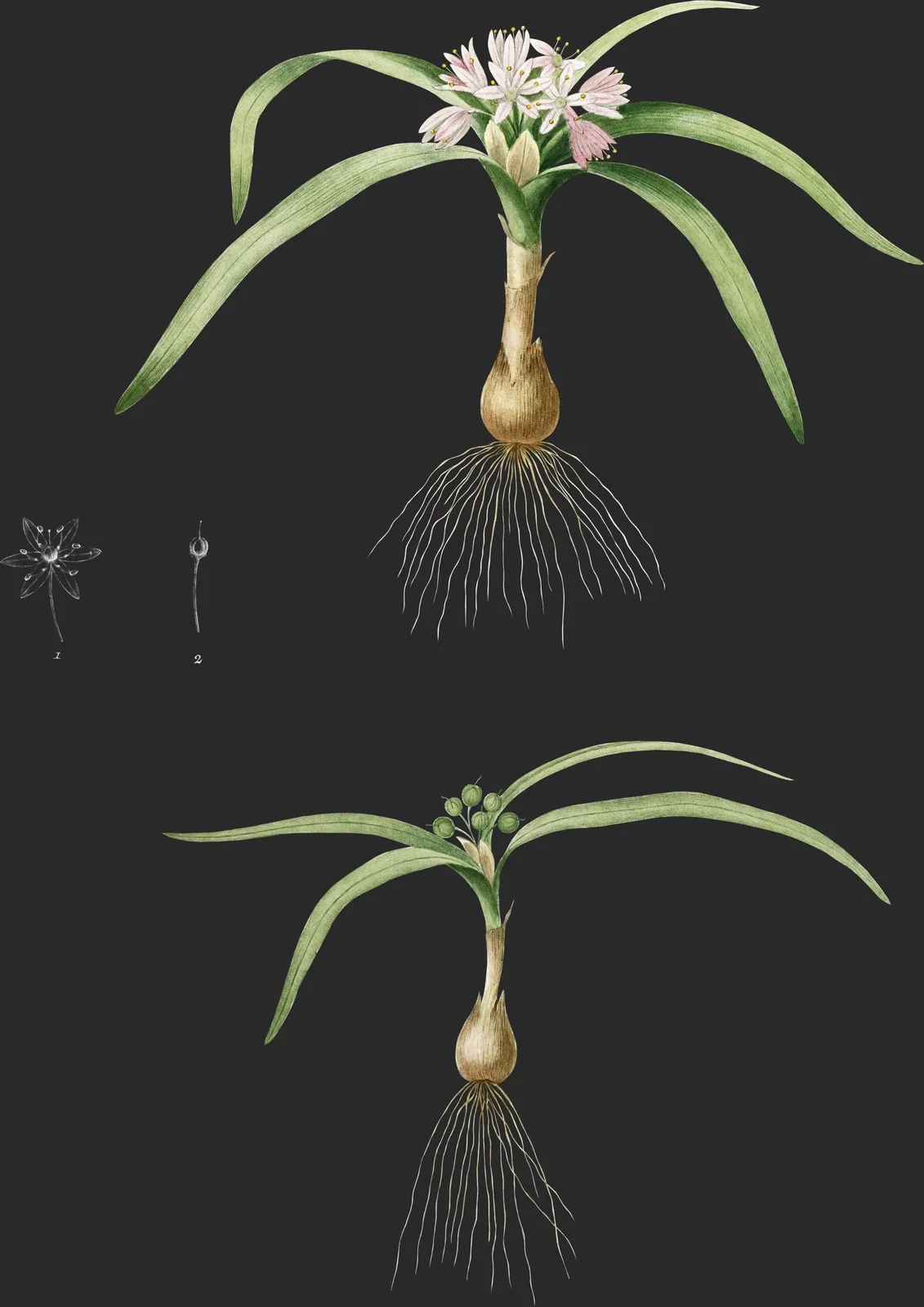
Cet Ail, la plus petite des espèces du même genre connues jusqu’à présent, sort d’une bulbe arrondie, grosse comme une noisette, couverte de tuniques épaisses, coriaces, grises et percées d’une multitude de pores. La partie info-rieure de cette bulbe émet un grand nombre de fibres radicales, simples, médiocrement épaisses et longues de trois ou quatre centimètres. Sa partie supérieure donne naissance à un faisceau de feuilles linéaires, aiguës, couchées sur la terre, longues de huit à douze centimètres, larges de six à huit milli-mètres, hérissées, sur quelques-unes de leurs nervures, et particulièrement sur leurs bords, de longs poils tres-fins.
La hampe atteint à peine trois centimètres de longueur, et reste entièrement cachée dans le milieu du faisceau que les feuilles forment à leur base. Elle est terminée par une ombelle de huit à dix fleurs, qui parait sessile au premier aspect. Les pédicelles qui supportent ces fleurs sont longs de dix à quinze milli-metres, et assez épais, surtout dans le haut. D’abord droits, ils se recourbent peu à peu vers le milieu de leur longueur; de telle manière qu’après la floraison leur partie supérieure est tout-à-fait pendante. Ils sont enveloppés par une spathe membraneuse, rougeâtre, qui leur est égale en longueur, et se partage en deux ou trois segments ovales.
Le périgone est d’un blane rougeâtre, en forme de cloche, divisé jusqu’à sa base en six lanières lancéolées, aigués, demi-étalées.
Les flaments des étamines sont blanes, en forme d’alene, de moitié plus courts que les divisions du périgone, auxquelles ils sont sondés dans une grande partie de leur longueur. Les anthères sont petites, jaunes, ovales-arrondies.
L’ovaire est arrondi, un peu déprimé, surmonté par un style blanc filiforme, de la même longueur que les étamines. Le stigmate est en forme de téte. La capsale est verte, de même forme que l’ovaire, à trois valves, à trois loges, dont chacune renferme deux graines.
Histoire
L’Ail Faux-Moly est indigène des contrées méridionales de l’Europe et de la Barbarie. Il vient dans les lieux pierreux, et fleurit en hiver.
Explication de la planche
La Plante entière en fleur et en fruit de grandeur naturelle.
- Une fleur isolée et étalée.
- L’ovaire et le style.
Fam. des Asphodèles. Juss.—Hexandrie monogynie. Lin.
- Alliam Chamæ-Moly. A. scapo subnullo, capsulis cernuis, foliis planis ciliatis. Lin. sp. pl. 433. Lam. dict. 1. p. 71. Cav. ic. 228. t. 207. f. 1. Desfont. fl. Atl. 1. p. 288. Botan. repos. t. 377. Willd. sp. pl. 2. p. 83. FI. Franç. éd. 3, n. 1965. Gawl. in Curt. botan. mag. 1203.
- Alliam lumilins folio gramineo. Tournef. inst. 385.
- Moly humile folio gramineo. Rudb. Elys. 2. p. 166. f. 15.
- Chamæ-Moly an Moly Dioscoridis. Column. ecphras. t. 326.
Twelve ways of seeing
- measured cast amber
- upright 1.41 : 1
- published 1811
- Plate 325
Not a catalogue entry but a way of looking: how to stand, what to notice, how the line was cut, when it flowers, where it came from, who made it — and then the poems and the classics that taught China to see the same flower. Read the twelve in order and the plate opens.
-
First Look
凡画山水,意在笔先。
—— 唐·王维《山水论》
In painting, the intention precedes the brush.
The sheet is vertical: the eye climbs and settles in the upper half. Let the plant stand before you look for detail. Then step in close: watch where colour meets line, and whether the line ever breaks. Third, find where the green is deepest: the whole tonal order is measured from that patch.
-
Name and Thing
The binomial is Ail faux-moly: the first word is the genus it belongs among, the second the epithet that sets it apart. Two words carry a whole provenance. The older system filed it under Asparagaceæ by overall affinity; Linnaeus, counting stamens only, placed it in Hexandria — two ways of asking what a plant is. No established Chinese name exists, so it is cited by its binomial alone.
-
Form and Colour
Measured on this plate: flower colour covers 1.5% of the sheet, foliage 4.7%, the cast amber with a second note of yellow-green. No other plate shares exactly this measure. A bulb of overlapping fleshy scales gives the lily its Chinese name, 'hundred-fold'; six tepals reflex as the flower opens, around six stamens with long, T-shaped anthers. Filed under green — a moss green, a colour that comes mostly from leaf and stem. A single plant, laid out with nothing hidden.
-
Composition
Tall and narrow, the plant rising in one movement with generous margins — the upright format of most floras. (about 1.41 : 1) No details are appended: a plate for looking, not for keying out. The plant covers only 9% of the sheet, centred above centre; the emptiness is where the eye rests. Old plates set the plant slightly off centre, with unequal margins — that small imbalance is what keeps it alive.
-
Line and Colour
The first half of the nineteenth century moved from copper to steel to lithography; stipple could render the softest transition. Take a loupe to three places: petal edge, leaf vein, caption. An unbroken line means engraving; colour crossing the outline means a hand.
-
Season
Early to high summer, June and July; the flowers last only days, so artists drew them just as they opened. The year 1811 on the plate is that of publication, not of flowering — the gathering came a year or two earlier. Note the season. Phenology is the most practical tool of appreciation.
-
Provenance
Temperate north — China, Japan, Europe. Long used in Chinese medicine, lilies were hunted in East Asia by nineteenth-century collectors and transformed European gardens. The localities on the plate are those of a century ago; plants travel and places change their names.
-
The Book and the Hand
“The Liliaceae” was drawn by Pierre-Joseph Redouté and published 1802-1816. This plate is Plate 325, book page 325. The image is public domain; the hand-colouring is still one person's hand.
-
Poetic Resonance
故乡寒食荼醾发,百合香浓邸舍深。
—— 宋·宋祁《山橙花》
The poem gives the mood first and the picture supplies the form; set the line beside the plate and the green the corolla becomes its resting point.
-
The Written Tradition
生川谷。《吴普》曰:百合一名重迈,一名中庭,生冠朐及荆山。(艺文类聚引云:一名重匡)《名医》曰:一名重箱,一名摩罗,一名中逢花,一名强瞿,生荆州,二月八月,采根,暴干。
—— 神农本草经·百合第一百七十
The Bencao Gangmu describes the bulb as garlic-like, edible and medicinal; Song writers already noted that the leaves vary while the flowers stay white. Keep the line; it will surface the next time you meet the same plant.
-
Symbolism
In the West the white lily is Marian purity, held by the angel of the Annunciation; in China the name sounds like 'a hundred years in harmony', a wedding wish. Flower language was added later; the flower knows nothing of it, and that innocence is part of its power.
-
What to Take Away
Carry three rules away: whole before detail; line before colour; picture before book. The flower of that year is dust, yet its image on paper has outlived every living cousin.