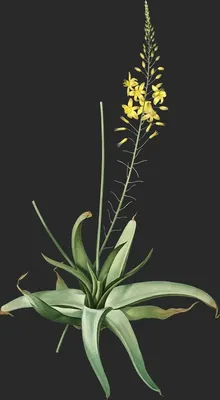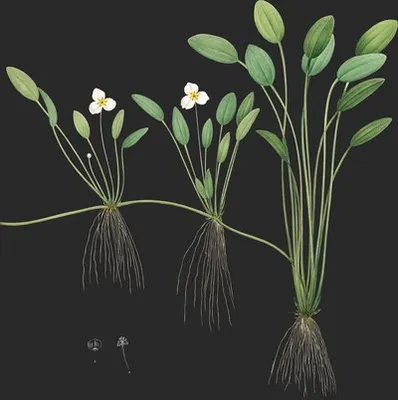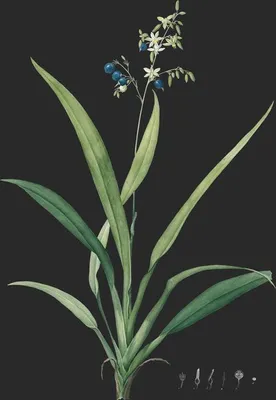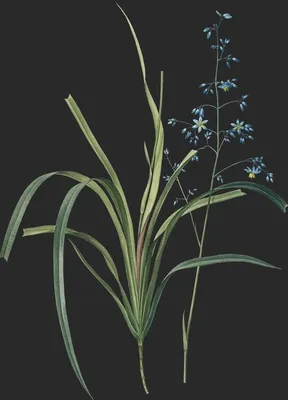
Anthericum Frutescens
Anthéric Frutescent
Anthéric Frutescent
About this plate
Description
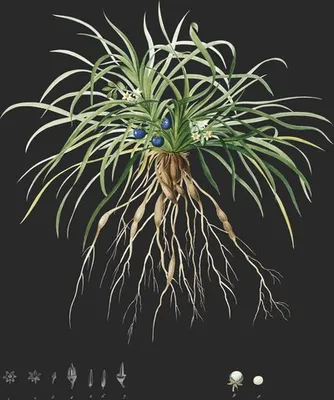
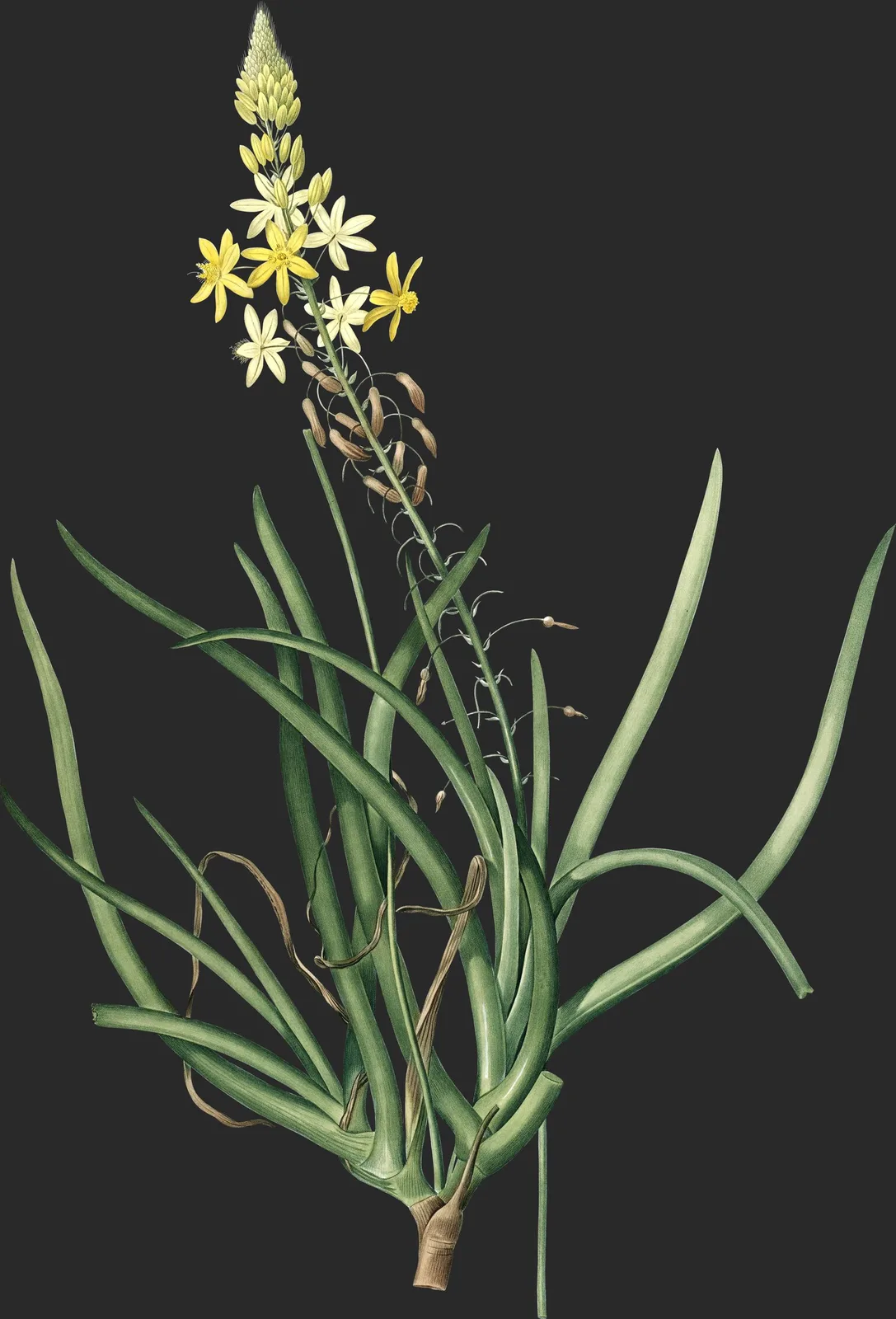
Cet Anthérie, qui a beaucoup de rapport avec le précédent, sort comme lai d’une racine charnue, rameuse; mais il en diffère en ce qu’il a une véritable tige vivace, tortueuse, tantôt simple, tantôt ramitiée, demi-ligneuse, enfouie en grande partie dans la terre, et couverte par la base des feuilles ou par leurs débris. Les feuilles sessiles et disposées en faisceau au sommet de la tige, sont linéaires, longues de deux ou trois décimètres, charnues, demi-cylindriques, planes en dessus, convexes en dessous, glabres et entières. Elles se rétrécissent graduellement depuis leur base, qui est engainante et de la grosseur do petit doigt, jusqu’à leur sommet, et se terminent en pointe.
Au milieu du faisceau que forment ces feuilles s’élève une hampe nue, droite, eylindrique, longue de deux ou trois décimètres, et terminée par une grappe de fleurs jaunes, dont les pédicelles tantôt solitaires, tantôt verticillés trois a trois, sont accompagnés de bractées linéaires-lancéolées aussi longues qu’eux. Ces fleurs étant entièrement semblables, d’ailleurs, pour leur dispo-sition, leur forme et leur organisation à celles de l’Anthérie à feuilles d’aloès; nous n’entrerons à leur égard dans aucun détail, pensant qu’il serait inutile de répéter ce que nous avons dit dans l’article précédent.
Histoire
L’Anthérie fratescent est originaire du Cap de Bonne-Espérance. Il fleurit pendant tout l’été, demande les mêmes soins, et se propage de la même manière que le précédent.
Observations
Le genre Anthericum, tel qu’il avait été établi par Linné, renfermait des espèces extrêmement disparates. Les botanistes modernes en ont retiré avec raison les Tofeldias et l’Abama, qui appartiennent à des familles diflérentes, et les Pha-langères, qui en diffèrent par leurs fleurs blanches ou rougeâtres, par leurs étamines glabres, et surtout par leur mode de germination; moyennant ces retranchements, le genre est devenu très-naturel. Les espèces qui le constituent, celles du moins dont l’organisation est bien connue, ont toutes, outre les caractères propres à la famille, des racines solides ou fibreuses, des feuilles charnues ou fistuleuses, des fleurs jaunes disposées en grappes simples, un périgone divisé jusqu’à sa base en six segments étalés, des étamines dont les filaments sont barbus, un style filiforme et un stigmate simple. Lembryon est placé dans Taxe même de la graine, et dans le moment de la germination, son lobe pend au moyen d’un filament au côté de la première gaine. A l’exception d’une espèce qui est originaire de la Nouvelle Zélande, toutes celles que l’on connait à présent ont été trouvées en Afrique.
Fam. des Asphodèles. Juss.—Hexandrie monogynie. Lin.
- Anthericum fratescens. A. foliis carnosis teretibus, caule fruticoso. Lin. spec. pl. 445. Gærtn. de fruct. 1. p. 55. t. 16 f. 1. Mill. dict. n. 4. Ait. Kew. 1. p. 449. n. 10. Med. botan. Beob. p. 49. Lam. dict. 1. 198. Decand. et Redout. pl. grasses, n. 14.
- Antherieum frutescens. A. folis carnosis teretibus, caule fruticoso erecto ramoso. Willd. sp. pl. 2. 142. Pers. enchir. 1. p. 369.
- Anthericum caulescens, foliis palposis teretibus subolatis supinè convexoplanis. Wach. Uhr. 305.
- Bolbine caulescens. Lin. hort. Cliff. p. 122.
- Phalangiam Capense caulescens, foliis cepitiis succosis. Dill. Elth. 310. t. 231. f. 298.
- Phalangiam Africanum folis ficoidis, floribus spicatis aureis. Boerh. ind. Alt. p. 134.
- Phalangium non ramosum spicatum lutem Promontorii Bonæ Spei, foliis magnis cepæ pulposis. Plukn. Amalih. p. 168.
- Asphodelus Africanus, foliis cepaceis, flore luteo. Tit. hort. Maur. p. 20.
- Asphodelas Zeylanicos foliis rotundis cepaceis, floribus luteis. Till. hort. Pis. p.17.
Twelve ways of seeing
- measured cast yellow-green
- upright 1.47 : 1
- published 1809
- Plate 284
Not a catalogue entry but a way of looking: how to stand, what to notice, how the line was cut, when it flowers, where it came from, who made it — and then the poems and the classics that taught China to see the same flower. Read the twelve in order and the plate opens.
-
First Look
论画以形似,见与儿童邻。
—— 宋·苏轼《书鄢陵王主簿所画折枝》
To judge painting by likeness alone is the view of a child.
The sheet is vertical: the eye climbs and settles in the upper half. Let the plant stand before you look for detail. Then step in close: watch where colour meets line, and whether the line ever breaks. Third, find where the green is deepest: the whole tonal order is measured from that patch. The pose leans left: the upper half carries 8 points further left than the lower — a living thing, not a diagram.
-
Name and Thing
The binomial is Anthericum frutescens: the first word is the genus it belongs among, the second the epithet that sets it apart. Two words carry a whole provenance. The older system filed it under Asparagaceæ by overall affinity; Linnaeus, counting stamens only, placed it in Hexandria — two ways of asking what a plant is. No established Chinese name exists, so it is cited by its binomial alone.
-
Form and Colour
Measured on this plate: flower colour covers 2.7% of the sheet, foliage 10.0%, the cast yellow-green with a second note of amber. No other plate shares exactly this measure. A bulb of overlapping fleshy scales gives the lily its Chinese name, 'hundred-fold'; six tepals reflex as the flower opens, around six stamens with long, T-shaped anthers. Filed under green — a moss green, a colour that comes mostly from leaf and stem. Read the outline, then the colour layers, then the brush.
-
Composition
Tall and narrow, the plant rising in one movement with generous margins — the upright format of most floras. (about 1.47 : 1) No details are appended: a plate for looking, not for keying out. The plant covers only 16% of the sheet, centred below centre; the emptiness is where the eye rests. Cover the margins with your thumb and the plate suffocates; uncover them and the flower breathes again.
-
Line and Colour
The first half of the nineteenth century moved from copper to steel to lithography; stipple could render the softest transition. Decide first whether it was printed or painted; only then discuss whether it is beautiful.
-
Season
Early to high summer, June and July; the flowers last only days, so artists drew them just as they opened. The year 1809 on the plate is that of publication, not of flowering — the gathering came a year or two earlier. The best time to read such a plate is its flowering season: three minutes under the tree explains what no text can.
-
Provenance
Temperate north — China, Japan, Europe. Long used in Chinese medicine, lilies were hunted in East Asia by nineteenth-century collectors and transformed European gardens. In the same volume the kin are shelved together; set several plates side by side.
-
The Book and the Hand
“The Liliaceae” was drawn by Pierre-Joseph Redouté and published 1802-1816. This plate is Plate 284, book page 284. The image is public domain; the hand-colouring is still one person's hand.
-
Poetic Resonance
梨花淡白柳深青,柳絮飞时花满城。
—— 宋·苏轼《东栏梨花》
Pear blossoms pale white, willows deep green; when the catkins fly, flowers fill the town.
The poem gives the mood first and the picture supplies the form; set the line beside the plate and the green the corolla becomes its resting point.
-
The Written Tradition
百合之根,以众瓣合成也。
—— 明·李时珍《本草纲目·菜部》
The root of the lily is many scales gathered into one — hence the name bai he, “a hundred joined”.
The Bencao Gangmu describes the bulb as garlic-like, edible and medicinal; Song writers already noted that the leaves vary while the flowers stay white. Keep the line; it will surface the next time you meet the same plant.
-
Symbolism
In the West the white lily is Marian purity, held by the angel of the Annunciation; in China the name sounds like 'a hundred years in harmony', a wedding wish. In a flora it is a species first and a symbol second; the order is worth keeping.
-
What to Take Away
Next time you stand before a flowering plant, give it three minutes: leaf arrangement, direction of the flower, the darkest patch. Two centuries on, the plant may still flower in some garden; the one on this sheet stopped in the season of 1809.